
Blog
Ashkenazi Jewelry: A Guide to History, Symbols, and Modern Heirlooms
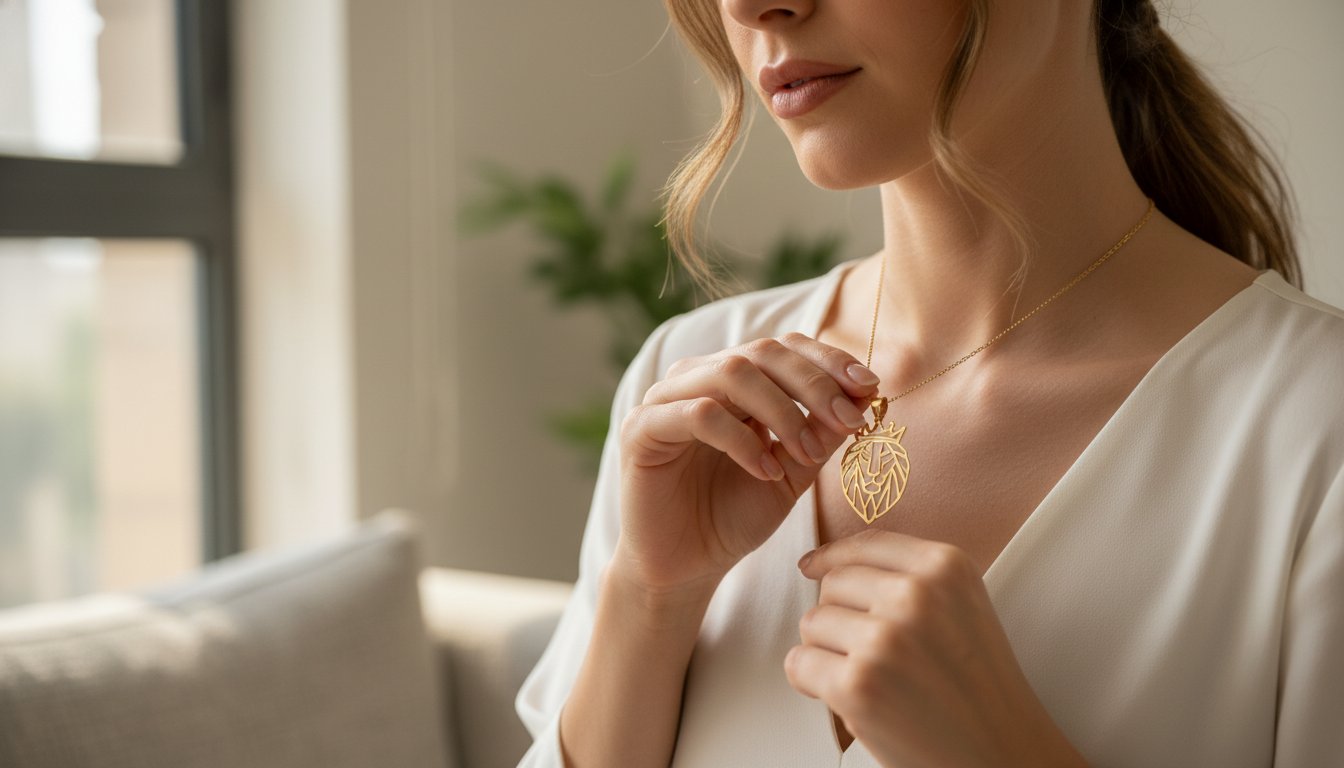
Jewelry is more than just an accessory; it is a language of personal expression, a keeper of memories, and a tangible link to our heritage. For those with roots in Central and Eastern Europe, Ashkenazi jewelry offers a particularly rich and poignant story. It speaks of history, resilience, and an identity lovingly passed down through generations. This is not just about antique heirlooms locked away in a box; it’s about living traditions and symbols that continue to find new life in modern, elegant designs.
This guide will explore the unique world of Ashkenazi jewelry, from its historical aesthetic and powerful symbols to its beautiful reinvention for the contemporary woman who values both meaning and style.
What Defines Ashkenazi Jewelry? More Than an Heirloom
In simple, elegant terms, Ashkenazi jewelry refers to the designs and traditions originating from the Jewish communities of Central and Eastern Europe. It is a style shaped by the culture, geography, and history of regions like Poland, Germany, and Russia. While all Jewish jewelry shares a common spiritual foundation, regional distinctions create unique artistic signatures. Ashkenazi pieces often differ from their Sephardic and Mizrahi counterparts, which might feature more intricate filigree work and motifs influenced by Iberian and Middle Eastern art. The Ashkenazi aesthetic is a story in itself, one that focuses deeply on powerful symbolism over purely decorative elements.
A Brief History Through Time
The story of Ashkenazi jewelry is woven into the history of the European diaspora. Originating in the medieval period, these designs were shaped by the lives of the communities that created them. Historical events, from periods of cultural flourishing to times of persecution and migration, profoundly influenced both the materials used and the motifs that became cherished. For many families, jewelry was more than adornment; it was a form of portable wealth and a precious family legacy that could be carried across borders, ensuring a connection to a past that was often uprooted.
Hallmarks of the Ashkenazi Aesthetic
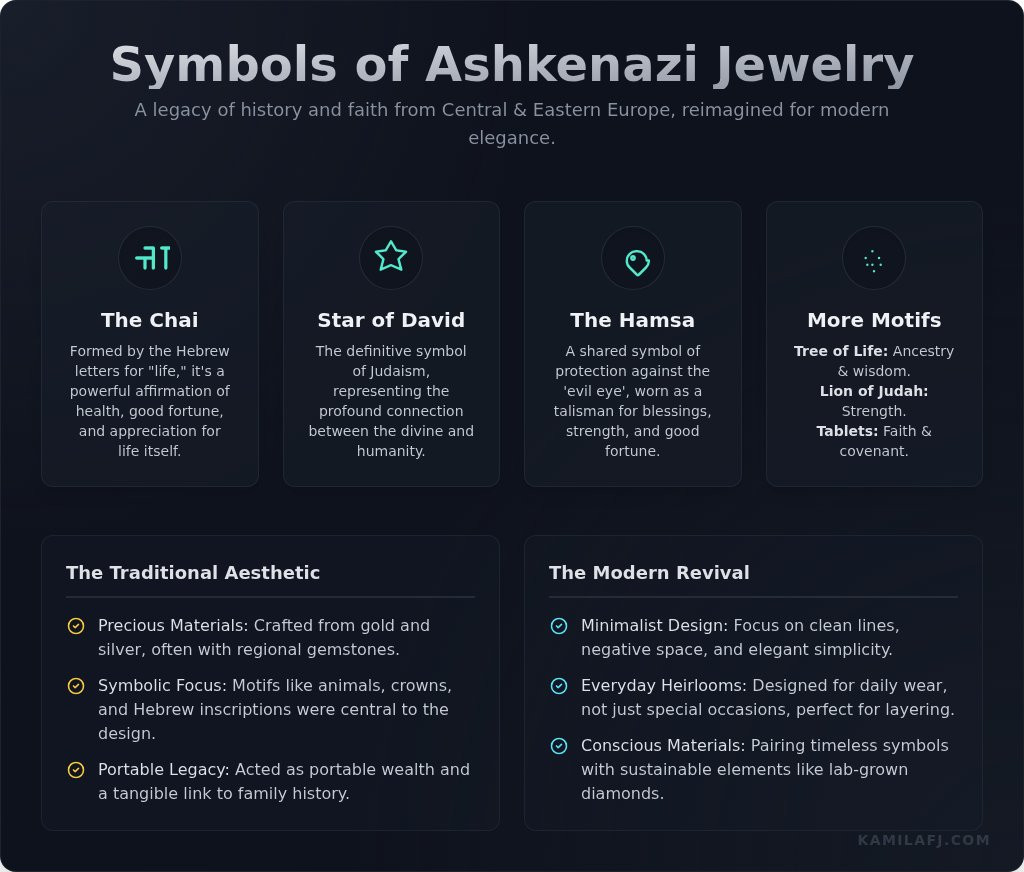
Traditionally, Ashkenazi jewelry was crafted from materials like gold and silver, often set with regional gemstones. The true soul of the aesthetic, however, lies in its motifs. Animal figures, such as the Lion of Judah or protective birds, were common, as were royal crowns symbolizing the Torah. Floral patterns and, most importantly, meaningful Hebrew inscriptions were central to the designs, turning each piece into a personal statement of faith, identity, or blessing.
Powerful Symbols in Ashkenazi Jewelry and Their Meanings
The enduring beauty of Ashkenazi jewelry lies in its cherished symbols, each telling a story that connects the wearer to faith, family, and a history that spans centuries. These icons are not mere decorations; they are profound expressions of core values and beliefs.
The Chai: A Celebration of Life
One of the most beloved symbols in all of Jewish culture, the Chai is formed by the Hebrew letters Chet (ח) and Yud (י). Together, they spell the word for “life.” Wearing a Chai is a powerful affirmation, symbolizing a wish for good fortune, health, and a deep appreciation for the gift of life itself. It remains a popular and deeply meaningful design for necklaces and charms.
The Star of David (Magen David): A Mark of Identity
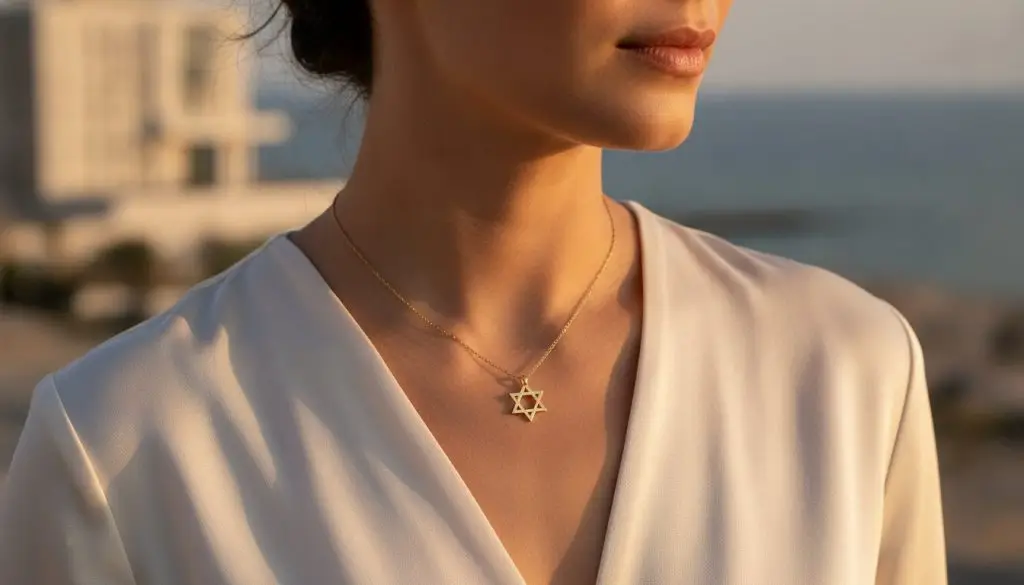
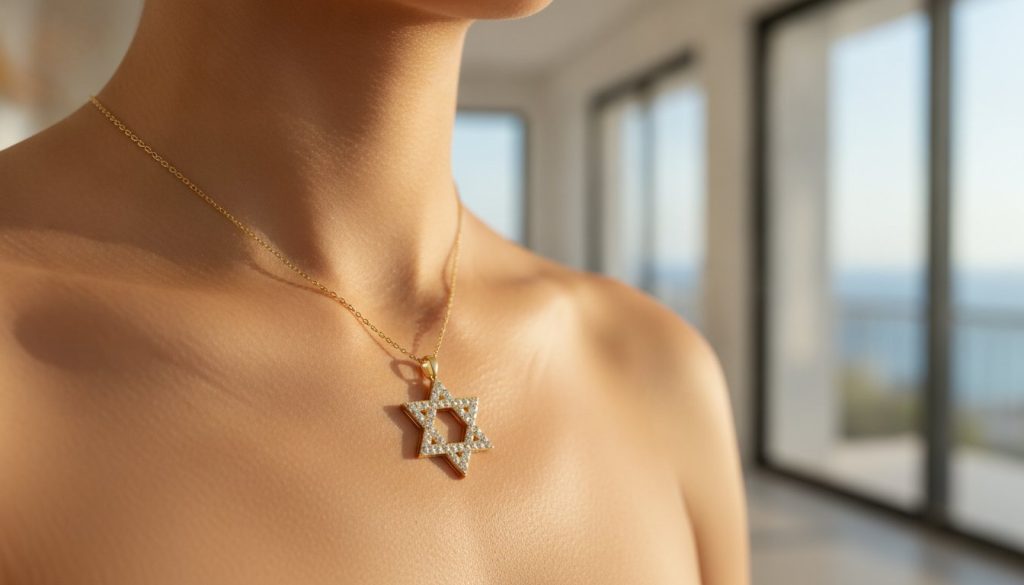
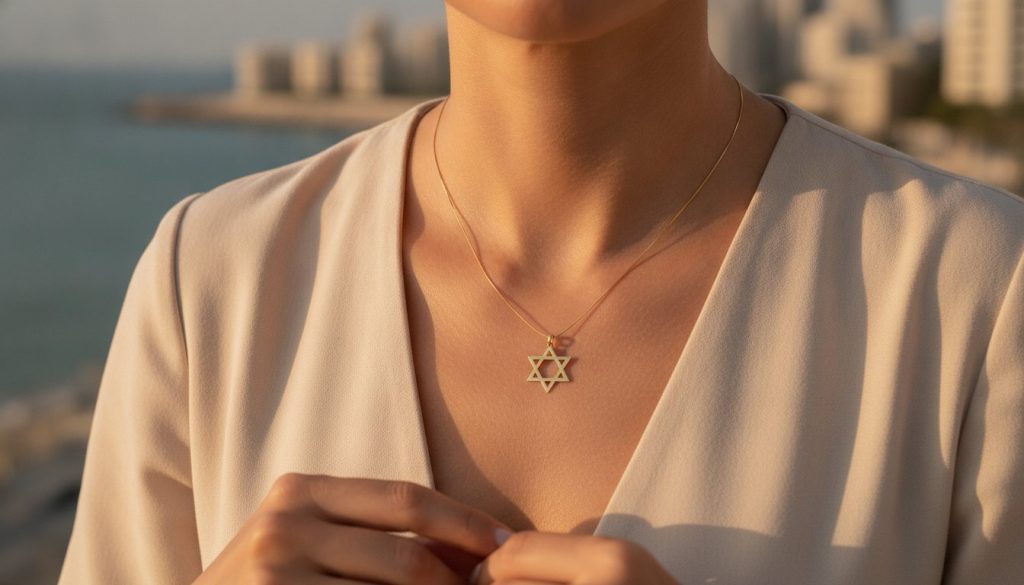
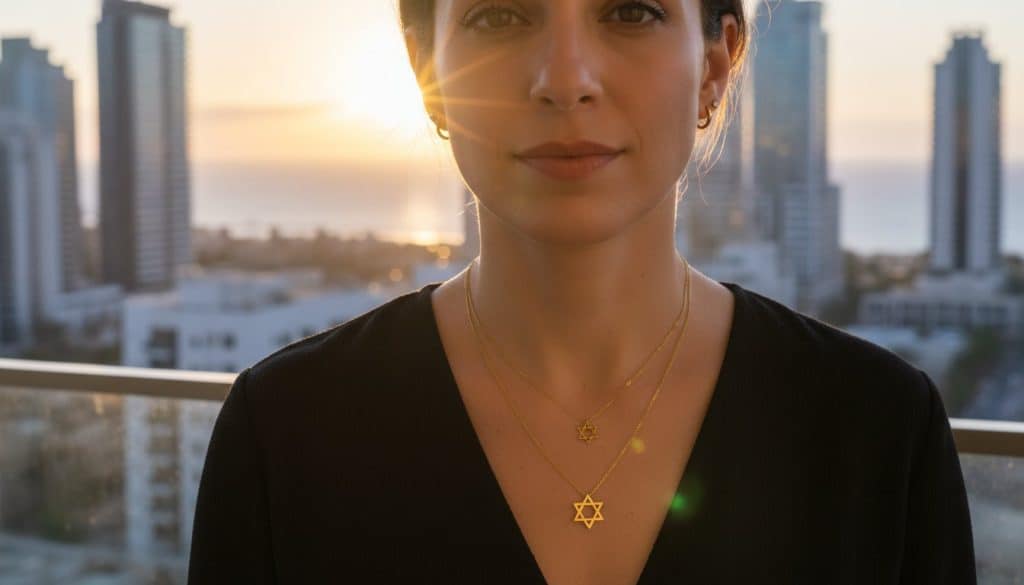
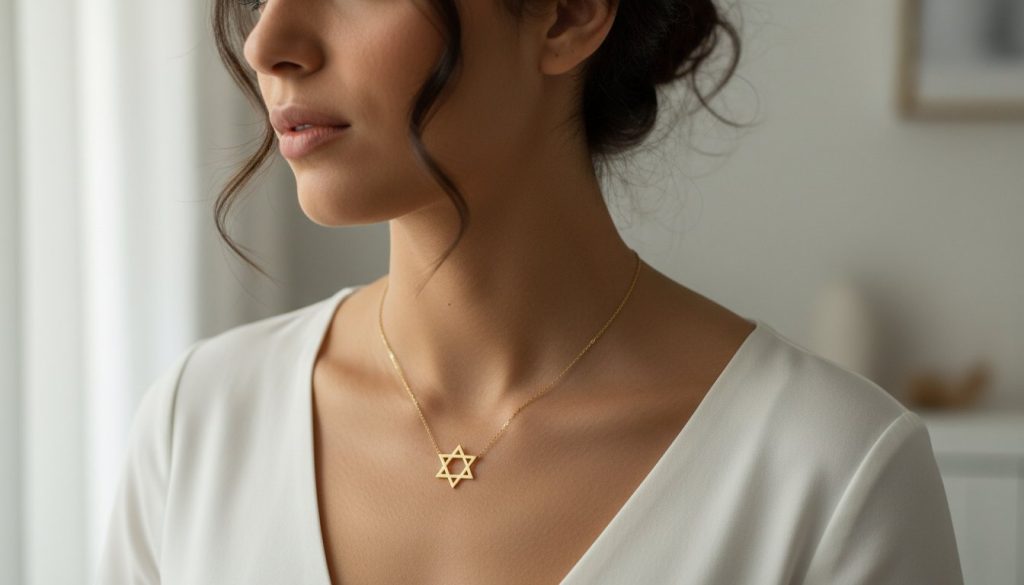
While its origins are complex, the six-pointed Star of David has evolved into the definitive and most recognizable symbol of Judaism. It is said to represent the connection between God and humanity, with the upward-pointing triangle symbolizing the divine and the downward-pointing one representing the earthly. As a timeless choice for pendants and earrings, it is a proud and elegant expression of identity.
The Hamsa: A Hand of Protection
The Hamsa, or Hand of Fatima, has shared roots across Middle Eastern and Sephardic cultures, but it was widely adopted by Ashkenazi communities as well. This stylized hand is a powerful symbol of protection against the “ayin hara,” or evil eye. Often featuring an eye, a fish, or Hebrew inscriptions, the Hamsa is worn as a talisman to bring blessings, strength, and good fortune to its owner.
Other Meaningful Motifs
Beyond these primary symbols, other motifs carry deep significance. The Tree of Life represents a connection to one’s ancestors and the wisdom of the Torah. The Luchot, or Tablets of the Ten Commandments, are a direct reference to the covenant at Sinai. And perhaps the most personal expression of all is Hebrew name jewelry, which transforms one’s own identity into a beautiful, wearable piece of art.
The Modern Revival: Ashkenazi Traditions in Contemporary Design
Today’s designers are breathing new life into these ancient traditions, reimagining heritage for a new generation that values authenticity and personal style. The modern revival is not about replicating the past, but honoring it. The shift is towards minimalism, clean lines, and an elegant simplicity that makes these meaningful pieces perfect for everyday wear, fusing timeless symbols with a sophisticated, contemporary aesthetic.
Minimalism Meets Meaning
The modern interpretation of Ashkenazi jewelry often involves stripping symbols down to their essential, elegant forms. Designers use clean lines, negative space, and subtle details to create a fresh, understated look. This minimalist approach allows the inherent power of the symbol to shine through without distraction, making the pieces perfect for layering and curating a personal jewelry story that is uniquely yours.
Handcrafted for Today: The KaMila Philosophy
At KaMila Fine Jewellery, our philosophy is rooted in this very idea: honoring tradition with modern artistry and impeccable craftsmanship. We believe in creating “everyday heirlooms”-pieces that are not meant to be saved for special occasions, but to be worn and cherished as part of your daily life. Our approach pairs meaningful, timeless symbols with the clean brilliance of sustainable lab-grown diamonds and the warm glow of 18k gold. Each piece is designed to feel both beautiful and deeply personal, a modern celebration of your story. Discover our collection of symbolic jewelry.
How to Choose and Wear Your Piece of Heritage
Selecting a piece of symbolic jewelry is a deeply personal journey. The right piece will resonate with your story and integrate seamlessly into your style, becoming a true extension of who you are.
Connecting with a Symbol
To find the perfect piece, ask yourself what message you want to carry with you. Is it a celebration of life (Chai), a statement of identity (Star of David), or a wish for protection (Hamsa)? Consider your family history or a value you hold dear. If you are choosing a gift, think about the wish you have for the recipient-health, happiness, or strength. The most beautiful piece is one that holds personal significance.
Styling Your Symbolic Jewelry
Integrating symbolic jewelry into your wardrobe is effortless. Let a beautiful Star of David or Chai necklace be the focal point of a simple neckline. Layer it with delicate gold chains of varying lengths for a modern, curated look. Don’t be afraid to mix and match your symbolic piece with your existing jewelry; its meaning will only add depth and character to your personal style.
Frequently Asked Questions
What is the main difference between Ashkenazi and Sephardic jewelry?
While both traditions share core Jewish symbols, the aesthetic differences often reflect their geographic origins. Sephardic jewelry, from Spain, North Africa, and the Middle East, frequently features intricate metalwork like filigree and granulation. Ashkenazi jewelry from Central and Eastern Europe often incorporates different motifs, such as specific animal figures, and sometimes places a stronger emphasis on bold, meaningful symbols over complex metalwork.
Is Hamsa considered an Ashkenazi symbol?
The Hamsa has roots in Sephardic and Mizrahi traditions and is prevalent throughout the Middle East. However, its powerful protective symbolism led to its widespread adoption by many Ashkenazi Jews as well. Today, it is considered a universally recognized Jewish symbol of protection, worn and cherished by people from all backgrounds.
Can I wear Ashkenazi jewelry if I’m not religious?
Absolutely. For many, wearing this jewelry is a cultural connection rather than a religious one. It can be a way to honor your heritage, celebrate your family’s story, or connect with timeless values like life, protection, and identity. These symbols transcend religious observance and speak to a universal desire for meaning.
What are the most popular Ashkenazi jewelry pieces for a gift?
A Chai or Star of David necklace is a timeless and deeply meaningful gift for milestones like a Bat Mitzvah, graduation, or birthday. A Hamsa charm can be a wonderful way to wish someone protection and good fortune on a new journey. Hebrew name necklaces are also incredibly personal and always cherished.
How do I care for my fine gold symbolic jewelry?
To keep your 18k gold jewelry beautiful, clean it gently with a soft cloth and a solution of warm water and mild soap. Avoid harsh chemicals and remove your jewelry before swimming or exercising. Store each piece separately in a soft pouch to prevent scratching and ensure it remains a treasured part of your collection for years to come.
Whether you are connecting with your own history or simply drawn to the beauty of timeless symbols, Ashkenazi-inspired jewelry is a celebration of stories that deserve to be told. It’s an invitation to wear your heritage with elegance and pride. Find a modern heirloom that tells your story. Explore KaMila Fine Jewellery. Our collections are built on handcrafted artistry and modern, minimalist designs, featuring sustainable 18k gold and lab-grown diamonds to create a piece that is truly and meaningfully yours.
Related Posts
Jewish Gold Jewelry: Modern Israeli Artistry for 2026
-
Posted by
מילה קלר
Why should a piece of jewelry that represents your deepest identity feel like a heavy, outdated relic from a different century? Most of us have…
18k Gold Star of David Necklace: A Guide to Modern Heirlooms & Meaning
-
Posted by
Your jewelry should be an intimate expression of who you are, not a relic that feels out of place in your modern life. Many people want to honor…
Modern Brilliance: The Guide to Lab Diamond Star of David Necklaces
-
Posted by
What if the most meaningful symbol of your heritage could be as clear and conscious as your future? Choosing a piece of jewelry that represents your…
Custom Star of David Necklace: A Guide to Modern Personalized Heirlooms
-
Posted by
Why does a symbol of such deep personal history often come in a box shared by thousands of others? You want to honor your heritage, but many…
Modern Star of David Necklace Gold: A Guide to Contemporary Jewish Jewelry in 2026
-
Posted by
A sacred symbol shouldn’t feel like a heavy heirloom tucked away for synagogue; it belongs in the radiant light of your daily life. You’ve likely…
The Star of David Necklace: A Guide to Its Meaning, History, and Modern Style
-
Posted by
More than a beautiful geometric form, the Star of David is a profound symbol of heritage, faith, and identity. When searching for the perfect star of…
The Tennis Bracelet: A Complete Guide to Its Timeless Elegance
-
Posted by
There’s a quiet confidence to a line of diamonds gracefully encircling the wrist, a piece of everyday magic. Yet, for many, the allure of the classic…
Jewelry Star of David: A Guide to Meaning, Style & Modern Heirlooms
-
Posted by
The Star of David is more than an emblem; it’s a story, a connection to heritage, and a deeply personal statement. Yet, finding a piece that feels…
Gift a Golden Star of David Necklace: A KaMila Showcase
-
Posted by
The search for the perfect שרשרת מגן דוד זהב 14k can feel endless. You’re looking for more than just an accessory; you want a symbol of heritage that…
Choosing a Modern Magen David Necklace: A Guide to Finding Your Perfect Star
-
Posted by
The Star of David is a profound symbol, an intimate piece of your story worn close to the heart. Yet, finding a design that feels truly personal-one…
Signet Rings: A Modern Heirloom for Self-Expression
-
Posted by
Perhaps the signet ring has always intrigued you, yet felt like a story you couldn’t claim-a piece steeped in tradition, reserved for family crests…
What Is a Tennis Bracelet? The Story & Style Guide to an Iconic Piece
-
Posted by
Effortlessly elegant and endlessly versatile, the tennis bracelet is a true icon in the world of fine jewelry. It’s a piece that whispers luxury, a…