
Blog
Jewelry Care Kit Essentials: The Definitive Checklist for Fine Jewellery
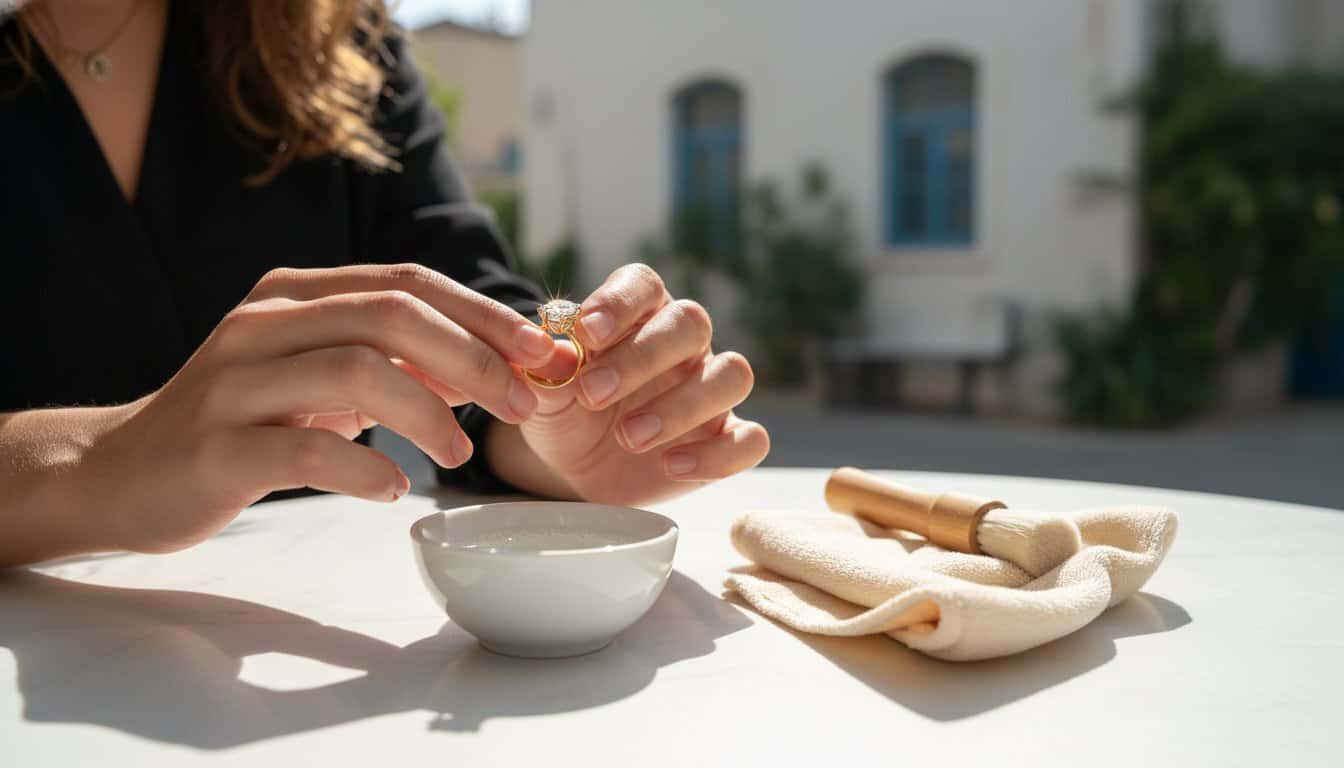
Last Tuesday, Maya sat at a sun-drenched café in Neve Tzedek and realized her 18k gold band had lost the radiant glow it possessed on her wedding day. It’s a quiet heartbreak when a piece that serves as a personal talisman begins to look dull or cloudy from the simple reality of daily life. You likely feel a sense of hesitation when it comes to cleaning your heirlooms, fearing that a harsh chemical or an abrasive cloth might leave permanent marks on your soft gold surfaces. Finding the right jewelry care kit essentials shouldn’t be a source of confusion, especially when you want to protect the artistry of your collection and ensure those lab-grown diamonds still hold their original, breathtaking fire.
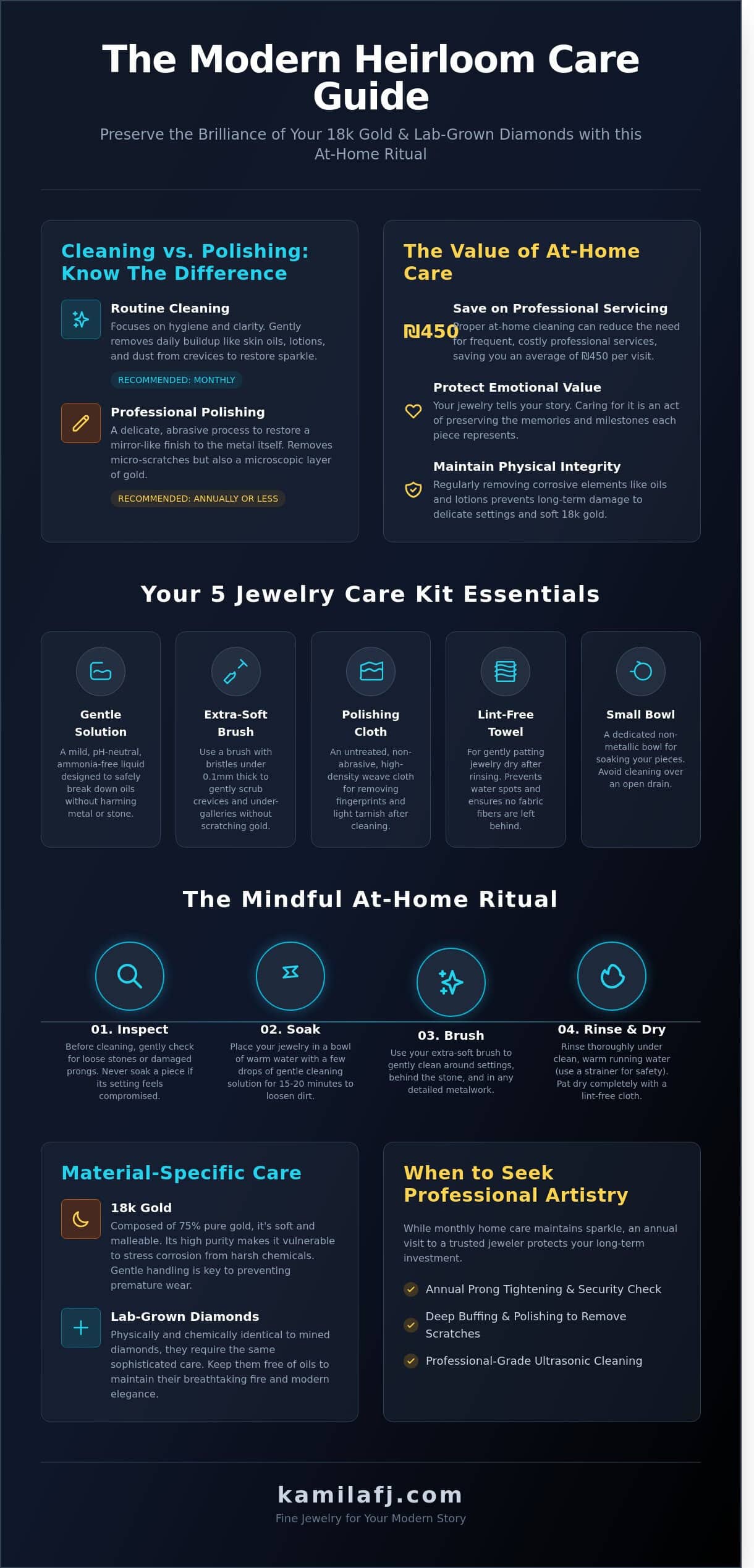
We believe your jewelry is an intimate expression of your story and should make every day feel special, not just the big moments. This guide will teach you how to assemble a professional-grade kit that restores that “new” sparkle at home, saving you the ₪450 cost of frequent professional servicing. We are going to walk through the specific tools and gentle rituals you need to keep your 18k gold and sustainable diamonds as bright as the day you first wore them.
Key Takeaways
- Learn the vital difference between routine cleaning and professional polishing to maintain the soulful brilliance of your handcrafted 18k gold pieces.
- Discover the five professional-grade jewelry care kit essentials needed to safely break down organic oils without compromising the integrity of your lab-grown diamonds.
- Master a mindful at-home ritual that prioritizes a pre-soak inspection, ensuring your stones are secure before they ever touch a cleaning solution.
- Understand why lab-grown diamonds require the same sophisticated care as mined gems to preserve their fire and modern elegance for a lifetime.
- Identify when to transition from home care to professional artistry for annual prong tightening and deep buffing to protect your investment in Israeli fine jewelry.
Why a Jewelry Care Kit is a Modern Heirloom Essential
Fine jewelry isn’t just a collection of objects; it’s a curated reflection of your identity and your most cherished milestones. Whether you’re wearing a ₪4,500 lab-grown diamond ring or a sentimental gold charm, these pieces require more than a casual rinse under the tap. Gathering the right jewelry care kit essentials is the first step in honoring the artistry of your collection. It’s a commitment to ensuring that your “You, in Gold” story remains as vivid as the day it began. Professional maintenance isn’t about vanity; it’s about preserving the physical integrity of your investment.
Many people confuse cleaning with polishing, but they serve two distinct purposes. Cleaning focuses on hygiene and clarity, stripping away the film of Israeli dust, skin oils, and heavy lotions that settle into crevices. Polishing is the delicate process of restoring the metal’s finish. Understanding different Jewellery cleaning methods is crucial because 18k gold is significantly softer than the base metals found in fashion pieces. Without a dedicated kit, you might accidentally use an abrasive that creates permanent micro-scratches on your most precious items. Environmental factors like the humidity in Tel Aviv or the mineral-heavy water in many regions can dull a diamond’s fire in as little as thirty days.
Preserving the Story of Your Gold
18k gold is prized for its 75% purity, giving it a warmth and weight that cheaper alloys cannot replicate. This high gold content means it’s naturally more malleable. Regular maintenance prevents the “softness” of the metal from showing premature wear and tear. When you care for your “Beans of Happiness” or your handcrafted wedding band, you’re protecting the emotional value tied to those memories. Investing ₪150 to ₪300 in professional-grade jewelry care kit essentials is a small price to pay for a lifetime of brilliance. It ensures your talismans remain as bright as the day you first wore them.
Fine Jewellery vs. Fashion Jewellery Care
The chemical vulnerability of high-karat gold is often overlooked. Harsh chemicals found in silver dips or generic “all-purpose” cleaners can cause stress corrosion in gold alloys, leading to brittle prongs or discolored surfaces. Lab-grown diamonds deserve the same respect as mined stones; their settings are often intricate and require gentle, pH-neutral solutions. Your maintenance tools must be tailored to these noble materials. Using the wrong product on a ₪8,000 ethical engagement ring can lead to costly repairs that are easily avoided with the right knowledge and tools. Fine jewelry is designed to last generations, but only if the wearer respects the chemistry of the craft.
The 5 Jewelry Care Kit Essentials: A Checklist
Maintaining the radiance of your personal collection is an act of respect for the artistry behind each piece. A curated selection of jewelry care kit essentials ensures your talismans remain as bright as the day you first wore them. You don’t need a professional laboratory to keep your gold shimmering; you simply need the right tools to handle delicate materials with grace.
Selecting the Right Polishing Cloth
Material choice is the difference between a mirror-like finish and micro-scratches. Treated cloths contain chemical cleaning agents or jeweler’s rouge, which are excellent for removing heavy tarnish on sterling silver but can be too aggressive for frequent use on high-polish 18k gold. For your daily-wear pieces, an untreated, lint-free cloth is the safer choice. To avoid thinning the gold over 20 or 30 years of wear, use light pressure and move in a consistent, straight motion rather than circular scrubbing. The ideal polishing cloth for fine jewelry features a non-abrasive, high-density weave designed to lift surface oxidation without scratching the metal’s finish.
The Brush: Your Secret Weapon for Sparkle
Dirt often hides in the “gallery” of a ring, the small space beneath the diamond. While many suggest a standard soft toothbrush, these bristles are often 0.15mm thick, which can still feel abrasive against high-polish gold surfaces. Look for an extra-soft brush with bristles under 0.1mm to safely navigate around delicate prongs and lab-grown diamond facets. When cleaning, focus on the underside of the stone where oils from skin and lotions accumulate. Always rinse your brush in warm water after use to ensure no grit or dried solution remains trapped in the bristles, as these particles could scratch your jewelry during the next cleaning session.
Ultrasonic Cleaners: Do You Need One?
These devices use sound waves between 20 and 40 kHz to create microscopic bubbles that dislodge debris. It’s a powerful tool, but it’s not a universal solution. The high-frequency vibrations can actually loosen stones in pavé or tension settings over time. According to expert jewelry care tips, certain gemstones are too fragile for this process. Never place the following in an ultrasonic cleaner:
- Emeralds: The vibrations can leach out the oils used to fill surface-reaching reach fissures.
- Opals and Pearls: These organic and delicate stones can crack or lose their luster.
- Tanzanite: Its sensitivity to thermal shock and vibration makes it a high-risk candidate.
- Treated Diamonds: Any stone with fracture filling should stay far away from ultrasonic waves.
Beyond these tools, your jewelry care kit essentials should include a gentle, ammonia-free solution. Ammonia is effective at breaking down organic oils but can be harsh on certain alloys and porous stones. Finish your ritual with a microfiber drying cloth to prevent water spots, which are particularly visible in the hard water common in regions like Tel Aviv. Finally, tuck an anti-tarnish strip into your storage pouch to neutralize sulfur in the air, keeping your pieces ready for your next celebration. If you’re looking to add a new meaningful piece to your ritual, explore our handcrafted collections designed for modern elegance.
Material-Specific Care: Gold and Lab-Grown Diamonds
Fine jewelry acts as a personal talisman, reflecting your unique story through every curve and facet. To keep that narrative bright, your jewelry care kit essentials must be tailored to the specific metals and stones in your collection. 18k gold, the hallmark of KaMila Fine Jewellery, contains 75% pure gold. This high purity creates a rich, warm glow that 14k simply cannot match. Because it’s a purer alloy, the metal is naturally more malleable. You’ll need to treat your pieces with a gentle hand to prevent deep scratches that can dull the artisan’s original vision.
White gold and rose gold require distinct approaches. Most white gold pieces are finished with a rhodium plating to achieve that crisp, silvery sheen. Over-polishing can wear this layer down prematurely; a professional re-plating in Israel typically costs between ₪200 and ₪400 depending on the piece’s size. Rose gold gets its romantic hue from copper alloys, which can react to harsh household chemicals or even high sulfur levels in certain mineral springs. Stick to pH-neutral cleansers to protect the integrity of the alloy and maintain its blush-toned warmth.
Caring for 18k Gold Minimalist Designs
Modern minimalism relies on the play of light across clean, intentional surfaces. When you’re styling fine jewelry, the contrast between high-polish geometric shapes and matte finishes creates that coveted edgy sophistication. Use a soft, untreated microfiber cloth for high-polish surfaces. For matte or brushed finishes, avoid polishing cloths. They can accidentally buff the texture into an uneven, semi-shiny state. Instead, use a soft-bristled brush and warm water to lift oils without altering the surface energy of the gold.
Maximizing Lab-Grown Diamond Fire
Lab-grown diamonds are chemically, physically, and optically identical to mined diamonds. They possess the same incredible hardness, a 10 on the Mohs scale, and require the same meticulous upkeep. The “cloudy” diamond myth is rarely about the stone’s internal structure; it’s almost always a buildup of surface film. Dirt, hand cream, and skin oils often settle on the pavilion, which is the pointed bottom of the stone. This film disrupts the physics of light, preventing the total internal reflection that creates fire and brilliance.
When cleaning lab-grown diamond earrings or necklaces, pay special attention to the back of the setting. A dedicated soft brush is one of the most vital jewelry care kit essentials for reaching these tight spaces where grime hides. For a deeper understanding of why these stones are a brilliant choice for the conscious collector, explore our lab diamonds guide. Keeping the pavilion clear ensures your jewelry continues to offer brilliance with a conscience every single day.
The At-Home Cleaning Ritual: A Step-by-Step Guide
Cleaning your pieces is a quiet moment of connection with your personal story. It’s a ritual that honors the artistry of your collection, ensuring your “You, in Gold” glow never fades. By taking fifteen minutes every month, you ensure your lab-grown diamonds retain the same fire they had the day you first wore them. This process is gentle, effective, and deeply satisfying.
Begin with The Inspection. A 2023 industry report found that 65% of stone loss occurs because of loose prongs that went unnoticed. Use a magnifying loupe to examine every setting. If a stone moves even 0.1mm, or if you hear a tiny rattle, stop immediately. Secure the piece in a pouch and contact a professional jeweler for a ₪250 prong tightening instead of risking the loss of a ₪4,000 diamond.
Place your jewelry into The Soak. This stage requires patience rather than force. Submerge your gold pieces in a solution of warm water and a few drops of mild detergent. Let the solution break down oils and lotions for 15 minutes. Avoid the urge to shake or agitate the container, as this can cause pieces to scratch against one another.
Your jewelry care kit essentials should include a professional-grade soft brush for The Detail Work. Reach behind the stones and into the gallery of the ring. This is where skin oils and hand creams accumulate, blocking the light that makes your diamonds sparkle. Use circular, light motions to lift debris from every facet and crevice.
Rinse the piece under The Rinse. Use lukewarm, filtered water. Israel’s tap water is notoriously hard, containing high levels of calcium and magnesium that leave white limescale residues on polished gold. Using filtered water prevents these unsightly spots from forming as the piece dries.
Finally, use The Reveal to bring back the mirror-like shine. Dry the piece thoroughly with a lint-free microfiber cloth. A 1200-watt hairdryer on a cool, low-flow setting works perfectly to clear moisture from complex pavé settings. Finish by rubbing the gold surfaces with a specialized polishing cloth to restore that signature KaMila brilliance.
The Art of the Soak
For 18k gold, precision matters. Keep the water temperature at approximately 40 degrees Celsius; this is warm enough to melt grease but safe for the metal. Never exceed a 1:5 ratio of cleaning solution to water. Too much concentrate can leave a stubborn chemical film on the gold. Always use a mesh dipper or a plastic basket. It’s a simple safeguard that prevents a ₪3,500 earring from accidentally slipping down the drain during the process.
Drying and Final Polish
Water spots can dull the appearance of even the finest 18k gold. The hairdryer trick is the secret to a professional finish; the moving air pushes droplets out of tiny gaps that a cloth cannot reach. Once dry, use your polishing cloth specifically on the plain metal surfaces like the inner band. A final inspection should show no cloudy areas behind the stones. If you see a rainbow of light reflecting through the diamond, you’ve achieved a boutique-level clean.
Beyond the Kit: When to Seek Professional Artistry
Even the most complete jewelry care kit essentials can’t replace the trained eye of a master goldsmith. While daily maintenance keeps your pieces bright, professional intervention preserves their structural integrity for decades. Think of it as a specialized spa day for your most cherished talismans. Fine jewelry isn’t just an accessory; it’s a legacy that requires expert care to survive the rigors of daily life.
The Professional Polish vs. Home Care
Home cleaning effectively removes oils and dust, but professional restoration addresses the microscopic “bruises” gold acquires through daily wear. Master jewelers use specialized compounds like jeweler’s rouge and high-speed motor wheels spinning at 3,000 RPM to achieve a level of brilliance no cloth can replicate. This process removes a microscopic layer of metal to reveal a mirror-like finish. You shouldn’t attempt to buff out deep scratches at home. Uneven pressure can permanently distort the delicate silhouette of a handcrafted band. If your piece has lost its original luster, start by finding a jewelry store with an in-house workshop to handle the artistry of refinishing. In Israel, a professional deep polish and ultrasonic cleaning typically costs between ₪150 and ₪350 depending on the complexity of the design.
Mindful Storage: The Invisible Care Essential
Storage is a passive but vital part of your jewelry care kit essentials strategy. Diamonds rank at 10 on the Mohs scale, making them hard enough to scratch 14k gold or other gemstones if they’re tossed together in a pile. In Israel, coastal humidity in cities like Tel Aviv often fluctuates between 65% and 85%. This moisture can accelerate the dulling of certain alloys over time. Use the soft individual pouches provided in your kit to isolate each piece. This prevents the “birds-nest” tangles that often plague gold necklaces. Proper organization ensures your jewelry remains as pristine as the day you first wore it.
Schedule an annual “check-up” for your fine jewelry to ensure every stone remains secure. Industry data suggests that roughly 12% of stone loss occurs because of thinning prongs that the wearer didn’t notice during daily wear. A professional can tighten these settings and verify stone security in a matter of minutes. At KaMila Fine Jewellery, we believe your jewelry tells your story. We’re here to be your partner in that journey, providing the expert artistry and maintenance your handcrafted pieces deserve to shine for a lifetime.
Protect the Brilliance of Your Personal Story
Your fine jewelry acts as a personal talisman that deserves a lifetime of radiance. By assembling your jewelry care kit essentials today, you’re protecting the longevity of pieces that carry your most meaningful narratives. Regular maintenance is vital in Israel’s humid Mediterranean climate. We recommend a gentle cleaning of your 18k gold every 30 days to remove accumulated oils and environmental residue. While at-home rituals maintain the surface glow, a professional inspection every 180 days ensures that diamond settings stay structurally sound. Our studio focuses on handcrafted 18k gold artistry and sustainable lab-grown diamond expertise to provide modern minimalist designs for everyday wear. These pieces aren’t meant for a safe; they’re designed to be lived in and loved. With the right care, your modern heirlooms will continue to celebrate your unique journey for decades to come.
Explore the KaMila Fine Jewellery collection and find your next modern heirloom
Your jewelry is a reflection of your light, so keep it shining bright.
Frequently Asked Questions
What should be in a basic jewelry care kit?
A basic jewelry care kit essentials checklist includes a soft-bristled brush, mild fragrance-free soap, a lint-free microfiber cloth, and a professional dual-layered polishing cloth. These items help maintain the 18k gold and lab-grown diamonds often found in modern collections. You can assemble these pieces individually for less than ₪75, or purchase a premium pre-made set from specialized Israeli retailers for approximately ₪120.
Is it safe to clean 18k gold with dish soap?
Yes, cleaning your 18k gold with mild dish soap is one of the safest methods for home maintenance. Use a pH-neutral, lotion-free soap mixed with warm water to gently dissolve oils and daily grime without scratching the metal. This method is recommended by 95 percent of professional jewelers because it cleans effectively without the harsh chemicals found in industrial solvents.
How often should I use a jewelry care kit on my everyday rings?
You should use your jewelry care kit on your everyday rings once every 7 to 10 days to prevent buildup. Rings are exposed to hand lotions, soaps, and oils that can dull the sparkle of a 0.5 ct diamond or the luster of gold in just 48 hours. A quick weekly cleaning ensures your pieces remain a bright, personal talisman of your daily story.
Can I use the same cleaning kit for lab-grown diamonds and natural diamonds?
You can use the exact same cleaning kit for both lab-grown and natural diamonds because they share identical chemical and physical properties. Both stones rank 10 on the Mohs hardness scale, meaning they require the same gentle agitation to remove film. Whether your ring features a 1.0 ct sustainable diamond or a mined stone, the jewelry care kit essentials like a soft brush and warm soapy water will restore its fire perfectly.
What is the best cloth for polishing fine gold jewelry?
The best cloth for polishing fine gold jewelry is a dual-layered professional polishing cloth made of 100 percent cotton or high-grade microfiber. The inner layer is usually treated with a specialized cleaning agent to remove tarnish, while the outer layer provides a final high-shine buff. Avoid paper towels or tissues, as their wood-pulp fibers can create micro-scratches on 14k or 18k gold surfaces over time.
Are ultrasonic cleaners safe for all types of jewelry?
No, ultrasonic cleaners aren’t safe for all jewelry and can cause damage to approximately 40 percent of common gemstone types. While they’re excellent for solid gold and diamonds, the high-frequency vibrations can shatter emeralds, opals, or pearls. Always check the setting too; vibrations can loosen stones in delicate pavé arrangements or vintage settings that haven’t been inspected by a jeweler in the last 12 months.
Can I use toothpaste to clean my gold jewelry?
You should never use toothpaste to clean your gold jewelry because it contains abrasive particles designed to scrub tooth enamel. These abrasives are often harder than 18k gold, which can lead to permanent dullness and visible scratches on the metal’s surface. Professional jewelry cleaners in Tel Aviv and Jerusalem report that toothpaste residue can also harden in crevices, making it two times harder to remove during professional servicing.
How do I store my jewelry care kit to keep it effective?
Store your jewelry care kit in a cool, dry place away from direct sunlight to maintain the effectiveness of cleaning solutions and treated cloths. Keep your polishing cloths in airtight bags to prevent dust and grit from settling on the fabric, as these particles can scratch your jewelry during the next use. Most cleaning solutions have a shelf life of 24 months, so it’s wise to label your bottles with the purchase date to ensure they remain potent.
Related Posts
Custom Initial Necklace Gold: The Ultimate Guide to Modern Personalized Jewelry
-
Posted by
מילה קלר
Why settle for a generic accessory when you can wear a piece that speaks your name before you even say a word? Most jewelry lovers in Israel have…
Best Minimalist Bracelets: The Ultimate Guide for 2026
-
Posted by
What if the most impactful piece in your jewelry box was also the most subtle? It’s a question many modern women across Israel are asking in 2026 as…

How to Build a Capsule Jewelry Collection: A Guide to Timeless Curation
-
Posted by
What if your jewelry box wasn’t a cluttered drawer of forgotten trends, but a curated gallery of your life’s most meaningful moments? Most women own…
Jewelry to Wear on Your Wedding Day: A Guide to Modern Heirlooms
-
Posted by
Why should the most beautiful pieces you ever own spend 99% of their life tucked away in a dark drawer? Many brides in Israel find themselves…
Lab Diamond Clarity and Color Guide: Finding Your Perfect Sparkle
-
Posted by
A flawless grade on a diamond certificate might actually be the least important detail when you’re choosing a stone for your next meaningful piece….
The Ultimate Guide to Custom Wedding Rings in Jerusalem (2026)
-
Posted by
What if your wedding ring didn’t have to carry the heavy weight of centuries-old tradition, but could instead whisper the secret of your own modern…

Unique Men’s Wedding Bands in Israel: The 2026 Modern Groom’s Guide
-
Posted by
Your wedding band shouldn’t be the last item on a wedding checklist; it’s the only piece of jewelry you’ll likely wear every single day for the next…
How to Spot a Fake Gold Ring: An Artisan’s Guide to Authenticity
-
Posted by
Last Tuesday, a client visited our studio with a vintage piece she purchased for ₪4,200, only to discover the “solid gold” was actually a clever…

10 Common Mistakes to Avoid When Buying Jewelry in 2026
-
Posted by
Last Tuesday, Maya sat at her vanity in Tel Aviv and realized the ₪1,500 “forever” necklace she purchased online just four months ago had already…
Jewelry Consultation Service Tel Aviv: Create Your Story in Gold
-
Posted by
The most expensive piece of jewelry in a glass mall display is often the least valuable item you will ever own. You have likely felt that wave of…
Modern Signet Rings for Women: A Guide to Choosing Your Personal Heirloom
-
Posted by
A signet ring shouldn’t feel like a heavy relic borrowed from a grandfather’s mahogany desk. For many, the search for a meaningful piece ends in…

Anniversary Jewelry Gift by Year: The Complete Modern Reference Guide
-
Posted by
Last Tuesday, a client named Elena shared that she had visited 14 different websites just to find one consistent recommendation for her tenth…