
Blog
The Best Gold for Sensitive Skin: A Guide to Hypoallergenic Fine Jewellery

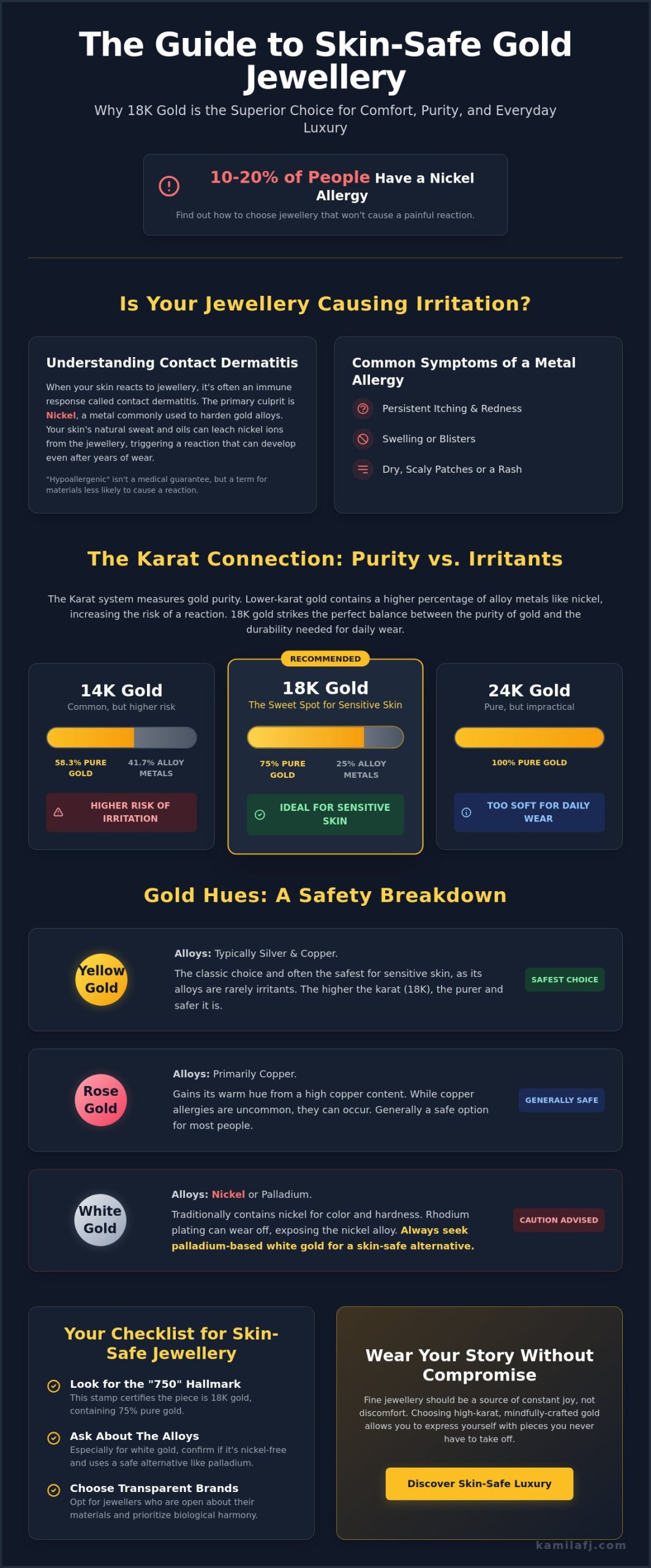
Imagine finding a piece of jewellery that feels like a second skin, only to have the day end with a painful rash or a dull green mark on your finger. For the estimated 10 to 20 percent of people living with a nickel allergy, the search for the best gold for sensitive skin often feels like a series of expensive disappointments. It is disheartening to invest in a beautiful design only to realize it cannot be worn for more than an hour without physical irritation. You deserve to wear your story every day without compromise.
We believe that fine jewellery should be a source of constant joy, not a hidden source of pain. This guide explores why 18K gold stands as the ultimate choice for those who require both timeless elegance and total comfort. You will discover the science behind gold alloys, learn how to navigate misleading hypoallergenic labels, and see why brands like KaMila Fine Jewellery prioritize biological harmony. From the strict standards of EU nickel regulations to the purity of high-karat gold, we are here to help you find pieces you can wear 24/7 with quiet, artistic confidence.
Key Takeaways
- Understand the biological roots of contact dermatitis and what “hypoallergenic” really means for your jewellery collection.
- Learn why 18K gold is the best gold for sensitive skin, balancing 75% purity with the durability needed for daily wear.
- Compare the safety profiles of yellow, white, and rose gold to choose the hue that best suits your skin’s unique needs.
- Identify authentic, skin-safe pieces by searching for the “750” hallmark and other signs of expert craftsmanship.
- Explore how choosing high-karat gold allows you to express your personal story through beautiful pieces you never have to take off.
Understanding Gold Allergies and Sensitive Skin
Choosing a piece of jewellery is an intimate act, a way to mark a milestone or celebrate your unique identity. However, for many, this joy is often overshadowed by the physical frustration of a reaction. Gaining a clear Understanding Metal Allergies is the first step toward reclaiming your ability to wear beautiful things every day. When we talk about “hypoallergenic” jewellery, it’s important to realize this isn’t a medical guarantee of zero irritation. Instead, it refers to pieces crafted from materials that are significantly less likely to cause contact dermatitis. This condition occurs when your immune system reacts to specific metal ions, leading to inflammation that can turn a moment of self-expression into one of genuine pain. Finding the best gold for sensitive skin is about more than just aesthetics; it’s about biological harmony.
The Role of Nickel in Jewellery Alloys
Manufacturers traditionally use nickel because it’s an inexpensive way to harden soft gold or provide the bright, silvery finish seen in many white gold pieces. While it serves a functional purpose for the maker, it’s the primary culprit for the wearer. As you wear a piece, your skin’s natural oils and sweat can leach nickel ions from the metal over time. This slow release is why a ring might feel fine for an hour but cause a reaction by the evening. It’s also why you’ll see a distinction between “nickel-free” and “nickel-compliant.” While the EU has strict limits on nickel release, other regions lack federal regulations, making it vital to choose brands that are transparent about their alloy compositions.
Symptoms of a Metal Allergy
A metal allergy doesn’t always appear as a sudden, dramatic rash. More often, it manifests as subtle redness, persistent itching, swelling, or dry, scaly patches where the jewellery touches your skin. Interestingly, these reactions can sometimes surface after years of wearing the same piece without issue. This happens because your body can develop a sensitivity over time, eventually reaching a threshold where it no longer tolerates the alloy. If you notice these signs, it’s a clear signal from your body. While a dermatologist can provide a formal diagnosis, the most effective path forward is often moving away from base-metal alloys and toward high-purity gold that respects your skin’s delicate balance. Your sensitivity shouldn’t be a barrier to luxury; it should be the reason you choose better, more thoughtful craftsmanship.
The Karat Connection: Why 18K Gold is the Gold Standard
To understand why 18K is widely considered the best gold for sensitive skin, we must first look at the mathematical artistry of the karat system. Pure gold, known as 24K, is a singular element of breathtaking warmth and brilliance. However, in its pure state, gold is remarkably soft. It yields easily to pressure, making it impractical for the delicate prongs of a ring or the intricate clasp of a bracelet. To give jewellery the strength it needs to accompany you through life’s daily moments, artisans blend pure gold with other metals to create durable alloys.
The karat number tells you exactly how much pure gold is in that blend. While 10K and 14K gold are common in mass-market jewellery, they rely heavily on base metals to make up the bulk of the piece. Nickel, often used in these lower-karat alloys, is a common cause of allergic contact dermatitis. By choosing 18K gold, you are opting for a composition that is 75 percent pure gold. This high ratio leaves only 25 percent for alloy metals, significantly reducing the presence of potential irritants while maintaining the luxurious weight and deep glow that only high-purity gold can provide.
14K vs. 18K Gold for Sensitivity
The choice between 14K and 18K gold is more than just a matter of price; it is a choice for your skin’s long-term health. 14K gold contains only 58.3 percent pure gold, meaning nearly half of your jewellery is made of other metals. For those with reactive skin, that extra 16.7 percent of pure gold found in 18K pieces acts as a protective margin. It creates a more “biologically quiet” environment against your skin. Ultimately, 18K gold is the sweet spot for skin-safe luxury, offering a high-purity barrier without the extreme fragility of 24K gold.
The Durability Myth of High-Karat Gold
A common misconception suggests that 18K gold is too delicate for an active lifestyle. While it is true that higher gold content makes the metal slightly more malleable than 14K, modern artisanal techniques have mastered the balance of strength and beauty. At KaMila Fine Jewellery, our handcrafted process ensures that even the most minimalist designs possess the structural integrity required for 24/7 wear. We focus on thoughtful geometry and expert stone setting to ensure your pieces remain as resilient as they are radiant. For those looking to mark a life-changing commitment, our Engagement Rings: The Complete Guide offers deeper insight into selecting a setting that balances high-karat purity with enduring strength. You don’t have to choose between a piece that lasts and a piece that feels good; you can find both in a thoughtfully crafted 18K gold ring or necklace.
Yellow, White, or Rose? Choosing the Safest Hue
While the karat weight determines the purity of a piece, the specific metals blended into the gold define its final shade. Creating the crisp brilliance of white gold or the romantic blush of rose gold is an artistic process that involves introducing copper, silver, zinc, or palladium into the pure gold. For those seeking the best gold for sensitive skin, the choice of color is just as critical as the karat count itself. Beyond the chemistry of the alloy, we believe that true luxury requires a commitment to ethical sourcing. The beauty of your jewellery should be reflected in its history, ensuring that your personal emblems are crafted with respect for both the wearer and the world.
Yellow Gold: The Natural Choice
High-karat yellow gold is often the most straightforward choice for those with high sensitivity. Because it remains closest to its natural state, 18K yellow gold typically relies on a blend of silver and copper rather than nickel to maintain its rich, sun-drenched glow. These traditional alloys are remarkably stable, making them ideal for pieces intended for constant wear. If you’re looking for a versatile way to incorporate this classic hue into your daily story, The Essential Gold Necklace Guide offers inspiration for selecting a piece that balances heritage with modern minimalism.
The White Gold and Rhodium Plating Cycle
White gold presents a unique challenge for the reactive wearer. To achieve its silvery appearance, yellow gold must be “bleached” by alloying it with white metals like nickel or palladium. Most white gold is finished with a layer of rhodium, a rare metal that acts as a temporary protective barrier between the alloy and your skin. However, this plating is not permanent. As it wears away through daily contact, the underlying alloy is eventually exposed. If your white gold contains nickel, you may find that a ring that was once comfortable suddenly causes irritation after a few months of wear. Regular maintenance of the rhodium finish is essential for skin safety, though choosing palladium-based white gold is a more permanent solution for those who prefer cool tones.
Rose Gold and Copper Sensitivity
The evocative, warm tone of rose gold is achieved through a higher concentration of copper. While copper is a common metal, it is not a universal allergen in the same way nickel is. Most people who react to “mystery metals” are actually reacting to nickel impurities, not the copper itself. However, a small percentage of individuals do have a genuine copper sensitivity. If you love the warmth of rose gold but have reactive skin, 18K is your best ally. Because it contains 75 percent pure gold, the copper content is significantly lower than in 14K or 10K versions. This high-purity ratio offers a safer, more comfortable way to enjoy this modern palette without compromising on your skin’s health.
How to Shop for and Maintain Skin-Safe Jewellery
Finding the right piece of jewellery requires a bit of detective work. Many brands use the term “hypoallergenic” as a broad marketing label rather than a technical standard, which can lead to frustrating and painful results. To find the best gold for sensitive skin, you have to look past the display case and examine the metal’s DNA. While gold-plated or vermeil pieces are tempting for their price point, they often carry a hidden risk. These items feature a microscopic layer of gold over a base metal that may contain nickel or brass. As that layer wears away, your skin is exposed to the very irritants you’re trying to avoid. Investing in solid 18K gold ensures that the metal touching your skin today is the same high-purity gold that will be there years from now.
Reading Hallmarks and Certifications
The most honest part of any ring or necklace is the hallmark hidden on the inside of the band or near the clasp. When you’re searching for skin-safe luxury, look for the “750” stamp. This number is a global certification that the piece contains 750 parts of pure gold per 1000, or 75 percent. This high concentration is what provides the safety margin your skin needs. Choosing transparent, artisanal designers allows you to verify that the remaining 25 percent of the alloy is made of high-quality metals like silver or palladium rather than reactive fillers. It’s about knowing exactly what you’re putting against your body.
Cleaning Your Jewellery for Skin Health
In some cases, what feels like a sudden metal allergy is actually a reaction to trapped debris. Lotions, soaps, and dead skin cells can build up inside stone settings or under a wide band, creating a breeding ground for bacteria. This buildup can cause redness and itching that mimics a traditional allergy. Keeping your 18K gold pieces clean is a vital part of skin care. You can find a gentle, step-by-step process in our guide on How to Clean Your Fine Jewelry at Home. A routine soak in warm water with a touch of mild soap ensures that your jewellery remains as hygienic as it is beautiful.
Special Considerations for New Piercings
The healing phase of a new piercing is when your skin is most sensitive. During the initial 6 to 12 months, the skin is forming a delicate new barrier, and any contact with low-quality alloys can lead to chronic inflammation. This is why 18K gold is the gold standard for healing. It doesn’t leach toxins into the skin, allowing your body to focus on recovery rather than fighting off irritants. If you’re considering a new addition to your look, The Art of the Ear Piercing provides essential insights into placement and long-term healing. Choosing high-purity gold from the start means you can enjoy your new piercing without the distraction of discomfort. Ready to find your next forever piece? Explore our collection of handcrafted 18K gold earrings and rings designed for total comfort.
KaMila Fine Jewellery: Handcrafted Comfort and Artistry
Jewellery is more than a simple accessory; it is an intimate expression of your journey and a reflection of your inner world. At KaMila Fine Jewellery, we believe that this expression should never be limited by physical discomfort. While many jewelers offer high-purity metals as a premium upgrade, we have made 18K gold our baseline standard. This commitment ensures that every piece we create is inherently designed for the skin’s health. By blending modern minimalism with the rich heritage of traditional Israeli craftsmanship, we create pieces that feel as light and natural as a second skin. Choosing the best gold for sensitive skin shouldn’t feel like a compromise between health and style; it should be a celebration of both.
The 18K Gold Difference at KaMila
The distinction between mass-produced items and handcrafted artistry is particularly vital for those with metal sensitivities. In large-scale factories, cross-contamination with base metals like nickel can occur during the casting process. Our handcrafted approach allows for total control over the alloy’s purity from start to finish. We focus on high-purity 18K gold because it provides a stable, non-reactive foundation for daily wear. This choice allows us to create designs that are both resilient and refined. Our use of 18K gold mirrors the duality of strength and delicacy found in the remarkable individuals who wear our pieces. Whether it is a pair of everyday studs or a statement ring, the focus remains on providing a biologically harmonious experience that lasts a lifetime.
Conscious Luxury: Lab Diamonds and Ethical Gold
We understand that our clients are as conscious of their impact on the world as they are of the materials touching their skin. This is why we pair our hypoallergenic 18K gold with ethically sourced stones. The brilliance of Lab Diamonds offers a stunning, sustainable alternative that complements a clean, skin-safe lifestyle. These stones possess the same physical and chemical properties as mined diamonds but come with a transparent history. For those with highly specific requirements, such as a need for palladium-based white gold or a particular copper-free alloy, our custom jewelry services allow us to tailor the metal’s DNA to your unique needs. This bespoke approach ensures that your piece is a perfect fit for both your aesthetic and your biology.
Embrace Your Story with Skin-Safe Luxury
Your relationship with jewellery should be an effortless source of joy, not a daily negotiation with discomfort. We’ve seen how 18K gold serves as the best gold for sensitive skin, providing a high-purity barrier that allows you to wear your most cherished pieces 24/7. Whether you choose the timeless warmth of yellow gold or the modern blush of 18K rose gold, the key lies in prioritizing quality over mass-produced convenience. By looking for the 750 hallmark and maintaining a simple care routine, you can protect both your investment and your skin’s health.
KaMila Fine Jewellery is dedicated to this fusion of art and well-being. Our collections are expertly crafted in Israel, using our high-purity 18K gold standard and sustainable lab-grown diamonds to create emblems that are as ethical as they are beautiful. We believe that true luxury is found in the objects that empower you to feel like your best self, without compromise. Explore KaMila’s Handcrafted 18K Gold Collection today and discover a world where high-end craftsmanship meets total biological harmony. You deserve to wear your story with radiant, lasting comfort.
Frequently Asked Questions
Is 14K or 18K gold better for sensitive skin?
18K gold is significantly better for sensitive skin because it contains 75 percent pure gold. In contrast, 14K gold is only 58.3 percent pure, meaning nearly half the piece is made of alloy metals like nickel or copper. Choosing 18K provides a higher purity barrier that respects your skin’s delicate balance while maintaining the durability needed for daily wear. It is the gold standard for those who prioritize long-term comfort and biological harmony.
Can you be allergic to pure 24K gold?
While rare, it is possible to be allergic to pure 24K gold. Most people who experience irritation are actually reacting to the alloy metals mixed with the gold, such as nickel. However, a 2001 study of over 4,000 individuals found that about 9.5 percent tested positive for a genuine gold allergy. If you react to high-purity 18K or 24K pieces, it’s best to consult a dermatologist for a patch test to identify your specific trigger.
Is rose gold hypoallergenic?
Rose gold can be hypoallergenic, provided it is high-karat and you don’t have a specific copper sensitivity. The romantic blush comes from a blend of gold and copper. Choosing 18K rose gold is the best gold for sensitive skin in this palette because it contains 75 percent pure gold and only 25 percent alloy. This lower copper-to-gold ratio makes it much safer than 10K or 14K alternatives for most reactive individuals who want to wear their story daily.
What should I do if my wedding ring starts causing a rash?
First, remove the ring to allow your skin to heal completely. The rash might be caused by a developed metal allergy or “wedding ring dermatitis,” which occurs when soap and bacteria become trapped under the band. Clean your ring thoroughly with mild soap and warm water to remove irritants. If the rash persists after cleaning and healing, your ring’s alloy might contain nickel, and you may need to consider a high-purity 18K gold replacement for 24/7 comfort.
Is white gold always made with nickel?
Not all white gold contains nickel. While nickel was traditionally used to “whiten” yellow gold, many artisanal designers now use palladium as a hypoallergenic alternative. Palladium belongs to the platinum family and is much kinder to the skin. When shopping for white gold, always ask the jeweler if the alloy is nickel-free or palladium-based. This ensures your jewellery meets your skin’s needs without relying on temporary fixes like plating that can wear away over time.
How can I tell if a piece of jewelry is nickel-free?
Identifying nickel-free jewellery requires looking for specific hallmarks and asking for material transparency. In the United States, there is no federal law defining “nickel-free,” so the term can be used loosely. Look for the “750” stamp, which indicates 18K gold and a lower likelihood of irritants. Trustworthy brands will be open about their alloy compositions and should be able to confirm if their pieces are nickel-free or nickel-compliant according to strict standards like those found in the EU.
Can I wear 18K gold in a new ear piercing?
18K gold is an excellent choice for new ear piercings. During the healing phase, which can last 6 to 12 months, your skin is highly vulnerable to infection and irritation. High-purity gold is stable and non-reactive, allowing the piercing to heal without the interference of leaching metal ions. Avoid costume jewellery or low-karat gold during this critical time, as they often contain nickel that can lead to chronic inflammation and painful earlobe infections.
Does rhodium plating make jewelry hypoallergenic?
Rhodium plating acts as a temporary hypoallergenic barrier. It is a member of the platinum family and is naturally nickel-free, providing a crisp finish and a protective layer over the underlying metal. However, this plating eventually wears off through daily friction and contact with skin oils. Once the plating thins, your skin will be exposed to the base alloy. For long-term comfort, it is safer to choose a solid 18K gold foundation rather than relying solely on a thin surface layer.
Related Posts
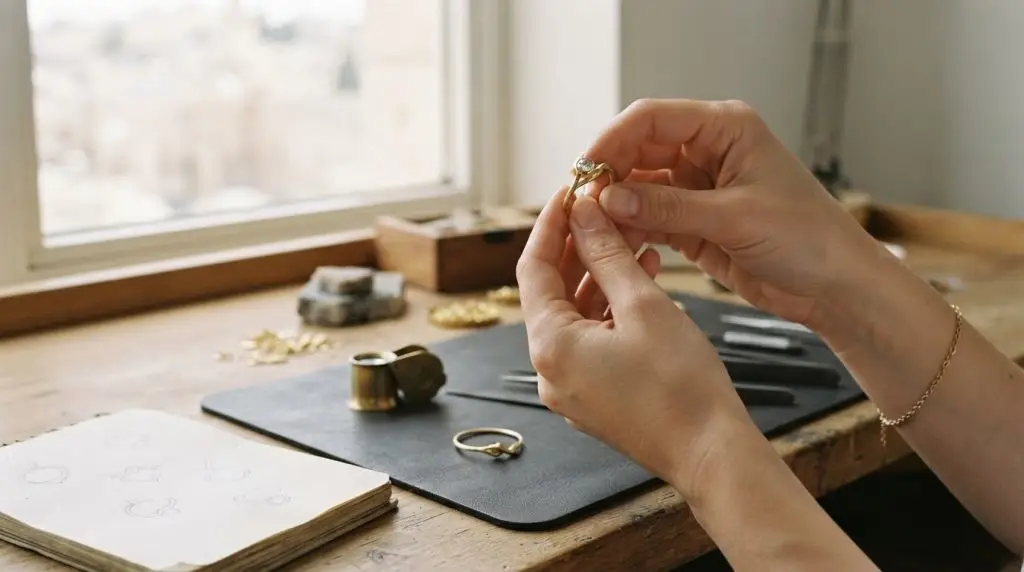
Creating a Ring That Symbolizes a Personal Achievement
-
Posted by
מילה קלר
What if the ring that marks your biggest achievement is subtle enough to feel like you, not a trophy? Creating a ring that symbolizes a personal…
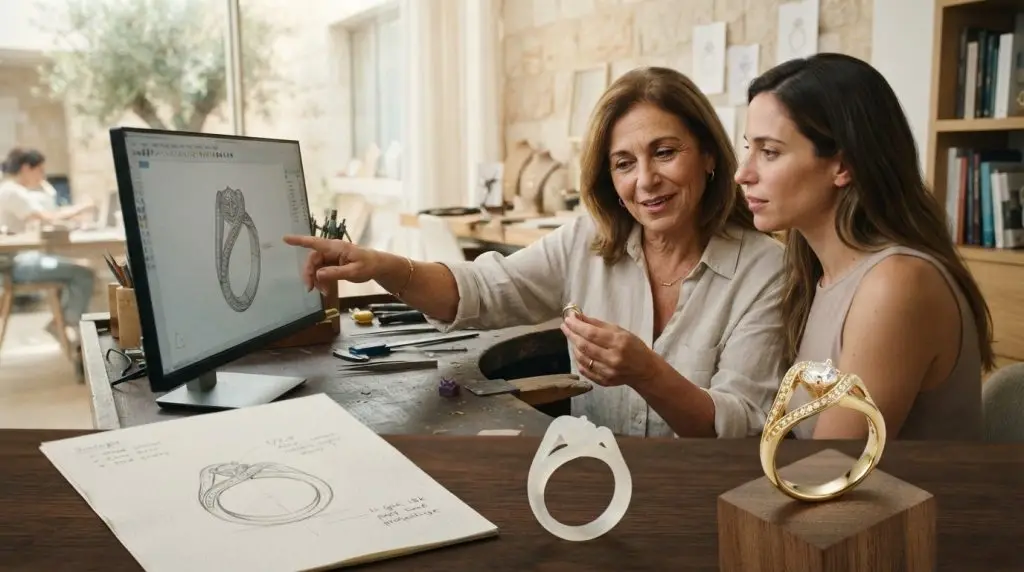
From Sketch to Sparkle: Ensuring the Final Piece Matches Your Jewelry Design
-
Posted by
You’ve spent weeks dreaming of a ring that captures your story, but as you look at the artist’s rendering, a small doubt creeps in. Will that…
Repurposing Heirloom Stones into Modern Custom Jewelry: The Complete 2026 Guide
-
Posted by
What if keeping an inherited ring tucked away in a dark jewelry box isn’t protecting your family history, but silencing it? It’s completely natural…
Designing a Custom 18k Gold Ring: 2026 Bespoke Guide
-
Posted by
What if the most exquisite jewelry you ever own isn’t reserved for formal galas, but crafted to enrich your daily life? When you start exploring…
Red Flags When Choosing a Custom Jewelry Designer: A 2026 Guide to Protecting Your Vision
-
Posted by
Imagine spending months dreaming of a bespoke 18k gold ring, only to open the velvet box and find a piece that feels like a generic retail cast…
Jewelry That Makes Me Feel Protected and Strong: A Guide to Modern Talismans
-
Posted by
Most people view a necklace or a ring as a simple finishing touch, but for the modern woman, it’s often the first layer of emotional armor she puts…
How to Stack Rings: The Art of Curating Your Personal Story in 18K Gold
-
Posted by
What if your jewellery box wasn’t just a collection of objects, but a living timeline of your most cherished milestones? You’ve likely looked at a…
Minimalist Gold Rings: A Guide to Curating Your Timeless 18K Collection
-
Posted by
Your jewelry shouldn’t have an expiration date. Too many of us have felt the frustration of a cherished piece tarnishing or causing skin irritation…
Getting a Better Price Than Big Brand Jewelers in Israel: The Insider’s Guide 2026
-
Posted by
That iconic logo on a shopping bag in a Tel Aviv mall might feel like a mark of quality, but it’s often the most expensive way to buy a memory. When…

18k Gold Minimalist Bracelets: The Ultimate Guide to Timeless Everyday Luxury
-
Posted by
True minimalism isn’t about having less; it’s about requiring more from the few pieces you choose to wear every day. If you’ve ever felt the…

18k Gold Stud Earrings: The Ultimate Guide to Everyday Luxury
-
Posted by
Why should the jewelry you wear every single day be the piece that irritates your skin or loses its radiance before the season even turns? It’s a…

18k Gold Jewelry Care: Preserving Modern Heirlooms
-
Posted by
Is your most cherished jewelry tucked away in a dark velvet box, waiting for a “special enough” occasion that never quite arrives? Many women…