
Blog
Are Lab Grown Diamonds a Good Investment? The 2026 Guide to Modern Heirlooms
What if the most meaningful piece in your jewelry box isn’t defined by a heritage brand name, but by the story it tells and the integrity of its materials? As you look toward your next milestone, you’re likely wondering: are lab grown diamonds a good investment for your future? It’s a natural question to ask in 2026, especially as the landscape of luxury shifts away from traditional scarcity toward conscious craftsmanship. Many of us fear that these stones might lose their value like the costume jewelry of the past, or we feel confused about whether 18k gold truly makes a difference compared to 14k alternatives.
We agree that your jewelry should feel as substantial as the moments it represents. In this guide, you’ll learn why the value of modern jewelry now depends on a “Triple Threat” of high-purity 18k gold, timeless minimalist design, and ethical transparency. We’ll show you how to identify high-quality 18k gold pieces and understand the relationship between cost-per-wear and long-term resale value in the Israeli market. You’ll discover how to build a collection of modern heirlooms that celebrate your identity while maintaining a grounded sense of worth and artistry.
Key Takeaways
- Understand the distinction between intrinsic melt value and sentimental worth to ensure your jewelry remains a meaningful part of your personal story.
- Discover why 18k gold provides a secure “value floor” for your collection, offering superior purity and durability compared to 14k options.
- Learn how to determine if are lab grown diamonds a good investment by analyzing total capital retention and the joy of higher carat weights.
- Identify the minimalist design principles that help you avoid short-lived trends and maintain the aesthetic value of your pieces for decades.
- Gain a practical framework for building a jewelry collection that balances modern ethical standards with the timeless appeal of authentic craftsmanship.
What Determines if Jewelry Holds Its Value in 2026?
Value in the jewelry world isn’t a single, static number. In 2026, we look at worth through three distinct lenses: melt value, resale value, and sentimental value. Melt value represents the raw market price of the materials, primarily the gold. Resale value is what a secondary buyer is willing to pay for the finished design, while sentimental value is the intangible weight of a piece that becomes a family treasure. When people ask are lab grown diamonds a good investment, they’re usually seeking a harmony between these three categories. The modern luxury landscape has shifted toward ethical materials, making transparency a core driver of demand. We no longer buy just for scarcity. We buy for the integrity of the story and the artistic soul of the piece. Craftsmanship quality directly impacts the long-term structural integrity, ensuring the piece survives for generations.
Intrinsic Material Value: The Gold Foundation
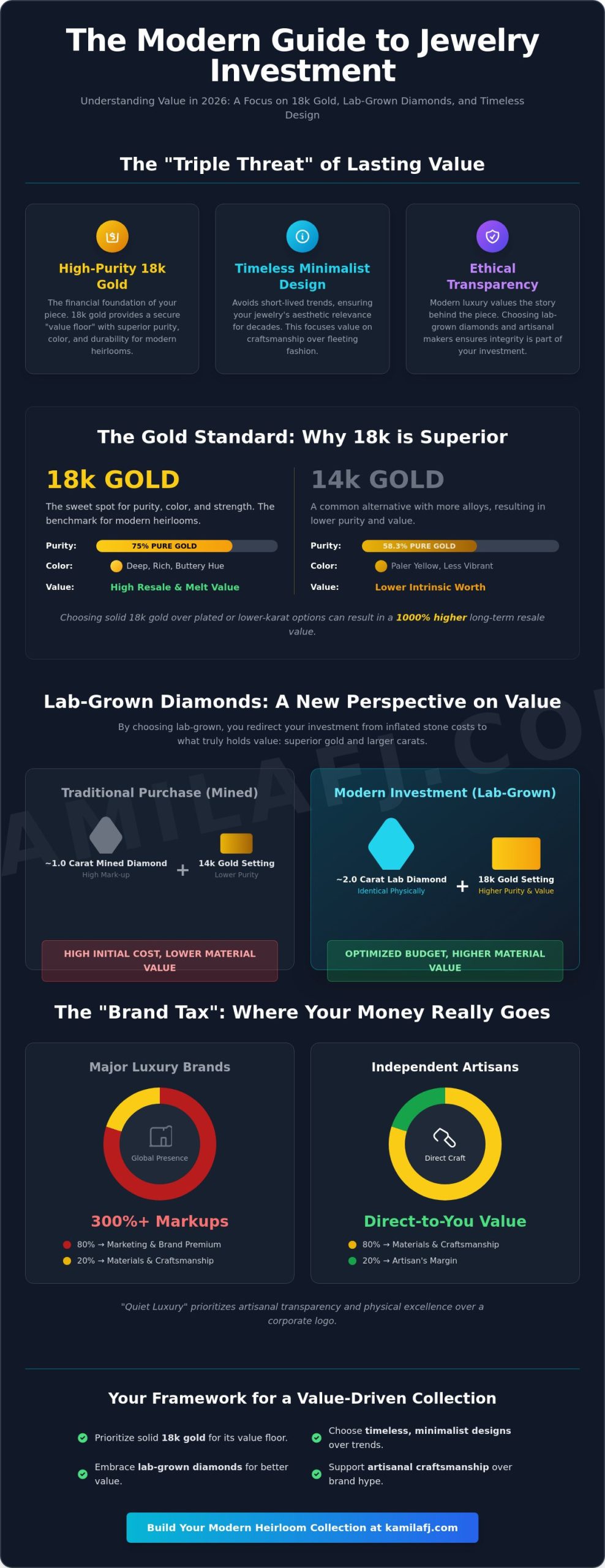
The purity of your metal acts as a definitive financial price floor for your collection. While gemstone trends might shift, the value of gold remains a consistent pillar in the Israeli market. We view 18k gold as the global benchmark for high-value jewelry because it provides a rich, buttery hue and superior durability. In 2026, gold serves as a stable hedge against economic volatility, ensuring that a significant portion of your investment is secured by the physical weight of the ₪ value. By understanding what a lab-grown diamond is, you can focus your budget on this high-purity gold foundation. This approach prioritizes long-term structural integrity over the inflated costs of mined stones. Gold continues to be a reliable store of wealth, especially when verified through proper hallmarking and certification.
The ‘Brand Premium’ vs. ‘Artisanal Value’ Debate
Choosing between a major luxury house and an independent artisan is often a choice between marketing and materials. Large brands frequently charge markups of 300% or more to sustain their global presence. This “brand tax” rarely translates to better resale value for the materials themselves. The rise of “Quiet Luxury” has redirected attention toward artisanal transparency and high-end craftsmanship. Independent designers like KaMila Fine Jewellery offer a more direct connection to the craft, where your ₪ investment goes toward the quality of the gold and the precision of the setting. This shift ensures that your jewelry retains value through its physical excellence. It becomes a reflection of your identity rather than a temporary trend dictated by a corporate logo. Artisanal transparency is now a primary value driver for the modern, conscious consumer.
The 18k Gold Standard: Why Purity Matters for Resale
While the diamond captures the light, the gold captures the value. If you’re asking are lab grown diamonds a good investment, you must look closely at the setting. In the Israeli market, the “metal floor” refers to the intrinsic worth of the gold that remains constant, regardless of the stone’s origin. Choosing solid 18k gold isn’t just an aesthetic preference; it’s a strategic decision for your collection’s longevity. Unlike gold-plated items that lose their luster and value almost instantly, solid gold pieces retain a resale worth that is often 1000% higher over the long term. This is why hallmarking is vital. A clear stamp of purity from a recognized authority ensures that future buyers recognize the ₪ value of your piece immediately.
The aesthetic appeal of 18k gold is unmatched. It possesses a deep, rich glow that lower-karat metals simply cannot replicate. 24k gold is often too soft for the intricate work of fine jewelry, making it prone to scratches and warping. Conversely, 14k gold contains more base metals, which can lead to a paler color and eventual tarnishing. 18k gold strikes the perfect balance. It offers the high purity required for significant value retention while maintaining the structural integrity needed to protect your stones for decades.
18k Gold: The Sweet Spot for Modern Heirlooms
Technically, 18k gold consists of 75% pure gold. This specific ratio allows for a material that is both radiant and resilient enough to withstand the beautiful chaos of daily life. Metal-heavy pieces, such as solid gold bracelets, are among the strongest value-holders in any collection. Because they rely less on the fluctuating trends of gemstones and more on the raw weight of the precious metal, they provide a reliable sense of security. This high purity also prevents the skin irritation and metal fatigue often associated with lower-quality alloys.
Yellow, White, and Rose Gold: Market Liquidity
Classic yellow gold continues to dominate the 2026 resale market. Its timeless nature ensures high liquidity, meaning it’s easier to find a buyer who values the piece’s intrinsic materials. A high-quality gold necklace acts as a portable vessel of melt value security. Whether you prefer the warmth of yellow gold or the crispness of white gold, ensuring color consistency is essential. High-purity 18k white gold, for instance, maintains its sophisticated look longer than 14k versions, protecting its future desirability. If you’re looking to start your own journey into meaningful luxury, you might explore our custom jewelry options designed to celebrate your unique story.
Minimalism and Timelessness: Avoiding the ‘Trend Trap’
Choosing a piece of jewelry is often an emotional journey, but it requires a grounded perspective on design longevity. Avant-garde or “trendy” pieces frequently lose up to 70% of their value within just two seasons. This happens because high-fashion designs are often tied to a fleeting cultural moment, making them difficult to resell once the aesthetic cycle moves on. When evaluating if are lab grown diamonds a good investment, the design choice is just as critical as the stone itself. A modern minimalist aesthetic relies on universal geometric shapes that maintain demand across generations. These clean lines ensure that your ₪ investment doesn’t become a relic of a specific year, but remains a relevant expression of grace for decades.
The financial logic of minimalism also extends to the “Cost-Per-Wear” calculation. We believe that high-end craftsmanship is for making daily life special, not just for formal occasions. A piece that sits in a safe gathers no emotional or practical interest. By choosing versatile, understated designs, you increase the frequency of use. This effectively lowers the cost of the item over its lifetime. Daily elegance is a superior investment compared to occasional wear because it integrates into your personal identity, becoming a consistent part of your story rather than a hidden asset.
The Power of the Solitaire and the Band
Resale liquidity is highest for designs that offer broad appeal. This is why engagement rings with clean lines and classic solitaire settings remain the gold standard for value retention. Minimalist bands and sleek settings are easier to resell because they don’t require the buyer to share a niche or “over-designed” taste. By avoiding overly ornate details that date a piece, you ensure the focus stays on the quality of the 18k gold and the brilliance of the diamond. This simplicity acts as a safeguard, protecting the secondary market desirability of your collection.
Artisanal vs. Mass Produced Value
In 2026, we see a rising collector value for “small batch” handcrafted jewelry. Mass-produced items often carry a hidden cost of generic manufacturing that adds nothing to the piece’s long-term worth. Conversely, independent artisanal pieces often carry a “collector’s premium.” When a piece is part of a limited run or features custom design elements, it possesses a rarity that mass-market brands cannot replicate. This uniqueness preserves value through personal meaning and scarcity. It transforms a simple accessory into a modern heirloom that carries the authentic soul of the artisan who created it.
Lab-Grown Diamonds: A New Perspective on Value Retention
When discussing the secondary market, many people focus solely on the percentage of resale value. It’s time to address the “resale elephant” in the room. While natural diamonds typically resell for 40-60% of their retail price, lab-grown stones often see a return of 10-40%. However, this percentage doesn’t tell the whole story. If you’re asking are lab grown diamonds a good investment, you must look at the total capital retained. In 2026, lab-grown diamonds are 70-90% less expensive than natural stones of identical quality. By spending ₪4,000 on a lab-grown stone instead of ₪25,000 on a natural one, you keep ₪21,000 in your pocket from day one. Even with a lower resale percentage, your total dollar loss is significantly smaller. This “opportunity cost” reframe is why modern buyers view lab diamonds as a smarter way to manage their initial capital.
The secondary market for these stones is also maturing. As consumer perception shifts, certified lab-grown jewelry is finding a steady audience of buyers who prioritize size and quality over the traditional rarity narrative. This is particularly true in Israel, where savvy collectors value the ability to secure a 2.5-carat stone for the price of a much smaller mined diamond. The value isn’t just in the potential for resale; it’s in the immediate joy of wearing a piece that reflects your highest aspirations without compromising your financial boundaries.
Brilliance with a Conscience: The Ethical ROI
The return on investment for lab diamonds extends far beyond the financial. There is a profound psychological and social value in choosing sustainable luxury. Modern consumers in 2026 prioritize ethical origin, viewing conflict-free stones as a necessary standard rather than a bonus. This ethical premium ensures your piece remains desirable to the growing number of conscious buyers. To protect this value, always ensure your stones are verified with IGI or GIA certificates. These documents provide the transparency needed for future buyers to trust the quality and origin of your heirloom. This clarity allows you to allocate more of your budget toward high-purity 18k gold settings, which we’ve already established as the primary value holder in any fine jewelry piece.
The Future of Diamond Value
Perception has evolved rapidly, with approximately two-thirds of Gen Z buyers now opting for lab-grown stones. This shift in demand is narrowing the gap between “mined” and “made.” When building your collection, focus on classic cuts like round or emerald. These shapes maintain universal appeal and are far more marketable in the secondary market than niche, “trendy” cuts. Because the 18k gold setting provides the “metal floor” for the item’s worth, the diamond becomes the crowning glory of a secure investment. If you’re ready to design a piece that balances brilliance with financial wisdom, you can shop our collection of gold rings to find your perfect match.
Creating Your Value-Driven Jewelry Collection
Building a jewelry collection is a deliberate act of curating your personal history. It’s about finding the balance between artistic expression and financial logic. When you ask yourself if are lab grown diamonds a good investment, the answer lies in how you manage the collection over time. By following a structured approach, you can ensure that every ₪ spent contributes to a legacy of beauty and security. A value-driven collection isn’t just a group of accessories. It’s a portfolio of meaningful objects that retain their worth through quality and care.
- Step 1: Prioritize 18k solid gold for metal floor security. As we’ve explored, the high purity of 18k gold provides a reliable financial baseline that lower-karat alloys cannot match.
- Step 2: Choose symbolic pieces. Select items that act as Ashkenazi jewelry or modern heirlooms. These pieces carry cultural and personal weight that transcends market fluctuations.
- Step 3: Preserve all documentation. Keep your original boxes, purchase receipts, and GIA or IGI stone certificates in a secure place. This documentation is essential for insurance appraisals and future resale transparency.
- Step 4: Maintain structural integrity. Schedule professional cleaning and prong checks at least once a year to prevent stone loss and metal fatigue.
Investing in the Story
The emotional value of a piece often acts as a safeguard against impulsive decisions. Symbolic naming and personal meaning prevent “panic selling” during economic shifts because the item represents a milestone rather than just a commodity. When you select a jewelry store that offers long-term support, you aren’t just buying a product. You’re entering a partnership with an artisan who understands your story. We believe that everyday luxury is the most sustainable way to build a personal heritage. By wearing your investment, you imbue it with life and memory, making it far more precious to the next generation than a stone kept in a dark vault.
Practical Maintenance for Value Preservation
High-purity 18k gold is a soft, noble metal that requires gentle care to maintain its rich luster. You should store your pieces in separate compartments to prevent scratches from harder gemstones. Regular diamond security checks are vital. Even the strongest gold prongs can shift over time, and catching a loose stone early can save you from a significant financial loss. Professional polishing can restore that “like-new” appeal, ensuring your jewelry always looks its best for your daily celebrations or a potential future buyer. By treating your collection with the respect it deserves, you protect the ₪ value of your modern heirlooms for decades to come.
Curating Your Legacy of Light and Gold
Your journey into fine jewelry should be as rewarding as the milestones you celebrate. By prioritizing the “Triple Threat” of 18k solid gold, timeless minimalist design, and ethical transparency, you create a collection that balances financial wisdom with deep personal meaning. We’ve established how the “metal floor” of high-purity gold provides a reliable foundation of worth. The capital saved by choosing lab-grown stones allows you to build a more brilliant collection from day one.
When you evaluate if are lab grown diamonds a good investment, remember that the most enduring value lies in the fusion of quality materials and the personal stories they represent. Choosing pieces that avoid fleeting trends ensures your modern heirlooms remain relevant in twenty years. Jewelry should be an intimate expression of your strength and grace, designed to be worn and cherished every day rather than hidden away in a safe.
Take the next step in building your value-driven collection. Explore KaMila Fine Jewellery’s 18k Gold & Lab Diamond Modern Heirlooms to find pieces handcrafted in Israel. Our collection features 18k solid gold, certified lab-grown diamonds, and modern minimalist aesthetics that empower you to tell your story with quiet confidence and authentic artistry.
Frequently Asked Questions
Does 18k gold jewelry hold its value better than 14k?
Yes, 18k gold jewelry consistently holds a higher intrinsic value because it contains 75% pure gold. In contrast, 14k gold contains only 58.5% gold, with the remainder being alloy metals. When you sell jewelry in Israel, the ₪ value is primarily calculated based on the weight of the pure gold. Choosing 18k ensures a more substantial metal floor for your collection.
Can I resell lab-grown diamond jewelry for a good price in 2026?
You can resell lab-grown pieces, but expect the resale price to be between 10% and 40% of your original purchase. When asking are lab grown diamonds a good investment, it’s helpful to focus on the ₪ capital you save upfront. By paying 70% to 90% less than natural diamond prices, you preserve your wealth from the moment of purchase.
Which jewelry styles have the highest resale value?
Timeless, minimalist styles like solitaire rings and simple gold bands have the highest liquidity in the secondary market. These designs appeal to the widest range of buyers, making them easier to sell quickly. Avoid overly ornate or trend-heavy pieces that can lose appeal as fashion cycles change. A classic 18k gold setting remains a desirable staple regardless of shifting aesthetics.
Is it better to buy gold bars or gold jewelry for investment?
Gold bars are superior for pure financial hedging because they lack the labor and design markups of fine jewelry. However, gold jewelry offers wearable luxury and emotional value that bars cannot provide. If you want to enjoy your investment daily while maintaining a solid material worth, 18k gold jewelry is the perfect balance between an asset and a personal treasure.
Does engraving a piece of jewelry decrease its resale value?
Engraving typically decreases the immediate resale value because it makes the piece highly personal to you. A secondary buyer may need to pay a jeweler to buff out the inscription, which can slightly reduce the metal weight. If you plan to sell the piece later, keep engravings small or in discreet locations where they can be easily removed by a professional.
What is the ‘melt value’ of jewelry and how do I calculate it?
Melt value is the raw market price of the precious metal in your jewelry if it were melted down. You calculate it by multiplying the total weight of the piece by its gold purity percentage, then multiplying that by the current spot price of gold in ₪. This figure represents the absolute minimum value of your piece, excluding any gemstones or artistic labor costs.
Why do some diamond rings lose value immediately after purchase?
Most jewelry experiences retail depreciation similar to a new car leaving the lot. The initial price includes the jeweler’s labor, marketing, and shop overhead, which don’t carry over to the secondary market. By choosing lab-grown stones, you minimize this initial loss because the starting price is significantly closer to the actual production cost of the materials.
How can I tell if a piece of vintage jewelry is worth investing in?
Start by checking for authentic hallmarks and signs of high-quality handcrafted construction under magnification. Look for unique design elements or rare gemstones that aren’t common in mass-produced modern pieces. Authentic provenance or a documented history can also add a collector’s premium to the ₪ value, making it a more secure investment for your family’s future.
Related Posts
Questions to Ask a Jeweler About Their Sourcing Ethics
-
Posted by
מילה קלר
What if “ethically sourced” tells you less than the answer to one careful question? When choosing a piece with personal meaning, it’s natural to want…
Jewelry Design in Haifa: What to Expect in 2026
-
Posted by
If you’re searching “jewelry design consultation in Haifa what to expect,” you may be wondering what to bring, which decisions you’ll need to make,…
From Sketch to Sparkle: Ensuring the Final Piece Matches Your Jewelry Design
-
Posted by
You’ve spent weeks dreaming of a ring that captures your story, but as you look at the artist’s rendering, a small doubt creeps in. Will that…
Repurposing Heirloom Stones into Modern Custom Jewelry: The Complete 2026 Guide
-
Posted by
What if keeping an inherited ring tucked away in a dark jewelry box isn’t protecting your family history, but silencing it? It’s completely natural…
Designing a Custom 18k Gold Ring: 2026 Bespoke Guide
-
Posted by
What if the most exquisite jewelry you ever own isn’t reserved for formal galas, but crafted to enrich your daily life? When you start exploring…
Finding an English-Speaking Custom Fine Jewelry Designer in Israel: A Complete Guide
-
Posted by
Your most cherished jewelry shouldn’t just be an accessory; it’s a piece of your history that deserves to be understood without a translator. When…
How to Convince Your Husband to Upgrade Your Wedding Ring
-
Posted by
What if your wedding ring wasn’t just a relic of who you were when you said “I do,” but a luminous reflection of the woman you’ve become today? Many…
Red Flags When Choosing a Custom Jewelry Designer: A 2026 Guide to Protecting Your Vision
-
Posted by
Imagine spending months dreaming of a bespoke 18k gold ring, only to open the velvet box and find a piece that feels like a generic retail cast…
Jewelry That Makes Me Feel Protected and Strong: A Guide to Modern Talismans
-
Posted by
Most people view a necklace or a ring as a simple finishing touch, but for the modern woman, it’s often the first layer of emotional armor she puts…
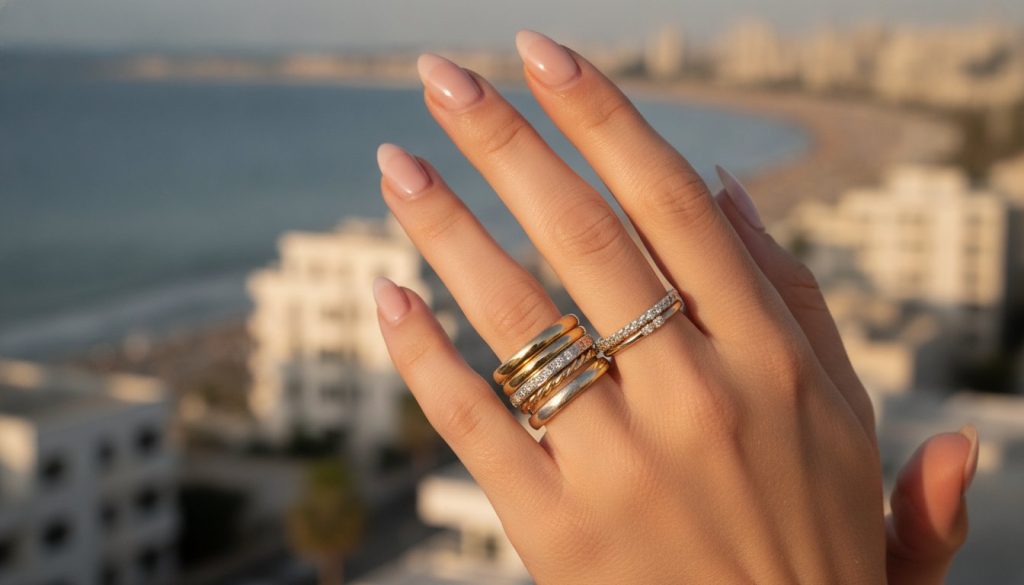
How to Stack Rings: The Art of Curating Your Personal Story in 18K Gold
-
Posted by
What if your jewellery box wasn’t just a collection of objects, but a living timeline of your most cherished milestones? You’ve likely looked at a…
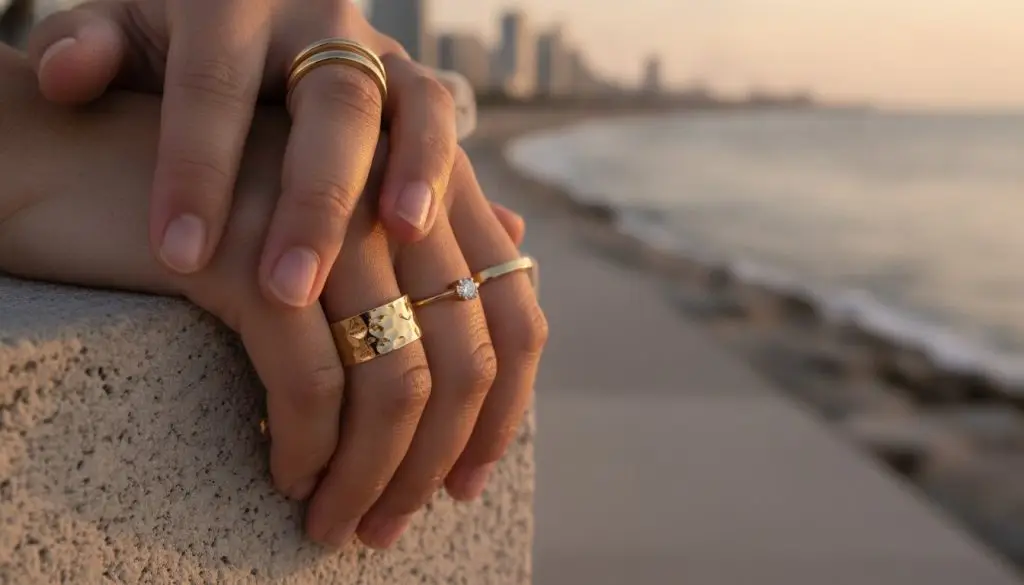
Minimalist Gold Rings: A Guide to Curating Your Timeless 18K Collection
-
Posted by
Your jewelry shouldn’t have an expiration date. Too many of us have felt the frustration of a cherished piece tarnishing or causing skin irritation…
Getting a Better Price Than Big Brand Jewelers in Israel: The Insider’s Guide 2026
-
Posted by
That iconic logo on a shopping bag in a Tel Aviv mall might feel like a mark of quality, but it’s often the most expensive way to buy a memory. When…