
Blog
How to Articulate My Jewelry Idea to a Designer: A Guide to Custom Artistry
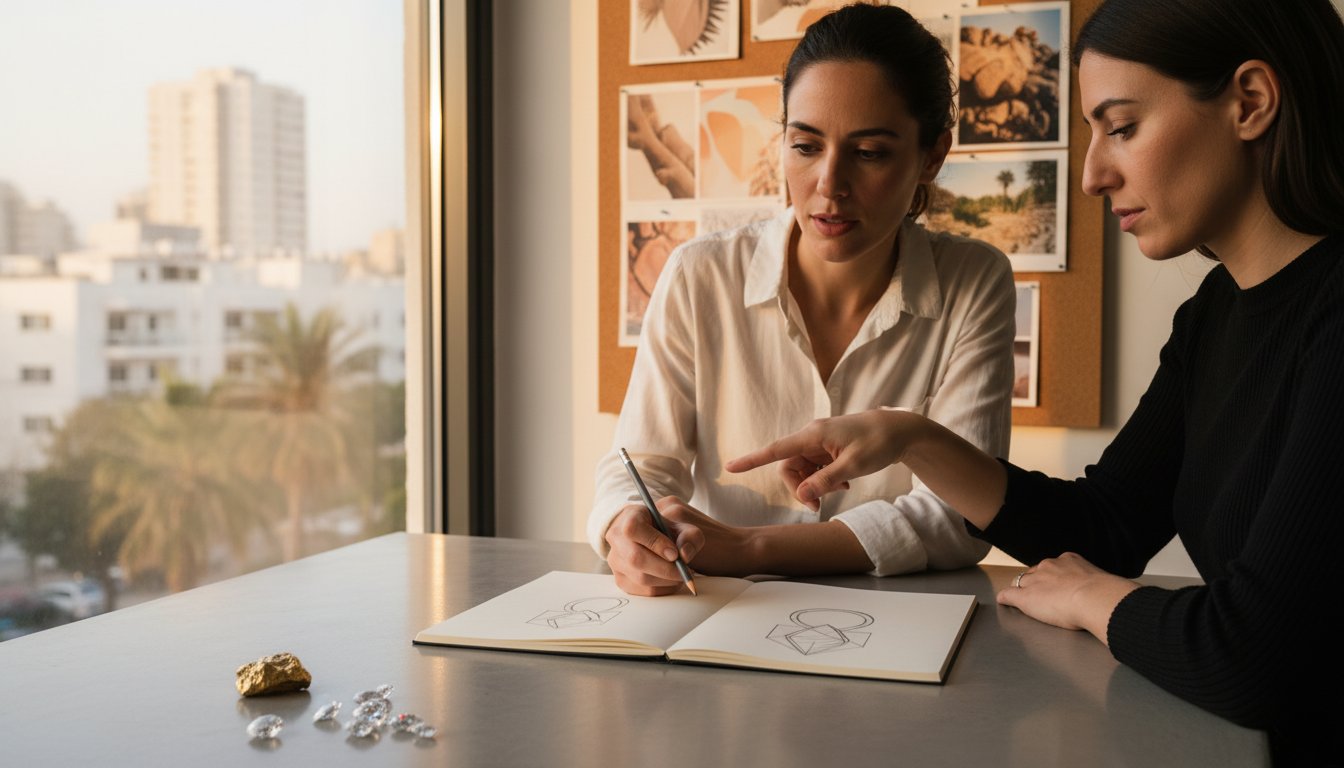
You don’t need to be a professional artist or a gemologist to design a piece that feels like your soul captured in solid gold. Many people hesitate to start a custom project because they fear their lack of technical vocabulary will lead to a costly misunderstanding. It’s common to feel anxious when you realize that learning how to articulate my jewelry idea to a designer involves more than just pointing at a gemstone. You want a personal talisman, but you’re worried the final piece won’t match the vision in your head.
We understand that the most beautiful jewelry begins with a story, not a blueprint. This guide will show you how to translate your vague inspirations into a clear, actionable vision that an artisan can bring to life. We’ll help you navigate the process of building a collaborative relationship while managing practical expectations. You’ll learn how to organize your thoughts, understand the impact of the current $4,600.30 gold spot price on your budget, and see why the $150 to $500 CAD design fee is an investment in your perfect outcome. By the end of this article, you’ll have a communication plan that turns your abstract ideas into a tangible celebration of you.
Key Takeaways
- Define the “why” behind your piece with an emotional brief to ensure your custom jewelry serves as a meaningful personal talisman.
- Curate visual cues through moodboards to communicate your aesthetic preferences without needing any professional drawing or artistic skills.
- Master the language of fine materials by understanding the significance of 18k gold and the sustainable appeal of lab-grown diamonds.
- Learn how to articulate my jewelry idea to a designer by applying the “Daily Life” test to balance your vision with practical wearability.
- Engage in a collaborative, artisan-led journey that transforms your unique story into a handcrafted piece of modern, sophisticated luxury.
Finding the Heart of Your Design: Defining Emotional Intent
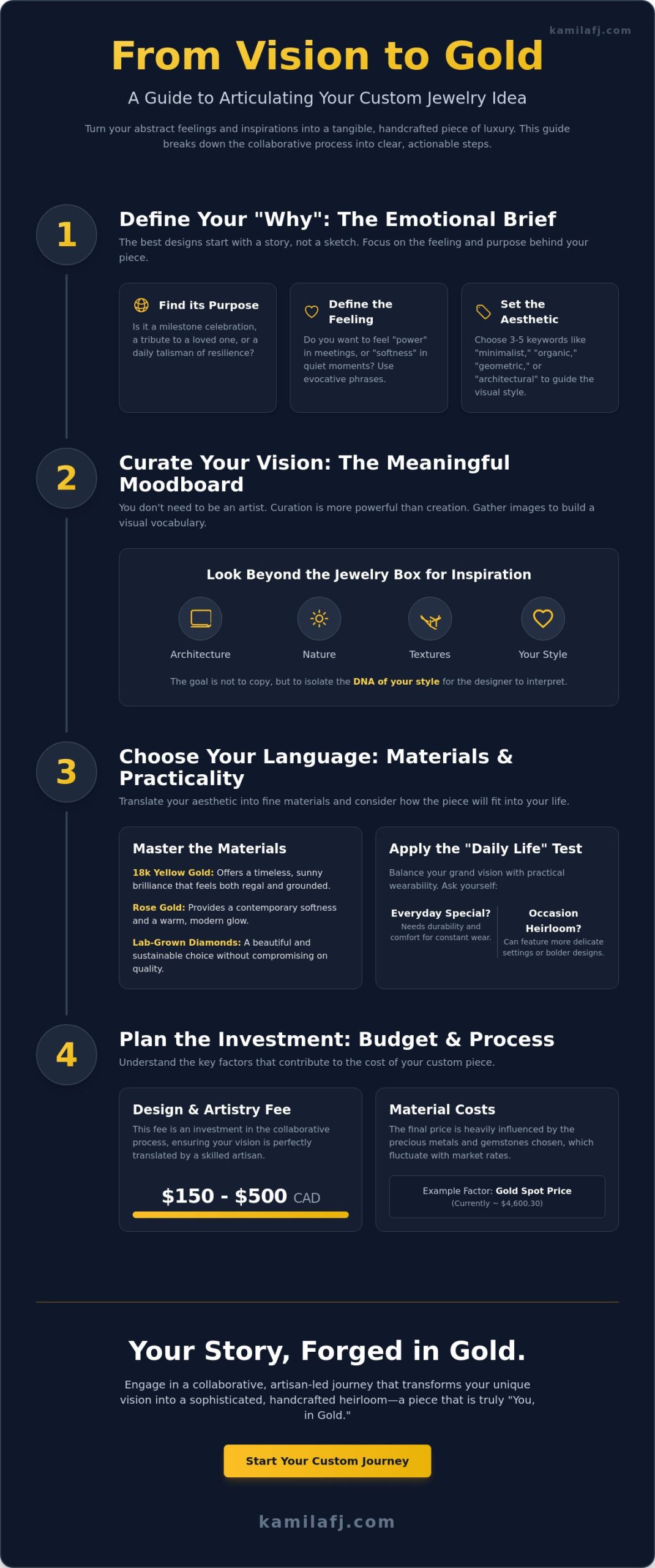
Before you ever look at a stone or pick a metal, you must find the heart of your vision. Most people walk into a consultation thinking they need a technical sketch, but the most successful projects start with an “Emotional Brief.” This isn’t a list of measurements or a professional blueprint. Instead, it’s a curated collection of stories, feelings, and specific purposes that act as a North Star for the artisan. Understanding how to articulate my jewelry idea to a designer begins with identifying the “why” behind the piece. Is this a celebration of a 30th birthday milestone, a tribute to a lost loved one, or a daily talisman to remind you of your own resilience?
Think deeply about your identity and how you want to feel when the gold touches your skin. Fine jewelry is an intimate expression of the wearer. Does this piece need to reflect your “power” during high-stakes boardroom meetings, or your “softness” in quiet, personal moments? We suggest writing a single sentence that defines the core feeling you want the piece to evoke. Phrases like “edgy sophistication,” “fluid grace,” or “structured nostalgia” provide more direction than a simple photograph ever could. This clarity is a vital part of the jewelry design process, ensuring the final creation resonates with your spirit rather than just following a trend.
The Storytelling Approach
Your jewelry shouldn’t just be an accessory; it should be a narrative chapter of your life. Think about the specific chapter this piece represents. Incorporating symbols with deep roots can ground your design in personal history. For example, you might choose a modern, minimalist interpretation of the Magen David to honor your heritage while maintaining a contemporary edge. We often look to our “Beans of Happiness” philosophy, which focuses on celebrating life’s small, meaningful pleasures. Whether it’s a hidden engraving that only you can see or a specific stone placement representing a child’s birth, these narrative details turn a gold ring into a story you wear every day.
Setting the Aesthetic Tone
Once the story is set, you can begin to translate those emotions into a visual language. Choose 3-5 keywords that describe the vibe you’re chasing. Words like “minimalist,” “geometric,” “organic,” or “architectural” help the designer narrow down the infinite possibilities. You should also decide if this is an “every day special” piece or a formal heirloom intended for grand occasions. This choice influences everything from the durability of the setting to the metal choice. Consider the specific “glow” you want; warm rose gold offers a contemporary softness, while classic 18k yellow gold provides a timeless, sunny brilliance that feels both regal and grounded.
Collecting Visual Cues: How to Create a Meaningful Moodboard
You don’t need to be a classically trained artist to bring your vision to life. Many people hesitate to start a custom project because they can’t draw a straight line, but the truth is that curation is more powerful than creation. When you consider how to articulate my jewelry idea to a designer, think of yourself as an editor rather than an illustrator. A professional artisan can interpret a collection of images much more effectively than a shaky sketch. By gathering existing elements you love, you build a visual vocabulary that serves as a bridge between your mind and the designer’s hands.
Digital tools like Pinterest are excellent for this, but don’t overlook the tactile nature of physical clippings from magazines or even photos of textures you find in the world. The goal isn’t to find a piece to copy; it’s to isolate the DNA of your style. This process allows the designer to see the common threads in your taste, whether that’s a preference for hidden details or a love for bold, sculptural forms. It turns a vague “I want something pretty” into a specific, actionable direction.
Beyond Jewelry Inspiration
Look beyond the jewelry box for your visual cues. Often, the most striking custom pieces are inspired by architecture, fashion, or the organic curves of nature. If you’re drawn to minimalism, a photo of a modern building’s clean lines might communicate your taste better than a picture of another ring. Don’t forget to include photos of your own wardrobe and current pieces. This helps the designer curate a unique look that fits seamlessly into your lifestyle. Even simple color swatches can be transformative, helping us source gemstones that evoke the exact mood you desire.
Organizing Your References
Clarity comes from structure. Whether you use a digital board or a physical folder, group your references into specific categories like “Metal Color,” “Stone Setting,” and “Overall Silhouette.” This prevents the inspiration overwhelm that can stall a project. For every image you include, highlight one specific element you admire. You might say, “I love the delicate claw prongs in this photo, but the band is too thick.” This level of detail is a key part of Speaking the Language of Artistry, moving you from vague admiration to a concrete vision. Always identify one “hero” image that represents the ultimate soul of your project.
Remember that your “What I Don’t Like” list is just as important as your favorites. Defining what to avoid creates necessary boundaries for the design process. If you know you dislike high-profile settings or find certain textures too busy, documenting these preferences saves time and ensures the final piece feels like a true reflection of you. If you’re feeling inspired, browsing a collection of custom jewelry can help you identify which silhouettes resonate most with your personal story.
Speaking the Language of Artistry: Translating Ideas into Materials
Once you’ve captured the emotional heart and visual cues of your vision, the next step is translating those abstract feelings into physical substances. Understanding how to articulate my jewelry idea to a designer requires a basic literacy in the materials that will form your talisman. It’s the difference between asking for “a gold ring” and requesting a handcrafted 18k yellow gold band that balances rich, buttery color with the durability needed for daily wear. This stage is where your story gains weight and texture, moving from a moodboard into the tangible world of fine jewelry.
Your choice of setting style acts as the “punctuation” for your design. A bezel setting, which encircles the stone in a thin frame of gold, offers a modern, minimalist look and extra protection for active lifestyles. Conversely, a prong setting is a classic choice that allows maximum light to enter the stone, prioritizing brilliance and a traditional silhouette. These technical details are often refined during The Design Consultation, where an artisan uses their expertise to ensure your aesthetic desires are physically possible and structurally sound.
The Metal and the Glow
In the world of modern heirlooms, 18k gold is our preferred standard. Composed of 75% pure gold, it offers a deeper, more luxurious hue than 14k options while remaining resilient enough for a lifetime of stories. With the spot price of gold sitting at approximately $4,600.30 per troy ounce as of May 2026, choosing the right alloy is both an aesthetic and financial decision. Yellow gold provides a timeless, sunny warmth, while rose gold offers a romantic, contemporary glow that complements many skin tones. Handcrafted pieces carry a distinct energy compared to mass-produced items; you can feel the intention in the weight and the slight, beautiful variations that prove a human hand shaped the metal.
Stones and Symbols
The centerpiece of your design is often a gemstone that embodies a specific feeling or milestone. For a conscious approach to luxury, many now choose a lab diamond, which provides the same chemical brilliance as a natural stone at a more accessible price point. In 2026, a high-quality 1-carat lab-grown diamond typically ranges from $725 to $1,500, allowing you to prioritize “sparkle” and scale over rigid technical specifications. You can also integrate symbolic elements like birthstones or cultural motifs to ground the piece in your heritage. The goal is to focus on how the stone moves and catches the light, ensuring it serves as a bright, daily reminder of the intent you defined at the start of this journey.
The Design Consultation: Communicating Practicality and Wearability
The most critical part of learning how to articulate my jewelry idea to a designer is passing the “Daily Life” test. While a sketch might look beautiful on paper, fine jewelry is meant to be lived in. It’s an intimate expression of your personality that should move with you through every part of your day. During your consultation, we’ll discuss if a design is too high-profile for your active lifestyle or if a delicate band can truly support a heavy center stone. We balance the artistry of your vision with the mechanics of jewelry making to ensure your piece doesn’t just look stunning, but lasts for generations.
Setting a budget range early is not about limitation; it’s about empowerment. It allows the designer to source the highest quality materials within your comfort zone. In 2026, the general cost for custom jewelry often falls between $1,150 and $5,700, with roughly 30% to 40% of that total dedicated to craftsmanship and labor. Understanding that a CAD model fee typically ranges from $150 to over $500 helps you see the value in the precision of the design process. Transparency here builds the trust necessary for a collaborative relationship, moving you closer to your “You, in Gold” moment.
Questions to Ask Your Designer
Preparation is the key to confidence. Don’t be afraid to dig into the technical side of your vision. You should ask, “How will this setting hold up to my daily activities?” and “Can we see a 3D render or a wax model before casting?” These steps prevent surprises and ensure the scale is exactly what you imagined. If you’re designing for a partner, ask, “How can we incorporate engagement ring storytelling into this specific design?” to make sure the piece carries the weight of your shared history.
Refining the Details
The final stage of articulation involves the small details that make a piece truly wearable. This includes precise ring sizing and discussing “comfort fits,” which are essential for wider bands that might otherwise feel restrictive. We’ll also talk about long-term maintenance, such as how easy it is to clean the specific nooks of your design. Once every detail is polished, we finalize a “Specifications” list. This clear summary acts as our shared contract, ensuring the final handcrafted piece matches the vision we’ve built together. If you’re ready to begin your journey, you can start your custom jewelry consultation today to see your story take shape in gold.
The KaMila Experience: From Spark of Inspiration to “You, in Gold”
Bringing a vision to life is a journey of trust and shared artistry. You’ve done the work of defining your emotional intent, gathering visual cues, and learning the language of fine materials. Now, the final step is finding a partner who can translate those fragments into a cohesive masterpiece. At KaMila Fine Jewellery, we specialize in this transition. We understand that knowing how to articulate my jewelry idea to a designer is only half the battle. The other half is working with an artisan who listens to the subtext of your story, ensuring the final piece feels like an intimate extension of your personality.
Our process is guided by the “Beans of Happiness” philosophy. We believe that fine jewelry should celebrate life’s small, meaningful pleasures, and the design process itself should be a source of joy. Whether we’re discussing the flow of a geometric band or the sparkle of a lab-grown diamond, we keep the experience light, empowering, and deeply personal. We don’t just want you to love the ring; we want you to love the memory of its creation. It’s about finding the “edgy sophistication” that defines your unique style and capturing it in timeless 18k gold.
Our Collaborative Philosophy
We view every custom project as a collaboration between two artists: you and the artisan. We don’t just make jewelry; we create intimate expressions of your identity. We’re transparent about our use of sustainable materials, favoring lab-grown diamonds that offer ethical brilliance without compromising on quality. In 2026, 61% of engagement rings feature lab-grown center stones, reflecting a global shift toward conscious luxury that we’ve championed from the start. This commitment to integrity ensures that your talisman is as kind to the earth as it is beautiful to the eye. We blend classic craftsmanship with a fresh, minimalist design that makes every day feel special.
Your Next Steps
The path to your “You, in Gold” moment starts with a simple conversation. When you’re ready, book an initial consultation at our designer-led jewelry shop. Bring your moodboard, your “What I Don’t Like” list, and the story you’re ready to tell. We’ll review your inspirations together, discuss how the current $4,600.30 gold price influences your material choices, and begin the sketching process. There’s nothing quite like the excitement of seeing a vague spark of inspiration transform into a handcrafted reality. It’s time to turn your story into something you can wear every day.
Your Vision, Handcrafted into a Modern Heirloom
Designing a custom piece is about more than just aesthetics; it’s an empowering act of self-expression. By defining your emotional intent and curating a visual moodboard, you’ve already laid the foundation for a masterpiece. You now have the tools to navigate the language of 18k gold and the brilliance of sustainable lab diamonds with confidence. Mastering how to articulate my jewelry idea to a designer ensures that your final piece isn’t just a beautiful object, but a personal talisman that carries your unique story. It’s the bridge between a vague inspiration and a tangible celebration of who you are.
At KaMila Fine Jewellery, we’ve brought dozens of “Every Day Special” stories to life through our artisan-led, handcrafted process. We specialize in blending timeless craftsmanship with edgy sophistication, ensuring every detail resonates with your identity. Whether you’re celebrating a milestone or seeking a daily reminder of your own power, we’re here to guide you. Your vision is ready to take shape in gold. Start your custom journey: Book a design consultation with KaMila and see your inspiration become a reality today. We can’t wait to hear your story.
Frequently Asked Questions
Do I need to be able to draw to work with a jewelry designer?
No, you don’t need any artistic or drawing skills to collaborate successfully. Most designers prefer a curated moodboard of images over a hand-drawn sketch. Curation allows the artisan to identify the common threads in your style, such as specific prong styles or metal textures. This visual vocabulary is often more precise than a drawing. It helps the designer understand the modern minimalism or edgy sophistication you’re chasing without the pressure of being an illustrator.
How long does the custom jewelry design process usually take?
The custom design process typically takes between 4 and 8 weeks from your initial consultation to the final piece. This timeline allows for the creation of CAD models, wax prototypes, and the meticulous hand-finishing of the 18k gold. Complex designs or sourcing rare gemstones might extend this period slightly. We recommend starting your journey at least two months before a major milestone to ensure every detail is perfect and ready for your celebration.
Can I use my own gemstones or old gold in a new design?
You can certainly incorporate heirloom gemstones into a new, modern design. While we often recommend using fresh 18k gold for structural integrity, many artisans can provide a credit for your old gold’s scrap value. Reusing stones is a beautiful way to maintain a sentimental connection while updating the aesthetic to match your current lifestyle. This turns a forgotten piece into a meaningful daily talisman that feels fresh, sophisticated, and uniquely yours.
What is the most important thing to tell a designer during the first meeting?
The most important information to share is the emotional intent or the “why” behind the piece. Explaining the story you want to tell helps the artisan move beyond technical specs to create a piece with soul. When you’re learning how to articulate my jewelry idea to a designer, starting with the core feeling ensures the final result resonates. Whether it’s a celebration of resilience or a daily reminder of joy, this emotional brief guides every design choice.
Is custom-made jewelry significantly more expensive than ready-to-wear?
Custom jewelry isn’t always more expensive, but it does involve unique costs like CAD design fees, which typically range from $150 to $500. While ready-to-wear pieces benefit from mass production, custom work is handcrafted for a single individual. In 2026, most custom pieces fall in the $1,150 to $5,700 range. You’re paying for exclusivity, superior 18k gold quality, and a collaborative process that ensures the piece fits your identity and lifestyle perfectly.
How do I know if my design idea is actually “makeable”?
Your designer will assess the structural integrity of your idea during the consultation phase. Some concepts look great in a moodboard but might be too fragile for daily wear or difficult to clean. Artisans use their technical knowledge to balance your aesthetic vision with the mechanics of jewelry making. They might suggest subtle adjustments, like thickening a band or changing a setting style, to ensure your piece is durable enough to become a timeless heirloom.
What if I don’t like the initial sketches or 3D renders?
It’s perfectly normal to request revisions during the sketching or 3D rendering stage. This is a collaborative journey, and the render is your opportunity to catch any details that don’t feel right before the gold is cast. Most design fees include a set number of revisions to ensure the final product matches your vision. Open, honest feedback is the best way how to articulate my jewelry idea to a designer effectively. We want the piece to be a perfect expression of you.
Should I have a firm budget in mind before I talk to a designer?
You should have a clear budget range in mind before your first meeting. A range allows the designer to suggest the best materials, such as choosing between different gold purities or gemstone types. Since materials and labor each account for roughly 30% to 40% of the final cost, knowing your limits helps the artisan maximize the beauty of your piece. It ensures the design process remains joyful and focused on creating your ideal talisman.
Related Posts
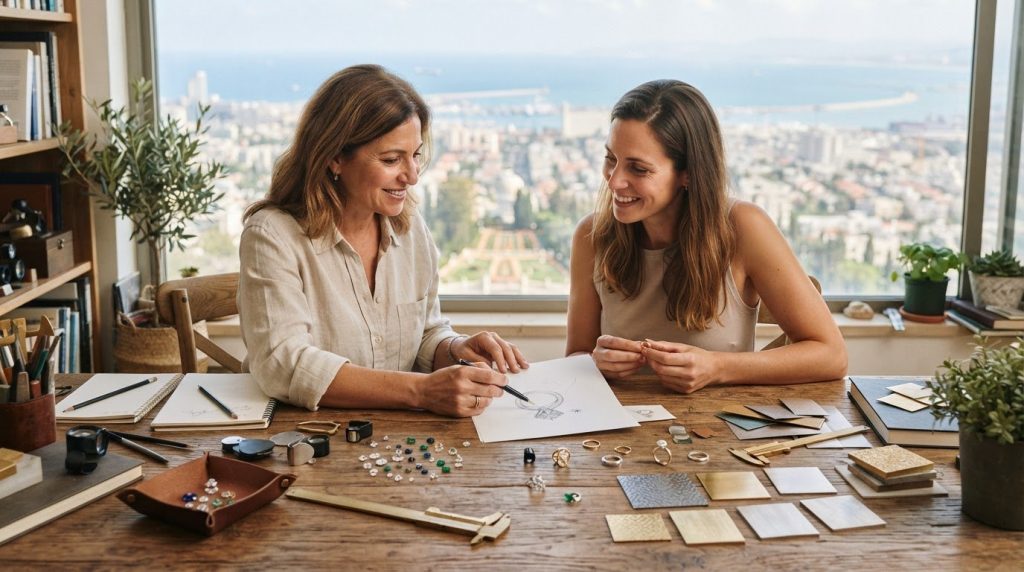
Jewelry Design in Haifa: What to Expect in 2026
-
Posted by
מילה קלר
If you’re searching “jewelry design consultation in Haifa what to expect,” you may be wondering what to bring, which decisions you’ll need to make,…
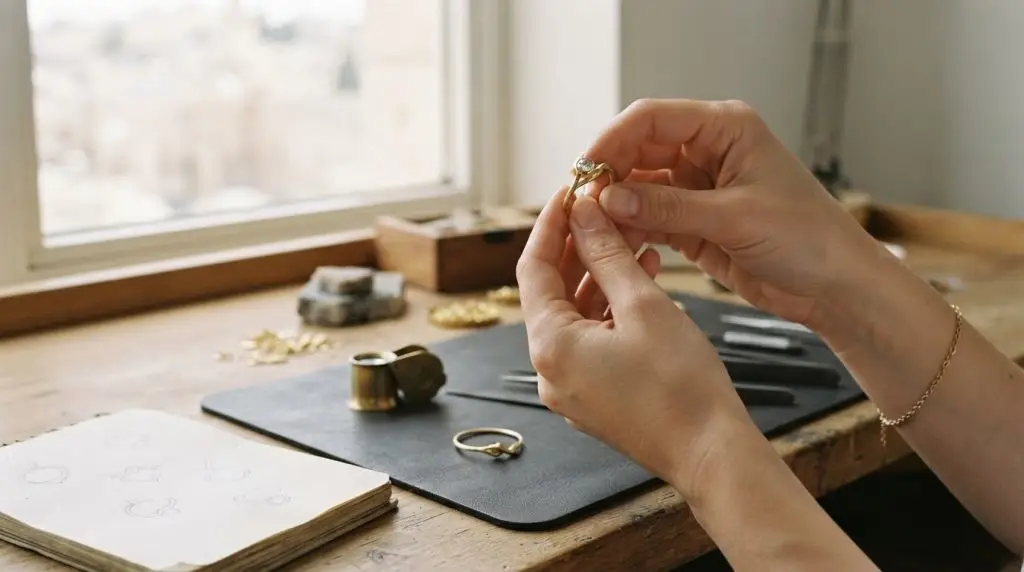
Creating a Ring That Symbolizes a Personal Achievement
-
Posted by
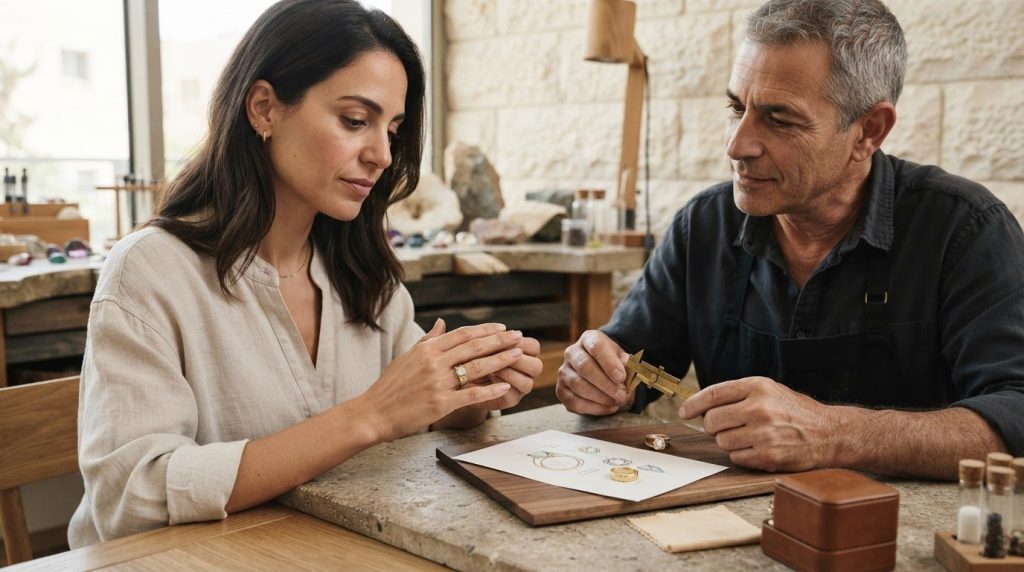
What if the ring that marks your biggest achievement is subtle enough to feel like you, not a trophy? Creating a ring that symbolizes a personal…
Unhappy With Your Final Custom Ring? Here’s What to Do Next
-
Posted by
What if I’m unhappy with my final custom ring, even though I approved the design? A finished piece can feel different on your hand than it did in a…
Ensuring Your Final Ring Matches the 3D Render
-
Posted by
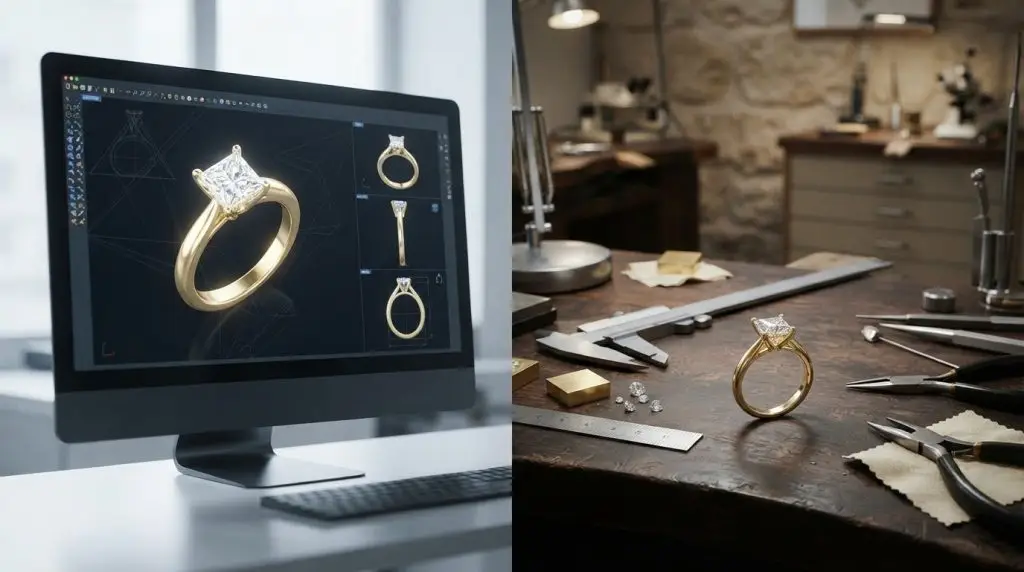
What if the image you approved is a beautiful preview, but not a complete specification for the ring being made? Ensuring the final ring matches the…
From Sketch to Sparkle: Ensuring the Final Piece Matches Your Jewelry Design
-
Posted by
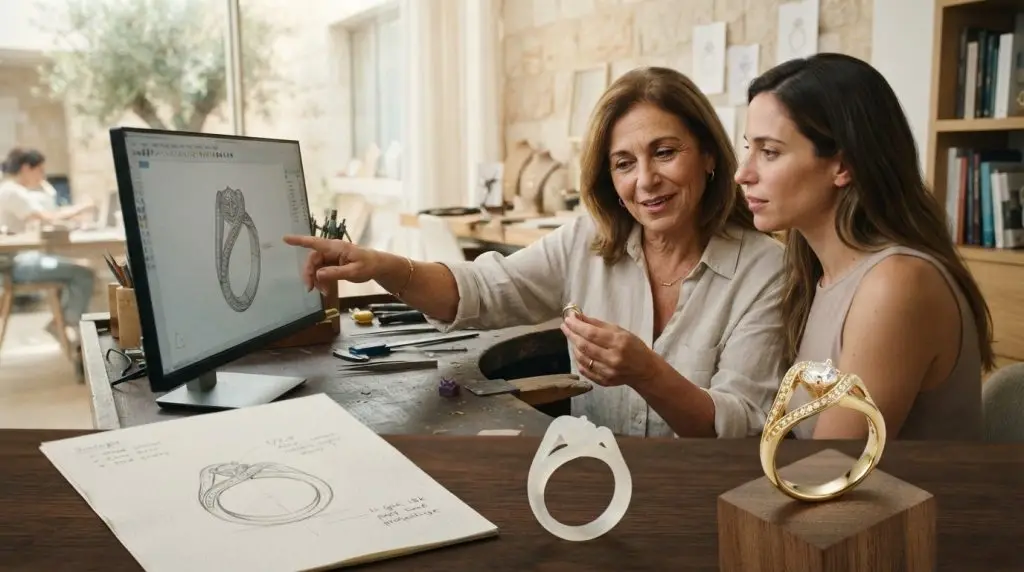
You’ve spent weeks dreaming of a ring that captures your story, but as you look at the artist’s rendering, a small doubt creeps in. Will that…
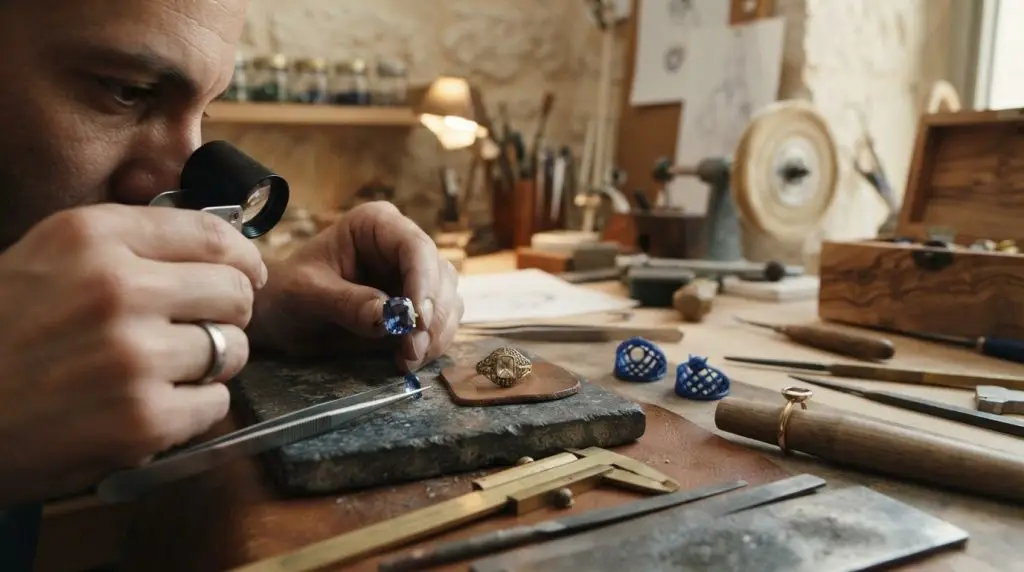
Repurposing Heirloom Stones into Modern Custom Jewelry: The Complete 2026 Guide
-
Posted by
What if keeping an inherited ring tucked away in a dark jewelry box isn’t protecting your family history, but silencing it? It’s completely natural…
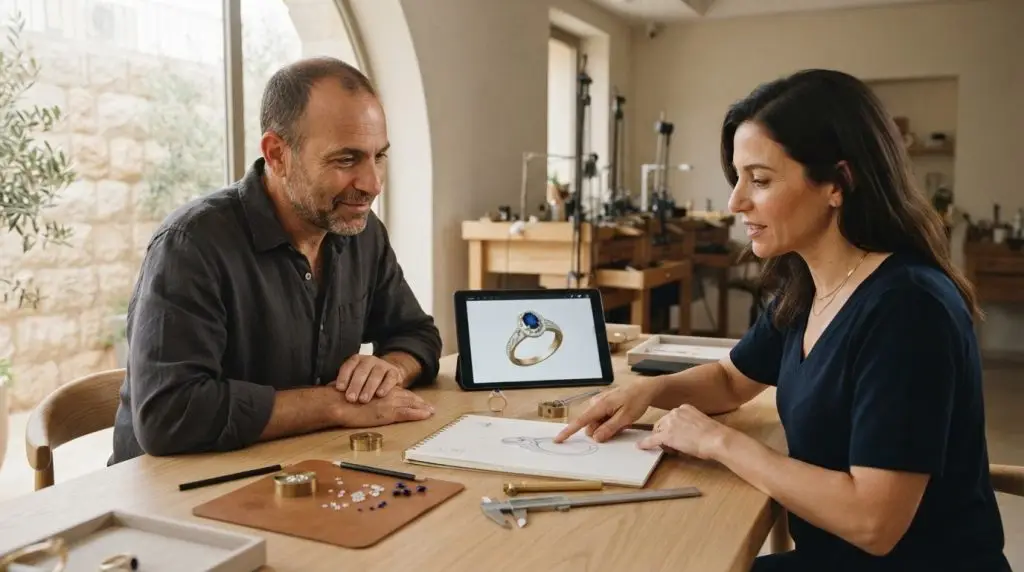
How to Give Constructive Feedback on a Jewelry Design: A Client’s Guide
-
Posted by
What if telling your jeweler you dislike a detail isn’t an insult, but the exact spark they need to craft your dream heirloom? When you first open…
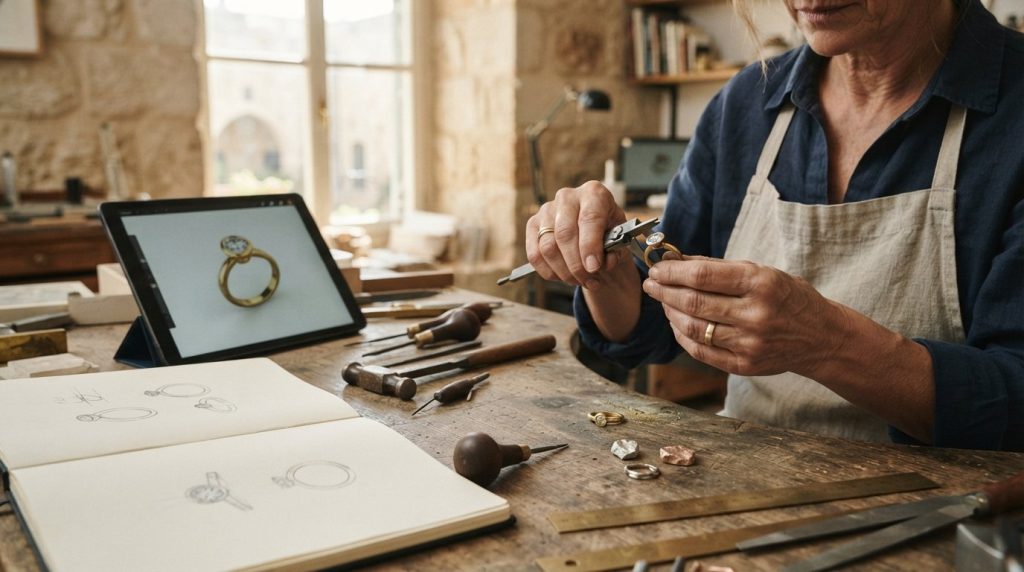
Designing a Custom 18k Gold Ring: 2026 Bespoke Guide
-
Posted by
What if the most exquisite jewelry you ever own isn’t reserved for formal galas, but crafted to enrich your daily life? When you start exploring…
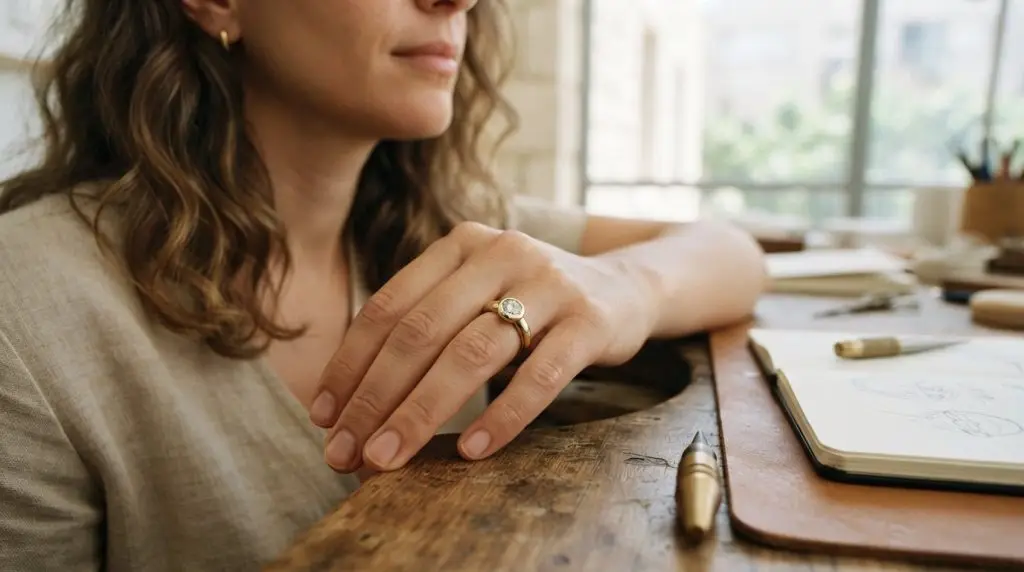
The Art of Ergonomics: Ensuring a Custom Ring is Comfortable for Daily Wear
-
Posted by
True luxury shouldn’t feel like a burden on your hand. While many focus solely on the carat weight or the sparkle, the real artistry lies in ensuring…
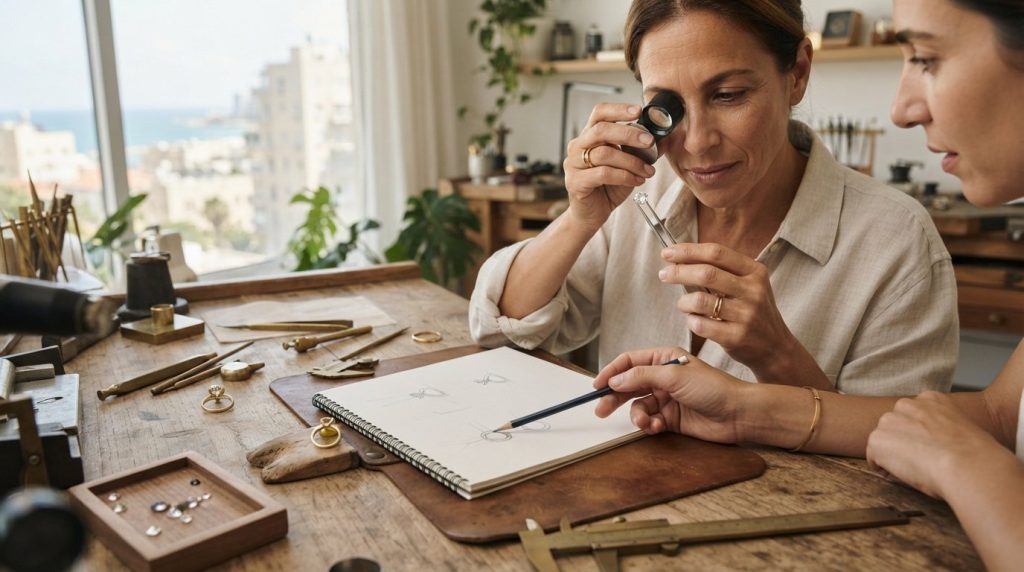
Finding an English-Speaking Custom Fine Jewelry Designer in Israel: A Complete Guide
-
Posted by
Your most cherished jewelry shouldn’t just be an accessory; it’s a piece of your history that deserves to be understood without a translator. When…
How to Convince Your Husband to Upgrade Your Wedding Ring
-
Posted by
What if your wedding ring wasn’t just a relic of who you were when you said “I do,” but a luminous reflection of the woman you’ve become today? Many…
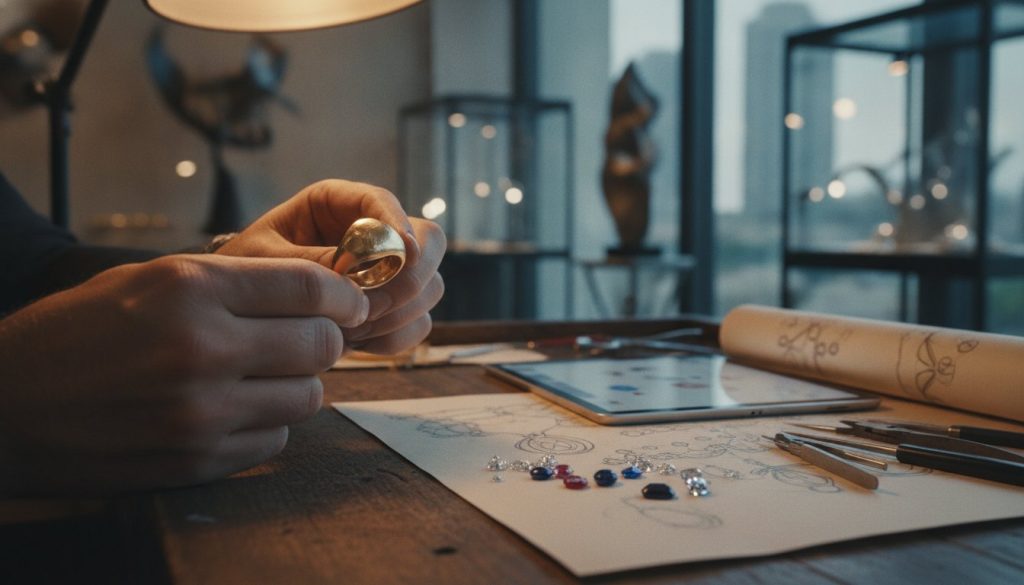
Red Flags When Choosing a Custom Jewelry Designer: A 2026 Guide to Protecting Your Vision
-
Posted by
Imagine spending months dreaming of a bespoke 18k gold ring, only to open the velvet box and find a piece that feels like a generic retail cast…