

Blog
What is a Solitaire Ring? The Timeless Guide to Minimalist Brilliance
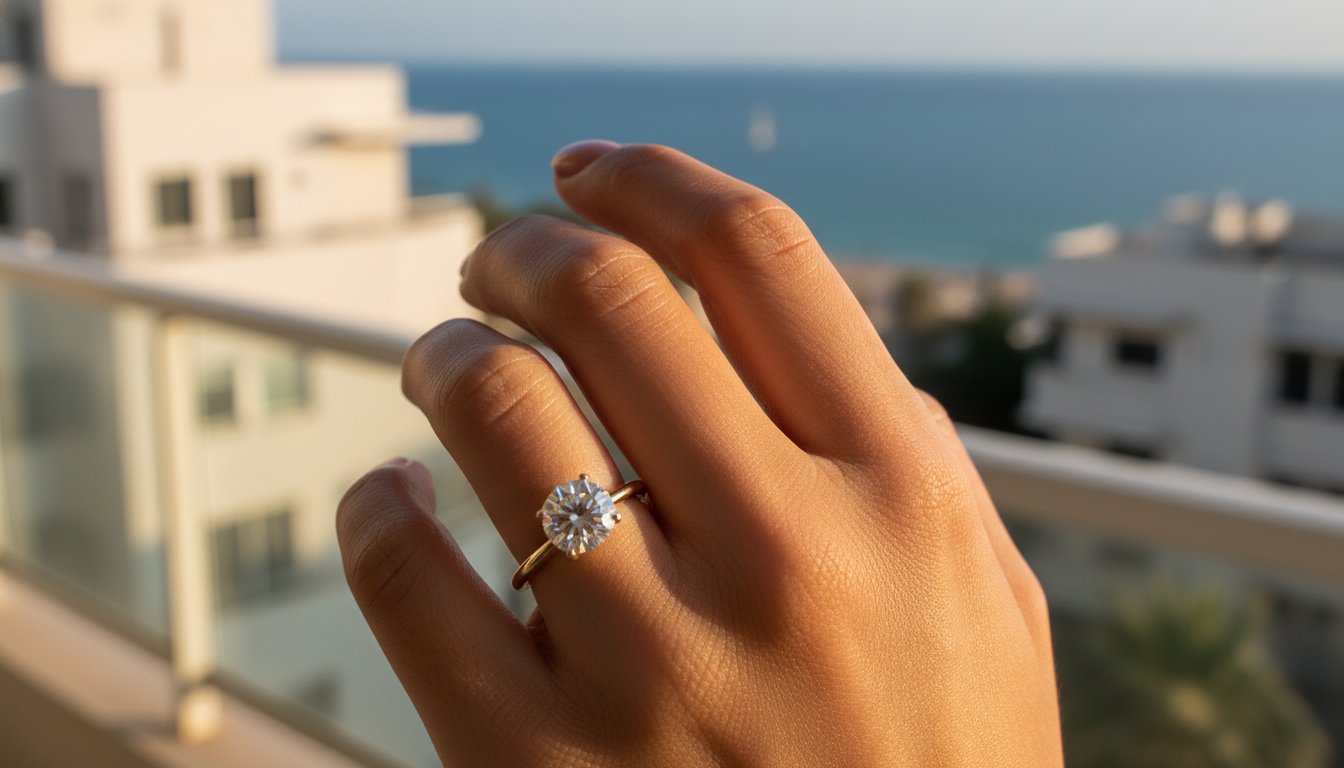
In a world of fleeting trends, the most powerful statement you can make is often the simplest. You might wonder, what is a solitaire ring, and why does it remain the gold standard for elegance after centuries? While some fear that a single stone on a band might feel predictable, the truth is that this design offers an unmatched canvas for your personal story. It’s an intimate expression of quiet luxury that focuses entirely on the brilliance of one exceptional gem.
Key Takeaways
- Learn the technical definition of what is a solitaire ring and why it’s the ultimate emblem of quiet luxury.
- Discover how setting choices like prongs or bezels dictate the ring’s character and influence how light interacts with the stone.
- Understand why the 4Cs, especially Cut, are paramount in a minimalist design where the diamond’s quality is completely visible.
- Identify how to choose durable materials like 18k gold to create a timeless piece that reflects your personal identity.
- Explore how custom craftsmanship allows you to weave your personal narrative into a design that transcends being a mere accessory.
Defining the Solitaire: More Than Just a Single Stone
When you begin your search for a piece that captures a moment forever, you’ll likely encounter a specific term. But what is a solitaire ring in its truest, most technical form? Simply put, it’s a ring featuring one single gemstone. It lacks side stones, pavé accents, or any surrounding clusters. The beauty of this design lies in its restraint. It relies entirely on the purity of its silhouette and the quality of its central gem to make a statement.
The name itself carries a poetic weight. It’s derived from the Latin word solitarius, which translates to “alone” or “solitary”. In contemporary jewelry design, this isn’t an expression of isolation. Instead, it represents a singular focus. The stone is crafted to be the undisputed protagonist of the piece. While many people use “diamond ring” and “solitaire” interchangeably, they aren’t the same. Every solitaire is a single-stone ring, but not every diamond ring is a solitaire. If a band features even the smallest accent diamonds alongside the center stone, it moves into the territory of multi-stone or pavé designs.
The History of the Single-Stone Setting
The journey of this style is deeply woven into the history of engagement rings. In ancient Rome, rings often featured uncut stones, symbolizing raw strength and an unbreakable bond. As craftsmanship evolved through the Victorian era, settings became more refined, though the stones often remained nestled deep within the metal. A true revolution arrived in 1886. This year saw the introduction of a setting that lifted the diamond high above the band using six slender prongs. This innovation allowed light to enter the stone from all angles, maximizing its natural brilliance. By the 1940s, major jewelry campaigns had cemented this specific silhouette as the global standard for timeless commitment.
Solitaire vs. Halo and Three-Stone Rings
The Anatomy of Elegance: Settings and Band Styles
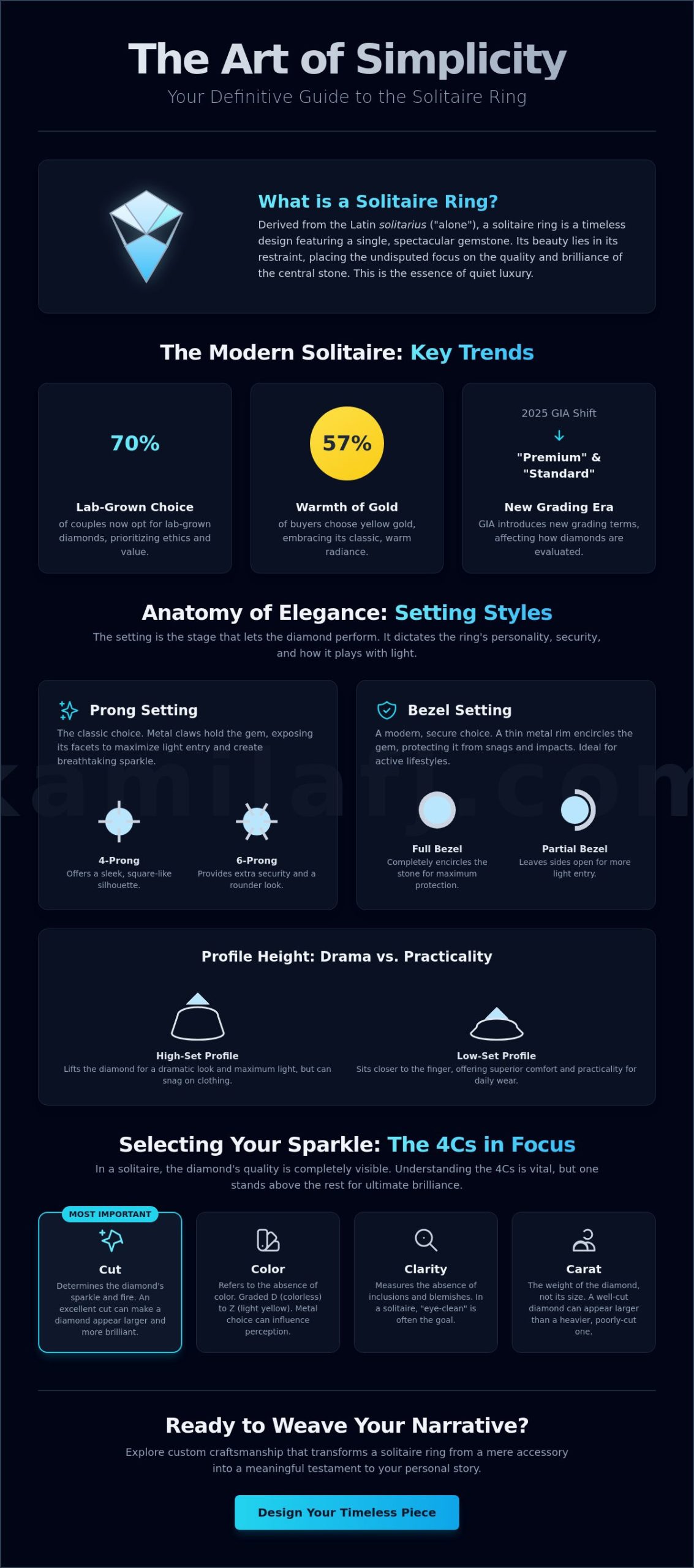
The architecture of a ring is the frame for your story. It’s more than metal. When you explore what is a solitaire ring, you’re really looking at how these physical elements harmonize to celebrate a single stone. The setting you choose dictates the piece’s personality, transforming a simple band into a modern masterpiece or a vintage-inspired heirloom. While the stone is the star, the setting is the stage that allows it to perform.
Profile height is one of the most impactful choices you’ll make. High-set profiles offer a dramatic, queenly look that lifts the stone away from the finger, allowing maximum light to enter from below. While striking, these can snag on clothing. Low-set designs sit closer to the skin. They’re incredibly practical for daily wear, making them a favorite for those with active lifestyles. The band itself, or the shank, also plays a vital role. A tapered band that thins as it approaches the stone can make your diamond appear larger and more brilliant by comparison.
Metal choice influences more than just the color of the band. It affects how we perceive the stone’s quality. With yellow gold representing 57% of engagement ring sales in 2025, many are embracing its warm, traditional glow. However, the metal color can reflect through the stone. If you’ve prioritized a high color grade when researching the 4Cs in a Solitaire Setting, a white gold or platinum setting might better preserve that icy, colorless look. If you’re looking for inspiration on how these metals pair with unique stones, our collection of gold rings offers a glimpse into these artistic combinations.
Prong Settings: Maximizing Light and Brilliance
Prongs are the classic choice for a reason. These small metal claws act as a minimalist cradle, exposing as much of the diamond’s surface as possible. The 4-prong setting offers a sleek, square-like silhouette, while the 6-prong setting provides extra security and a more rounded appearance. Beyond the number, the shape of the prong matters. Claw prongs taper to a fine point for an edgy, modern feel, while round prongs offer a soft, timeless aesthetic. By letting light hit the stone from all angles, prongs ensure your solitaire truly dances.
Bezel and Tension Settings: The Modern Minimalist Choice
For those who crave a clean, contemporary look, the bezel setting is an exceptional alternative. It surrounds the entire perimeter of the stone with a thin rim of gold. This not only protects the diamond from chips but also ensures a snag-free experience. It’s the ultimate choice for the modern woman who wants her jewelry to keep up with her day. Tension settings take this minimalism even further. They use the pressure of the metal band to hold the stone in place, creating the breathtaking illusion that your diamond is floating in mid-air.
Beyond Tradition: The Modern Symbolism of the Solitaire
While the technical answer to what is a solitaire ring focuses on a single stone, the modern interpretation is far more expansive. This design has transcended its traditional role to become a symbol of singular focus and inner strength. In a world of constant noise, the solitaire represents a moment of clarity. It’s an intentional choice to let one exceptional element stand on its own, mirroring the quiet confidence of the person wearing it. This “uncluttered” luxury appeals to a modern desire for meaningful simplicity over excessive ornamentation.
It’s no surprise that the solitaire remains the premier choice for engagement rings. Its popularity is rooted in its ability to adapt. Because the design is so focused, it doesn’t compete with the wearer’s evolving style. A solitaire purchased today remains just as relevant in thirty years, effortlessly transitioning through decades of fashion shifts. It acts as a steadfast companion to your personal narrative, growing more precious as it gathers the memories of your life’s journey.
We’re also seeing a beautiful rise in the “self-love” solitaire. Many are moving away from the idea that a single-stone ring must be a gift from another. Instead, they’re choosing what is a solitaire ring for themselves as a “power ring” to mark a promotion, a personal milestone, or a period of growth. This shift reframes the gem not just as a romantic token, but as a protective emblem of one’s own achievements and independence. It’s a celebration of the individual, proving that high-end craftsmanship is a worthy investment in your own story.
A Canvas for Personal Storytelling
Minimalist jewelry is often more intimate than ornate pieces. Without the distraction of side stones, the connection between the wearer and the central gem becomes more direct. This “unification” of a single stone represents a life’s milestone with poetic precision. These pieces become modern heirlooms because they’re stripped of the hyper-specific trends that often date other jewelry. They’re timeless vessels for stories, designed to be passed down as symbols of grace and enduring strength.
The Versatility of the Solitaire in Daily Life
The true genius of a solitaire is its effortless versatility. It’s one of the few pieces that feels equally at home during a morning coffee run as it does at a formal gala. You can easily style fine jewelry like this by stacking your solitaire with textured gold bands or delicate spacers. This allows you to curate a look that’s uniquely you, adding layers of meaning over time while keeping that brilliant center stone as the heart of your aesthetic.
Selecting Your Sparkle: The 4Cs in a Solitaire Setting
When you choose what is a solitaire ring, you’re making a bold statement about quality and transparency. In more ornate designs, like a halo or pavé setting, small accent diamonds can distract the eye or mask minor imperfections in the center stone. In a solitaire, however, the diamond is “naked.” Every facet is exposed to the light and the viewer’s gaze. This level of visibility demands a higher level of scrutiny because there’s nowhere for a poor cut or visible inclusions to hide. It’s a design that celebrates the stone’s true character, making your selection process both more critical and more rewarding.
Cut is the undisputed engine of brilliance. You shouldn’t compromise here, as a well-cut stone will sparkle even in low light. Color and Carat involve a more personal balance with your choice of metal. Since yellow gold now represents 57% of engagement ring sales as of 2025, it’s helpful to know that its warm hue can actually mask a slightly lower color grade. A stone that might look slightly warm in a platinum setting often appears perfectly white against the rich glow of 18k gold. When it comes to Carat, consider the proportions of your band. A minimalist band makes even a modest stone look significant, creating a harmonious balance between the gold and the gem.
Why Cut and Clarity Reign Supreme
For a flawless minimalist look, focus on finding an “Eye Clean” diamond. This means that while inclusions might exist under a microscope, they aren’t visible to the naked eye. This is especially vital for step-cut shapes like Emerald cuts, which have large, open facets that act like windows into the stone. If you’re following the 33% of buyers currently choosing Oval-cut stones, you’ll find that their elongated shape offers a flattering look while maintaining exceptional brilliance. Each shape brings a different energy to the piece, from the classic round brilliant to the edgy pear or sophisticated marquise.
The Conscientious Choice: Lab-Grown Diamonds
Many modern wearers are turning to lab diamonds to achieve a larger, higher-quality stone that aligns with their values. These gems are chemically and physically identical to mined diamonds but offer a more sustainable path to brilliance. By 2025, lab-grown diamonds accounted for approximately 70% of engagement ring sales. It’s important to understand a major change in how these stones are evaluated. Since October 1, 2025, the GIA no longer uses the traditional 4Cs grading scale for lab-grown diamonds. Instead, they assess them with a simplified classification of “Premium” or “Standard” based on overall quality. This modern approach helps you focus on the overall beauty and value of the piece rather than getting lost in technical minutiae.
Ready to begin your journey? Explore our curated selection of custom jewelry to find a stone and setting that perfectly mirror your unique story.
The KaMila Solitaire: Handcrafted Artistry with a Conscience
At KaMila Fine Jewellery, we believe that understanding what is a solitaire ring requires looking beyond the diamond to the hands that shaped the metal. Our philosophy treats every piece as an intimate expression of your story. We don’t see a ring as a mere accessory; it’s a protective emblem of your history. This is why we embrace a thoughtful artisan approach. Every prong is hand-finished. Every curve is intentional. While mass-produced settings often feel cold or generic, our pieces carry the warmth of human touch. This artistry ensures that the minimalist design never feels “boring.” Instead, it feels alive with the passion of its creator.
This commitment to excellence is rooted in our heritage of modern Israeli design. We combine artistic vision with a clear understanding of the modern desire for meaningful luxury. By choosing materials that reflect conscious values, we ensure your brilliance doesn’t come at a hidden cost. The solitaire is the ultimate canvas for this integrity. It places the purity of the material front and center. When you wear a piece from KaMila Fine Jewellery, you’re wearing a statement of both personal style and global responsibility.
18k Gold: The Perfect Partner for Minimalist Design
18k gold is the metal of choice at KaMila Fine Jewellery for a reason. In minimalist design, every millimeter of metal is visible. 14k gold, while durable, often lacks the rich, buttery hue that defines a truly luxurious piece. Our 18k gold provides a deep, warm glow that complements the brilliance of a central stone. It’s the perfect partner for a solitaire. Because it contains a higher percentage of pure gold, it has a weight and a luminosity that 14k simply can’t match. Over time, this gold develops a unique character. It’s a living material that ages with you. It reflects the years of life it has witnessed. Our handcrafted bands aren’t just jewelry; they’re enduring companions that celebrate the elevation of the everyday.
Crafting Your Modern Heirloom
Your journey with KaMila Fine Jewellery often begins with a custom request. We specialize in creating one-of-a-kind pieces that capture your essence. Our designs celebrate the duality of strength and delicacy. A band might look fragile, but it’s forged with the integrity to last a lifetime. We guide you through the process of selecting a silhouette that mirrors your personality, ensuring the final piece is a symbolic representation of your experiences. It’s about more than the object; it’s about the identity it celebrates. Whether you’re marking a new beginning or a personal victory, we’re here to help you tell that story. Explore the KaMila Fine Jewellery collection of gold rings to find the piece that speaks to your heart and reflects your unique brilliance.
Embrace Your Singular Story
Choosing a piece of jewelry is an act of self-expression. Now that you understand what is a solitaire ring, you can see it’s more than a simple design; it’s a focused masterpiece that celebrates a single, brilliant moment. By prioritizing a superior cut and selecting a setting that mirrors your lifestyle, whether it’s a protective bezel or a light-filled prong, you create a piece that stays relevant for decades. This minimalist approach ensures that your personal narrative always remains the center of attention.
At KaMila, we blend modern minimalist Israeli artistry with a deep respect for traditional craftsmanship. Our pieces are handcrafted in 18k gold to provide a warm, lasting glow that standard alloys simply cannot match. We also champion ethically sourced lab-grown diamonds, allowing you to choose brilliance that aligns with your values. Your ring should be as unique and resilient as you are, serving as a daily reminder of your strength and grace.
Discover Your Perfect Solitaire in the KaMila Collection and find a piece that truly reflects the person you’ve become. We look forward to helping you craft a modern heirloom that you’ll cherish every day.
Frequently Asked Questions
What is the difference between a solitaire and a diamond ring?
The primary difference lies in the number of stones. A solitaire ring is defined by its single gemstone, while “diamond ring” is a broad term for any piece featuring diamonds. While every solitaire is a diamond ring, not all diamond rings are solitaires. If a band has side stones, halos, or pavé accents, it no longer fits the technical definition of a solitaire.
Are solitaire rings more expensive than other styles?
Solitaire rings aren’t necessarily more expensive. In fact, they can be more budget-friendly because you aren’t paying for the labor and materials required for multiple accent stones. This allows you to focus your investment on one exceptional center gem. When people ask what is a solitaire ring, they often discover it’s a strategic way to prioritize stone quality over complex metalwork.
Which diamond shape looks best in a solitaire setting?
Round brilliant diamonds are the most traditional choice for their unmatched light return. However, elongated shapes like ovals, which represented 33% of sales in 2025, are incredibly popular for their ability to make the finger appear longer. Emerald and pear cuts also offer a sophisticated, modern vibe that stands out beautifully when set alone on a minimalist gold band.
Is a 4-prong or 6-prong solitaire setting better for daily wear?
A 6-prong setting offers more security and better protects the stone’s edge, making it a wise choice for those with active lifestyles. A 4-prong setting is often preferred for its minimalist look, as it allows more light to enter the stone and creates a square-like silhouette. Both are durable, but the 6-prong provides that extra peace of mind for everyday elegance.
Can a solitaire ring have a wedding band that fits flush?
Yes, many solitaire designs are crafted with a “high-set” profile specifically to allow a wedding band to sit flush against the shank. This creates a seamless, stacked look. If you choose a “low-set” solitaire for its practical, snag-free profile, you can pair it with a curved or contoured wedding band to achieve a beautiful, nested aesthetic.
Why is the solitaire the most popular choice for engagement rings?
The solitaire remains the gold standard because its beauty is timeless and doesn’t rely on fleeting trends. It’s a versatile design that evolves with your style over decades. By focusing on a single stone, it creates a piercing focal point that symbolizes a singular, intimate story, making it the ultimate emblem of quiet luxury.
Do solitaire rings look small compared to halo rings?
A solitaire may have a smaller visual footprint than a halo ring, but it offers a more concentrated and direct sparkle. You can make a solitaire stone appear larger by choosing a thinner, tapered band. This contrast between the delicate metal and the gem creates a visual impact that celebrates the stone’s true size and character.
How do I care for my solitaire ring to keep it sparkling?
Caring for your ring is simple and ensures it remains a radiant part of your daily life. Soak the piece in warm water with mild dish soap for twenty minutes, then gently scrub with a soft toothbrush to remove oils. Since what is a solitaire ring focuses on one stone, keeping that single gem clean is the best way to maintain its breathtaking brilliance.
Related Posts
Jewelry Design in Haifa: What to Expect in 2026
-
Posted by
מילה קלר
If you’re searching “jewelry design consultation in Haifa what to expect,” you may be wondering what to bring, which decisions you’ll need to make,…
Is My Diamond Too Big for My Hand? A Personal Style Guide
-
Posted by
A diamond can look dramatic in a product photo and feel perfectly at home on your hand; a smaller stone can still make a striking statement. If…
Unhappy With Your Final Custom Ring? Here’s What to Do Next
-
Posted by
What if I’m unhappy with my final custom ring, even though I approved the design? A finished piece can feel different on your hand than it did in a…
Ensuring Your Final Ring Matches the 3D Render
-
Posted by
What if the image you approved is a beautiful preview, but not a complete specification for the ring being made? Ensuring the final ring matches the…
From Sketch to Sparkle: Ensuring the Final Piece Matches Your Jewelry Design
-
Posted by
You’ve spent weeks dreaming of a ring that captures your story, but as you look at the artist’s rendering, a small doubt creeps in. Will that…
How to Give Constructive Feedback on a Jewelry Design: A Client’s Guide
-
Posted by
What if telling your jeweler you dislike a detail isn’t an insult, but the exact spark they need to craft your dream heirloom? When you first open…
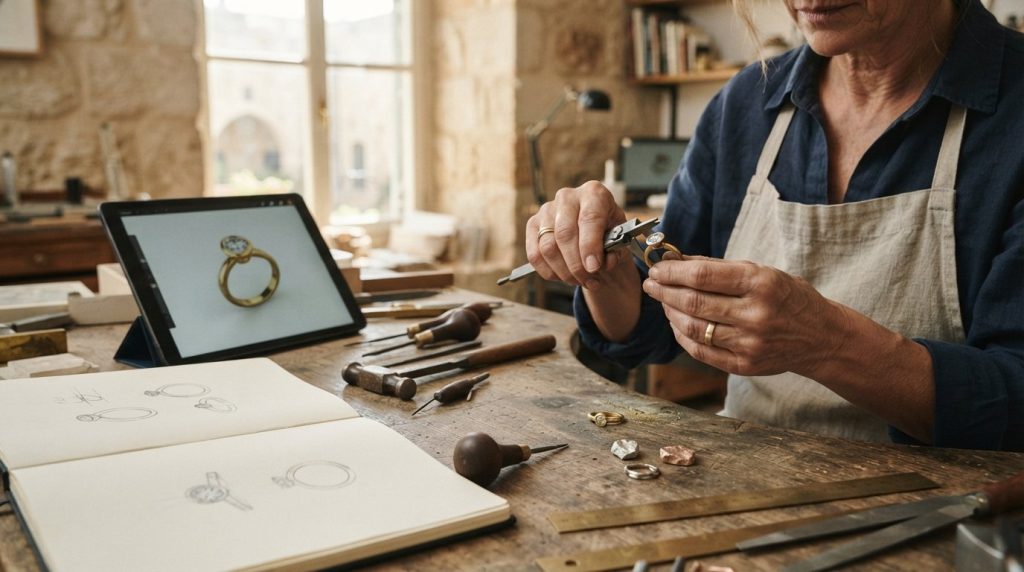
Designing a Custom 18k Gold Ring: 2026 Bespoke Guide
-
Posted by
What if the most exquisite jewelry you ever own isn’t reserved for formal galas, but crafted to enrich your daily life? When you start exploring…

Finding an English-Speaking Custom Fine Jewelry Designer in Israel: A Complete Guide
-
Posted by
Your most cherished jewelry shouldn’t just be an accessory; it’s a piece of your history that deserves to be understood without a translator. When…
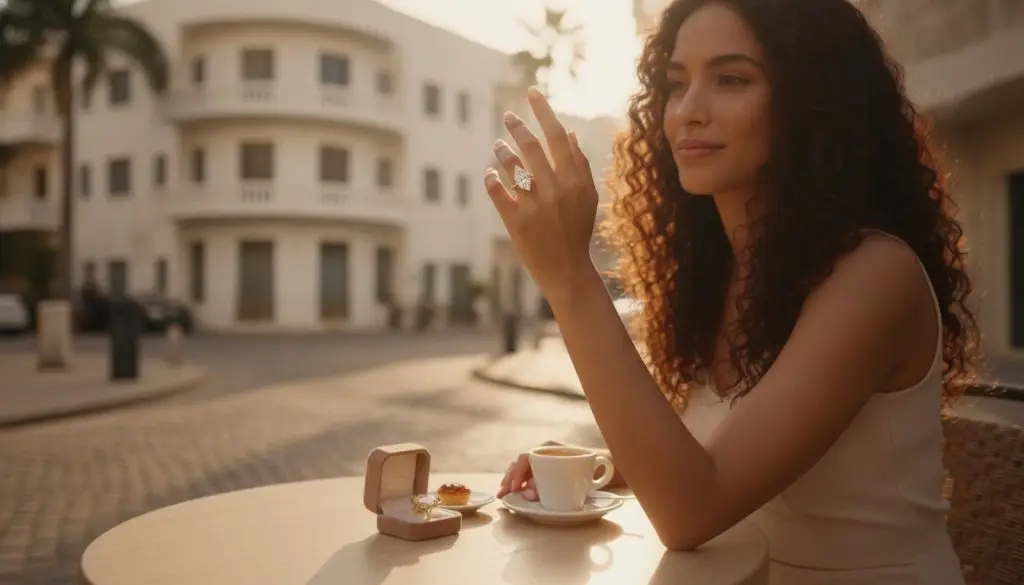
How to Convince Your Husband to Upgrade Your Wedding Ring
-
Posted by
What if your wedding ring wasn’t just a relic of who you were when you said “I do,” but a luminous reflection of the woman you’ve become today? Many…
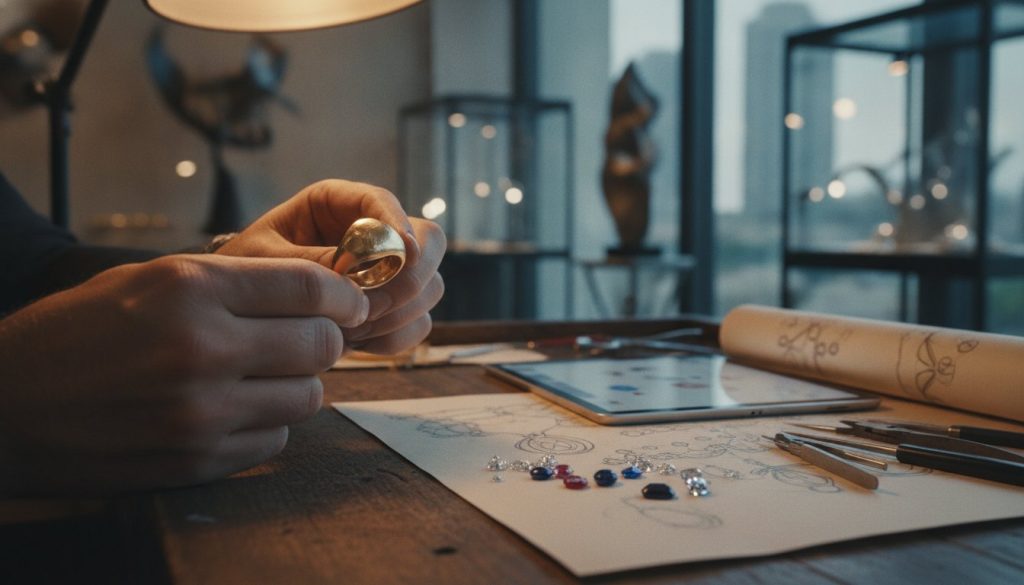
Red Flags When Choosing a Custom Jewelry Designer: A 2026 Guide to Protecting Your Vision
-
Posted by
Imagine spending months dreaming of a bespoke 18k gold ring, only to open the velvet box and find a piece that feels like a generic retail cast…
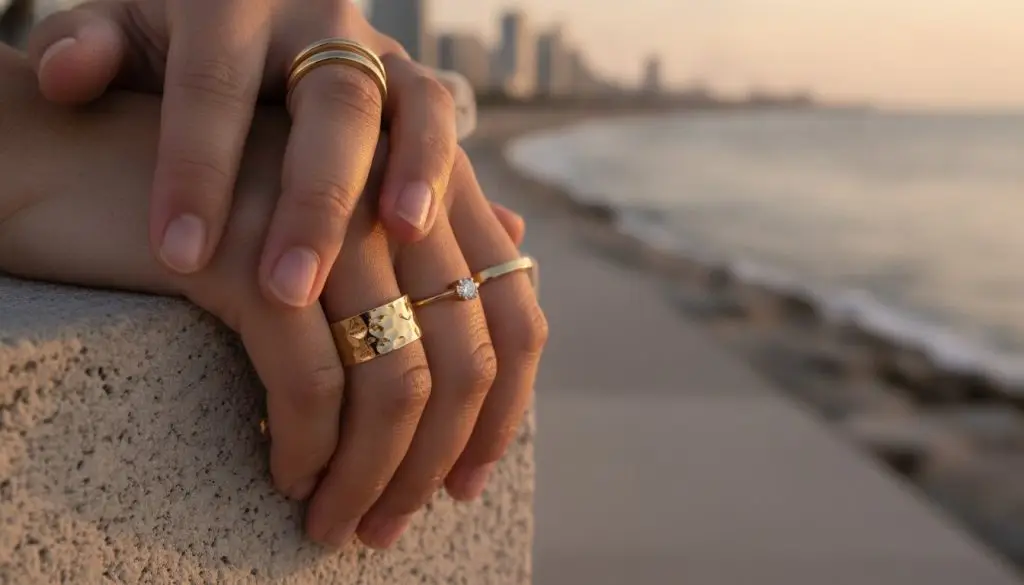
Minimalist Gold Rings: A Guide to Curating Your Timeless 18K Collection
-
Posted by
Your jewelry shouldn’t have an expiration date. Too many of us have felt the frustration of a cherished piece tarnishing or causing skin irritation…
Getting a Better Price Than Big Brand Jewelers in Israel: The Insider’s Guide 2026
-
Posted by
That iconic logo on a shopping bag in a Tel Aviv mall might feel like a mark of quality, but it’s often the most expensive way to buy a memory. When…