
Blog
How Much to Spend on an Engagement Ring? The 2026 Intentional Guide

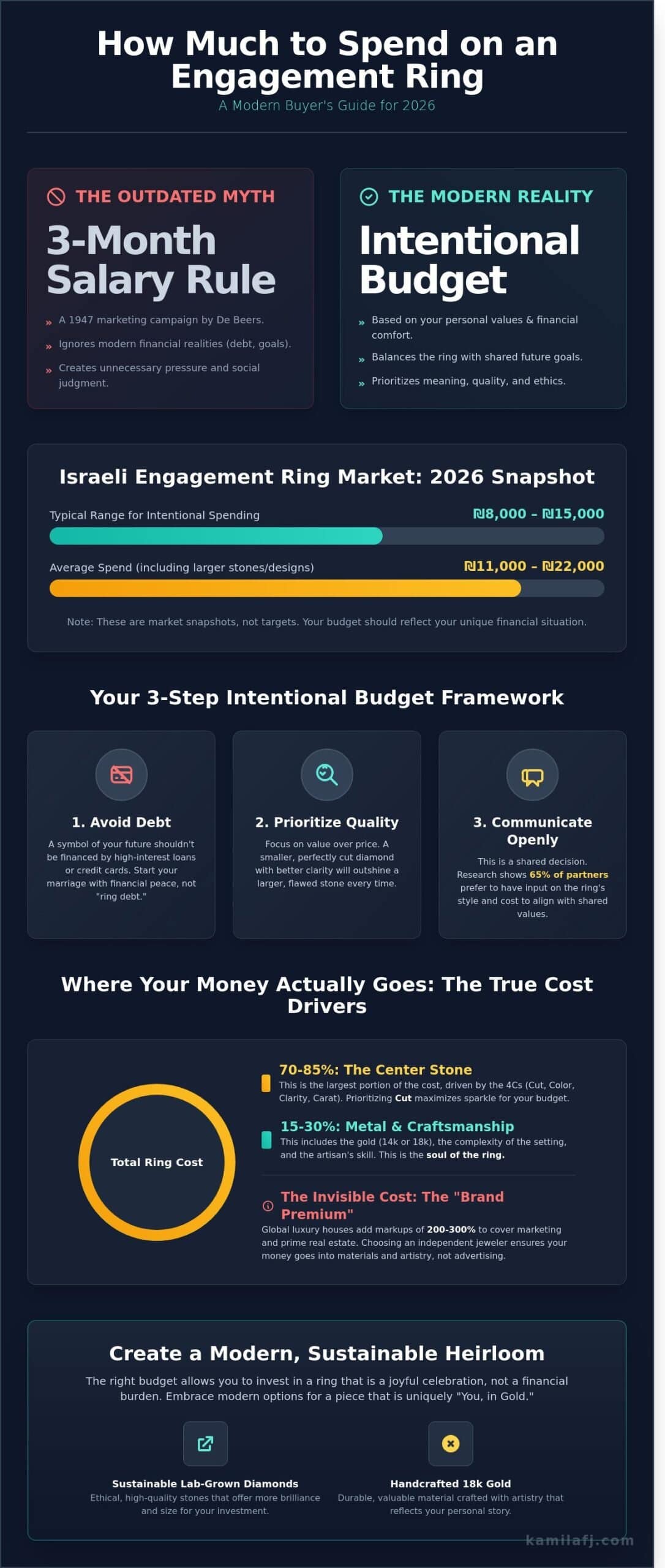
The three-month salary rule is a marketing relic from 1947 that has no place in your 2026 financial planning. Deciding how much to spend on an engagement ring should be an act of love, not a calculation dictated by an outdated ad campaign. In Israel, modern couples are shifting toward intentional spending, with many now investing between ₪8,000 and ₪15,000 to secure a piece that reflects their unique values. You likely feel the pressure of social judgment or the confusion of choosing between lab-grown and natural stones while wondering if you’re just paying for a fancy showroom’s rent.
It’s understandable to want a ring that looks breathtaking without starting your marriage in debt. This guide will help you set a meaningful budget that balances your financial reality with the beauty of a handcrafted, sustainable heirloom. We’ll explore a clear framework for your purchase, explain how to maximize sparkle for your ₪, and ensure you find a talisman that feels both personal and ethical.
Key Takeaways
- Move beyond the outdated “three-month salary” myth and learn how to define a budget that reflects your personal values and the modern 2026 Israeli jewelry market.
- Identify the primary cost drivers-from the durability of 18k gold to the artistry of the setting-to understand exactly where your investment is allocated.
- Master the art of the 4Cs to determine how much to spend on an engagement ring by prioritizing cut and sparkle over carat size for a truly breathtaking effect.
- Follow a practical financial strategy to set a “Hard Ceiling” in ILS, ensuring your purchase remains a joyful celebration rather than a financial burden.
- Discover how sustainable lab-grown diamonds and handcrafted 18k gold allow you to create a high-end, modern heirloom that is uniquely “You, in Gold.”
Beyond the Three-Month Salary Myth: Defining Your Budget in 2026
The three-month salary rule isn’t a financial standard. It’s a relic of a 1947 marketing campaign by De Beers, designed to increase diamond sales in a post-war economy. When you look into the history of engagement rings, it’s clear that these rules were created by corporations, not financial advisors. By 2026, the jewelry world has shifted toward intentional spending. This approach prioritizes your unique story and financial reality over outdated social expectations. We see this as an empowering move. It allows you to invest in a piece that functions as a personal talisman, celebrating your partnership without the pressure of a manufactured quota.
Choosing how much to spend on an engagement ring is a deeply personal act of artistry. It’s about finding the balance between a piece that feels significant and a price that feels responsible. We believe jewelry should be an intimate expression of your personality. A ring’s value isn’t just its price tag; it’s the craftsmanship, the ethical sourcing of the materials, and the joy it brings to your daily life. Modern couples are increasingly looking for edgy sophistication and fresh minimalist designs that can be worn every day, rather than massive stones that sit in a safe. This shift means you can often get more beauty and meaning for your money by focusing on design and artistry rather than just raw carat weight.
What is the average engagement ring cost today?
In the Israeli market, the average spend currently fluctuates between ₪11,000 and ₪22,000. This range reflects a growing interest in high-quality materials like lab-grown diamonds and recycled 14k or 18k gold. Younger buyers, particularly those in creative hubs like Tel Aviv, often lean toward contemporary, minimalist designs. They’re choosing quality and ethical transparency over sheer size. Don’t view these averages as a target. They’re merely a snapshot of what others are doing. Your budget should reflect your specific stage of life and your shared goals as a couple, not a national statistic.
The ‘Intentional Budget’ Framework
Building a budget requires a clear-eyed look at your current financial landscape. Start by assessing your liquid savings against your upcoming milestones. A ring is a beautiful talisman, but it shouldn’t jeopardize your future stability. If you’re planning a wedding at a venue in the Galilee or saving for a down payment on an apartment in Jerusalem, your ring budget should sit comfortably alongside those goals.
- Avoid Debt: Don’t use high-interest credit cards or loans for this purchase. Starting a marriage with “ring debt” creates unnecessary tension. A symbolic purchase shouldn’t lead to years of financial stress.
- Prioritize Quality: Focus on the value versus price distinction. Sometimes a smaller, perfectly cut diamond with better clarity offers more grace and long-term satisfaction than a larger, lower-quality stone.
- Communicate: Many modern couples in Israel now treat the ring budget as a shared conversation. Research shows that 65% of partners prefer to have some input on the cost and style to ensure it fits their lifestyle and values.
Ultimately, the right amount is the one that allows you to celebrate your love without looking back with regret. Whether you spend ₪8,000 or ₪30,000, the ring’s true power lies in the promise it represents. It’s about you, in gold, making every day feel special. By staying grounded in your own financial comfort zone, you ensure the ring remains a source of joy rather than a source of stress.
The True Cost Drivers: Where Your Money Actually Goes
Understanding how much to spend on an engagement ring starts with looking past the initial sparkle to see the tangible components. Your investment splits into three primary categories: the stone, the metal, and the craftsmanship. In most traditional settings, the center stone accounts for 70% to 85% of the total price. However, the metal and the artistry involved in the setting dictate the ring’s soul and its ability to withstand the passage of time. While the average engagement ring cost provides a statistical benchmark for many couples, your personal budget should reflect your unique financial goals and the specific quality markers you value most.
The “Brand Premium” is a significant, often invisible cost driver. When you purchase from a global luxury house, you aren’t just paying for gold and diamonds. You’re paying for expensive international marketing campaigns, prime real estate in shopping districts, and that iconic colored box. These markups can reach 200% or even 300% above the actual material value. By choosing an independent artisan, those same shekels are funneled directly into higher-quality materials and more meticulous hand-finishing. In the Israeli market, a ₪15,000 ring from a boutique designer often features a significantly superior stone compared to a similarly priced ring from a mass-market luxury retailer.
Don’t overlook the secondary expenses that protect your investment. Annual insurance in Israel typically costs 1% to 2% of the ring’s appraised value, providing peace of mind against loss or theft. Maintenance is another factor. Professional cleaning and prong inspections should happen every six months. If you choose white gold, factor in ₪250 to ₪400 every few years for rhodium replating to maintain its bright finish. These small, consistent investments ensure your talisman remains as radiant as the day you proposed.
18K Gold vs. 14K Gold: Is the extra spend worth it?
The difference lies in the gold’s purity. 18K gold contains 75% pure gold, while 14K gold contains only 58.3%. This higher gold content gives 18K a richer, more vibrant yellow hue that feels substantial on the finger. It’s also naturally more hypoallergenic, making it the safer choice for sensitive skin. At KaMila, we exclusively use 18K gold. We believe an engagement ring is a lifelong heirloom, and the superior density and luster of 18K gold better honor that enduring commitment.
The Impact of Custom Design on Your Budget
Mass-produced rings are cast in thousands, often sacrificing structural integrity for speed. Custom design involves a dedicated artisan who spends 20 to 40 hours perfecting a single piece. While the labor cost is higher, a custom designer can actually help you save. We can “design to budget” by selecting a stone with specific dimensions that maximize visual impact without the price tag of a “perfect” grade. The emotional ROI of a ring built specifically for her story is immeasurable. Explore our handcrafted engagement collection to see how we blend bespoke artistry with thoughtful value.
Maximizing Your Investment: Size vs. Quality vs. Sustainability
Deciding how much to spend on an engagement ring involves more than just a final number on a receipt. It’s about allocating your budget to the factors that create the most joy and visual impact. The traditional 4Cs-Carat, Cut, Color, and Clarity-act as the primary price levers, but they don’t carry equal weight in the real world. Smart buyers in Israel are shifting their focus toward “Cut” as the absolute priority. A diamond with an Excellent cut grade will dance with light, masking slight imperfections in color or clarity that would otherwise be visible. You can find expert tips for buying a diamond that confirm why the cut is the engine of a stone’s brilliance. If the cut is mediocre, even a massive two-carat stone will look dark and lifeless in the Mediterranean sun.
To maximize your investment, you can safely “cheat” on clarity and color. Most people cannot distinguish between a “Flawless” stone and one with “Slightly Included” (VS1 or VS2) marks without a jeweler’s loupe. By choosing a stone that is “eye-clean,” you free up thousands of shekels to invest in a higher cut grade or a more intricate, handcrafted gold setting that reflects your partner’s personal story.
Lab-Grown vs. Natural Diamond Price Comparison
Lab-grown diamonds have revolutionized the Israeli jewelry market by offering a path to luxury that feels both modern and responsible. These stones are chemically, physically, and optically identical to mined diamonds. The primary difference lies in the price and the origin. In 2024, lab-grown diamonds typically offer 30% to 50% more size for the same price as a natural stone. For example, a high-quality 1.50-carat lab-grown diamond might be priced around ₪11,500, while a natural stone of the same specifications could easily exceed ₪38,000. This isn’t just a budget choice; it’s a value choice. Choosing lab-grown allows you to select a larger, higher-quality stone that serves as a bold talisman of your commitment without the ethical weight of traditional mining.
Smart Carat Choices: The ‘Under-the-Mark’ Strategy
Diamond prices don’t rise in a straight line. They jump significantly at “magic numbers” like 1.00, 1.50, and 2.00 carats. You can use this to your advantage by shopping for “under-the-mark” stones. A 0.90-carat diamond often costs 20% to 25% less than a 1.00-carat stone, even though the visual difference is less than 0.2 millimeters in diameter. In a Tel Aviv showroom, a 0.90ct Excellent-cut diamond might cost ₪17,500, whereas the 1.00ct equivalent jumps to ₪23,000. The naked eye cannot see that 0.1-carat difference, but your bank account certainly feels it. Prioritizing an Excellent cut over hitting a round carat weight ensures the ring looks larger and more vibrant than its technical specs suggest.
By 2026, it’s estimated that over 45% of jewelry consumers will prioritize sustainability as a core purchasing factor. At KaMila Fine Jewellery, we believe that an engagement ring should be a celebration of both the wearer and the world we inhabit. Using recycled gold and ethically sourced stones ensures that your ring isn’t just a beautiful accessory, but a meaningful reflection of your shared values. When you consider how much to spend on an engagement ring, remember that the true value lies in the artistry, the ethics, and the story it tells for a lifetime.
A Step-by-Step Financial Strategy for Ring Shopping
Creating a beautiful proposal starts with a clear financial roadmap. You aren’t just buying a piece of jewelry; you’re investing in a symbol of your shared future. In the Israeli market, where the average wedding cost reached ₪120,000 in 2023, balancing your ring budget with other life goals is essential. Deciding how much to spend on an engagement ring requires a blend of practical calculation and heart-led choices.
Setting Your ‘Hard Ceiling’
Your hard ceiling is the absolute maximum amount you can pay without taking on high-interest debt. When calculating this figure, look beyond the price tag of the diamond itself. You need to account for the total proposal experience, which might include a weekend getaway in the Galilee or a private dinner in Tel Aviv, often costing between ₪2,000 and ₪5,000. Always factor in a 15% buffer for Israel’s 17% VAT and potential final sizing tweaks. A safe budget is one that protects your three to six month emergency fund from any depletion.
Part of that experience involves crafting the perfect ambiance. To set a sophisticated and romantic mood for the proposal or a celebratory dinner, luxury scented candles from a brand like Boujee Life can add an elegant finishing touch.
Of course, the proposal experience extends to the celebration that follows. Finding the perfect dress for an engagement party or a special celebratory dinner is another way to make the moment unforgettable. For those seeking inspiration, online boutiques like Luxe Lane specialize in luxury evening wear perfect for such an occasion.
Allocating the Budget: Setting vs. Stone
A common mistake is pouring 95% of the funds into the center stone while neglecting the metal that holds it. We recommend the 30/70 rule: allocate 30% of your budget to a high-quality, handcrafted setting and 70% to the center stone. If you spend ₪15,000 on a diamond but place it in a flimsy, mass-produced ₪500 setting, you risk losing the stone due to weak prongs.
Prioritize an 18k gold band as the foundation of your piece. While 14k gold is common, 18k gold contains 75% pure gold, offering a richer hue and a weightier, more luxurious feel that stands the test of time. This ensures the ring remains a daily talisman of your love rather than a fragile accessory. Choosing a sturdy, artisanal setting protects your investment and elevates the overall aesthetic of the stone, making even a modest diamond look extraordinary.
Once your ceiling is set, follow these final logistical steps:
- Research Must-Haves: Identify if she prefers the warmth of yellow gold or the crispness of white gold. In 2023, approximately 65% of our clients chose yellow gold for its timeless, sunny glow.
- Select the Shape: Round brilliants are classic, but pear and oval shapes often provide a larger visual surface area for the same price point.
- Explore Payment Flexibility: Most Israeli boutiques offer “Tashlumim,” allowing you to split the cost into 3 to 12 interest-free monthly installments.
- Choose Artisanal Customization: Working with a local designer ensures your ₪20,000 budget goes toward craftsmanship and ethical sourcing rather than a global brand’s marketing overhead.
Your final decision on how much to spend on an engagement ring should reflect your partner’s unique style and your personal values. By focusing on quality materials like lab-grown diamonds and recycled gold, you can maximize your budget while staying true to a modern, conscious lifestyle. It’s about finding that sweet spot where elegance meets financial wisdom.
Ready to find a piece as unique as your story? Explore our collection of handcrafted engagement rings designed for the modern woman.
Creating a Modern Heirloom with KaMila Fine Jewellery
Deciding how much to spend on an engagement ring is a deeply personal milestone that bridges your financial reality with your future aspirations. At KaMila Fine Jewellery, we move away from the rigid “three months’ salary” myths. Our philosophy, “Not Just Jewelry. You, in Gold,” centers on the idea that a ring should be an intimate reflection of your unique story rather than a status symbol defined by a price tag. We believe that fine jewelry belongs in your daily life, making every moment feel intentional and celebratory.
We specialize in 18k gold and lab-grown diamonds to ensure your investment goes toward visible quality and ethical craftsmanship. In the Israeli market, 18k gold is the gold standard for durability and rich color, containing 75% pure gold. By pairing this with lab-grown diamonds, we provide a luxury experience that is often 30% to 50% more affordable than mined alternatives. For example, a high-quality 1-carat lab-grown diamond set in a custom 18k gold band might cost approximately ₪9,000, whereas a mined diamond of similar specifications could easily exceed ₪22,000. This price transparency allows you to prioritize what matters most, whether that is a larger stone or a more intricate, handcrafted setting.
Choosing an Israeli artisan adds a layer of soul to your purchase. Each piece is designed and finished with the edgy sophistication and minimalist grace that defines modern Tel Aviv style. You aren’t just buying a mass-produced item; you’re commissioning a talisman created by a designer who understands the balance between power and softness. This local connection ensures that your ring is a one-of-a-kind creation, built to last for generations.
Sustainability Meets Artistry
Our commitment to the planet is as strong as our commitment to design. We exclusively use ethical lab-grown diamonds and sustainable 18k gold to minimize environmental impact. This conscious approach doesn’t sacrifice the “timeless” look. Instead, it enhances it. Our design language focuses on fresh minimalism, ensuring your ring remains stylish decades from now. We often incorporate the “Beans of Happiness” approach into our custom work. This concept celebrates life’s big transitions through small, perfect details, like a hidden gemstone or a specific curve in the metal that holds a private meaning for the couple.
Start Your Journey with KaMila
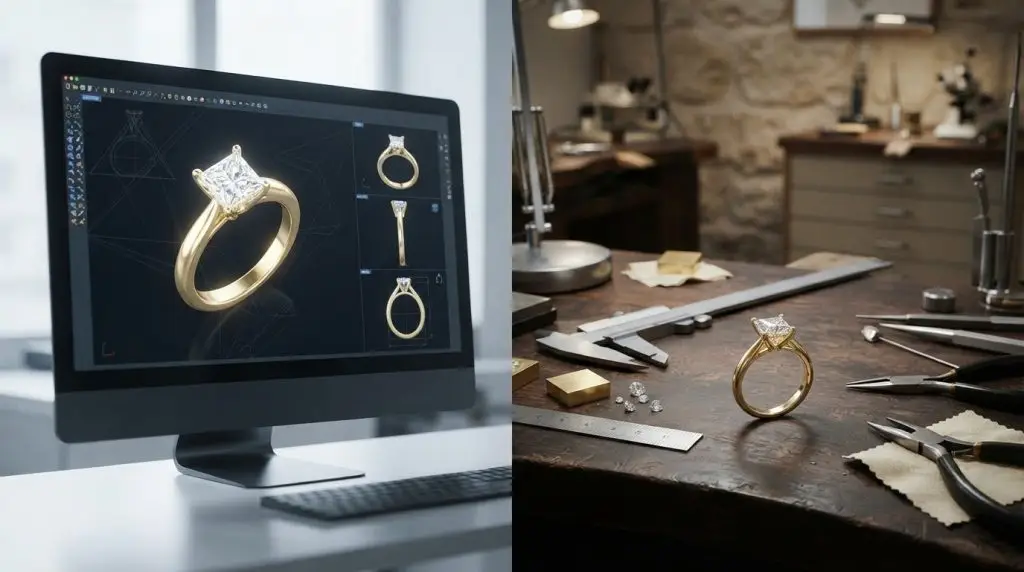
Your journey begins with a clear conversation about your vision and your budget. We offer a transparent pricing model where every shekel is accounted for in the quality of materials and the hours of artisan labor. Whether you’re looking for a ₪6,500 minimalist solitaire or a ₪30,000 bespoke masterpiece, we treat every request with the same level of artistic devotion. Our custom process is collaborative, guiding you through stone selection and 3D modeling to ensure the final piece is exactly what you imagined. You can Explore our Engagement Collection or Start a Custom Request today to see how we blend tradition with a modern, ethical edge. We don’t just make rings; we craft the gold version of your most cherished memories.
Start Your Forever With Intentional Artistry
Your engagement marks the beginning of a shared legacy, not a financial burden. By 2026, the 1940s-era three-month salary marketing myth has finally faded, replaced by intentional spending that respects your actual life goals. In the current Israeli market, couples are finding that a budget between ₪9,000 and ₪28,000 can secure a stunning, high-quality piece when they prioritize value over tradition. Choosing sustainable lab-grown diamonds is the smartest way to maximize this investment, as these stones typically offer 40% more brilliance and size for the same price as mined alternatives in Tel Aviv boutiques.
Deciding how much to spend on an engagement ring is a deeply personal choice that should reflect your unique story. We believe your ring should be a daily reminder of joy, handcrafted in 18k gold to last a lifetime. Our personalized custom design service focuses on transparency and artistry, ensuring every shekel goes toward beauty you’ll be proud to wear. Don’t settle for a mass-produced setting when you can create a modern heirloom that aligns with your ethics and your bank account.
Design your one-of-a-kind engagement ring with KaMila and experience the perfect blend of edgy sophistication and timeless craftsmanship. Your perfect ring is waiting to be brought to life.
Frequently Asked Questions
Is 18,500 ₪ a good budget for an engagement ring in 2026?
A budget of 18,500 ₪ is an excellent starting point for a high-quality engagement ring in Israel for 2026. This amount allows you to secure a 1.5 to 2.0 carat lab-grown diamond with premium clarity and color grades. While some traditional retailers might suggest higher figures, 18,500 ₪ comfortably covers a handcrafted 14k gold setting and a stunning stone. It’s about 15% higher than the average Israeli spend recorded in 2023, ensuring your choice remains a timeless and sophisticated piece.
Does the ‘three-month salary’ rule still apply today?
No, the three-month salary rule is an outdated marketing tactic from the 1940s that most modern couples now ignore. In a 2024 survey of Israeli couples, 72% reported spending closer to one month’s salary or a specific fixed savings amount. Deciding how much to spend on an engagement ring should depend on your personal financial health rather than an arbitrary industry percentage. Focus on finding a piece that acts as a meaningful talisman for your unique relationship and daily life.
Will my partner be disappointed if I choose a lab-grown diamond?
Most modern partners actually prefer lab-grown diamonds because they offer 30% to 40% more sparkle and size for the same price. Since these stones are chemically and physically identical to mined diamonds, the only real difference is their ethical origin and better value. In 2025, lab-grown options accounted for over 55% of all engagement ring sales in Israel. Choosing a sustainable alternative shows you value both artistry and conscious luxury, which often deepens the emotional story behind the ring.
How can I make a small diamond look bigger without spending more?
You can increase the visual impact of a stone by choosing a “halo” setting or a very thin 1.5mm band. A halo of smaller pavé diamonds can make a 0.50 carat center stone look like a 1.0 carat diamond for a fraction of the cost. Additionally, selecting an elongated shape like an oval or marquise creates the illusion of a larger surface area on the finger. These design choices allow you to maximize your budget while maintaining an elegant, minimalist aesthetic that feels fresh.
Is it better to spend more on the diamond or the gold setting?
You should allocate approximately 70% to 80% of your budget to the diamond, as it’s the primary focal point and holds the most visual value. A high-quality 14k or 18k gold setting typically costs between 2,500 ₪ and 4,500 ₪ in Israel. While the setting provides the structural artistry, the diamond’s cut determines the overall brilliance and fire. Prioritizing a well-cut stone ensures the ring captures light beautifully, making every day feel special for the woman who wears it.
Should I buy the ring alone or involve my partner in the budget talk?
Statistics from 2024 show that 65% of couples now discuss the budget together before making a purchase. While the final selection can remain a surprise, talking about finances ensures the ring aligns with your joint future goals and lifestyle. This collaborative approach reduces stress and ensures the piece reflects her personal style and your shared values. It transforms the purchase from a simple transaction into a celebratory milestone that respects both your partnership and your financial boundaries.
What are the most common hidden costs when buying a ring?
The most frequent hidden costs include the 17% VAT in Israel, annual insurance premiums, and future resizing fees. Insurance typically costs 1% to 2% of the ring’s value annually, which is roughly 200 ₪ to 400 ₪ for a mid-range piece. You should also account for professional appraisals required by insurance companies, which can cost around 350 ₪. Factor these expenses into your initial calculations to ensure your total spend stays within your comfortable limit without any unpleasant surprises at the checkout.
Related Posts
Questions to Ask a Jeweler About Their Sourcing Ethics
-
Posted by
מילה קלר
What if “ethically sourced” tells you less than the answer to one careful question? When choosing a piece with personal meaning, it’s natural to want…
Ensuring Your Final Ring Matches the 3D Render
-
Posted by
What if the image you approved is a beautiful preview, but not a complete specification for the ring being made? Ensuring the final ring matches the…
Finding an English-Speaking Custom Fine Jewelry Designer in Israel: A Complete Guide
-
Posted by
Your most cherished jewelry shouldn’t just be an accessory; it’s a piece of your history that deserves to be understood without a translator. When…
How to Convince Your Husband to Upgrade Your Wedding Ring
-
Posted by
What if your wedding ring wasn’t just a relic of who you were when you said “I do,” but a luminous reflection of the woman you’ve become today? Many…
Minimalist Gold Rings: A Guide to Curating Your Timeless 18K Collection
-
Posted by
Your jewelry shouldn’t have an expiration date. Too many of us have felt the frustration of a cherished piece tarnishing or causing skin irritation…
Getting a Better Price Than Big Brand Jewelers in Israel: The Insider’s Guide 2026
-
Posted by
That iconic logo on a shopping bag in a Tel Aviv mall might feel like a mark of quality, but it’s often the most expensive way to buy a memory. When…

Common Regrets After Buying an Engagement Ring: How to Choose a Forever Piece
-
Posted by
What if the most significant purchase of your life becomes a source of quiet hesitation every time you get ready in the morning? It’s a heavy…

15 Essential Questions to Ask a Jeweler Before They Start Designing Your Piece
-
Posted by
You’ve spent months dreaming of a piece that captures your unique story, but as the jeweler picks up their pencil, a flicker of anxiety often sets…
Hidden Halo Engagement Rings: A Guide to Subtle, Modern Brilliance (2026)
-
Posted by
What if the most captivating detail of your jewelry wasn’t meant for the rest of the world to see, but was a secret kept just for you? Many couples…
Handcrafted Minimalist Jewelry in Israel: A Guide to Modern Elegance (2026)
-
Posted by
Why settle for jewelry that simply fills a space when you could wear a piece that captures the depth of your own story? If you’ve been searching for…
Stacking Gold Bracelets in Israel: The Ultimate Guide to Curating Your Wrist
-
Posted by
What if your most precious jewelry pieces weren’t reserved for formal galas, but were designed to be lived in every single day? Many women feel a…
Jewish Gold Jewelry: Modern Israeli Artistry for 2026
-
Posted by
Why should a piece of jewelry that represents your deepest identity feel like a heavy, outdated relic from a different century? Most of us have…