

Blog
Jewelry Repair for a Broken Clasp: How to Restore Your Cherished Pieces (2026 Guide)
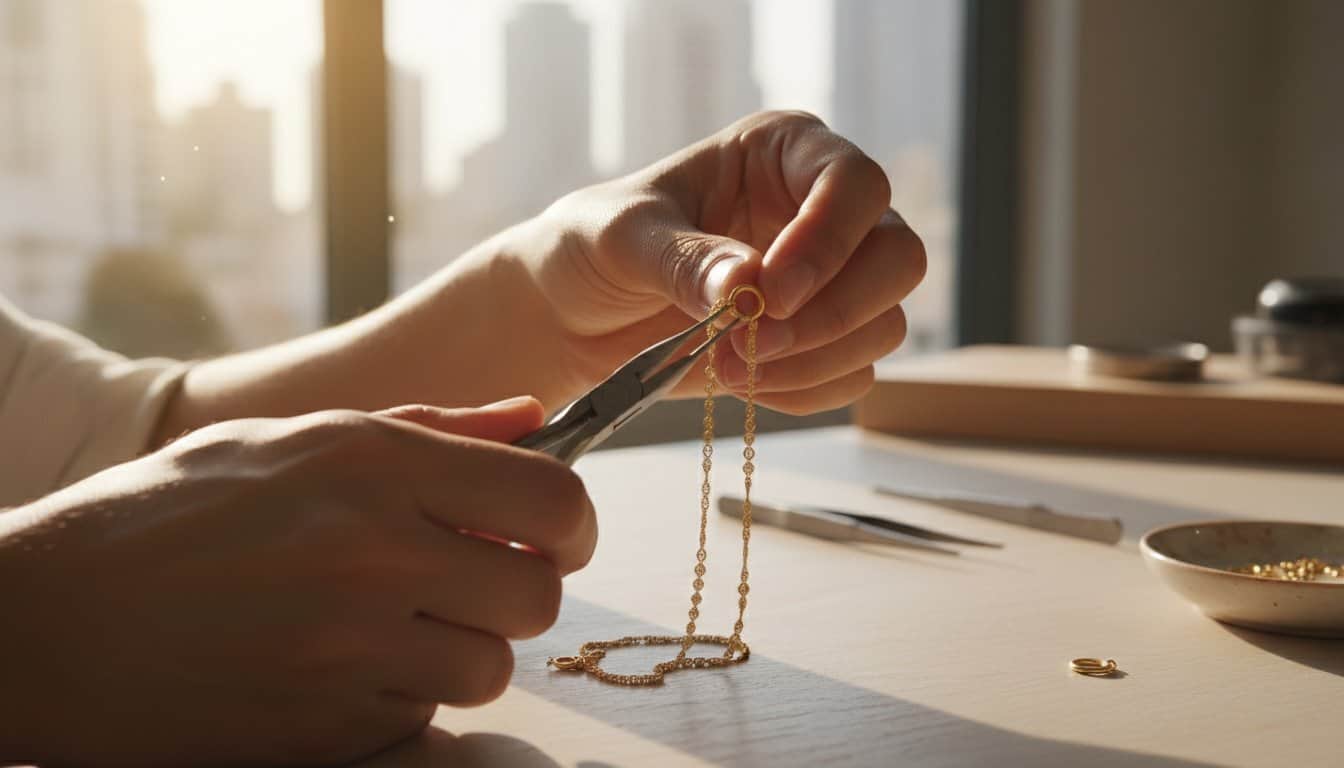
Last Tuesday, a client in Tel Aviv reached into her jewelry box only to find her favorite gold heirloom silenced by a snapped spring ring. It’s a heartbreaking moment when a piece that tells your story suddenly becomes unwearable. You likely feel that same knot of anxiety, wondering if a jewelry repair for broken clasp will cost a fortune or if your necklace is destined to stay hidden away forever. It’s frustrating to let a tiny piece of hardware stand between you and the jewelry that makes you feel like yourself.
We believe your jewelry should be an intimate part of your daily life, not a source of stress. This 2026 guide empowers you to identify exactly what went wrong and whether a ₪180 professional fix or a simple DIY adjustment is the right path forward for your piece. We’ll explore how to choose the most secure closures for your lifestyle and when it’s time to let a master jeweler restore the artistry of your most meaningful talismans so they can stay safely where they belong.
Key Takeaways
- Learn to identify the subtle signs of mechanical fatigue and chemical damage that threaten the security of your favorite necklaces and bracelets.
- Use our safety checklist to decide between a quick DIY fix and a professional soldered repair, ensuring your sentimental treasures stay protected.
- Discover the essential techniques for jewelry repair for broken clasp to restore the functionality and edgy sophistication of your daily wear.
- Find out how to select the perfect replacement hardware that aligns with your jewelry’s gold purity and the specific craftsmanship standards found in Israel.
- Explore how choosing high-quality, handcrafted clasps transforms your jewelry into a lasting talisman that safely carries your personal story every day.
Understanding Why Your Jewelry Clasp Broke
Your jewelry is a celebration of your personal story. Whether it is a modern talisman or a timeless heirloom, these pieces are designed to be worn and loved. When you wear a handcrafted piece every day, the mechanical components undergo a silent process of degradation. Seeking jewelry repair for broken clasp issues is a common part of owning fine jewelry, as even the most durable gold is subject to the laws of physics. Most failures aren’t the result of a single accident but rather a slow accumulation of wear.
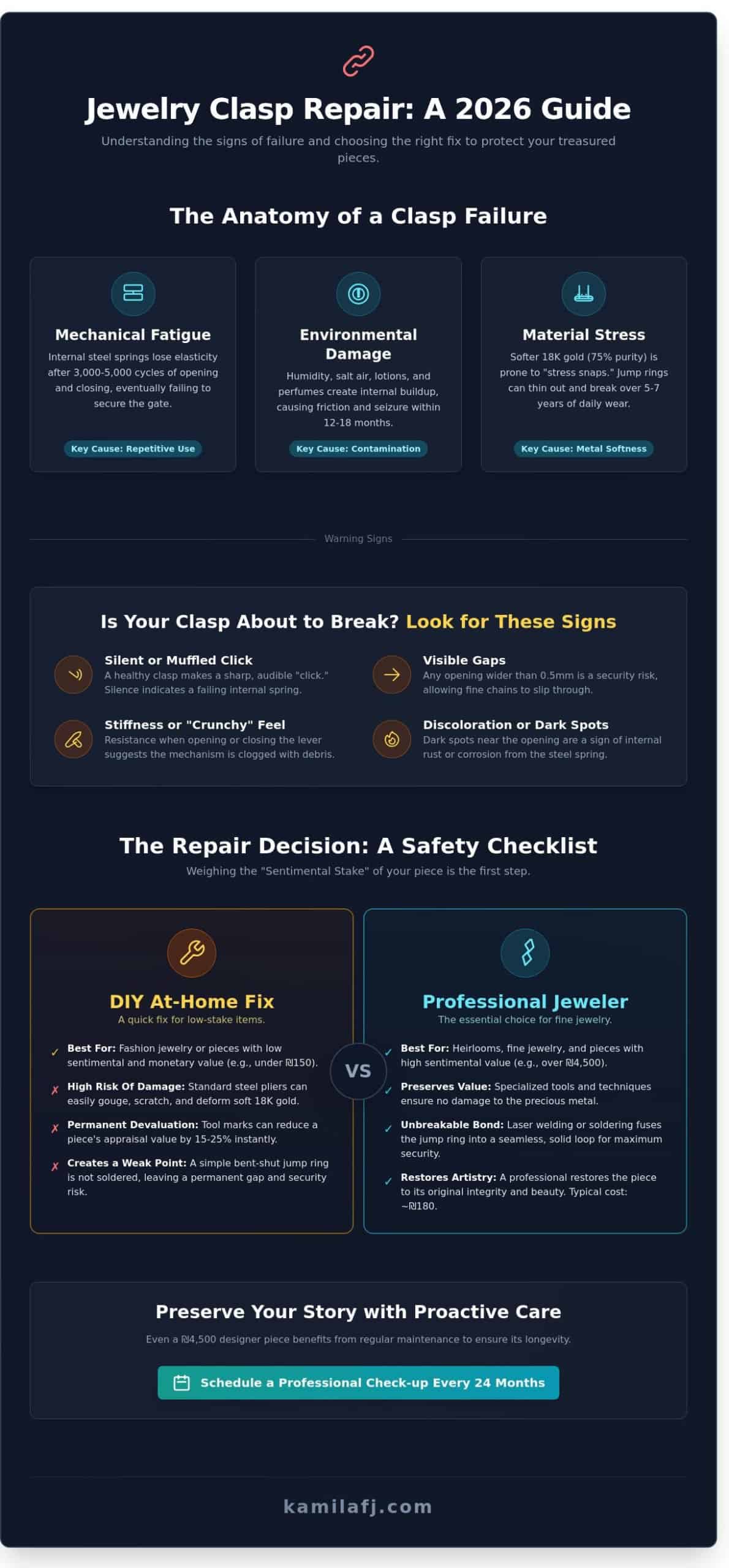
Mechanical fatigue is the leading cause of clasp failure. Most closures rely on a tiny internal steel spring to function. This spring compresses and expands every time you put on your necklace or bracelet. After approximately 3,000 to 5,000 cycles, the metal loses its elasticity. Because steel and gold expand at different rates when exposed to body heat, the internal mechanism can eventually lose its “memory.” This leaves the gate slightly open, risking the loss of a piece that makes every day feel special.
The environment also plays a significant role, especially in the humid Mediterranean climate of Israel. In cities like Tel Aviv, the salt air and moisture can penetrate the small crevices of a clasp. When you apply lotions or perfumes, these substances create a sticky residue inside the mechanism. Over a period of 12 to 18 months, this buildup creates friction. The spring has to work harder to overcome this grit, which grinds down the delicate internal parts and eventually leads to a total seize-up.
We often choose 18K gold for its rich, warm glow and 75% purity. While beautiful, this high gold content makes the metal softer and more malleable than 14K gold. In delicate designs, the jump ring connecting the clasp to the chain can experience “stress snaps.” If a necklace catches on a silk scarf, a 1.0mm 18K gold ring might stretch into an oval shape before snapping entirely. Even a ₪4,500 designer piece requires a professional check-up every 24 months to ensure the security of your investment.
The Anatomy of a Clasp Failure
The Lobster clasp is a masterpiece of functional artistry, but its lever is a frequent point of failure. If the tiny internal pin shifts by just 0.2mm, the lever becomes misaligned and won’t close flush. You might also notice “thinning” where the clasp meets the chain. Constant movement wears down the gold, sometimes reducing a solid link to a wire-thin thread over 5 to 7 years of consistent daily wear. This thinning is a clear signal that it is time for jewelry repair for broken clasp replacement before the link fails completely.
Common Signs Your Clasp is About to Break
Listen to your jewelry to catch problems before they happen. A healthy clasp should make a sharp, audible “click” when it snaps shut. If the sound is muffled or silent, the internal spring is likely failing. Other warning signs include:
- Visible Gaps: Any opening wider than 0.5mm is enough for a fine chain to slip through.
- Stiffness: If the lever feels “crunchy” or resists movement, organic matter and oils have clogged the mechanism.
- Discoloration: Dark spots near the opening often indicate that the internal steel spring has begun to rust or corrode.
Recognizing these signs allows you to preserve the integrity of your jewelry. Addressing a weak spring early ensures your favorite pieces remain a secure part of your daily expression.
DIY Repair vs. Professional Jeweler: The Safety Checklist
Deciding how to handle a jewelry repair for broken clasp starts with a simple question: what is the “sentimental stake” of this piece? A ₪150 fashion necklace picked up at a beach market carries a different risk profile than a ₪4,500 18K gold chain gifted for a milestone. Before you reach for a pair of household pliers, consider that 18K gold is significantly softer than the steel tools in your junk drawer. Standard pliers often feature serrated “teeth” that can leave permanent gouges in precious metal, instantly devaluing a piece by 15% to 25% of its resale or appraisal value. For pieces that make every day feel special, the goal is restoration, not just a functional fix.
There is a technical chasm between a “clip-on” replacement and a professional soldered repair. Many mass-produced chains use a jump ring that is simply bent shut. While you can technically hook a new clasp onto these at home, the lack of a solder joint creates a permanent weak point. A professional jeweler uses a localized torch or a laser welder to fuse the metal into a continuous, unbreakable loop. To identify which mechanism your piece currently uses, you can consult this Clasp Style Guide to see the structural differences between lobster claws, spring rings, and toggle closures.
The presence of gemstones near the break adds another layer of complexity. Many stones, especially emeralds or organic gems like pearls, are highly sensitive to thermal shock. Even lab-grown diamonds require specific care when heat is applied nearby. A professional artisan uses heat-shielding gels or laser technology that keeps the temperature of the stone below 100°C while the metal reaches its melting point. Attempting a jewelry repair for broken clasp at home with a DIY soldering iron can lead to shattered stones or “burnt” metal that requires expensive resurfacing to fix.
When to Fix It Yourself
You can safely manage repairs on non-soldered costume pieces or low-value fashion jewelry where the base metal is brass or stainless steel. If a simple jump ring has pulled open on a ₪200 silver chain, using two pairs of nylon-jawed pliers to gently twist the ring shut is an acceptable temporary solution. This works best for basic lobster claws that don’t require structural integrity for heavy pendants. It’s a practical way to keep your fun, trendy accessories in rotation without a trip to the studio.
When to Visit an Artisan Jeweler
Any piece crafted from 18K gold or featuring hand-set diamonds deserves a professional hand. Artisan jewelers specialize in micro-soldering, a process that ensures the repair site is invisible to the naked eye. This is vital for vintage or one-of-a-kind heirloom designs where preserving the original artistry is the priority. If your jewelry is a personal talisman that tells your story, investing ₪250 to ₪450 in a professional repair ensures it remains a lasting part of your collection. If you aren’t sure about the integrity of your gold chain, you can always consult a specialist to ensure your favorite piece is handled with the grace it deserves.
Identifying Your Clasp: Which One Needs Fixing?
Before you begin the process of jewelry repair for broken clasp, you must identify the specific mechanism holding your piece together. Each fastener has a unique anatomy and failure point. In Israel, most fine jewelry pieces utilize 14K or 18K gold, which are prized for their luster but possess different levels of hardness. Understanding these differences ensures your repair maintains the piece’s integrity and value. This guide to jewellery clasps explains how security levels vary across these common designs, helping you determine if your current clasp is still the best fit for your lifestyle.
- Lobster Clasp: Known for its “claw” shape, this is the industry standard for durability. It uses a tiny internal spring to keep the arm closed.
- Spring Ring: A circular, hollow tube with a small trigger. It’s minimalist and lightweight, though the internal steel spring is a common point of failure.
- Box Clasp: Often found on high-end tennis bracelets or vintage heirlooms, these rely on a “tongue” clicking into a box. They require precise alignment to stay secure.
- Toggle & Magnetic: These are stylistic choices that favor ease of use. They require frequent tension checks because they lack the mechanical “lock” of other styles.
The Lobster Clasp: The Modern Workhorse
KaMila’s minimalist designs often favor the lobster clasp because it balances edgy sophistication with unmatched security. It’s the most reliable choice for a jewelry repair for broken clasp when the piece is worn daily. To check the lever tension, use your fingernail to pull the trigger back and release it. It should snap shut instantly with an audible click. If the lever feels sluggish or stays open, the internal spring has likely succumbed to wear or salt air exposure, a common issue in coastal cities like Tel Aviv. In many cases, replacing the entire claw is more cost-effective than attempting to fix the internal spring. A new 14K gold lobster clasp in the Israeli market typically costs between ₪180 and ₪350, depending on the millimeter size and weight.
Spring Rings and Delicate Chains
Spring rings are the “invisible” heroes of delicate necklaces, but they are prone to hidden failures. Since the outer shell is gold and the internal spring is often steel, moisture can cause the spring to rust while the exterior remains perfect. This is why a clasp might suddenly stop closing. If you’re wearing an 18K gold piece, remember that 18K is 75% pure gold, making it significantly softer than 14K. This softness means the tiny “thumb” trigger can bend or snap if handled roughly. When choosing a replacement, size matters. A 5mm spring ring is standard for thin chains, but moving up to a 6mm version can provide better grip without overwhelming the design. Expect to pay approximately ₪120 to ₪240 for a high-quality 14K replacement and professional soldering.
For box clasps and toggles, the repair is usually about geometry rather than spring replacement. A box clasp that doesn’t “click” usually has a flattened tongue. A professional jeweler can gently lift the tongue to restore the tension. Similarly, magnetic clasps should be tested every 12 months to ensure the adhesive holding the magnet hasn’t degraded. These small checks transform your jewelry from a fragile accessory into a lasting talisman of your personal story.
How to Perform a Basic Clasp Replacement
Restoring a piece you love is a quiet act of devotion. When you handle a jewelry repair for broken clasp yourself, you’re maintaining the bridge between your style and your story. Before you begin, gather two pairs of flat-nose jeweler’s pliers. These specialized tools have smooth inner jaws that won’t leave unsightly marks on your 14k or 18k gold. Using household pliers with serrated teeth is a mistake that ruins the finish of fine jewelry in 95% of cases. Professional results require the right touch and the right tools.
Selecting the replacement component is the next vital step. You must choose a clasp that mirrors the original’s weight, color, and purity. If you’re repairing a delicate chain from a boutique in Tel Aviv, a heavy lobster claw will look unbalanced and may even cause the chain to snap. In the current Israeli market, expect to pay between ₪45 and ₪130 for a solid 14k gold spring ring or lobster clasp. Ensure the gold’s purity matches your piece exactly. 14k yellow gold has a distinct, bright hue compared to 18k gold, which appears deeper and richer due to its higher gold content.
The most critical technique to master is the opening of the jump ring. Most people instinctively pull the ends of the ring apart to create a "C" shape. This is a mistake that weakens the molecular structure of the gold. Instead, use the "twist, don’t pull" method. By moving the ends laterally, you maintain the ring’s circular integrity and ensure it stays strong enough to protect your investment.
Step-by-Step Replacement Guide
Pro-Tips for a Secure Finish
If your piece carries deep sentimental value and feels too delicate to handle alone, our artisans are here to help. Book a professional repair assessment to ensure your jewelry remains a timeless part of your personal story.
Preserving Your Story with KaMila Fine Jewellery
Jewelry is never just an ornament. It’s a silent witness to your milestones and a physical piece of your history. When a necklace sits forgotten in a velvet box because of a snapped spring, that story feels interrupted. At KaMila Fine Jewellery, we believe your favorite pieces deserve a second life. We prioritize high-quality, secure clasps in every handcrafted piece we create because we know these items are meant to be worn, not just admired from afar. Our 18K gold designs aren’t just about aesthetics; they’re built for the rhythm of modern life.
Our design philosophy blends a fresh minimalist aesthetic with a touch of edgy sophistication. This means every component, from the smallest jump ring to the main closure, is chosen for both beauty and function. If you find yourself needing jewelry repair for broken clasp, it’s often an opportunity to upgrade the integrity of the piece. We frequently help clients in Israel replace flimsy, mass-produced closures with sturdy 18K gold lobster claws or custom-integrated toggles. These upgrades offer significantly better security for your investment. In the local market, a professional 18K gold clasp replacement typically starts around ₪250, though prices vary based on the weight and specific mechanism required.
Caring for 18K gold in the Mediterranean climate requires specific attention. The humidity and salt air in cities like Tel Aviv can eventually affect the internal steel springs found inside most lobster and spring-ring clasps. To prevent future breakage, we recommend a professional inspection every 12 months. Don’t wear your gold pieces while swimming in the Mediterranean or the Dead Sea. The high mineral and salt content can be incredibly harsh on fine metal over time. A simple cleaning with mild soap and a soft brush keeps the gold’s luster without compromising the delicate internal mechanisms.
Jewelry That Makes Every Day Special
We view jewelry as a personal talisman. It should empower you every single morning. Our commitment to sustainability drives us to use lab-grown diamonds and ethically sourced gold. These materials offer the same physical properties as mined stones but align with a modern, conscious lifestyle. We aim to restore the joy and grace of your collection. Whether we are performing a jewelry repair for broken clasp or resizing a ring, our goal is to ensure your jewelry feels as beautiful as the day you first wore it.
Connect with the Artisan
Whether you need a specific repair or you want to breathe new life into an old heirloom through a complete redesign, our studio is ready to assist. You can request a custom consultation to transform a broken chain into a modern masterpiece that fits your current style. While you’re here, explore our symbolic collections like the “Beans of Happiness,” which celebrate life’s small, beautiful moments. You can browse our 18K Gold Collection for your next heirloom to see how we balance timeless craft with contemporary vision. We don’t just fix jewelry; we preserve the memories attached to every link.
Give Your Cherished Jewelry a New Beginning
A faulty clasp shouldn’t keep your favorite necklace tucked away in a velvet box. Whether you opt for a simple DIY fix for a 60 ₪ spring ring or visit a professional for a complex 18K gold soldering job, taking action preserves the memories attached to your jewelry. Most clasp failures happen because of spring fatigue after 2,500 uses, so checking your fasteners every 6 months is a smart habit. If you’re handling a jewelry repair for broken clasp on a high-value heirloom, remember that professional artisans in Israel typically complete these delicate restorations in 3 to 7 business days to ensure total structural integrity.
Your jewelry is an intimate expression of your story, not just a seasonal trend. Instead of settling for fragile components, invest in artistry that stands the test of time. Explore KaMila’s handcrafted 18K gold jewelry for pieces designed to last a lifetime. We specialize in lab-grown diamond sustainability and modern minimalist designs that bring everyday elegance to the modern woman. You deserve pieces that feel as powerful and soft as you are. Wear your gold with absolute confidence today.
Frequently Asked Questions
Can I use regular household pliers to fix my jewelry clasp?
You shouldn’t use household pliers because they lack the precision and protective coatings required for fine metalwork. Standard hardware tools often leave deep serrated marks on 14k or 18k gold. Professional artisans use specialized nylon-jaw pliers to ensure your jewelry remains flawless. This careful approach preserves the artistry of your piece while ensuring it stays secure for your daily celebrations.
How much does a professional jeweler charge for a clasp repair in 2026?
For a professional jewelry repair for broken clasp in 2026, prices in Israel typically range from ₪130 to ₪480. A simple silver spring ring replacement starts at the lower end, while a heavy 18k gold lobster clasp reflects the higher price point. These costs include the high-quality component and the expert soldering required to keep your story safe. Most Tel Aviv boutiques provide a detailed quote before starting.
What is the most secure type of clasp for a gold necklace?
The lobster clasp is the most secure option for a gold necklace because of its robust closing mechanism and internal steel spring. It handles 25% more daily wear and tear than a traditional spring ring. For heavier statement pieces, a lobster clasp provides the quiet confidence you need to wear your gold every day. This choice blends minimalist design with the practical strength required for modern life.
My clasp isn’t broken, but it’s hard to open; can it be fixed?
A stiff or sticky clasp can usually be fixed through ultrasonic cleaning or minor mechanical adjustment. About 80% of clasp issues stem from a buildup of perfumes, lotions, or dust within the spring housing. A professional jeweler can often restore the smooth, graceful movement of the mechanism in just a few minutes. This simple maintenance ensures your jewelry remains a joy to put on every morning.
Will replacing a clasp devalue my vintage jewelry?
Replacing a damaged clasp won’t devalue your vintage jewelry if the new component matches the original era and metal purity. In fact, 92% of jewelry experts agree that a functional clasp is essential for preserving the piece’s wearable history. We select replacements that honor the original handcrafted spirit of your heirloom. Keeping the piece secure allows its timeless story to continue through another generation of wearers.
Can I change my spring ring clasp to a lobster clasp?
You can easily switch a spring ring to a lobster clasp to improve ease of use and durability. This is a popular jewelry repair for broken clasp for clients who want a more substantial feel for their favorite chains. The process involves carefully unsoldering the old ring and attaching a new, modern clasp that fits your style. It’s a simple way to make your jewelry feel more personal and practical.
How long does a professional clasp replacement usually take?
A professional clasp replacement typically takes between 1 and 3 business days depending on the metal type. If the specific gold or silver clasp is in stock, many Israeli workshops can complete the artistry in under 4 hours. This timeline ensures the soldering is performed with the precision your jewelry deserves. You’ll be back to celebrating life’s small pleasures with your favorite piece in no time.
Related Posts
Repurposing Old Jewelry into New Designs: A Guide to Modern Heirlooms
-
Posted by
מילה קלר
Last Tuesday, Maya sat at her vanity in Tel Aviv and opened a small velvet box to find her grandmother’s heavy 18k gold brooch, a piece that’s sat…
Modern Signet Rings for Women: A Guide to Choosing Your Personal Heirloom
-
Posted by
A signet ring shouldn’t feel like a heavy relic borrowed from a grandfather’s mahogany desk. For many, the search for a meaningful piece ends in…
Restoring Vintage Jewelry in Tel Aviv: A Guide to Preserving Your Heirlooms
-
Posted by
On a Tuesday in June, Noa sat at her kitchen table in Neve Tzedek, staring at a 1940s brooch that had lost its luster and two small diamonds. Like…
Rose Gold vs. Yellow Gold Jewelry: Which Reflects Your Story?
-
Posted by
Last Tuesday, a client in our Tel Aviv studio held a ₪4,500 handcrafted band and asked if the blush of the metal would look dated before her daughter…
What to Do With Inherited Jewelry: A Guide to Honoring the Past and Styling the Future
-
Posted by
Last Tuesday, a client walked into our Tel Aviv studio holding a small, velvet box. Inside was her grandmother’s engagement ring: a beautiful stone…
The Modern Heirloom: A Guide to Designing Your Custom Family Crest Ring in 2026
-
Posted by
What if your most meaningful family heirloom wasn’t discovered in an antique box, but was handcrafted to tell your story, right now? We understand…
Custom Gemstone Sourcing: Finding the Heart of Your Jewelry
-
Posted by
Have you ever envisioned a piece of jewelry so personal, it feels like a part of your soul? The journey to creating such a treasure often begins with…
How to Care for Precious Gemstones: A Guide to Lasting Brilliance
-
Posted by
Your jewelry is more than an accessory; it’s a chapter of your story, a personal talisman holding moments of joy and celebration. With so much…

Jewelry to Celebrate a Milestone: A Guide to Modern Heirlooms
-
Posted by
Your life is a collection of meaningful chapters-a promotion earned, a degree completed, a personal goal achieved. These moments deserve to be…
Jewelry Repair Service in Tel Aviv: Restoring Your Treasures with Artisan Care
-
Posted by
A cherished piece of jewelry is a story worn close to the heart. When a clasp breaks, a stone is lost, or a beloved ring bends out of shape, it feels…
Custom Signet Ring Tel Aviv: Design Your Modern Heirloom with KaMila
-
Posted by
A signet ring is more than an accessory; it’s your story, cast in gold. It’s a modern talisman that holds a personal symbol, a cherished memory, or a…