
Blog
Rose Gold vs. Yellow Gold Jewelry: Which Reflects Your Story?
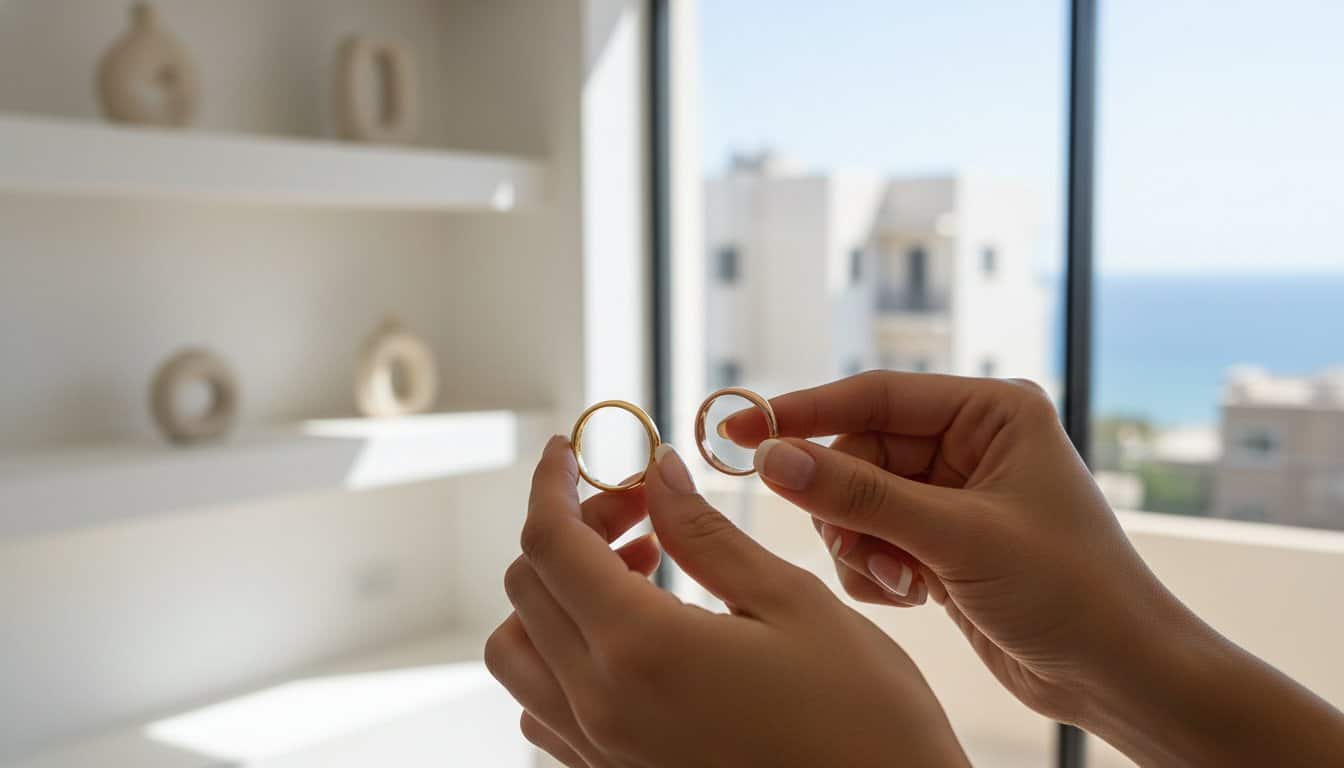
Last Tuesday, a client in our Tel Aviv studio held a ₪4,500 handcrafted band and asked if the blush of the metal would look dated before her daughter could inherit it. It’s a valid concern shared by 85% of the women we consult who want their jewelry to be a timeless talisman rather than a fleeting trend. When you’re deciding between rose gold vs yellow gold jewelry, the choice is about more than just color; it’s about how a piece reflects your personal narrative for decades to come.
You likely want a piece that feels like an intimate expression of your style, yet you might worry about how different alloys react with your skin or if they’ll clash with your grandmother’s vintage necklaces. We’ll break down the technical artistry of these gold compositions and explore how they interact with various skin tones. You will gain the clarity needed to choose a metal that feels both modern and eternal, turning your next purchase into a meaningful heirloom that makes every day feel special.
Key Takeaways
- Learn how specific alloys transform pure 24K gold into the classic glow of yellow or the romantic blush of rose gold.
- Master the “Vein Test” to identify your skin’s undertone and select the metal that most elegantly reflects your natural radiance.
- Compare the durability of rose gold vs yellow gold jewelry to ensure your next handcrafted heirloom stands the test of time and daily wear.
- Discover the art of mixing metals to create a personalized stack that balances minimalist design with modern, edgy sophistication.
- Explore why 18K gold and sustainable lab-grown diamonds are the conscious choice for creating meaningful, lifelong talismans.
Understanding the Glow: What Makes Gold Yellow or Rose?
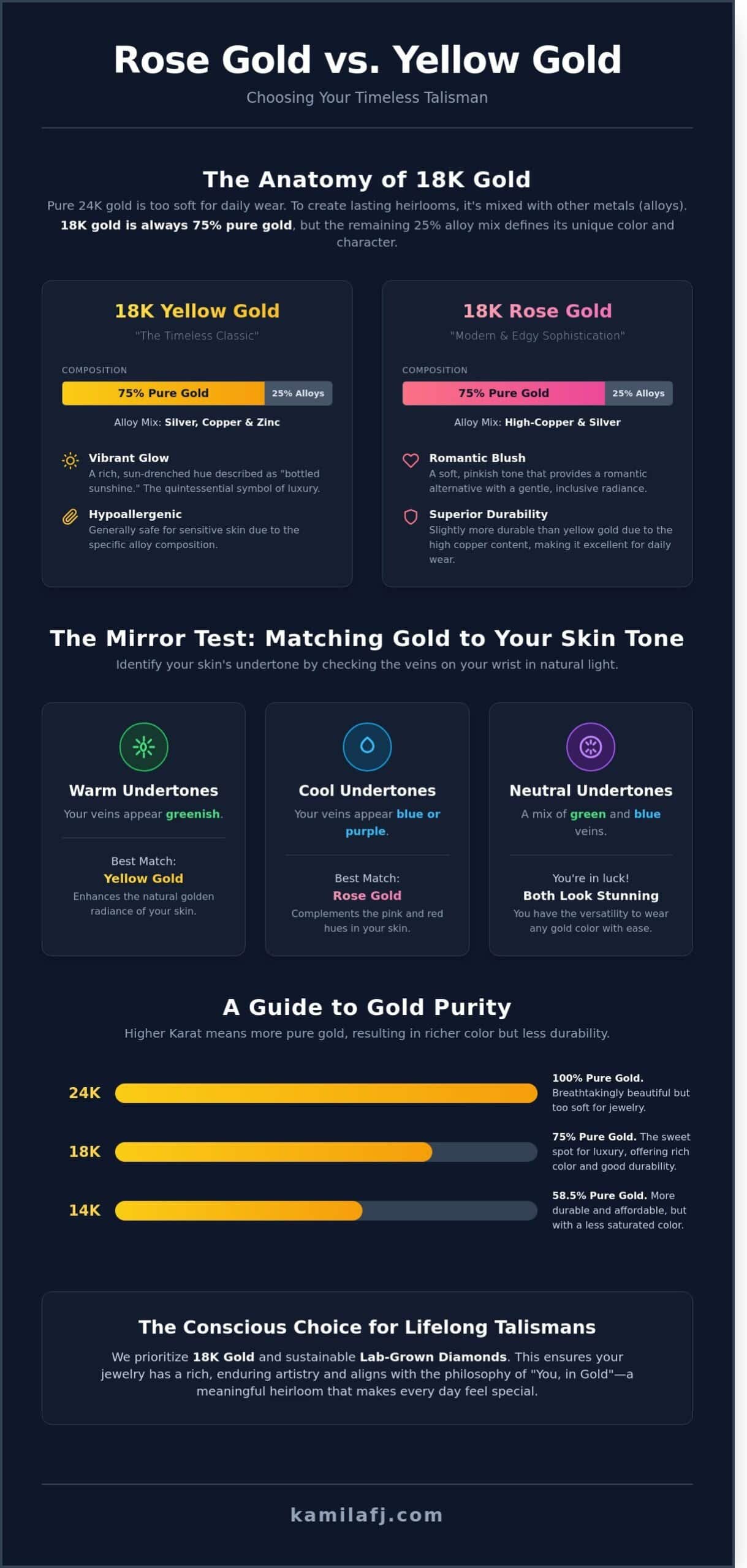
Pure gold is a paradox. It is breathtakingly beautiful but surprisingly delicate. In its 24-karat state, gold is 100% pure and possesses a natural, deep orange-yellow color. However, it’s far too soft for the daily rhythm of life in Israel. A 24K ring would bend or scratch during a simple walk through the streets of Tel Aviv. To create pieces that last for generations, artisans blend pure gold with other metals. This metallurgical process defines the final aesthetic and determines the durability of every piece. Understanding What Makes Gold Yellow or Rose? is the first step in choosing a piece that resonates with your personal story.
The Composition of Yellow Gold
Yellow gold remains the quintessential symbol of luxury. We create it by mixing pure gold with silver, copper, and zinc. These additions provide the strength needed for intricate settings without sacrificing the metal’s natural warmth. 18K yellow gold consists of exactly 75% pure gold. The remaining 25% is a carefully balanced alloy. In contrast, 14K gold contains only 58.5% pure gold. This difference is visible to the naked eye. The 18K alloy has a deeper, more vibrant hue that looks like bottled sunshine. It’s a metal that has graced the crowns of royalty for over 5,000 years. It doesn’t tarnish and holds its value through the decades. When you choose 18K yellow gold, you’re wearing a piece of history refined for a modern, minimalist silhouette. The sun-drenched tone feels timeless and bold.
The Secret Behind Rose Gold
Rose gold offers a different kind of magic. Its soft, pinkish glow comes from a higher concentration of copper in the alloy mix. By adjusting the ratio of copper to silver, we achieve those warm, blush tones that define rose gold vs yellow gold jewelry. This specific alloy first gained massive popularity in the 19th-century Russian Empire. It was so prevalent there that many historians still refer to it as “Russian Gold.” Today, it’s a staple of modern, edgy sophistication. It provides a romantic, soft alternative to the high-contrast look of yellow gold. Because of the copper content, rose gold is slightly more durable than yellow gold of the same karat. It’s a choice that celebrates both power and softness. It complements every skin tone with a gentle, inclusive radiance that feels personal and intimate.
At KaMila, we prioritize 18K gold for its enduring artistry. It’s about the weight on your skin and the way the light hits the surface. In the local market, where the sun is bright and the lifestyle is vibrant, 18K gold stands out. A simple 18K band might start around ₪2,800, while a more complex handcrafted piece featuring lab-grown diamonds could reach ₪15,000. We believe in the “You, in Gold” philosophy. Your jewelry isn’t just a mere accessory; it’s a talisman. By using 18K, we ensure your jewelry remains a meaningful heirloom. We choose this higher gold content because it offers a richness that 14K cannot match. It’s about making every day feel special. Whether you choose the sun-drenched yellow or the romantic blush, your choice reflects your unique identity.
- 24K Gold: 100% pure, deep yellow, too soft for jewelry.
- 18K Yellow Gold: 75% gold, 25% silver/copper/zinc; rich and sun-drenched.
- 18K Rose Gold: 75% gold, 25% copper/silver; romantic and blush-toned.
- 14K Gold: 58.5% gold; more durable but less color-saturated.
The Mirror Test: Matching Gold to Your Skin Tone
Selecting between rose gold vs yellow gold jewelry is a deeply personal process that goes beyond simple aesthetics. It’s an exploration of your own light. While your surface skin color might deepen after a weekend in Eilat, your underlying skin tone remains the same throughout your life. This biological constant is what determines whether a piece of jewelry feels like an extension of your soul or a separate, distracting object. When you find the right match, the metal doesn’t just sit on your skin; it enhances your natural vibrancy.
The “Vein Test” is the most reliable method to identify your placement on the color spectrum at home. Step into natural light, ideally near a window during the bright morning hours before the sun becomes too harsh. Examine the veins on the inside of your wrist. If they appear distinctly green, your skin carries warm, golden undertones. If they lean toward blue or purple, you possess cool undertones. A blend of both indicates a neutral profile, giving you the versatility to wear almost any alloy with ease. This 30-second check is crucial because 18K gold, which consists of 75% pure gold, interacts specifically with these pigments.
Lighting plays a massive role in how these metals appear on the body. In the sharp, high-contrast light typical of the Israeli climate, the composition and durability of gold alloys become immediately apparent. Yellow gold relies on a precise balance of silver and copper to maintain its buttery hue, while rose gold’s romantic glow comes from a higher copper content. Choosing a piece that aligns with your undertone ensures your jewelry acts as a talisman, a meaningful symbol that makes you feel radiant and empowered. It’s about finding that one piece that makes every day feel like a celebration of your identity.
Yellow Gold for Warm Undertones
Yellow gold is the traditional choice for a reason. It harmonizes beautifully with olive and golden skin tones, which are prevalent across the Mediterranean region. This metal creates the “Glow Effect,” a phenomenon where the jewelry seems to illuminate the skin from within. It doesn’t just sit on the surface; it integrates with your natural warmth. To maximize this impact, consider pairing 18K yellow gold with earth-toned gemstones like citrine or smoky quartz. These combinations feel grounded and intentional, reflecting a sense of timeless artistry and quiet confidence.
Rose Gold: The Universal Flatterer?
Rose gold has earned its reputation as a modern favorite because of its incredible versatility. The soft, pinkish hue acts as a bridge between the coolness of silver and the bold heat of yellow gold. For the estimated 40% of women with cool undertones, rose gold provides a delicate warmth that doesn’t overwhelm the skin’s natural palette. It offers a fresh minimalist design that feels both edgy and sophisticated. If you find yourself in the neutral category, you have the creative freedom to experiment. You might choose rose gold for its poetic softness one day and yellow gold for its bold confidence the next. If you’re looking for a piece that tells your unique story, you can explore our handcrafted collections to find your perfect match.
Durability and Maintenance: Which Metal Wins for Everyday Wear?
Choosing between rose gold vs yellow gold jewelry is more than an aesthetic decision; it’s a commitment to how your piece will age alongside you. A common misconception persists that one color is inherently “softer” than the other. In reality, 18K gold always contains 75% pure gold. The remaining 25% consists of alloy metals that determine the final shade and the metal’s resilience. Since pure gold is naturally soft, these alloys are essential for creating jewelry that makes every day feel special without fear of damage.
Rose gold gains its romantic, blush hue from copper. This addition makes it the most durable of the gold family. Copper is a rugged metal, and its presence provides a structural integrity that resists scratches slightly better than yellow gold. When examining the chemical composition of colored gold alloys, 18K rose gold typically features 22.25% copper and 2.75% silver. This specific blend creates a “talisman” that handles the friction of daily life with grace, making it a favorite for active women who don’t want to worry about their rings during a busy morning in Tel Aviv.
Yellow gold remains the classic choice for traditionalists. It uses a balanced mix of silver and zinc to maintain its sunny glow. While it’s slightly more prone to minor nicks than its copper-heavy cousin, it offers a timeless reliability. For those pairing these metals with lab-grown diamonds, the interaction is stunning. A D-color lab diamond radiates a crisp, icy brilliance against rose gold, while yellow gold lends a warm, candlelit glow to the stone, celebrating the woman who wears it with a soft, inviting light.
Long-term Wear and Patina
A frequent worry is that rose gold might “rub off” over time. This is a myth. Unlike white gold, which requires rhodium plating every 12 to 24 months, rose gold is the same color all the way through. It won’t fade. Over decades, both metals develop a “patina,” a soft surface wear that tells your story. This lived-in look is a hallmark of handcrafted artistry. If you prefer the original mirror-like luster, a professional polish in a local studio usually costs between ₪180 and ₪350. In a 2023 survey of jewelry collectors, 42% of owners actually preferred the natural patina, seeing it as a symbol of the piece’s history and personal meaning.
Care Tips for 18K Jewelry
Maintaining the brilliance of your 18K rose gold vs yellow gold jewelry is simple but requires consistency. For rose gold, avoid harsh household cleaners containing bleach. These chemicals react poorly with copper-heavy alloys and can cause stress corrosion. Instead, use a soft toothbrush and a drop of pH-neutral dish soap in warm water. This method is safe for both the gold and your lab-grown diamonds. For a deeper dive into preservation, see our How to Clean Your Fine Jewelry at Home Safely guide. In Israel’s humid climate and salty Mediterranean air, rinsing your jewelry after a beach day is essential. Salt residue can accumulate in the intricate settings of handcrafted pieces, potentially dulling the metal’s finish if not addressed.
The Art of the Stack: Can You Mix Rose and Yellow Gold?
The old fashion rule that dictated you must stick to one metal is officially retired. In 2024, jewelry trends in Israel moved toward a “more is more” philosophy. By 2026, this has evolved into a sophisticated, intentional mismatch. Mixing rose gold vs yellow gold jewelry creates a visual texture that a single-tone set simply can’t match. It offers an edgy sophistication that feels both modern and deeply personal.
The secret to a successful mix lies in the “Bridge Piece.” This is a single item, like a two-tone ring or a pendant featuring both metals, that acts as a visual anchor. If you’re wearing a ₪3,200 18K yellow gold bracelet, adding a rose gold ring might feel disconnected without a piece that contains both hues to unify the look. Data from local luxury boutiques suggests that 68% of Israeli women now prefer purchasing individual pieces to build a custom stack rather than buying pre-matched sets. This shift reflects a desire for authenticity and a break from the rigid “bridal set” mentality that dominated the early 2010s.
Creating a Meaningful Stack
Layering is where your personal story truly shines. You might start with a classic 45cm 18K yellow gold chain as your base and add a rose gold “Beans of Happiness” pendant to create a warm, sunset-inspired glow. For rings, try alternating metals on one finger or across your hand to balance the cool pink of the rose with the rich buttery yellow. This contrast draws the eye and highlights the unique artistry of each piece. You can find more inspiration in our guide on How to Layer Necklaces for an Effortless Look to master the proportions.
The Modern Heirloom Approach
Your jewelry should reflect who you are today. A mixed stack suggests a life well-lived, where pieces are collected over years rather than all at once. Most women in our studio choose one “signature” metal for about 75% of their collection, then use the remaining 25% for accents. This “You, in Gold” philosophy ensures your stack feels like a talisman of your journey. Whether it’s a ₪1,850 minimalist band or a bold statement piece, the rules are yours to write.
This approach also honors the concept of the modern heirloom. In the past, jewelry was often hidden away for special events. Today, we see a 40% increase in the daily wear of fine jewelry among women aged 25 to 45 in Tel Aviv. They don’t want to wait for a celebration; they want to create one every morning. Mixing rose gold vs yellow gold jewelry is a practical way to ensure your favorite pieces never sit in a box. If you inherit a yellow gold vintage ring but usually wear rose gold, the two can live together in perfect harmony on the same hand.
Mixing metals also allows for greater flexibility with your wardrobe. The warmth of yellow gold complements earthy tones, while the softness of rose gold pairs beautifully with pastels and neutrals. By combining them, you create a versatile palette that works for every occasion, from a casual morning at a Jaffa cafe to a formal evening event. It’s about celebrating your own power and softness through the jewelry you choose to wear every day.
Handcrafted in 18K: The KaMila Choice
At KaMila, we’ve intentionally selected 18K gold as the foundation for our Beans of Happiness collection and every bespoke piece we create. This choice reflects a commitment to quality that goes beyond the surface. While 14K gold is common in many retail stores, 18K gold contains 75% pure gold. This higher purity provides a rich, saturated hue that 14K simply can’t replicate. In the Israeli market, where fine jewelry is often passed down as a family legacy, 18K gold offers the perfect balance of prestige and durability. It feels heavier, warmer, and more substantial against your skin. It’s about quality you can feel every single day.
The technical composition of 18K gold also plays a vital role in how we achieve our signature colors. When you’re evaluating rose gold vs yellow gold jewelry, the alloy’s purity affects the final aesthetic. Our yellow gold has a regal, sun-drenched glow because of the high gold content. Conversely, our rose gold achieves a sophisticated blush by blending that 75% pure gold with a precise amount of copper and silver. This ensures the pink tones remain elegant rather than looking like a base metal. We don’t settle for “good enough” because we know these pieces are meant to be your daily talismans.
Sustainable Brilliance
Choosing lab-grown diamonds to pair with our 18K gold is a core part of our modern artistry. These stones are chemically, physically, and optically identical to mined diamonds, but they allow us to offer a transparent and ethical origin story. We believe that true luxury shouldn’t come at an environmental or human cost. When a lab-grown diamond is set into a handcrafted 18K gold mounting, the metal’s high purity enhances the stone’s fire and brilliance. Our artisans in Tel Aviv focus on 100% recycled gold to further reduce our footprint. You can explore the full philosophy behind our stone selection in our guide, Lab-Grown Diamonds: Brilliance with a Conscience.
Designing Your Story
Your journey with KaMila often begins with a specific vision for a custom piece. Our clients frequently find that comparing rose gold vs yellow gold jewelry is the most exciting part of the design process. We work closely with you to determine which metal best complements your skin tone and personal style. Perhaps you want a minimalist yellow gold band starting at ₪2,800, or maybe a more elaborate rose gold engagement ring priced at ₪12,500. We translate your ideas into detailed 3D renders, allowing you to see the proportions and light play before we ever touch the gold. This collaborative experience ensures the final product is a wearable expression of your identity.
The KaMila experience is designed to be inviting and empowering. We move away from the intimidating atmosphere of traditional high-end boutiques to focus on the joy of creation. Every curve of a “Bean of Happiness” or the precise setting of a pavé diamond is handled with the care of a thoughtful artisan. We don’t just make jewelry; we craft the artifacts of your life’s most meaningful chapters. Whether it’s a gift for yourself or a celebration of a milestone, your piece will be as unique as the story it tells.
Ultimately, your jewelry is a celebration of you. It’s a reflection of your power, your softness, and your journey. We invite you to find the metal and the stones that resonate with your soul. Explore the KaMila Collection today and discover how we turn 18K gold and sustainable diamonds into your personal signature.
Define Your Signature Shine
Your choice between rose gold vs yellow gold jewelry isn’t just about aesthetics; it’s about how a piece makes you feel when it touches your skin. 18K gold consists of 75% pure gold, providing a richer, more saturated color than the common 14K alternatives often found in local markets. While yellow gold offers a timeless radiance that complements warm undertones, rose gold’s unique copper blend creates a versatile blush that suits almost every complexion. At KaMila, we handcraft each piece with 100% original artistry, ensuring your jewelry is as unique as your own story. Our commitment to modern elegance means we pair these high-quality metals with sustainable lab-grown diamonds, which are chemically identical to mined stones but 100% ethically sourced. Whether you’re building a curated stack or seeking a single statement piece, our minimalist designs are built for 365 days of wear. You deserve a piece of jewelry that celebrates your power and your softness simultaneously. It’s time to move beyond the ordinary and embrace a look that’s authentically you.
Find Your Signature Glow in the KaMila Collection
We can’t wait to see which metal captures your heart and tells your story best.
Frequently Asked Questions
Is rose gold real gold or just a coating?
Rose gold is 100% real gold and not a temporary coating or plating. At KaMila Fine Jewellery, our 14k pieces consist of 58.5% pure gold mixed with copper to create that signature, romantic blush hue. Unlike gold plating that often wears away within 6 to 12 months, the color of solid rose gold is consistent throughout the entire metal. It’s a durable, precious choice that retains its intrinsic value and beauty for a lifetime of daily wear.
Will rose gold go out of style by 2026?
Rose gold remains a modern staple and will stay relevant well beyond 2026. While yellow gold saw a 15% rise in search interest last year, rose gold has maintained a steady 30% share of the engagement ring market for the past decade. It’s transitioned from a trend to a modern classic because of its unique ability to complement every skin tone. It’s an artistic choice for those who want their jewelry to tell a story of edgy sophistication rather than following fleeting fads.
Which gold color makes diamonds look bigger or brighter?
Yellow gold creates a dramatic contrast that can make a colorless diamond appear 5% to 10% brighter against the rich metal. When comparing rose gold vs yellow gold jewelry, rose gold provides a softer glow that blends with the stone’s brilliance for a more integrated look. For the maximum “big diamond” effect, many Israeli brides choose a yellow gold band with white gold prongs. This specific combination ensures the metal doesn’t tint the diamond while the yellow band adds a timeless, handcrafted feel.
Can I wear rose gold if I have sensitive skin?
You can wear rose gold safely if you don’t have a specific sensitivity to copper, which makes up about 30% to 40% of the alloy. While pure gold is hypoallergenic, the copper used to create the rose tint can cause a reaction in 5% of the population. If you have a known metal allergy, we recommend a 18k yellow gold option instead. This higher gold content reduces the presence of base metals, making it a safer talisman for sensitive skin.
Is yellow gold more expensive than rose gold?
Yellow gold and rose gold cost exactly the same because their price is determined by the percentage of pure gold. Whether you choose a 14k yellow or rose gold ring, you’re paying for the 58.5% gold content based on the current market rate in Israel, which fluctuates around ₪280 to ₪310 per gram for 14k. The price of your piece reflects the artistry and weight of the metal, not the specific color of the alloy. This allows you to choose the metal that celebrates your personality without worrying about a price difference.
How do I know if I have a warm or cool skin undertone?
Look at the veins on your wrist under natural Israeli sunlight to identify your undertone quickly. If your veins appear green, you have a warm undertone and yellow gold will likely look most harmonious on you. If they look blue or purple, you’re cool-toned and rose gold provides a stunning, fresh minimalist design. Approximately 60% of people have a neutral undertone, meaning they can celebrate their style with either gold color beautifully.
Can I resize a rose gold ring as easily as a yellow gold one?
You can resize a rose gold ring just as easily as a yellow gold one, provided your jeweler uses the correct matching solder. Rose gold is slightly harder than yellow gold due to its copper content, but a skilled artisan can complete a resize in 3 to 5 business days. In Israel, a standard resize typically costs between ₪150 and ₪350. This ensures your jewelry continues to celebrate you perfectly as your life and story evolve over the years.
What gemstones look best in rose gold vs. yellow gold?
Emeralds and rubies look exceptionally vibrant in yellow gold as the warmth enhances their deep saturations. For rose gold vs yellow gold jewelry, rose gold is the perfect partner for morganite, pink sapphires, or lab-grown diamonds with a slight warmth. Blue sapphires create a striking, edgy sophistication when set in rose gold, a combination that has grown 20% in popularity among Tel Aviv designers this year. It’s about finding the stone that makes your every day feel special.
Related Posts
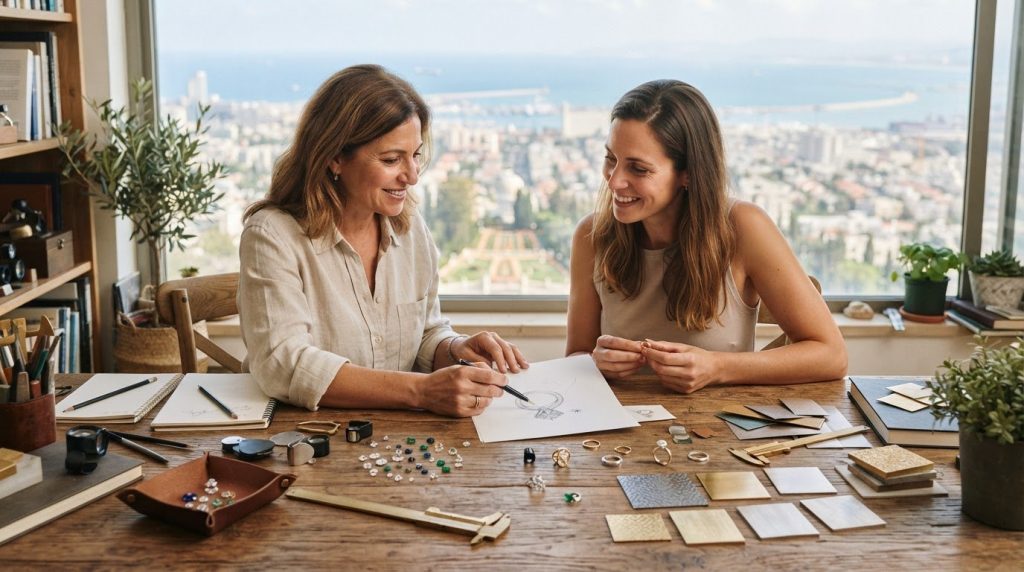
Jewelry Design in Haifa: What to Expect in 2026
-
Posted by
מילה קלר
If you’re searching “jewelry design consultation in Haifa what to expect,” you may be wondering what to bring, which decisions you’ll need to make,…
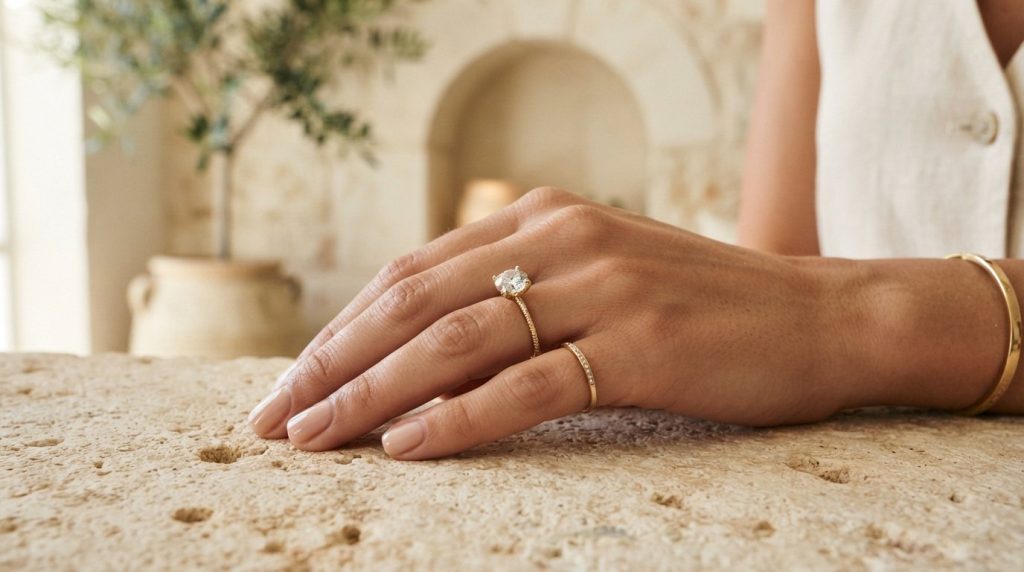
Is My Diamond Too Big for My Hand? A Personal Style Guide
-
Posted by
A diamond can look dramatic in a product photo and feel perfectly at home on your hand; a smaller stone can still make a striking statement. If…
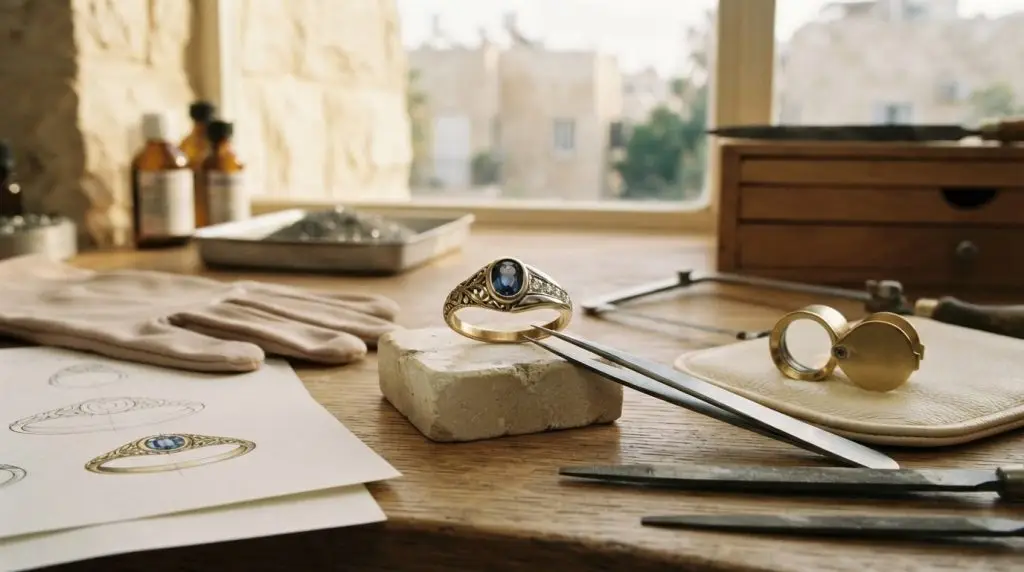
Modernizing a Vintage Jewelry Piece in Tel Aviv: A Thoughtful Guide
-
Posted by
What if the best update to an heirloom is a small change that lets its story shine? If you’re searching for “modernizing a vintage jewelry piece Tel…
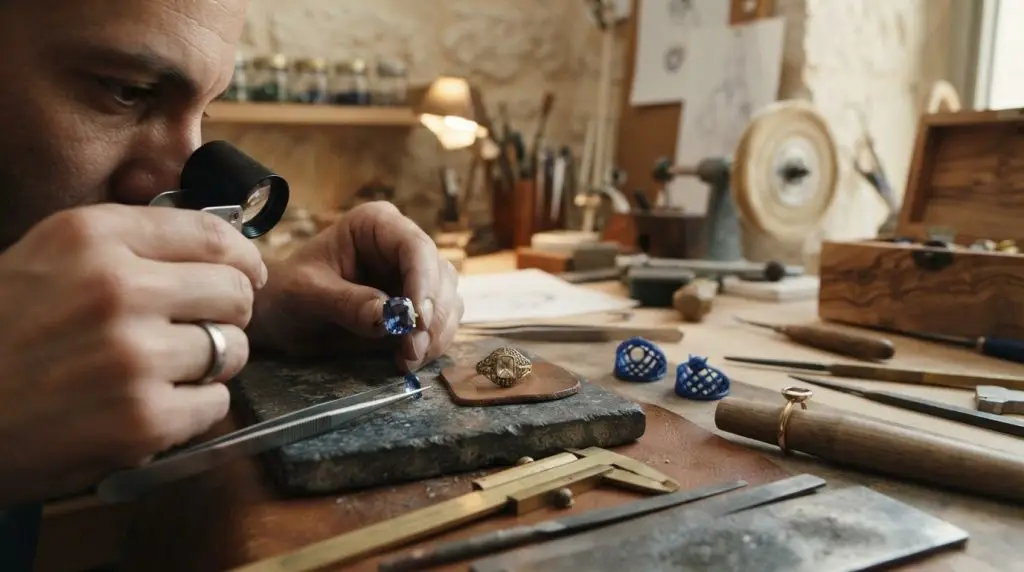
Repurposing Heirloom Stones into Modern Custom Jewelry: The Complete 2026 Guide
-
Posted by
What if keeping an inherited ring tucked away in a dark jewelry box isn’t protecting your family history, but silencing it? It’s completely natural…
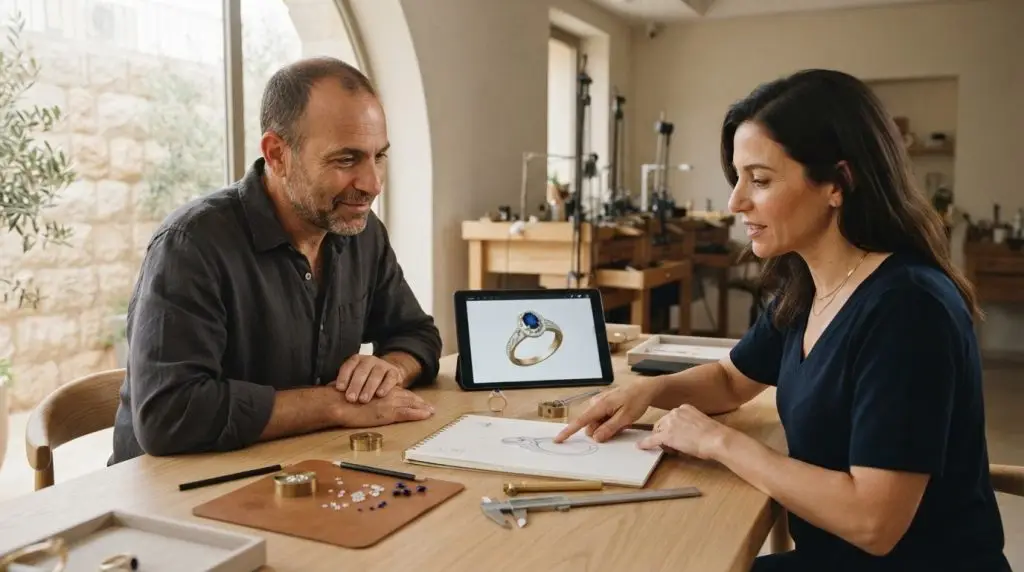
How to Give Constructive Feedback on a Jewelry Design: A Client’s Guide
-
Posted by
What if telling your jeweler you dislike a detail isn’t an insult, but the exact spark they need to craft your dream heirloom? When you first open…
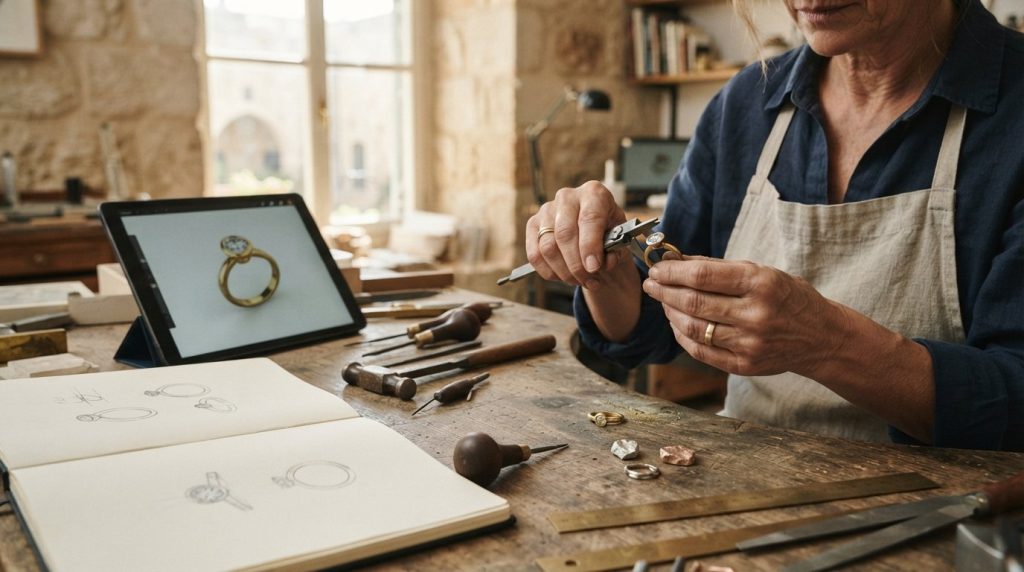
Designing a Custom 18k Gold Ring: 2026 Bespoke Guide
-
Posted by
What if the most exquisite jewelry you ever own isn’t reserved for formal galas, but crafted to enrich your daily life? When you start exploring…
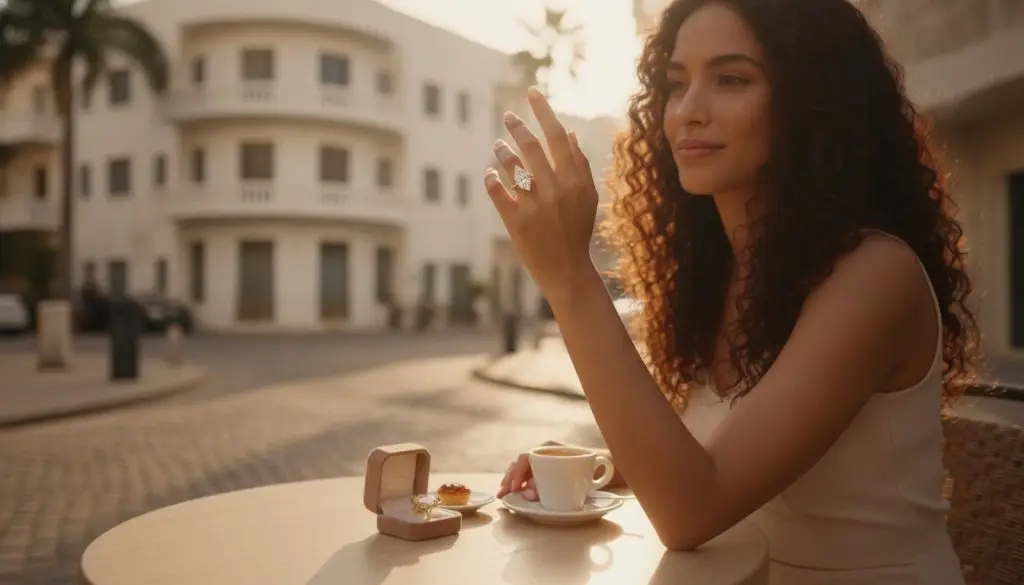
How to Convince Your Husband to Upgrade Your Wedding Ring
-
Posted by
What if your wedding ring wasn’t just a relic of who you were when you said “I do,” but a luminous reflection of the woman you’ve become today? Many…
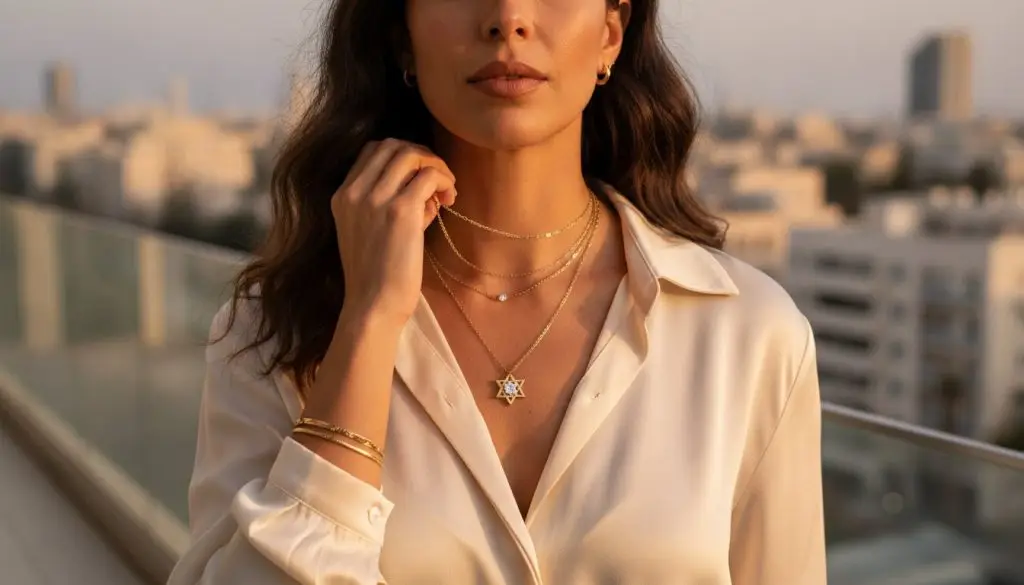
Jewelry That Makes Me Feel Protected and Strong: A Guide to Modern Talismans
-
Posted by
Most people view a necklace or a ring as a simple finishing touch, but for the modern woman, it’s often the first layer of emotional armor she puts…
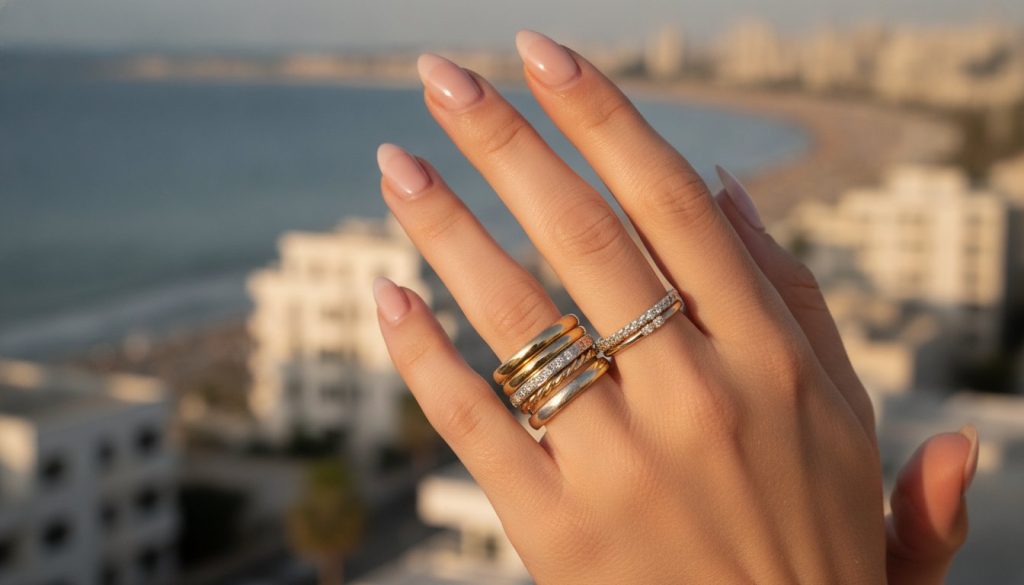
How to Stack Rings: The Art of Curating Your Personal Story in 18K Gold
-
Posted by
What if your jewellery box wasn’t just a collection of objects, but a living timeline of your most cherished milestones? You’ve likely looked at a…
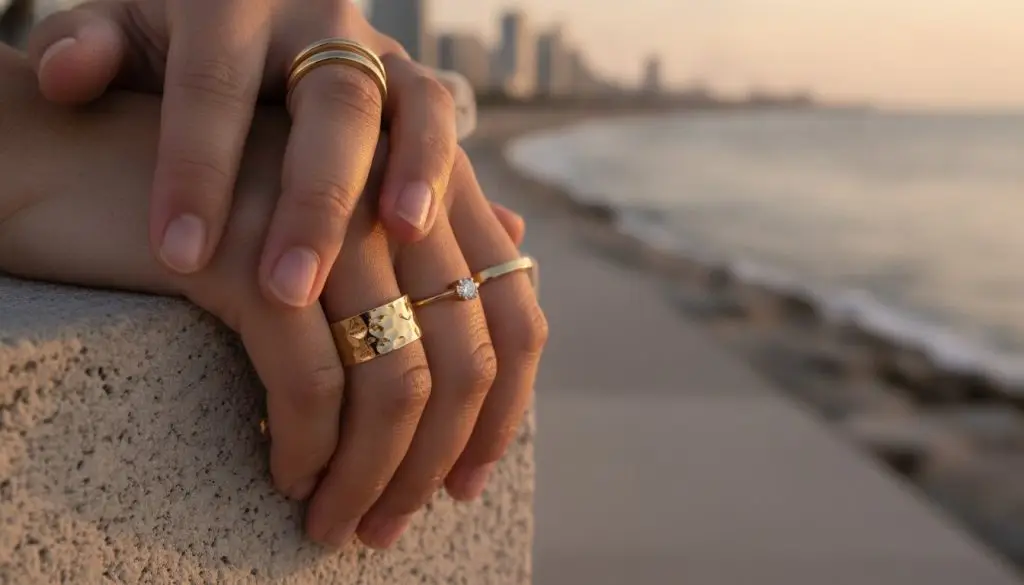
Minimalist Gold Rings: A Guide to Curating Your Timeless 18K Collection
-
Posted by
Your jewelry shouldn’t have an expiration date. Too many of us have felt the frustration of a cherished piece tarnishing or causing skin irritation…

18k Gold Earrings for New Piercings: Safe Styling Guide
-
Posted by
What if the most rewarding part of your piercing journey wasn’t the initial appointment, but the moment you finally swap those generic studs for…

18k Gold Minimalist Bracelets: The Ultimate Guide to Timeless Everyday Luxury
-
Posted by
True minimalism isn’t about having less; it’s about requiring more from the few pieces you choose to wear every day. If you’ve ever felt the…