

Blog
White Gold vs Platinum for Wedding Bands: A Guide to Choosing Your Forever Metal
What if the most important decision about your wedding ring isn’t the diamond, but the metal that holds it? You’ve likely spent months envisioning the perfect design, yet the choice between white gold vs platinum for wedding bands often comes down to how you live your life every day. It’s a choice that balances the immediate sparkle of a new piece with the reality of how it will age over decades. You want a band that feels like a natural extension of your personality, not a source of maintenance stress.
We understand that you want your jewelry to be a timeless talisman of your love. Whether you’re concerned about the ₪250 cost of periodic rhodium replating in Israel or you’re one of the 15% of people globally with a nickel sensitivity, finding the right fit is essential for your comfort. This guide reveals the nuanced differences between these two precious metals to ensure your choice reflects your personal style and enduring story. We’ll compare durability, hypoallergenic properties, and the long-term price gap to give you total confidence in your forever metal.
Key Takeaways
- Uncover the secret behind their shared silver glow and learn how to manage the maintenance cycles of rhodium plating versus the soft, storied patina of time.
- Resolve the white gold vs platinum for wedding bands dilemma by weighing the tactile luxury of platinum against the practical, scratch-resistant elegance of white gold.
- Understand the value behind the price gap in Israel, where a 30-50% increase in ILS (₪) translates to a denser, more pure metal choice for your forever piece.
- Evaluate the “durability paradox” to choose a setting that offers both daily comfort and the ultimate security for your most meaningful symbols.
- Align your choice with your personal artistry, ensuring your wedding band serves as a modern talisman that beautifully reflects your unique story.
The Aesthetic Mirror: Why White Gold and Platinum Look Alike (But Aren’t)
In 2026, the search for the perfect silver-toned wedding band usually leads to two primary contenders. On a jeweler’s velvet tray, these metals appear virtually identical. This visual mimicry is intentional; most couples struggle with the choice of white gold vs platinum for wedding bands because, at the moment of purchase, they share the same brilliant, icy radiance. This section peels back the surface to show how these metals reflect your personal story differently over a lifetime of wear.
While they look like twins on day one, their biological makeup is entirely different. One is a master of disguise, using artistry to achieve its cool glow. The other is a pure expression of its natural state. Understanding this distinction is the first step in choosing a piece of jewelry that makes every day feel special. Your choice impacts not just the initial cost in Israeli Shekels, but the maintenance ritual you’ll perform for decades to come.
What is 18k White Gold?
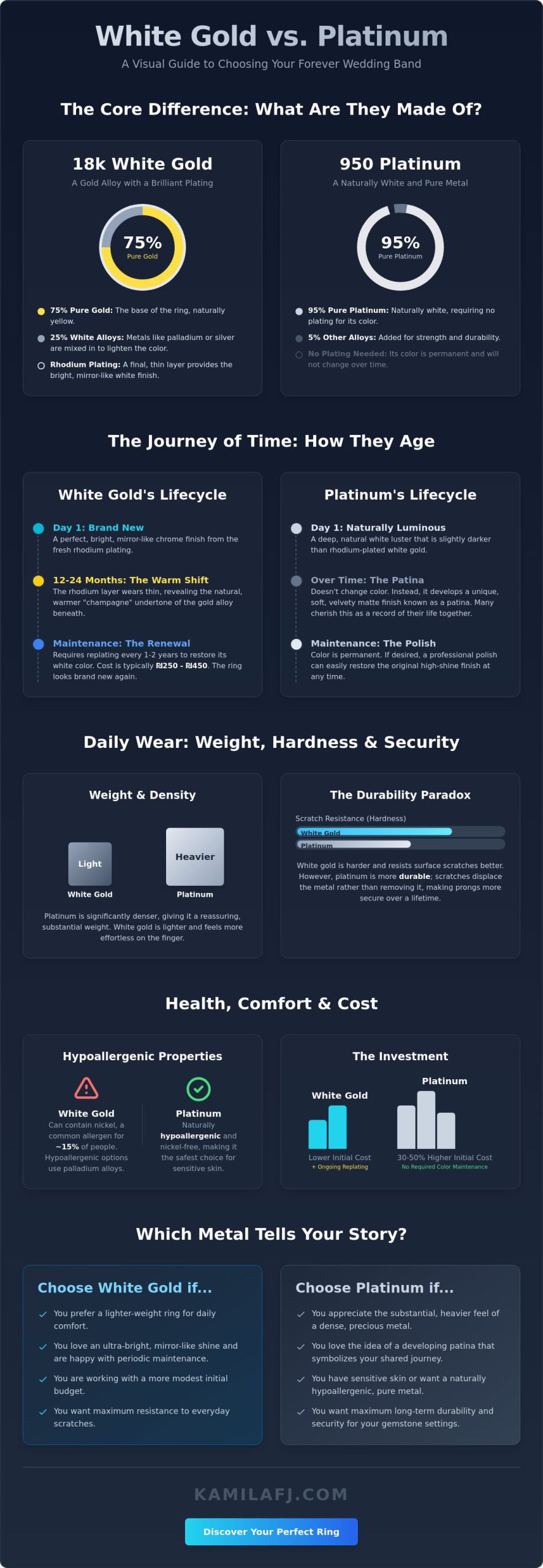
Gold is naturally yellow. To achieve a modern, cool-toned finish, 18k white gold consists of 75% pure gold mixed with 25% white alloy metals like palladium or silver. This creates a pale straw color that isn’t quite “white” yet. The final, essential step is the rhodium plating process. Rhodium is a rare metal from the platinum family that gives white gold its signature mirror-like, chrome finish.
This metal is a favorite in minimalist jewelry for its incredibly bright, reflective quality. It embodies the “You, in Gold” philosophy by offering a lightweight, high-shine option that feels effortless on the finger. However, because that white color is a plating, it’s a temporary state. Over 12 to 24 months of daily wear, the rhodium wears thin, revealing the warmer gold tones beneath.
The Nature of Platinum
Platinum stands as gold’s rare, heavier sibling. Unlike white gold, it’s naturally white. It doesn’t require a chemical mask to achieve its color. Most high-quality wedding bands use platinum in a near-pure form, typically 95%. The physical properties of platinum make it significantly denser and heavier than gold, providing a reassuring weight on the hand that many find grounding.
Because it’s white through and through, it never requires re-plating to maintain its color. This permanence makes it a premium choice for engagement rings and bands meant to last a lifetime without changing hue. While white gold stays bright through maintenance, platinum matures. It develops a “patina,” a soft matte texture that many see as a beautiful record of a life lived together. In the Israeli market, choosing platinum is often seen as a commitment to a metal that is as enduring as the vows it represents.
- White Gold: 75% gold, requires rhodium plating, stays bright with maintenance.
- Platinum: 95% pure, naturally white, develops a velvet-like patina over time.
- Initial Look: Identical cool-toned chrome finish on the wedding day.
Maintenance and Longevity: The Rhodium vs. Patina Debate
Choosing between white gold vs platinum for wedding bands often comes down to a single, anxious question: “Will my ring turn yellow?” It’s a valid concern for a piece of jewelry intended to last a lifetime. Understanding the life cycle of these metals helps transform maintenance from a chore into a meaningful ritual of care for your personal talisman. Over a ten-year period, these two metals age in fundamentally different ways, requiring distinct levels of attention to keep them looking their best.
Living with White Gold
White gold starts its life as an alloy of pure yellow gold mixed with white metals like palladium or silver. To achieve that iconic, icy brilliance, it’s finished with a thin layer of rhodium plating. This plating isn’t permanent. Within 12 to 24 months of daily wear, the rhodium begins to thin, revealing the metal’s natural “champagne” undertone. This warm glow is particularly noticeable in 18k gold because of its higher gold content. Some find this aging process beautiful, as the subtle warmth can complement Mediterranean skin tones beautifully.
Restoring white gold to its original state requires a process called “replating.” In Israeli jewelry workshops, this typically costs between ₪250 and ₪450. Over a decade, you might perform this 5 to 8 times. Each time, your ring returns looking brand new, with every tiny scratch filled and the surface gleaming with fresh rhodium. The Gemological Institute of America (GIA) explains the differences in how these coatings interact with the base metal, emphasizing that while the white gold itself is durable, its color is a maintained aesthetic.
The Platinum Patina
Platinum is a different creature entirely. It’s naturally white and will never turn yellow. However, it doesn’t stay shiny forever. As you wear a platinum band, it develops a “patina,” a soft, matte finish created by thousands of microscopic scratches. Unlike gold, which loses tiny slivers of metal when scratched, platinum is “displaced.” The metal merely moves aside, meaning your ring maintains its weight and volume over decades of wear.
- Maintenance Frequency: Platinum rarely needs professional intervention. You might choose a professional polish once every 5 years to restore the shine.
- The Symbolic View: Many couples in our community view the patina as a beautiful symbol of a long marriage; the scratches represent the years lived and the experiences shared.
- Interaction with Stones: When you set high-quality lab diamonds in platinum, the metal’s changing texture can actually make the diamond’s brilliance stand out more as the background becomes less reflective.
Whether you prefer the “forever new” look of maintained white gold or the “lived-in” history of platinum, your choice should reflect how you want to interact with your jewelry. If you appreciate a hands-on approach to preserving brilliance, you might explore our handcrafted collections to find a design that speaks to your style.
Weight, Hardness, and Daily Comfort
Choosing between white gold vs platinum for wedding bands involves more than just aesthetics. It’s about how the ring lives on your hand every single day. Your wedding band is a daily companion, a small talisman that travels through life with you, from quiet mornings to celebratory evenings. The tactile experience of these two metals reveals their true nature. Density is the scientific measurement of mass within a specific volume, and it’s the primary reason platinum feels significantly heavier on the finger.
The Feel of Luxury: Weight and Density
Platinum is approximately 40% heavier than 18k gold. This difference is immediate the moment you slide the band onto your finger. Many of our clients in Israel appreciate the “psychological weight” of platinum. It provides a constant, grounding reminder of the commitment it represents. If you prefer a ring with a significant, luxurious presence, platinum is the choice for you.
Conversely, 18k white gold offers a light, effortless feel. It’s the ideal selection for those who aren’t used to wearing jewelry or simply want a band that feels like a second skin. Gold allows for a sense of airy grace, making it perfect for delicate designs that you want to wear without a second thought. Both metals offer comfort, but the choice depends on whether you want to “feel” your ring or forget it’s even there.
Durability and Prong Security
There’s a fascinating paradox in jewelry artistry regarding hardness and durability. White gold is technically harder than platinum, which means it resists fine surface scratches slightly better in the short term. However, white gold is more brittle. Over decades of wear, the metal can slowly wear away, requiring the prongs to be rebuilt to keep your stones safe.
Platinum behaves differently. It’s a “sticky” and malleable metal. When it’s scratched, the metal isn’t lost; it merely shifts or displaces, creating a unique patina over time. This makes it the superior choice for holding diamonds securely. Platinum prongs are incredibly reliable because they bend rather than snap under pressure. According to Blue Nile’s guide to choosing your metal, this structural integrity is a major factor for those prioritizing long-term security. At KaMila, our handcrafted approach ensures that regardless of the metal chosen, your stones are set with the highest level of precision and care.
For those with sensitive skin, your choice also impacts daily comfort. Platinum is naturally hypoallergenic because it’s typically used in a 95% pure state. This minimizes the risk of skin irritation. White gold is an alloy that often includes nickel to achieve its bright, silvery tone. If you’ve experienced skin reactions to fashion jewelry in the past, the purity of platinum offers peace of mind for a lifetime of daily wear.
Cost vs. Value: Decoding the Price Gap
When you compare white gold vs platinum for wedding bands, the first thing you’ll notice is the price tag. Platinum rings typically command a premium of 30% to 50% over white gold alternatives. This isn’t just a “luxury tax” or a matter of brand prestige. It’s a reflection of the metal’s physical properties and the specialized artistry required to shape it into a symbol of your commitment. Think of this price gap as an investment in a modern heirloom. You’re choosing a piece designed to survive the daily rhythm of your life for decades without losing its essence.
The value of platinum lies in its endurance. While white gold is a beautiful and practical choice, platinum offers a weight and permanence that many couples find deeply meaningful. It’s the densest of the precious metals, giving it a substantial feel on the finger that signifies the gravity of the promises you’re making to each other.
Why Platinum Costs More
- Density: Platinum is roughly 60% heavier than 14k gold. Because precious metals are sold by weight, a platinum ring requires more actual grams of metal to create the exact same dimensions as a gold one.
- Purity: You’re paying for more “noble” metal. An 18k white gold ring is 75% pure gold mixed with other alloys. In contrast, platinum jewelry is typically 95% pure, meaning there’s very little “filler” in your band.
- Craftsmanship: Platinum is a stubborn metal that demands respect at the jeweler’s bench. It has a melting point of 1,768°C, which is significantly higher than gold’s 1,064°C. This requires specialized torches, high-heat environments, and tools that wear down quickly. The time required to polish and finish platinum to a mirror shine is nearly double that of gold.
The Long-Term Budget View
While platinum has a higher upfront cost, white gold comes with a recurring maintenance schedule. To keep that crisp, silvery finish, white gold requires rhodium plating every 18 to 24 months. In Israel, this professional service usually costs between ₪180 and ₪350 per visit. Over 20 years of marriage, those maintenance costs can add up to ₪3,500 or more, often exceeding the initial price difference of a platinum band.
Choosing 18k white gold is a strategic move for couples who want to prioritize different elements of their jewelry. By opting for white gold, you can often reallocate those immediate savings toward a larger lab diamond or a more intricate setting. It allows you to maximize the visual impact of your ring within your current budget while still enjoying the elegance of a handcrafted piece.
Find the metal that resonates with your personal style in our handcrafted wedding band collection.
The Artisan Choice: Selecting the Metal That Tells Your Story
Deciding between white gold vs platinum for wedding bands is an intimate step in your journey together. It’s about more than just comparing technical specs or price points; it’s about how a piece of jewelry integrates into the rhythm of your daily life. At KaMila, we believe jewelry is a modern talisman. It’s a celebration of personal identity that should feel like a natural extension of your soul. Your ring shouldn’t just sit on your finger. It should tell your story with every gesture, reflecting your values and your unique aesthetic.
Whether you’re drawn to the edgy sophistication of a high-shine finish or the grounded, substantial feel of a rare metal, your choice is a reflection of your personal narrative. We see every wedding band as a piece of wearable art that makes every day feel special. The right metal isn’t just a setting for a stone. It’s the foundation of a memory you’ll carry for decades.
Choose 18k White Gold if…
You love the bright, mirror-like finish of rhodium. This plating gives white gold its signature icy glow that many Israeli brides find irresistible. It’s the perfect choice if you prefer a lightweight, “barely-there” feel for your gold bracelets and rings. You’ll enjoy the ritual of professional cleaning and the occasional “refreshing” of your jewelry. A quick rhodium dip every 12 to 24 months at a professional studio keeps the piece looking as crisp as the day you first wore it.
Choose Platinum if…
You have sensitive skin or a known nickel allergy. Platinum is 100% hypoallergenic, making it a safe and gentle choice for a lifetime of constant wear. You might want a “heirloom” weight that feels substantial and significant on the hand. Because platinum is 60% denser than gold, it offers a comforting, secure presence. You’ll value a metal that never changes color and develops a unique, matte character called a patina over time, which many believe adds a layer of depth and history to the piece.
- Daily Feel: Do you prefer the effortless lightness of 18k gold or the significant, grounded weight of platinum?
- Maintenance Style: Are you comfortable with a brief maintenance ritual every few years to maintain a mirror shine, or do you prefer a metal that ages gracefully with a matte finish?
- Skin Sensitivity: If you’ve ever experienced irritation from fashion jewelry, platinum’s 95% purity provides total peace of mind.
- Budget Allocation: In the Israeli market, 18k white gold often allows for a larger stone or a more intricate design within the same budget compared to platinum.
Choosing between white gold vs platinum for wedding bands is a beautiful dilemma to have. Both metals offer timeless elegance and the durability required for a lifetime of love. We invite you to explore our custom designs that blend these precious metals with unique artistry and sustainable practices. Let’s create a piece that isn’t just jewelry, but a reflection of you, in gold or platinum.
Defining Your Forever in Metal
Your wedding band isn’t just an accessory; it’s a daily talisman of your shared commitment. Deciding between white gold vs platinum for wedding bands depends on how you want your story to feel on your skin. 18k white gold is a sophisticated choice, composed of 75% pure gold and finished with rhodium for a high-shine brilliance. It’s lightweight and bright, though it requires a refresh every 12 to 24 months to maintain its luster. Platinum is the artisan’s choice, boasting a melting point of 1,768°C and a natural density that resists thinning over decades. While it develops a storied patina, its strength is ideal for those with active lifestyles.
At KaMila Fine Jewellery, we believe every ring should be as unique as your bond. Each piece is handcrafted in our Israel studio using premium 18k gold and the finest materials. Whether you’re looking for sustainable lab-grown diamond options or our personalized custom design service to bring a specific vision to life, we’re here to guide you. Discover your perfect wedding band in our collection of handcrafted 18k gold and platinum rings. Your journey toward a lifetime of elegance starts with a single, meaningful choice.
Frequently Asked Questions
Is white gold or platinum better for someone with sensitive skin?
Platinum is the superior choice for sensitive skin because it’s naturally hypoallergenic and typically 95% pure. Most white gold alloys contain approximately 10% to 15% nickel, which is a common allergen that affects roughly 1 in 7 people according to dermatological studies. Choosing platinum ensures your wedding band remains a comfortable, daily expression of your story without the risk of irritation or skin reactions.
Will my white gold wedding band turn yellow over time?
Your white gold wedding band will eventually show a warm, yellowish tint as the outer rhodium plating wears away through daily use. White gold is an alloy of yellow gold mixed with white metals, so it requires a fresh coat of rhodium every 12 to 24 months to maintain its bright, silvery finish. This natural evolution is part of the metal’s life, though many women in Israel prefer the crisp look of a newly plated piece to celebrate their personal style.
Why does platinum scratch so easily if it’s considered more durable?
Platinum is more durable because it’s a dense metal that doesn’t lose volume when scratched; instead, the metal merely shifts to create a “patina” finish. While gold loses tiny particles over decades of wear, platinum’s high density means it holds stones more securely over a lifetime. This unique characteristic makes it a meaningful choice for those who value a talisman that survives the rigors of daily life while developing a soft, vintage character.
How often do I need to re-plate a white gold wedding ring?
You should plan to re-plate your white gold wedding band every 12 to 18 months depending on your lifestyle and skin chemistry. Frequent exposure to household chemicals or friction can accelerate this timeline, making the underlying warm tones visible sooner. In the Israeli climate, where we enjoy outdoor activities and sea air, a professional rhodium treatment restores that edgy sophistication and brilliant luster you loved on your wedding day.
Can I wear a platinum engagement ring with a white gold wedding band?
You shouldn’t wear a platinum engagement ring with a white gold wedding band because the harder platinum will gradually wear down the softer gold through constant friction. Over 5 to 10 years, this rubbing can significantly thin your gold band or even damage the settings. For a cohesive and lasting look, it’s best to match the metals when comparing white gold vs platinum for wedding bands to ensure your jewelry suite ages gracefully together.
Which metal is better for a minimalist, modern ring design?
White gold is often the preferred choice for a minimalist, modern ring design because its rhodium finish provides a sharper, more clinical white glow. This metal choice perfectly complements the clean lines and fresh minimalist design of contemporary jewelry. White gold offers a lightweight feel that suits an active lifestyle while maintaining an elegant, sophisticated silhouette that feels effortless and personal for the modern woman.
Does 18k white gold look different from 14k white gold?
There’s no visible difference between 18k and 14k white gold once they’ve been finished with rhodium plating. Both alloys receive the same bright white coating, so they look identical to the naked eye at the time of purchase. The real distinction lies in the gold content; 18k gold contains 75% pure gold, making it slightly heavier, whereas 14k gold contains 58.3% gold and offers increased hardness for those with very active hands.
Is platinum worth the extra cost for a simple wedding band?
Platinum is worth the extra investment for a simple band because its density and weight provide a luxurious, grounded feel that gold can’t replicate. While a platinum band may cost 40% to 60% more than a 14k gold version in the local market, its longevity means it won’t require recurring ₪250 to ₪400 rhodium plating fees every year. It’s a thoughtful choice for a forever piece that remains a pure, white talisman without the need for constant maintenance.
Related Posts

18k Gold Earrings for New Piercings: Safe Styling Guide
-
Posted by
מילה קלר
What if the most rewarding part of your piercing journey wasn’t the initial appointment, but the moment you finally swap those generic studs for…

18k Gold Minimalist Bracelets: The Ultimate Guide to Timeless Everyday Luxury
-
Posted by
True minimalism isn’t about having less; it’s about requiring more from the few pieces you choose to wear every day. If you’ve ever felt the…

18k Gold Stud Earrings: The Ultimate Guide to Everyday Luxury
-
Posted by
Why should the jewelry you wear every single day be the piece that irritates your skin or loses its radiance before the season even turns? It’s a…

Handcrafted Minimalist Jewelry in Israel: A Guide to Modern Elegance (2026)
-
Posted by
Why settle for jewelry that simply fills a space when you could wear a piece that captures the depth of your own story? If you’ve been searching for…

The Ultimate Guide to Choosing a Minimalist 18k Gold Necklace in 2026
-
Posted by
Is your jewelry box a collection of “for now” pieces or a reflection of your forever story? Many women find themselves caught in a cycle of buying…
Everyday Diamond Rings: A Guide to Modern, Wearable Luxury
-
Posted by
Your finest diamonds shouldn’t spend their lives hidden in a dark velvet box, waiting for a “special enough” occasion that rarely arrives. True…
Minimalist Gold Rings: A Guide to Timeless Elegance
-
Posted by
A piece of jewelry is never just an object; it’s a silent language and an intimate expression of your personal history that you carry through every…
18k Gold Earrings for Sensitive Ears: Luxury & Comfort
-
Posted by
What if the jewelry you love didn’t demand a sacrifice in comfort? Many of us have experienced the stinging disappointment of red, swollen earlobes…
18k Gold vs 14k Gold Jewelry: A Guide to Choosing Your Modern Heirloom
-
Posted by
Choosing the metal for your next investment isn’t just a technical decision; it’s an intimate choice about the legacy you carry on your skin. When…
Best Earrings for Newly Pierced Ears: The 2026 Guide to Healing in Style
-
Posted by
Your first set of earrings shouldn’t feel like a medical prescription. Many people assume that the healing phase requires sacrificing personal style…
18k Gold Bracelets for Women: A Guide to Timeless Everyday Elegance
-
Posted by
Why settle for jewelry that loses its luster after a few months when you can wear a piece of the sun that grows more meaningful with every pulse of…
18k Gold Stud Earrings: The Ultimate Guide to Everyday Luxury and Purity
-
Posted by
What if the jewelry you wear closest to your skin isn’t just an accessory, but a silent guardian of your comfort and a daily celebration of your…