

Blog
What to Look for When Buying Gemstone Jewelry: A Modern Artisan’s Guide
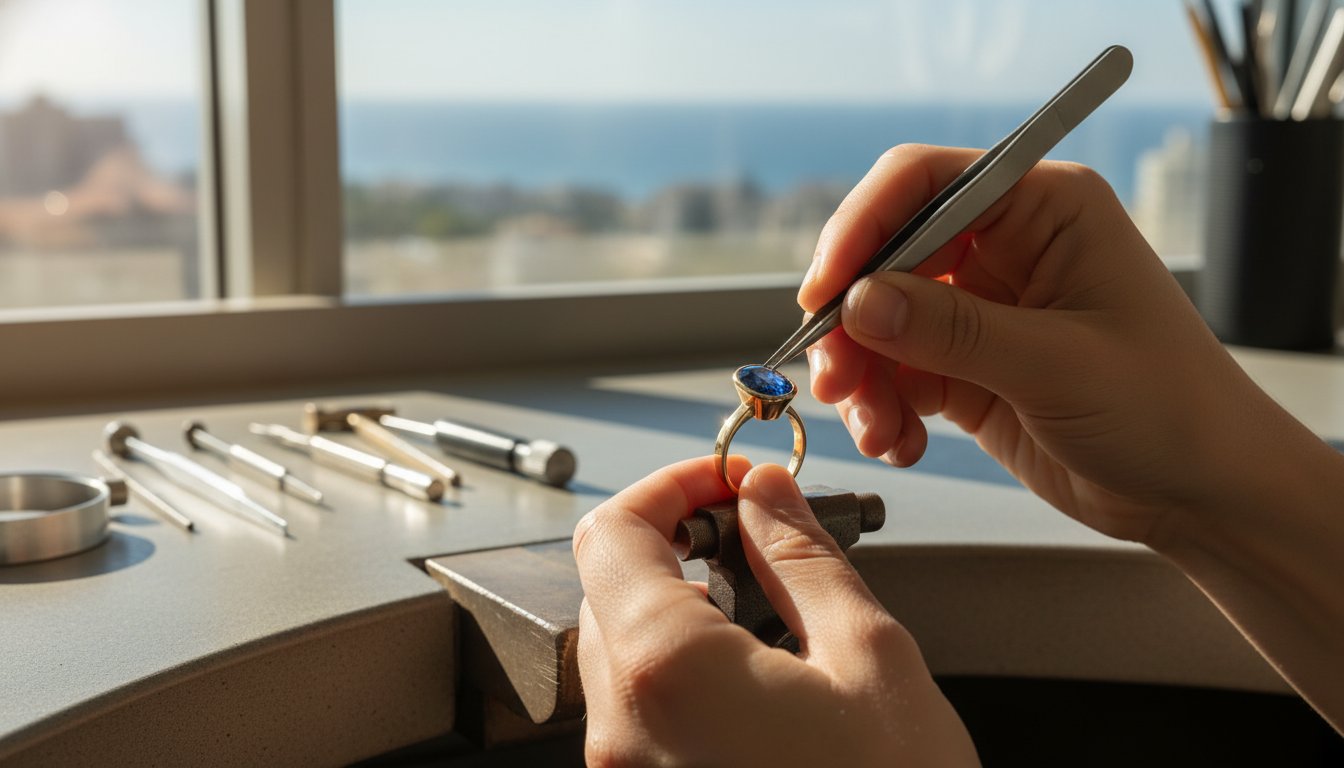
Did you know that 78% of jewelry buyers now prioritize ethical integrity over aesthetics alone? It’s a powerful shift that reflects our collective desire for objects that carry real substance. When you’re searching for a piece that marks a significant milestone, understanding what to look for when buying gemstone jewelry becomes about much more than just a price tag. You want to feel certain that a sapphire’s deep blue or an emerald’s forest glow is as genuine as the intention behind it. It’s natural to feel a sense of hesitation when faced with technical terms like clarity grades or heat treatments. You shouldn’t have to be a gemologist to find a piece that feels right.
We believe that high-end craftsmanship should make your daily life feel special, not just your formal occasions. This guide will help you bridge the gap between technical quality and personal narrative, ensuring you find a piece that truly reflects your story. We will explore the enduring value of 18K gold, the latest 2026 GIA standards for origin verification, and how to choose minimalist designs that feel both modern and timeless. You’ll gain the confidence to identify a quality piece that resonates with your identity and stands the test of time.
Key Takeaways
- Learn why 18K gold is the premier choice for setting precious stones to ensure your jewelry remains a durable, lasting part of your story.
- Master the nuances of color and clarity to understand exactly what to look for when buying gemstone jewelry that balances technical excellence with visual soul.
- Understand the physical and ethical profiles of natural versus lab-grown stones to find a gem that resonates with your personal integrity.
- Use the Mohs Scale to select gemstones that are resilient enough for daily life while maintaining their brilliant, light-catching qualities.
- Discover how to blend minimalist design with symbolic stones to create a custom jewelry piece that serves as a celebration of your identity.
Beyond the Sparkle: Understanding the Soul of Gemstone Jewelry
Jewelry is far more than a simple adornment. It represents a quiet dialogue between the raw, ancient beauty of the earth and the deliberate hand of the creator. Whether you choose a stone formed over millennia or a modern lab-grown alternative, the piece becomes a vessel for your own experiences. Understanding what to look for when buying gemstone jewelry starts with recognizing this blend of natural art and human craftsmanship.
We believe 18K gold is the essential foundation for any meaningful piece. While 14K is common in mass-market collections, 18K gold offers a richer, more luminous hue that perfectly complements the vibrant depth of a gemstone. It strikes a graceful balance; it’s pure enough to feel luxurious against the skin yet durable enough to secure a precious stone for a lifetime. This choice transforms a ring or necklace into a modern heirloom, an object designed to be worn daily and eventually passed down as a chapter of your personal history.
The traditional distinction between “precious” and “semi-precious” stones has largely faded in the modern artisan world. While rubies, emeralds, and sapphires carry historical weight, stones like morganite, spinel, or tanzanite offer equally breathtaking brilliance and rarity. You can learn about gemstone characteristics and how they are classified to better understand why certain stones command such presence. Ultimately, the value lies in the stone’s unique quality and how it resonates with your personal narrative.
The Emotional Value of Color and Symbolism
Color is the heartbeat of a gemstone. A deep blue sapphire might evoke a sense of serenity and clarity, while the fiery red of a ruby speaks of passion and inner strength. We’ve seen a beautiful shift away from rigid birthstone traditions toward intuitive selection. You don’t have to wear a stone just because you were born in a certain month. Instead, choose a gem that mirrors your current journey or an emotion you want to carry with you. Learning the art of styling fine jewelry allows you to layer these meanings, creating a look that is entirely your own.
The Role of the Artisan in Quality
When considering what to look for when buying gemstone jewelry, the integrity of the setting is just as vital as the stone itself. Mass-produced jewelry often feels hollow because it’s designed for efficiency rather than expression. An artisan approach ensures that every curve of a ring or setting of an earring is intentional. A skilled designer creates a secure yet minimalist setting that lets the stone breathe. This allows light to enter from every angle, maximizing brilliance without the clutter of heavy metal. The artisan’s vision defines the final vibe of the piece, ensuring it feels both grounded and ethereal.
The Quality Checklist: Color, Clarity, Cut, and Carat
While the “4Cs” are famous in the world of diamonds, applying them to colored gems requires a more nuanced touch. When you’re learning what to look for when buying gemstone jewelry, you’ll find that color usually takes center stage. Clarity and cut play vital supporting roles in revealing the stone’s inner fire and personality. It’s a delicate balance of technical specs and how the piece resonates with your own aesthetic.
Color: The Most Critical Factor
The “heart” of any gemstone is its color. Professionals break this down into three pillars: hue, tone, and saturation. Hue refers to the actual color you see, like the specific blue of a sapphire. Tone describes how light or dark that color is, while saturation measures its intensity. A high-quality stone shows consistent color from every angle, without large “windows” or dark spots where the color seems to disappear. It’s always a wise choice to view a gem in various lighting. A stone that glows under a jeweler’s lamp might look entirely different in natural sunlight or the warm glow of your home.
Clarity and Inclusions: Character vs. Flaws
In the world of colored gems, we rarely look for “flawless” stones. Instead, we seek out “eye-clean” pieces where inclusions aren’t visible to the naked eye. These tiny internal features are often called “fingerprints of nature,” and they serve as proof of the stone’s natural origin. You can explore GIA’s guide to gemstones to see how these characteristics vary across different species. For instance, emeralds almost always have a “jardin,” or garden of inclusions, which is part of their unique charm. You simply want to ensure that these internal marks don’t reach the surface or compromise the stone’s structural integrity.
The cut is the artisan’s contribution to the stone’s beauty. A masterfully cut gem will maximize light return and can even cleverly hide certain inclusions. If a stone is cut too shallow or too deep, it loses its “life” and looks dull. Finally, remember that carat is a measure of weight, not physical dimensions. Different gems have different densities. A one-carat sapphire will look smaller than a one-carat emerald because it’s a denser material. Always look at the millimeter measurements to understand how the piece will actually sit on your skin.
Selecting the right stone is a deeply personal process that balances these technical details with how the piece makes you feel. If you’re ready to find a design that speaks to your unique style, exploring our collection of handcrafted gold rings is a wonderful place to start.
Ethical Brilliance: Natural vs. Lab-Grown and Sustainable Sourcing
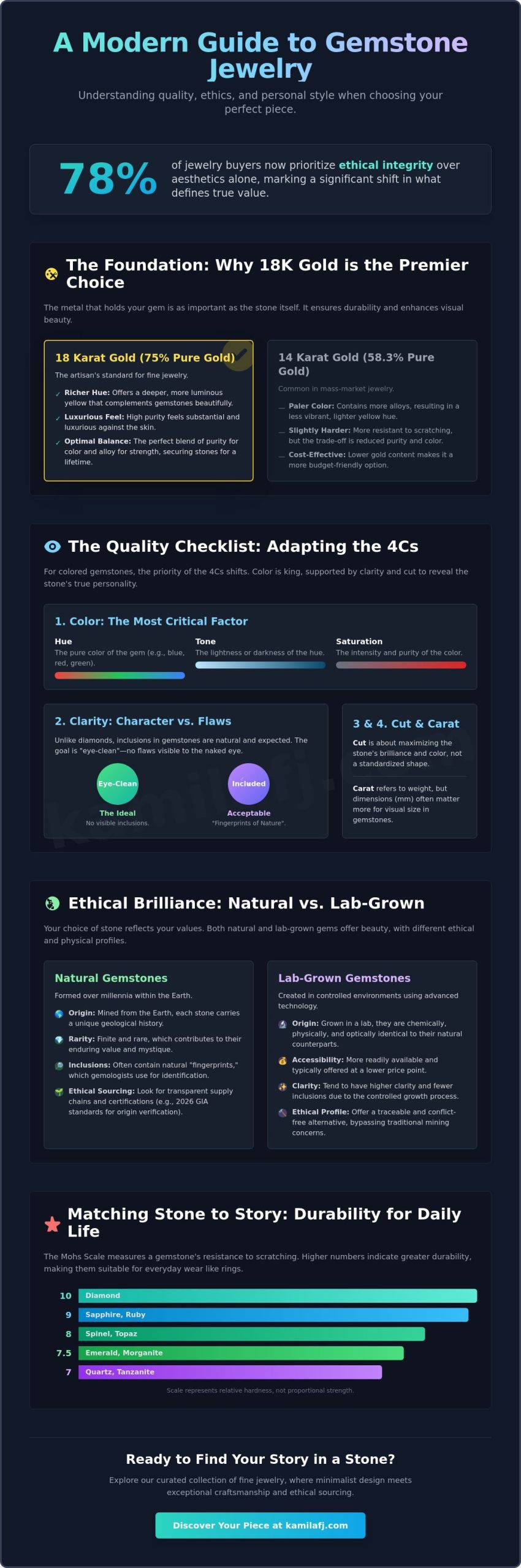
Modern luxury is defined by a sense of integrity that matches its visual beauty. By 2025, 78% of jewelry buyers prioritized ethical sourcing over aesthetics alone, proving that the story behind a stone is just as vital as its sparkle. Understanding what to look for when buying gemstone jewelry involves peering into the journey of the stone itself. Whether you’re drawn to the geological history of a mined gem or the technological marvel of a lab-grown one, your choice should reflect your personal values and your vision for the future.
The rise of lab diamonds and gemstones has transformed the industry. These stones are chemically, physically, and optically identical to their mined counterparts. They aren’t “fakes”; they’re simply created in a controlled environment that mimics the earth’s natural heat and pressure. This innovation allows for a level of transparency and environmental consideration that was previously difficult to achieve. As of 2025, natural diamonds still held a 71% market share, but lab-grown options are rapidly becoming the preferred choice for those seeking brilliance with a clear conscience.
Sustainability also extends to the metals that hold these gems in place. We choose 18K gold not only for its rich color but for its enduring life cycle. High-quality gold is infinitely recyclable, maintaining its value and purity through every transformation. A well-crafted 18K gold piece avoids the “disposable” nature of lower-quality metals, ensuring that your jewelry remains a permanent part of your collection rather than a temporary accessory.
The Transparency Revolution
A brand’s ethical statement should be clear and specific. Look for designers who can speak openly about their workshop practices and the origins of their materials. As of January 2026, the GIA expanded its origin services to include stones like Opal and Spinel, adding a layer of verified provenance that can increase a stone’s value by 15-20%. Knowing your jewelry was handcrafted by artisans who are treated with dignity adds an intangible grace to the piece. This transparency is a key part of what to look for when buying gemstone jewelry in a modern market.
Choosing Between Lab and Natural
Your decision often comes down to a balance of budget and belief. In early 2026, a one-carat natural diamond costs approximately $4,200, while a lab-grown equivalent averages around $1,000. This price difference allows you to prioritize size or higher clarity grades if you choose the lab-grown route. Reviewing GIA’s 10 tips for buying jewelry can help you evaluate these options objectively. Ultimately, the “right” stone is the one that aligns with your story, whether that involves the ancient mystery of the earth or the clean innovation of the modern laboratory.
Matching the Stone to Your Story: Durability and Style
The Mohs Scale is our primary guide for this. It ranks minerals from 1 to 10 based on their ability to resist scratching. Diamonds sit at the top, while the “Big Three”—rubies, emeralds, and sapphires—remain the cornerstones of the market for their beauty and relative strength. Beyond durability, consider how the stone’s shape complements your hand. An oval or pear cut can elegantly elongate the fingers, while a round or cushion cut offers a classic, balanced feel. Think about how a new ring might sit alongside your favorite gold necklace. A cohesive jewelry collection is built on these thoughtful, visual connections.
Durability for Daily Wear
For pieces intended for constant use, such as engagement rings, sapphires and rubies are exceptional choices. They rank a 9 on the Mohs Scale, making them tough enough to handle the rigors of daily life. Softer stones like emeralds or opals require a gentler touch. They are more prone to chipping if they strike a hard surface. If you’ve fallen in love with a delicate stone, consider a bezel setting. This design wraps the gem in a protective “hug” of 18K gold, shielding the edges from impact while maintaining a sleek, modern look.
Minimalist Design: The Modern Way to Wear Gems
We believe that “less is more” when you’re showcasing a high-quality gemstone. A minimalist design allows the stone’s natural color and fire to take center stage without distraction. Clean lines and the warm glow of 18K gold provide a sophisticated backdrop that highlights the gem’s unique character. This aesthetic also makes it easier to mix and match different pieces. You can create a curated, stacked look by combining different gemstones that represent different chapters of your life. This approach turns your jewelry into a wearable timeline of your identity.
If you’re ready to find a piece that resonates with your personal narrative, we invite you to browse our latest One-of-a-Kind Jewelry designs.
Crafting Your Legacy: Why KaMila Fine Jewellery is the Perfect Choice
Choosing a piece of jewelry is a deeply personal act of self-expression. It’s a celebration of where you’ve been and a quiet statement of where you’re going. When you consider what to look for when buying gemstone jewelry, the final step is finding a partner who shares your values of artistry and integrity. KaMila Fine Jewellery was born from the desire to elevate the everyday. We fuse traditional artisanal techniques with a sleek, minimalist aesthetic. This ensures that even the most vibrant stones feel contemporary and wearable. By setting every gem in 18K gold, we guarantee a depth of color and a structural longevity that lower-quality alternatives can’t match.
Our commitment to ethical brilliance is woven into every design. We embrace the innovation of lab-grown stones because they offer a path to luxury that is both transparent and sustainable. Every piece we create is designed to be a modern heirloom, an object that carries your story with grace. Understanding what to look for when buying gemstone jewelry means finding a designer who views jewelry as a legacy, not just a purchase. We focus on the relationship between the object and the individual, ensuring each piece feels like a protective or meaningful emblem of your own strength and delicacy.
Handcrafted in Israel
Every ring, necklace, and bracelet is born in our Israel-based studio. This direct connection to the artisan means we maintain absolute quality control over every facet of the production. Buying directly from a studio ensures that your piece isn’t just another mass-produced item. It’s a creation made with specific intention and a passion for the craft. This human touch imbues each piece with a symbolic power that reflects your own unique journey. We believe that high-end craftsmanship is for making daily life special, and that artistry is felt in the weight and finish of the gold.
Start Your Journey with KaMila
Our collections are designed to be curated and layered to reflect your changing narrative. You might start your collection with a pair of minimalist studs or a delicate ring and eventually pair them with our signature gold bracelets to create a look that is uniquely yours. If your story requires something entirely original, our custom jewelry service allows us to collaborate on a design that is truly one-of-a-kind. We help you find the perfect stone that resonates with your identity, whether it’s a bold lab-grown diamond or a rare colored gem. Explore our collection of handcrafted fine jewelry and find the piece that speaks to your story.
Embrace the Art of Meaningful Adornment
Finding the perfect gemstone is a journey that blends technical knowledge with your own intuition. You’ve learned that understanding what to look for when buying gemstone jewelry involves more than just checking a checklist of the 4Cs. It’s about choosing materials that align with your values, like 18K gold for its lasting radiance and lab-grown stones for their ethical brilliance. By prioritizing durability and minimalist design, you ensure that your jewelry remains a versatile part of your daily life rather than a hidden treasure.
At KaMila Fine Jewellery, we’re passionate about helping you translate your story into a wearable emblem. Our pieces are handcrafted in our studio in Israel and shipped worldwide, ensuring that every ring and necklace meets our high standards of artistry. Whether you’re drawn to our one-of-a-kind designs or prefer the clean lines of our minimalist collections, we’re here to help you find a piece that resonates. Discover Handcrafted Gemstone Jewelry by KaMila and begin your legacy today. Your story deserves to be told through the light of a stone that is as authentic as you are.
Frequently Asked Questions
What is the most durable gemstone for an everyday ring?
Sapphires and rubies are the most resilient choices for a ring you intend to wear every single day. Ranking a 9 on the Mohs scale, these stones resist scratching and chipping better than almost any other colored gem. While diamonds are the hardest, these corundum varieties offer a beautiful balance of vibrant color and structural strength. This makes them ideal for pieces that encounter the bumps and scrapes of a busy, modern life.
How can I tell if a gemstone is real or synthetic?
You can identify a natural stone by its unique internal inclusions, which act as the stone’s biological signature. Synthetic or lab-grown stones are real in a chemical sense, but they are created in a laboratory rather than the earth’s crust. A jeweler using a loupe can often spot the difference in growth patterns. For absolute certainty, professional lab testing is the only way to distinguish between the two origins.
Is 18K gold better than 14K gold for gemstone jewelry?
18K gold is the premier choice for fine jewelry because it contains 75% pure gold, resulting in a deeper, more celebratory yellow hue. When you are deciding what to look for when buying gemstone jewelry, the metal purity matters for both value and aesthetics. 18K gold provides a more luxurious weight and a luminous backdrop that makes gemstone colors truly pop. It’s also less likely to cause skin irritation over long periods of wear.
What are gemstone treatments and should I avoid them?
Most gemstones undergo some form of enhancement, such as heat treatment, to reach their full visual potential. These are standard industry practices and don’t need to be avoided as long as they’re fully disclosed by the jeweler. However, completely untreated stones are significantly rarer. For example, a “No Oil” emerald or an unheated sapphire can be valued at double or triple the price of treated equivalents in the 2026 market.
Do I need a certificate when buying gemstone jewelry?
A professional laboratory report is essential for verifying the quality and origin of a high-value stone. When you’re researching what to look for when buying gemstone jewelry, a certificate from an organization like the GIA provides peace of mind. As of early 2026, these reports are even more detailed, covering country of origin for stones like spinel and paraiba tourmaline. This documentation ensures you know exactly what you’re investing in.
How do I clean my gemstone jewelry at home safely?
A gentle soak in warm, soapy water is the safest way to maintain the glow of your jewelry at home. Use a soft-bristled toothbrush to reach behind the setting where oils and lotions tend to collect. Be cautious with porous stones like opals or pearls, which should never be submerged for long periods or placed in ultrasonic cleaners. Regular cleaning ensures your 18K gold and gems remain as radiant as the day you first wore them.
What is the difference between a precious and semi-precious gemstone?
The terms precious and semi-precious are historical labels that no longer reflect the true rarity or value of a stone. Traditionally, only diamonds, rubies, sapphires, and emeralds were called precious. Today, we recognize that stones like alexandrite or fine tanzanite can be far more expensive and rare than a commercial-grade sapphire. We prefer to focus on the individual beauty and technical quality of each unique gem regardless of its traditional category.
Can I use lab-grown diamonds in a custom gemstone design?
Lab-grown diamonds are an excellent and ethical choice for any custom jewelry project. Because they’re chemically identical to mined diamonds, they provide the same fire and scintillation while allowing for a more accessible price point. This flexibility often means you can choose a larger or higher-clarity stone for your bespoke design. It’s a modern way to create a piece that perfectly reflects your personal values and your unique style.
Related Posts
Questions to Ask a Jeweler About Their Sourcing Ethics
-
Posted by
מילה קלר
What if “ethically sourced” tells you less than the answer to one careful question? When choosing a piece with personal meaning, it’s natural to want…
From Sketch to Sparkle: Ensuring the Final Piece Matches Your Jewelry Design
-
Posted by
You’ve spent weeks dreaming of a ring that captures your story, but as you look at the artist’s rendering, a small doubt creeps in. Will that…
Repurposing Heirloom Stones into Modern Custom Jewelry: The Complete 2026 Guide
-
Posted by
What if keeping an inherited ring tucked away in a dark jewelry box isn’t protecting your family history, but silencing it? It’s completely natural…
How to Convince Your Husband to Upgrade Your Wedding Ring
-
Posted by
What if your wedding ring wasn’t just a relic of who you were when you said “I do,” but a luminous reflection of the woman you’ve become today? Many…
Red Flags When Choosing a Custom Jewelry Designer: A 2026 Guide to Protecting Your Vision
-
Posted by
Imagine spending months dreaming of a bespoke 18k gold ring, only to open the velvet box and find a piece that feels like a generic retail cast…
Jewelry That Makes Me Feel Protected and Strong: A Guide to Modern Talismans
-
Posted by
Most people view a necklace or a ring as a simple finishing touch, but for the modern woman, it’s often the first layer of emotional armor she puts…
How to Stack Rings: The Art of Curating Your Personal Story in 18K Gold
-
Posted by
What if your jewellery box wasn’t just a collection of objects, but a living timeline of your most cherished milestones? You’ve likely looked at a…
Minimalist Gold Rings: A Guide to Curating Your Timeless 18K Collection
-
Posted by
Your jewelry shouldn’t have an expiration date. Too many of us have felt the frustration of a cherished piece tarnishing or causing skin irritation…
Getting a Better Price Than Big Brand Jewelers in Israel: The Insider’s Guide 2026
-
Posted by
That iconic logo on a shopping bag in a Tel Aviv mall might feel like a mark of quality, but it’s often the most expensive way to buy a memory. When…

18k Gold Minimalist Bracelets: The Ultimate Guide to Timeless Everyday Luxury
-
Posted by
True minimalism isn’t about having less; it’s about requiring more from the few pieces you choose to wear every day. If you’ve ever felt the…

18k Gold Stud Earrings: The Ultimate Guide to Everyday Luxury
-
Posted by
Why should the jewelry you wear every single day be the piece that irritates your skin or loses its radiance before the season even turns? It’s a…

Common Regrets After Buying an Engagement Ring: How to Choose a Forever Piece
-
Posted by
What if the most significant purchase of your life becomes a source of quiet hesitation every time you get ready in the morning? It’s a heavy…