
Blog
Hypoallergenic Gold Earrings: The Ultimate Guide for Sensitive Ears
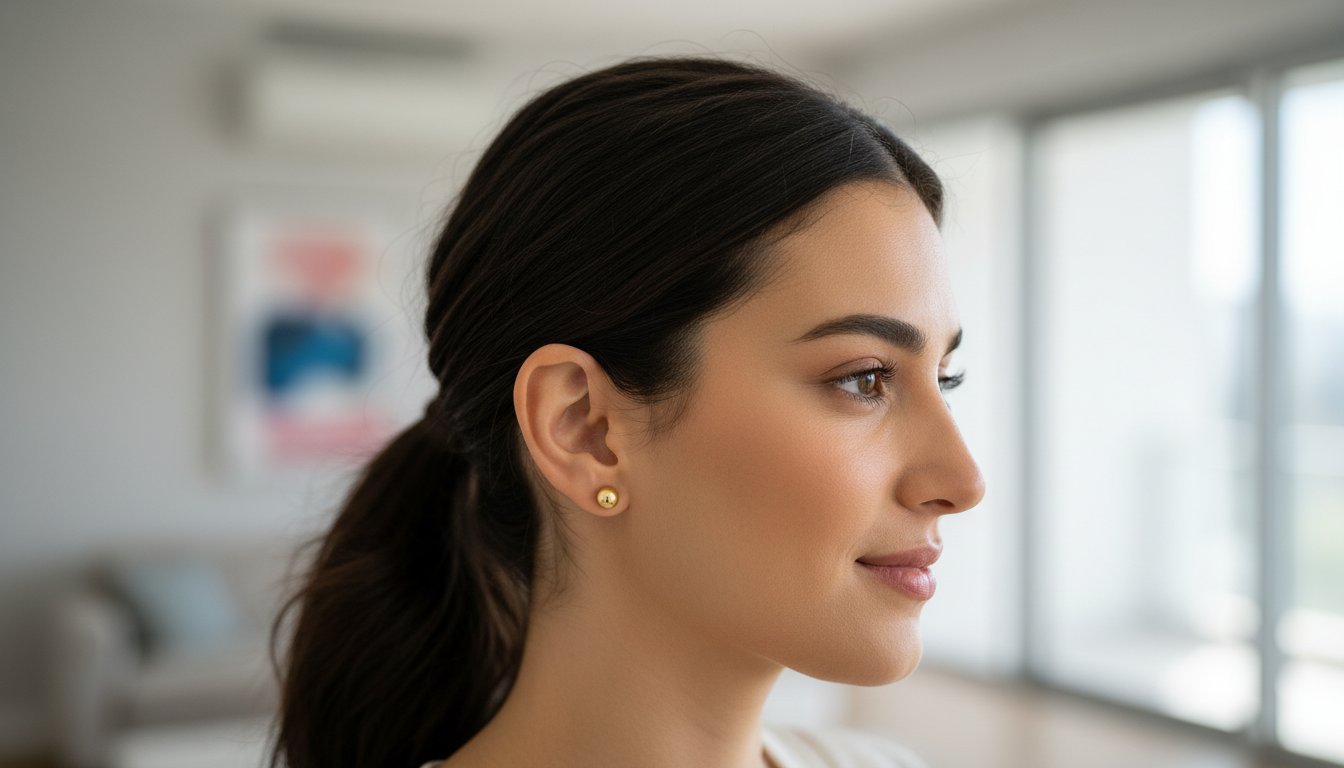
There is a unique kind of disappointment that comes from a beautiful pair of earrings-the kind that promises to complete your look but instead leaves you with red, itchy, and irritated skin. If you have a jewelry box filled with pieces you’ve loved but couldn’t wear, you understand this feeling all too well. This cycle of hope and frustration can make you question if fine jewelry is meant for you. We believe the story of your jewelry should be one of joy and self-expression, not discomfort. It’s time to discover the confidence that comes with wearing stunning, truly hypoallergenic gold earrings every day.
Consider this your personal guide to reclaiming the simple, beautiful pleasure of wearing earrings. We will explore why 18k solid gold is a sanctuary for even the most sensitive skin, demystifying the often-confusing world of jewelry terms so you can clearly understand the difference between ‘gold-plated’ and ‘solid gold.’ By the end, you’ll feel empowered to choose an exquisite, handcrafted piece you can not only love, but live in-comfortably and without a second thought. Let’s find the perfect pair that lets you shine, irritation-free.
Key Takeaways
- Learn why 18k solid gold is the gold standard for hypoallergenic gold earrings, offering the highest purity to minimize the risk of skin irritation.
- Understand the crucial differences between solid gold, gold-plated, and gold-filled earrings to make an informed choice that lasts.
- Discover how an earring’s design, weight, and backing can impact comfort, helping you find a style you can truly wear every day.
- Master a simple care routine to keep your earrings sparkling and your piercings healthy, ensuring lasting beauty and irritation-free wear.
What Does ‘Hypoallergenic’ Really Mean for Your Earrings?
Choosing a new pair of earrings should be a moment of joy, a celebration of your personal style. But for those with sensitive skin, it can often lead to discomfort and irritation. You’ve likely seen the word ‘hypoallergenic’ used to promise a solution, but what does this term truly signify for your jewelry?
In essence, ‘hypoallergenic’ simply means a product is less likely to cause an allergic reaction. It’s important to understand that this is a marketing term, not a regulated medical standard. Learning what ‘hypoallergenic’ means reveals that there is no official certification or guarantee of a reaction-free experience. Instead, it signals that a brand has consciously avoided common irritants in its materials, with one metal being the primary offender: nickel.
The Truth About Nickel Allergies
The most common cause of jewelry-related skin irritation is a nickel allergy, a form of contact dermatitis that can develop at any age from prolonged exposure. If you’ve ever experienced discomfort after wearing a new pair of earrings, you may have recognized the tell-tale signs. Avoiding nickel is the single most important step toward wearing your jewelry with comfort and confidence.
- Common Symptoms: Itching, redness, or a rash around the piercing.
- More Severe Reactions: Swelling, dry patches, or even blistering.
Why ‘Gold’ Isn’t Always the Whole Story
Here is a reassuring truth: pure gold itself is biologically inert, meaning it very rarely causes an allergic reaction. The story becomes more complex when we consider how gold is crafted into the beautiful, durable pieces we love. Pure 24-karat gold is too soft for everyday wear, so jewelers blend it with other metals-creating an alloy-to give it strength and colour.
The type and proportion of these alloys are what determine if a piece is gentle on your skin. Metals like nickel, cobalt, and even high amounts of copper can trigger sensitivity. This is why understanding the purity of gold (measured in karats) is essential to finding truly hypoallergenic gold earrings that you can wear and cherish every single day.
The Gold Standard: A Guide to Karats for Sensitive Skin
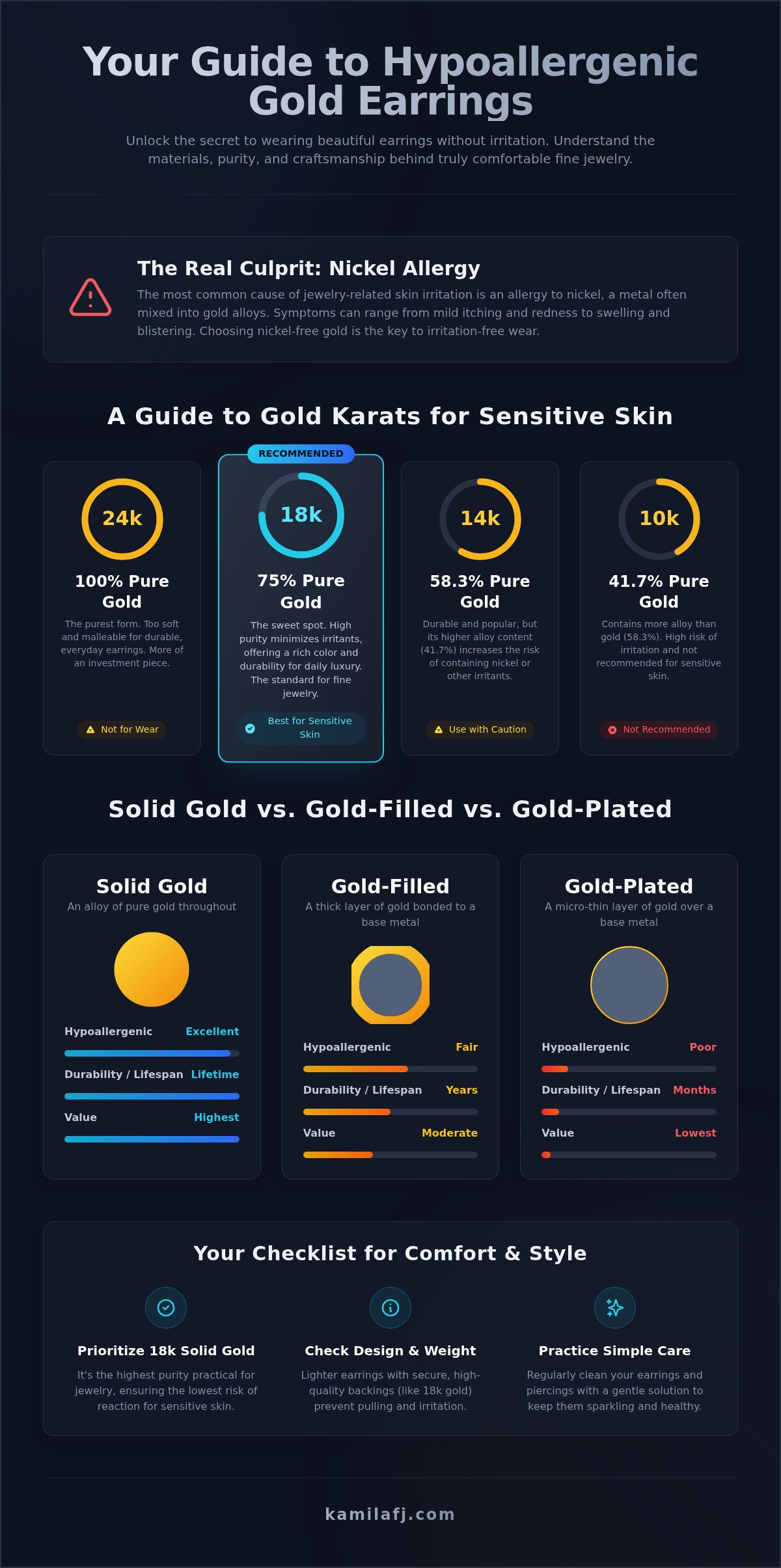
When choosing jewelry that feels as good as it looks, understanding the language of gold is essential. The “karat” (k) is a measure of purity, representing how much pure gold is in your piece out of 24 parts. For those with sensitive skin, this ratio is everything. The higher the gold content, the less room there is for other metals, known as alloys, which are often the source of irritation.
Decoding Gold Karats: 24k, 18k, 14k, and 10k
Navigating the world of gold purity is the first step toward finding comfortable, beautiful earrings. Each karat level offers a different balance of purity, durability, and suitability for sensitive ears.
- 24k Gold (100% Gold): While beautifully pure, 24k gold is too soft and malleable for crafting durable earrings that can withstand daily life. It’s an investment, but not a practical choice for everyday wear.
- 18k Gold (75% Gold): This is the sweet spot for fine jewelry. With 75% pure gold, it offers a rich, warm hue and has a significantly lower percentage of alloys, making it an ideal choice for sensitive skin.
- 14k Gold (58.3% Gold): A popular and durable option, 14k gold contains a higher percentage of alloys. This increases the risk of it containing nickel, a leading cause of the most common metal allergies.
- 10k Gold (41.7% Gold): Containing more alloys than pure gold, 10k pieces are not recommended for those with metal sensitivities.
Why 18k Gold is the Superior Choice
For a piece of jewelry that is meant to be a personal talisman, comfort is non-negotiable. 18k gold is the foundation of true hypoallergenic gold earrings because its high purity minimizes the presence of potential irritants. Beyond its gentle nature, it boasts a deeper, more luxurious yellow color that celebrates the true beauty of gold. It is the standard for high-end, handcrafted European and designer jewelry, chosen for its perfect blend of timeless elegance and lasting strength. This commitment to quality ensures your jewelry is not just an accessory, but a comfortable, meaningful part of your story.
Explore our collection of nickel-free 18k gold earrings.
What About White Gold and Rose Gold?
The radiant spectrum of gold colors is achieved by blending pure gold with different alloys. High-quality hypoallergenic gold earrings in these tones are crafted with care:
- White Gold: To achieve its silvery hue, gold is mixed with white metals. Reputable jewelers use hypoallergenic palladium, creating a beautiful and safe option. Be aware that some lower-cost pieces may use nickel, so it’s crucial to confirm the alloys.
- Rose Gold: The warm, romantic blush of rose gold comes from a copper alloy. Copper is not a common allergen, making 18k rose gold a stunning and safe choice for most people.
Solid Gold vs. Plated vs. Filled: What’s the Difference?
Navigating the world of gold jewelry can feel complex, especially when searching for pieces that won’t irritate sensitive skin. The terms ‘solid,’ ‘filled,’ and ‘plated’ are often used, but the differences are significant. Think of it like furniture: a solid wood table is a lifetime investment, while a veneered piece has a beautiful surface that can chip away to reveal a different material underneath. When it comes to your earrings, what lies beneath the golden surface is what truly matters for your comfort and peace of mind.
Solid Gold: The Lifetime Investment
Solid gold means the entire earring is crafted from a consistent gold alloy, such as 14k or 18k gold, from the surface to the core. Its luminous color will never fade, chip, or wear away to expose a different metal. For those with sensitive skin, solid gold is the only 100% guaranteed safe choice for long-term, irritation-free wear, making them the ultimate hypoallergenic gold earrings. It’s more than an accessory; it’s a durable, modern heirloom designed to be part of your story for years to come.
Gold-Filled: A Thicker Layer
Gold-filled jewelry is created by heat-bonding a thick, durable layer of solid gold over a base metal core, typically brass. While significantly more durable and valuable than gold-plated pieces, it is not a lifetime material. With daily wear over many years, the gold layer can eventually wear thin, potentially exposing the base metal underneath. For this reason, it may not be suitable for those with very high metal sensitivities who require a completely non-reactive material.
Gold-Plated: The Highest Risk for Sensitive Skin
This process involves electroplating a micro-thin layer of gold over a base metal, which is often brass or a nickel alloy. This delicate layer wears away very quickly, especially on high-friction areas like earring posts that sit directly against your skin. Once the gold is gone, the exposed base metal is what triggers redness, itching, and irritation. This is particularly true for nickel, a common allergen in costume jewelry. Understanding the best practices for preventing nickel allergy, such as choosing the right materials, is key. Unfortunately, because the surface is initially gold, these pieces are often misleadingly labeled ‘hypoallergenic,’ causing confusion and discomfort for many.
Choosing Your Perfect Pair: Style and Comfort
Moving beyond the science of skin-safe metals, we enter the art of personal expression. The journey to finding your perfect pair of hypoallergenic gold earrings is deeply personal, blending aesthetics with all-day comfort. The right style not only complements your look but feels weightless and wonderful against your skin, allowing you to curate a personal ‘ear stack’ that tells your story with confidence and grace.
Minimalist Studs: The Foundation of Your Collection
For those with new piercings or exceptionally sensitive lobes, minimalist studs are the ultimate foundation. Their lightweight, close-fitting design offers unparalleled comfort, making them ideal for 24/7 wear. Classic styles like simple 18k gold balls, elegant bezel-set gems, or unique, modern shapes provide endless versatility. A secure, high-quality backing is just as crucial, ensuring your cherished studs stay in place without causing pressure or irritation.
Elegant Hoops and Huggies
Huggies are small hoops that gracefully “hug” the earlobe, offering a chic, sophisticated look perfect for effortless daily wear. For a more classic statement, traditional hoops add a touch of timeless elegance that never fades. When choosing hoops for sensitive ears, the key is to select lightweight designs that won’t pull or stretch your piercing over time. A beautifully crafted pair can instantly elevate any outfit, transitioning seamlessly from a busy day to an elegant evening.
The KaMila Difference: Conscious Craftsmanship
At KaMila, we believe your jewelry should be a celebration of you, crafted without compromise. This philosophy is at the heart of our collections, where artistry and integrity meet. We exclusively use 18k solid gold for all our earrings, ensuring the purest and safest material rests against your skin. Each piece is meticulously handcrafted in our Tel Aviv studio, reflecting a deep commitment to quality and detail. By pairing our gold with sustainable, lab-grown diamonds, we offer a touch of conscious luxury that you can feel wonderful about wearing, every single day. Discover jewelry designed to become a part of your story at kamilafj.com.
Caring for Your Hypoallergenic Earrings and Ears
Your fine jewelry is more than an accessory; it’s a personal talisman, a part of your daily story. Caring for your hypoallergenic gold earrings is a simple ritual that honours their artistry and ensures they remain a source of joy and comfort for years to come. A thoughtful care routine not only preserves the brilliant shine of the gold but also promotes healthy, happy earlobes, allowing you to wear your favourite pieces with confidence and grace every single day.
A Simple Cleaning Routine
To maintain their sparkle and prevent the buildup of natural oils or lotions, we recommend a gentle weekly cleaning for your most-loved earrings. This effortless practice keeps them looking as radiant as the day you first wore them.
- Prepare a gentle solution: Fill a small bowl with warm water and add a single drop of mild, fragrance-free dish soap.
- Soak and soften: Let your earrings rest in the solution for a few minutes to loosen any residue.
- Cleanse with care: Use a soft-bristled baby toothbrush to gently brush away any impurities, paying special attention to crevices around settings or backings.
- Rinse and dry: Rinse each earring thoroughly under cool running water and pat dry completely with a soft, lint-free cloth before wearing or storing.
Proper Storage to Prevent Damage
When you’re not wearing them, storing your earrings correctly is essential to protecting your investment. Fine gold is a soft metal, and proper storage prevents the scratches and tangles that can occur when pieces are kept together. We recommend placing each pair in a separate soft pouch or a fabric-lined jewelry box with individual compartments. Always be mindful to put your earrings on after applying perfumes, lotions, or hairspray, as harsh chemicals can dull the metal’s beautiful, warm glow over time.
With these simple rituals, your jewelry will remain a cherished and brilliant part of your collection. Ready to find your forever pair? Shop the KaMila Earring Collection.
Your Journey to Happy Ears and Timeless Style
Your quest for the perfect earrings should never be a compromise between beauty and irritation. As we’ve explored, the secret to happy, healthy ears lies not in a simple label, but in the purity of the material. Understanding the difference between solid gold and plated pieces, and why higher karats matter, gives you the power to select jewelry that is as kind to your skin as it is beautiful. This knowledge empowers you to choose the perfect pair of hypoallergenic gold earrings with absolute confidence, knowing they are crafted for a lifetime of comfortable, brilliant wear.
At KaMila Fine Jewellery, we believe your personal story deserves to be told in the finest, safest materials. That is why each of our pieces is meticulously handcrafted from 100% 18k Solid Gold, guaranteed to be nickel-free and a gentle choice for even the most sensitive skin. Adorned with sparkling, sustainable lab-grown diamonds, our designs offer a modern elegance that makes every day feel special. Discover our collection of handcrafted 18k gold earrings, designed for beauty and comfort.
It’s time to adorn yourself with grace and let your unique sparkle shine through.
Your Questions About Hypoallergenic Earrings, Answered
Can I be allergic to pure gold?
A true allergy to pure, 24k gold is incredibly rare. Gold is an inert metal, meaning it is very non-reactive with human skin. When someone experiences an allergic reaction to gold jewelry, it is almost always caused by the other metals alloyed with it. Common irritants like nickel, copper, and cobalt are often mixed into gold to enhance its durability and alter its color, and these are the typical culprits behind skin sensitivity and discomfort.
Is 14k gold hypoallergenic enough for most people?
For the vast majority of people, yes. 14k gold offers a wonderful balance of purity and strength, making it ideal for everyday fine jewelry. At KaMila, we ensure our 14k gold alloys are completely nickel-free, creating pieces that are both beautiful and gentle. While those with extreme sensitivities might opt for 18k gold, our thoughtfully crafted 14k hypoallergenic gold earrings are designed to be a safe, celebratory choice for sensitive ears.
Why do my ears get irritated even by earrings labeled ‘nickel-free’?
This can be a frustrating experience, but there are a few potential reasons. You could have a sensitivity to another metal alloy, such as cobalt or copper, which are sometimes used in nickel-free pieces. It’s also possible that while the earring post is nickel-free, another part of the earring that touches your skin is not. In some cases, trace amounts of nickel from the manufacturing environment can contaminate a piece, even if it wasn’t an intended ingredient.
Are gold-plated sterling silver earrings a safe option for sensitive ears?
They can be, but their safety depends on quality and wear. A thick, high-quality layer of gold plating (vermeil) over nickel-free sterling silver creates an effective barrier for sensitive skin. However, this plating can eventually wear thin over time, exposing your ear to the silver underneath. While many can wear sterling silver without issue, some are sensitive to it. For a truly timeless and worry-free investment, solid 14k or 18k gold is the most reliable choice.
What type of earrings are best for a new piercing?
For a new piercing, the material must be biocompatible to ensure a smooth and successful healing process. We always recommend choosing studs made from either solid 14k or 18k gold or implant-grade titanium. These materials are body-safe and highly unlikely to cause a reaction. Simple stud designs are preferable to hoops or dangles, as they are less likely to be snagged or pulled, allowing your piercing to heal beautifully and without irritation.
How can I tell if my old earrings contain nickel?
The most dependable method is to use a nickel spot test kit. These kits contain a chemical solution (dimethylglyoxime) that you apply to the jewelry with a cotton swab. If the swab turns pink or red, it confirms the presence of nickel. These easy-to-use kits can be purchased online or at some larger pharmacies in Israel for around ₪50-₪70, offering a quick way to identify which pieces in your collection might be causing irritation.
Related Posts
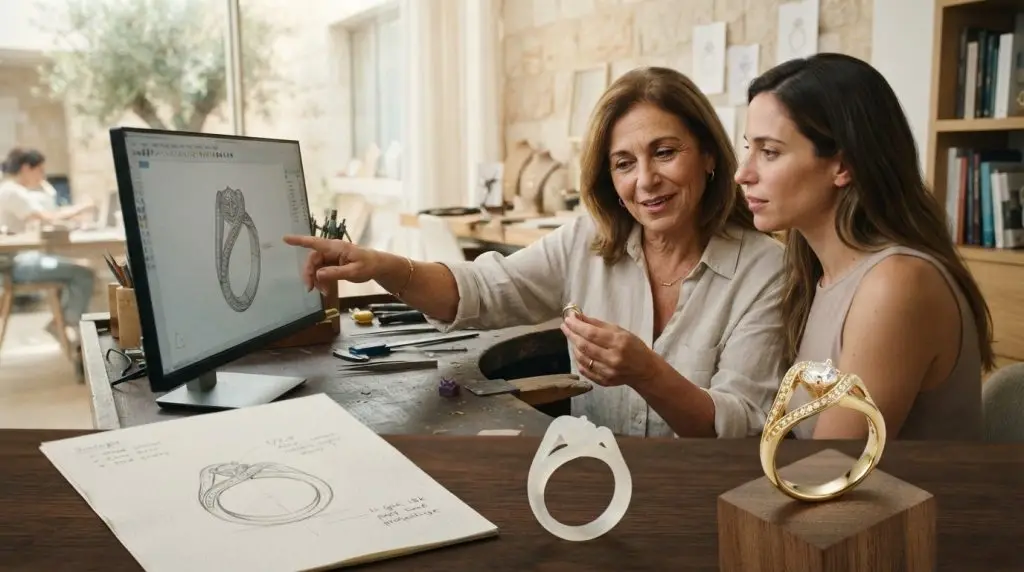
From Sketch to Sparkle: Ensuring the Final Piece Matches Your Jewelry Design
-
Posted by
מילה קלר
You’ve spent weeks dreaming of a ring that captures your story, but as you look at the artist’s rendering, a small doubt creeps in. Will that…
Repurposing Heirloom Stones into Modern Custom Jewelry: The Complete 2026 Guide
-
Posted by
What if keeping an inherited ring tucked away in a dark jewelry box isn’t protecting your family history, but silencing it? It’s completely natural…
Red Flags When Choosing a Custom Jewelry Designer: A 2026 Guide to Protecting Your Vision
-
Posted by
Imagine spending months dreaming of a bespoke 18k gold ring, only to open the velvet box and find a piece that feels like a generic retail cast…
Jewelry That Makes Me Feel Protected and Strong: A Guide to Modern Talismans
-
Posted by
Most people view a necklace or a ring as a simple finishing touch, but for the modern woman, it’s often the first layer of emotional armor she puts…
How to Stack Rings: The Art of Curating Your Personal Story in 18K Gold
-
Posted by
What if your jewellery box wasn’t just a collection of objects, but a living timeline of your most cherished milestones? You’ve likely looked at a…
Minimalist Gold Rings: A Guide to Curating Your Timeless 18K Collection
-
Posted by
Your jewelry shouldn’t have an expiration date. Too many of us have felt the frustration of a cherished piece tarnishing or causing skin irritation…
Getting a Better Price Than Big Brand Jewelers in Israel: The Insider’s Guide 2026
-
Posted by
That iconic logo on a shopping bag in a Tel Aviv mall might feel like a mark of quality, but it’s often the most expensive way to buy a memory. When…

18k Gold Earrings for New Piercings: Safe Styling Guide
-
Posted by
What if the most rewarding part of your piercing journey wasn’t the initial appointment, but the moment you finally swap those generic studs for…

18k Gold Minimalist Bracelets: The Ultimate Guide to Timeless Everyday Luxury
-
Posted by
True minimalism isn’t about having less; it’s about requiring more from the few pieces you choose to wear every day. If you’ve ever felt the…

18k Gold Stud Earrings: The Ultimate Guide to Everyday Luxury
-
Posted by
Why should the jewelry you wear every single day be the piece that irritates your skin or loses its radiance before the season even turns? It’s a…

18k Gold Jewelry Care: Preserving Modern Heirlooms
-
Posted by
Is your most cherished jewelry tucked away in a dark velvet box, waiting for a “special enough” occasion that never quite arrives? Many women…
Handcrafted Minimalist Jewelry in Israel: A Guide to Modern Elegance (2026)
-
Posted by
Why settle for jewelry that simply fills a space when you could wear a piece that captures the depth of your own story? If you’ve been searching for…