
Blog
Red Flags When Choosing a Custom Jewelry Designer: A 2026 Guide to Protecting Your Vision
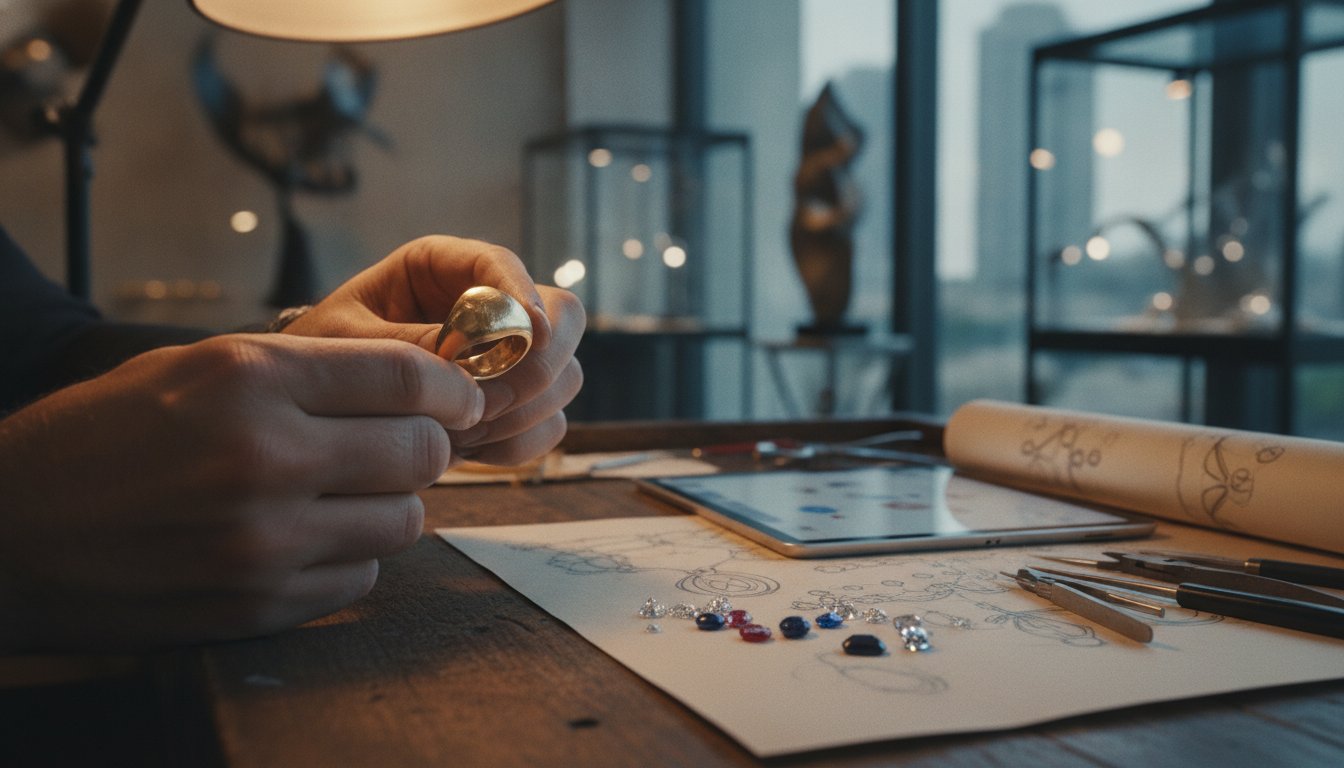
Imagine spending months dreaming of a bespoke 18k gold ring, only to open the velvet box and find a piece that feels like a generic retail cast rather than your personal story. It is a heartbreaking moment that happens far too often when the initial spark of creativity is not backed by technical transparency or true craftsmanship. Learning to spot the red flags when choosing a custom jewelry designer is the most important step you can take to protect your vision and ensure your investment of thousands of shekels results in a modern heirloom rather than a costly disappointment.
You likely already feel that a custom piece should be an intimate reflection of your journey, and you’re right to expect a process that feels celebratory rather than confusing. We promise to provide you with a clear framework for vetting artisans so you can move forward with total peace of mind. This guide explores the essential questions to ask about material sourcing, the importance of detailed design phases, and how to identify a designer who acts as a thoughtful storyteller for your most precious memories.
Key Takeaways
- Spot the subtle red flags when choosing a custom jewelry designer, such as a lack of interest in your personal story or a dismissal of your design preferences.
- Ensure material integrity by demanding transparency and certification for 18k gold and gemstones to avoid overpaying for low-quality craftsmanship.
- Protect your vision with a structured design process that includes CAD renderings or wax models before any metal is cast.
- Learn how to verify a designer’s technical expertise and ethical sourcing practices to guarantee your piece is as sustainable as it is beautiful.
- Gain the confidence to choose an artisan who values the emotional weight of your jewelry, turning your ideas into a high-quality modern heirloom.
The Allure and Risk of Bespoke: Why Your Choice of Designer Matters
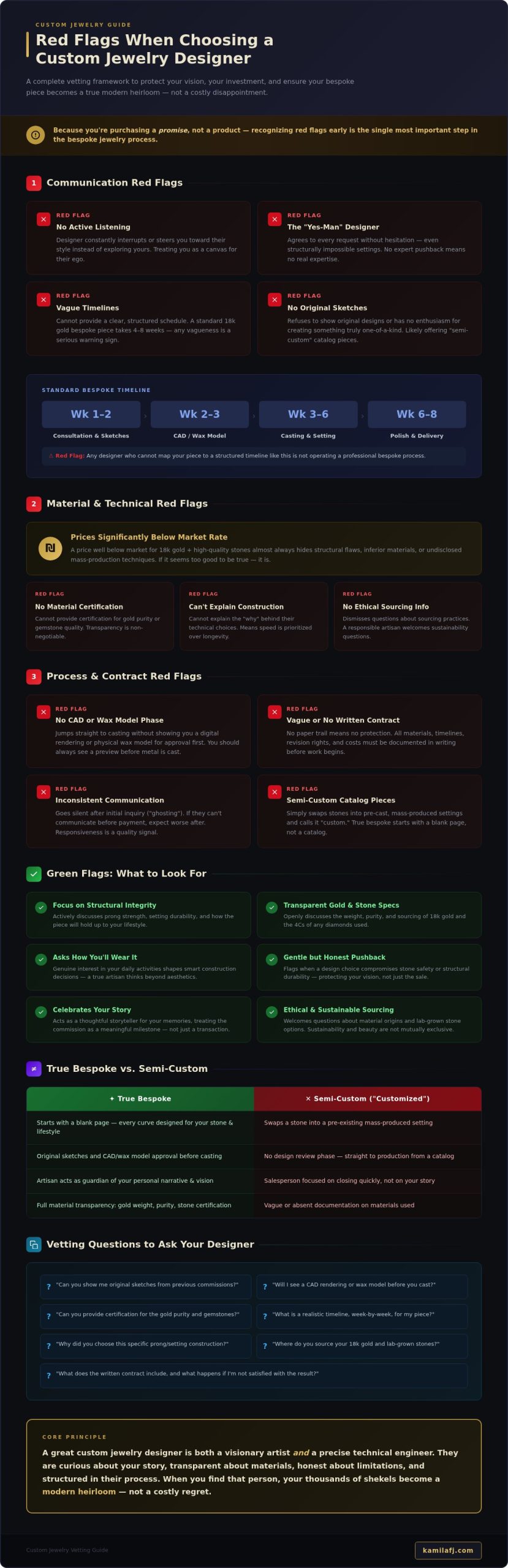
Choosing a custom piece of jewelry is fundamentally different from browsing a glass case in a shopping mall. When you commission a handcrafted 18k gold ring or a necklace featuring lab-grown diamonds, you aren’t just buying an accessory; you’re investing in a physical manifestation of a personal milestone. This emotional weight is what makes the process so rewarding, yet it also introduces a layer of vulnerability. Because the piece doesn’t exist yet, you’re essentially purchasing a promise. This is why recognizing the red flags when choosing a custom jewelry designer is vital to ensuring that your dream doesn’t turn into a technical or financial nightmare.
In the Israeli market, it’s common to encounter “special offers” that seem too good to be true. While everyone loves a bargain, a price that sits significantly below the market rate for 18k gold and high-quality stones often hides structural flaws. A designer must be both a visionary artist and a precise technical engineer. If they prioritize a quick sale over the integrity of the build, you may find yourself spending thousands of shekels on a piece that loses stones or bends under the pressure of daily wear. The journey should be one of trust and storytelling, where the artisan acts as the guardian of your vision.
Custom vs. Customized: Understanding the Difference
There’s a significant distinction between true bespoke design and what many shops call “customized” jewelry. True bespoke involves starting with a blank page, where every curve of the metal is designed specifically for your chosen gemstone and your lifestyle. Many retail outlets fall into the “semi-custom” trap, where they simply swap a stone into a mass-produced, pre-cast setting. This approach lacks the soul and precision of an artisan-led process. One of the primary red flags when choosing a custom jewelry designer is a refusal to show you original sketches or a lack of enthusiasm for creating something truly one-of-a-kind. Your personal narrative requires a dedicated approach that cannot be found in a catalog.
The Long-Term Value of Craftsmanship
The difference between a jewelry salesperson and an artisan designer becomes clear months after the purchase. Poorly engineered jewelry often suffers from metal fatigue or thin shanks that cannot withstand the rigors of life in a city like Tel Aviv. An artisan understands how to balance the delicate aesthetic of a modern heirloom with the durability needed for the everyday. Bespoke jewelry is an intimate expression of identity. If a designer cannot explain the technical “why” behind their construction choices, they’re likely prioritizing speed over longevity. Look for these green flags instead:
- A focus on the structural integrity of prongs and settings.
- Transparent discussions about the weight and purity of the 18k gold used.
- An interest in how and where you plan to wear the piece.
Communication Breakdown: Red Flags in the Initial Consultation
The first meeting is where your vision begins to take shape. It’s more than just a logistical chat; it’s the foundation of your future heirloom. One of the clearest red flags when choosing a custom jewelry designer is a lack of active listening. If a designer constantly interrupts or steers you toward their signature style instead of exploring yours, they’re treating you as a canvas for their ego rather than a partner in creation. A true artisan should celebrate your unique perspective while offering the technical expertise to make it a reality.
The ‘Yes-Man’ Designer
It might seem ideal when a designer agrees to every request without hesitation. However, blind agreement is often one of the most dangerous red flags when choosing a custom jewelry designer. Jewelry design involves complex physics and material science, especially when working with 18k gold and lab-grown diamonds. An expert will provide gentle pushback if a design choice compromises the safety of a stone or the durability of a band. A designer who says ‘yes’ to a structurally impossible setting is setting you up for heartbreak. You want an artisan who guides your vision with integrity, ensuring your piece remains beautiful for decades.
Vague Timelines and Ghosting
Transparency is the hallmark of a professional. In the Israeli jewelry market, a standard lead time for a bespoke 18k gold piece usually ranges from four to eight weeks, depending on the complexity. If a designer cannot provide a clear, structured timeline or gives vague answers about when you’ll see the first sketches, proceed with caution. Inconsistent communication during the inquiry phase is a preview of the stress you’ll face once you’ve paid your deposit. A designer who respects your time and your story will have a defined process, from the first sketch to the final polish.
Be wary of anyone who pressures you to ‘close the deal’ before the design details are finalized. Custom jewelry is a journey, not a transaction. If you feel rushed or find the designer giving evasive answers about the feasibility of your ideas, it’s time to step back. Choosing a partner for custom jewelry should feel empowering, not anxiety-inducing. Trust your instincts during that first conversation; they’re your best defense against a poor investment.
Material Mystery: Red Flags in Technical Expertise and Sourcing
Technical proficiency is the silent partner of artistic vision. Once you move beyond the initial sketch, the conversation must turn to the physical reality of your piece. A designer’s inability to speak clearly about their materials is one of the most significant red flags when choosing a custom jewelry designer. You aren’t just buying a look; you’re purchasing a composition of precious elements that must stand the test of time. If a designer becomes defensive or vague when you ask about metal purity or stone origins, they’re likely masking a lack of expertise or a compromised supply chain.
In the Israeli market, transparency regarding metal is paramount. You should never feel confused about whether you’re receiving solid 18k gold or a gold-plated alternative. Evasiveness here isn’t just a communication issue; it’s a financial risk that could leave you with a piece that tarnishes or loses its value within a year. A professional artisan will always have a portfolio of past work and technical drawings available to demonstrate their mastery of the craft.
The Importance of Ethical Sourcing
A modern artisan should be able to trace the journey of every component in your jewelry. A major red flag is a designer who cannot explain their supply chain or where they source their stones. This is especially true for lab diamonds, which require specific expertise to select for maximum brilliance and ethical integrity. Choosing a designer who prioritizes sustainability ensures your celebration doesn’t come at a hidden cost to the planet. Green flags include a passionate discussion about modern material innovations and a clear commitment to ethical practices that align with your own values.
Verifying the Craft: Hallmarks and Certs
Trust is earned through verification. When you invest thousands of shekels in a custom piece, documentation is your primary protection. Any reputable designer will provide a GIA or IGI report for significant stones. These certificates aren’t just paper; they’re a scientific breakdown of the cut, clarity, and color of your diamond. Without them, you’re essentially taking a stranger’s word for the quality of your investment. 18k gold is the standard for modern heirlooms. In Israel, gold hallmarks are non-negotiable markers of purity that every legitimate artisan will use. If a designer suggests bypassing these standards or claims they aren’t necessary for “artistic” pieces, it’s time to walk away. True luxury never shies away from being measured against global standards.
The Paper Trail: Red Flags in the Contract and Production Process
The creative spark is exhilarating, but the transition from a dream to a physical 18k gold piece requires a rigorous paper trail. A lack of a written contract or a detailed invoice before you hand over any shekels is a glaring red flag when choosing a custom jewelry designer. A professional agreement should outline exactly what you are paying for, including stone specifications, metal weight, and the estimated timeline. Ambiguity at this stage often leads to hidden fees that weren’t discussed during your initial ₪ quote, turning a celebratory experience into a source of stress. You deserve a process that is as polished as the final product.
Visualizing the Dream: CAD and Sketches
Precision in 2026 is non-negotiable. While a hand-drawn sketch captures the soul of an idea, relying solely on it for the final build is a significant risk. CAD (Computer-Aided Design) allows you to see a 3D digital model of your piece, ensuring every prong is placed exactly where it should be. A major red flag when choosing a custom jewelry designer is a professional who skips the approval step before casting. You should always see a rendering or a wax model to ensure the proportions align with your expectations. This step protects your vision and prevents costly mistakes in the 18k gold casting process.
Warranties and Long-Term Care
A piece of jewelry is meant to be lived in. A legitimate warranty should cover manufacturing defects and offer a clear path for maintenance. If a designer claims ‘all sales are final’ without any quality guarantee, they aren’t standing behind their craft. It is essential to prioritize finding a jewelry store near you that offers long-term care and cleaning services. This relationship ensures your 18k gold investment remains as radiant as the day you first wore it. Look for clear policies on revisions and returns before signing any document.
Transparency in the production phase is the ultimate sign of respect for the wearer. If you are looking for an artisan who values clarity and technical excellence, explore our custom jewelry design process to see how we bring your story to life with integrity.
Crafting Your Narrative: Finding a Designer Who Values Your Story
Once you’ve learned to identify the technical and contractual red flags when choosing a custom jewelry designer, you can focus on the most rewarding part of the process: the connection. A successful collaboration feels like an intimate conversation between friends where one happens to be a master of 18k gold. You aren’t just looking for a technician; you’re looking for a storyteller who understands the weight of your memories. The ultimate green flag is a designer who begins the consultation by asking about the “why” behind the piece rather than just the “what.”
Finding an artisan whose aesthetic aligns with your personal style is a journey of intuition. Look through their past work not just for quality, but for a shared language of form and light. If you prefer minimalist, modern lines and they specialize in heavy, ornate Victorian styles, the friction may prevent your vision from truly shining. When you find that alignment, the process shifts from a series of checks and balances to a celebratory experience of creation. You move away from fear and toward the joy of seeing your identity reflected in a physical object.
The KaMila Custom Experience
At KaMila Fine Jewellery, we approach every custom request with quiet confidence and a deep respect for the individual. Our commitment to using 18k gold and ethically sourced lab-grown diamonds isn’t just about technical excellence; it’s about providing a foundation of integrity for your story. We blend traditional craftsmanship with a modern, minimalist aesthetic to create pieces that feel like wearable emblems of your most significant milestones. By removing the traditional clichés of the luxury industry, we focus on what matters most: the relationship between the object and the wearer.
Your Next Steps Toward a Modern Heirloom
Preparing for your first consultation is about more than just bringing photos. Think about the emotions you want the piece to evoke and how it will fit into your daily life. A modern heirloom should be as wearable as it is beautiful. Use this final checklist to ensure you’ve found the right partner:
- Does the designer listen more than they talk during the initial meeting?
- Is there a clear, transparent process for material sourcing and 18k gold hallmarking?
- Do they provide digital renderings or models before the final casting?
- Do you feel empowered and excited rather than pressured or confused?
If you’re ready to begin this journey, we invite you to explore our guide to engagement rings for more inspiration on how a custom piece can tell your unique story. Your vision deserves a partner who treats it with the grace and artistry it deserves.
Your Journey Toward a Timeless Emblem
Commissioning a piece of jewelry is one of the most personal investments you’ll ever make. By identifying the red flags when choosing a custom jewelry designer, you’ve taken the first step toward protecting your vision and your resources. Remember that a true artisan prioritizes technical transparency, especially regarding 18k gold purity and the certification of lab-grown diamonds. They should act as a listener first, ensuring that every curve of the metal reflects your unique story rather than their own ego. A structured process involving CAD renderings and clear contracts isn’t just a formality; it’s the foundation of your peace of mind.
You deserve a collaborative experience that feels as radiant as the final piece itself. At KaMila Fine Jewellery, we blend modern minimalist aesthetics with traditional craftsmanship to turn your milestones into wearable art. Our focus on ethical materials and personalized service ensures that your custom journey is defined by joy and integrity. If you’re ready to create a piece that truly tells your story, start your custom journey with KaMila Fine Jewellery today. Your modern heirloom is waiting to be born.
Frequently Asked Questions
What is the most important red flag when choosing a jewelry designer?
The most critical red flag when choosing a custom jewelry designer is a lack of technical transparency or a dismissal of your design ideas. If an artisan cannot explain why they choose specific 18k gold thicknesses or stone settings, they might be prioritizing speed over structural integrity. A designer should act as a partner who listens to your story while providing the necessary technical pushback to ensure your piece lasts for decades.
Should I avoid a designer who only works with lab-grown diamonds?
You don’t need to avoid specialists; in fact, choosing a designer who focuses on lab-grown diamonds often indicates a commitment to modern ethics and sustainable practices. Artisans specializing in these stones often have deeper expertise in sourcing high-quality, brilliant gems that offer better value for your shekels. It’s more important to ensure they provide official certification from bodies like the IGI or GIA to verify the stone’s quality.
How many revisions should a custom jewelry designer allow?
Most professional designers include one or two rounds of revisions during the initial CAD or sketching phase. It’s a standard part of the process to ensure the 18k gold proportions and stone placements align with your vision. However, asking for major changes after the casting process has begun is usually not possible without significant extra costs. Always clarify the revision policy before paying your deposit to avoid any confusion later.
Is it normal for a custom jewelry designer to ask for a 50% deposit upfront?
Yes, a 50% deposit is the industry standard in Israel for custom jewelry projects. This initial payment covers the cost of sourcing stones and the raw 18k gold needed to begin the handcrafted process. Since bespoke pieces are tailored specifically to your identity and are difficult to resell, this deposit protects the artisan’s time and material investment. Ensure you receive a detailed invoice and a signed contract before making any payment.
What certifications should I look for in a custom diamond ring?
For any significant custom diamond ring, you should look for a grading report from the GIA or IGI. These documents prove the diamond’s characteristics and origin, protecting your investment. Additionally, in the Israeli market, ensure your piece carries an official gold hallmark. This stamp is a non-negotiable legal requirement that verifies the purity of the 18k gold used in your modern heirloom, ensuring you receive exactly what you paid for.
How do I know if a jewelry designer is actually making the piece themselves?
You can verify the artisan’s involvement by asking to see technical drawings, CAD renderings, or photos of the piece at different stages of production. A designer who is deeply connected to the craft will be passionate about explaining their specific bench techniques and the nuances of 18k gold casting. If they’re evasive about where the actual work happens or cannot show a portfolio of original designs, it’s one of the red flags when choosing a custom jewelry designer.
What happens if the final custom piece doesn’t look like the CAD drawing?
If the final piece deviates significantly from the approved CAD drawing, the designer should address the discrepancy through their quality guarantee or revision policy. CAD models are highly precise, so a noticeable difference usually points to a manufacturing error. A reputable artisan will stand by their work and make the necessary adjustments to ensure the piece matches the technical specifications you agreed upon. Clear communication during the design phase is the best way to prevent this.
Can a custom designer use gold from my old family jewelry?
Many custom designers can repurpose old gold, but they usually refine it first to ensure the purity and strength of the new piece. Melting down old jewelry directly can sometimes introduce impurities that cause the 18k gold to become brittle or porous. It’s often better to trade in the value of your old gold toward the new project’s cost. Discuss this with your designer early to see which approach best suits your vision and budget.
Related Posts
Questions to Ask a Jeweler About Their Sourcing Ethics
-
Posted by
מילה קלר
What if “ethically sourced” tells you less than the answer to one careful question? When choosing a piece with personal meaning, it’s natural to want…
Jewelry Design in Haifa: What to Expect in 2026
-
Posted by
If you’re searching “jewelry design consultation in Haifa what to expect,” you may be wondering what to bring, which decisions you’ll need to make,…
Creating a Ring That Symbolizes a Personal Achievement
-
Posted by
What if the ring that marks your biggest achievement is subtle enough to feel like you, not a trophy? Creating a ring that symbolizes a personal…
Unhappy With Your Final Custom Ring? Here’s What to Do Next
-
Posted by
What if I’m unhappy with my final custom ring, even though I approved the design? A finished piece can feel different on your hand than it did in a…
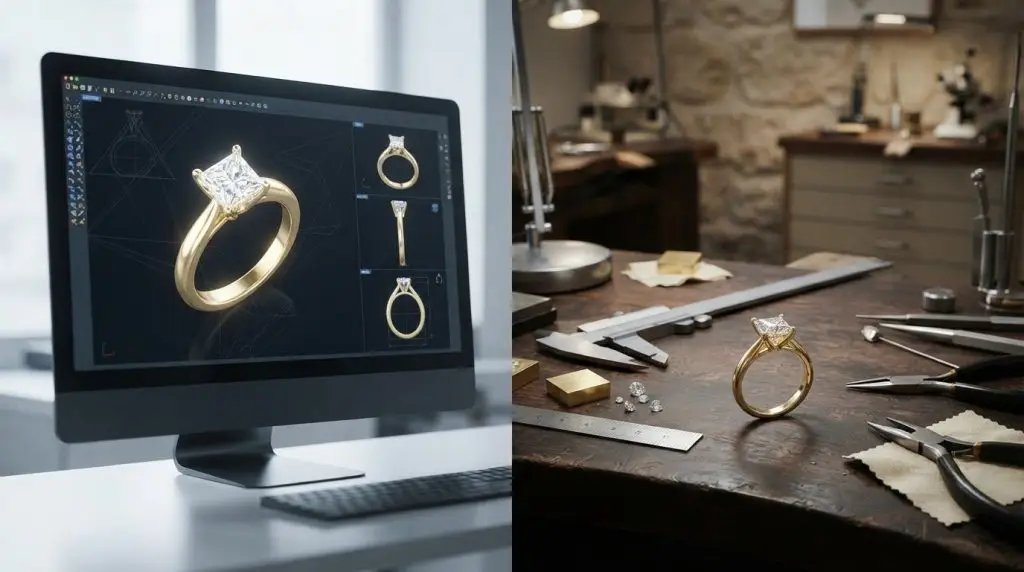
Ensuring Your Final Ring Matches the 3D Render
-
Posted by
What if the image you approved is a beautiful preview, but not a complete specification for the ring being made? Ensuring the final ring matches the…
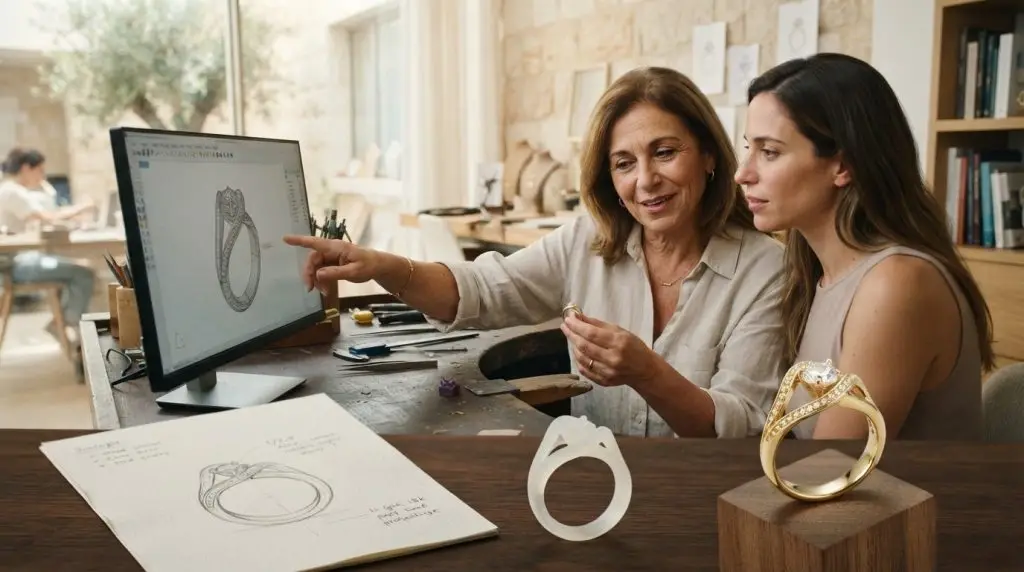
From Sketch to Sparkle: Ensuring the Final Piece Matches Your Jewelry Design
-
Posted by
You’ve spent weeks dreaming of a ring that captures your story, but as you look at the artist’s rendering, a small doubt creeps in. Will that…
Repurposing Heirloom Stones into Modern Custom Jewelry: The Complete 2026 Guide
-
Posted by
What if keeping an inherited ring tucked away in a dark jewelry box isn’t protecting your family history, but silencing it? It’s completely natural…
How to Give Constructive Feedback on a Jewelry Design: A Client’s Guide
-
Posted by
What if telling your jeweler you dislike a detail isn’t an insult, but the exact spark they need to craft your dream heirloom? When you first open…
Designing a Custom 18k Gold Ring: 2026 Bespoke Guide
-
Posted by
What if the most exquisite jewelry you ever own isn’t reserved for formal galas, but crafted to enrich your daily life? When you start exploring…
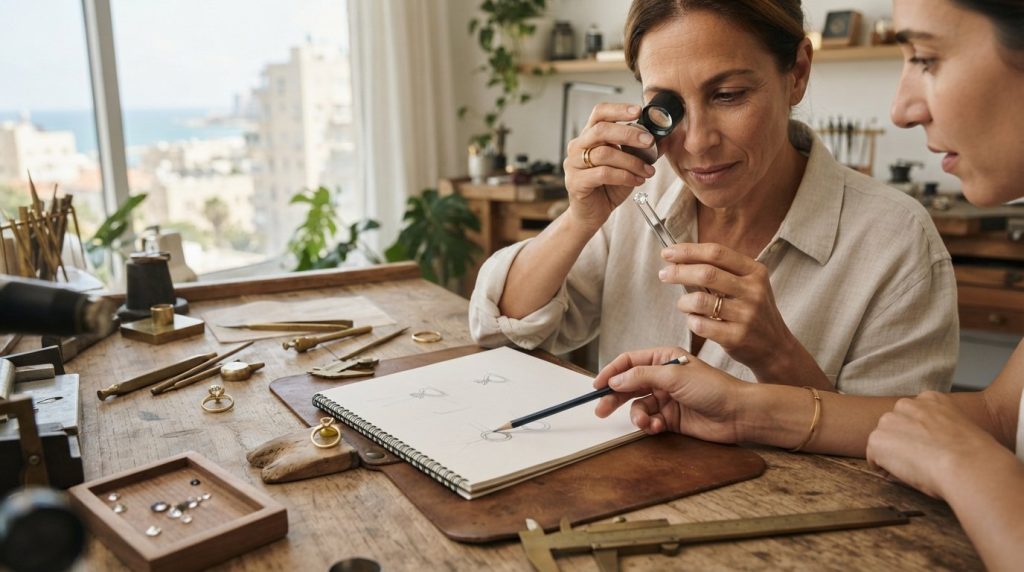
Finding an English-Speaking Custom Fine Jewelry Designer in Israel: A Complete Guide
-
Posted by
Your most cherished jewelry shouldn’t just be an accessory; it’s a piece of your history that deserves to be understood without a translator. When…
How to Convince Your Husband to Upgrade Your Wedding Ring
-
Posted by
What if your wedding ring wasn’t just a relic of who you were when you said “I do,” but a luminous reflection of the woman you’ve become today? Many…
Jewelry That Makes Me Feel Protected and Strong: A Guide to Modern Talismans
-
Posted by
Most people view a necklace or a ring as a simple finishing touch, but for the modern woman, it’s often the first layer of emotional armor she puts…