
Blog
From Sketch to Sparkle: Ensuring the Final Piece Matches Your Jewelry Design
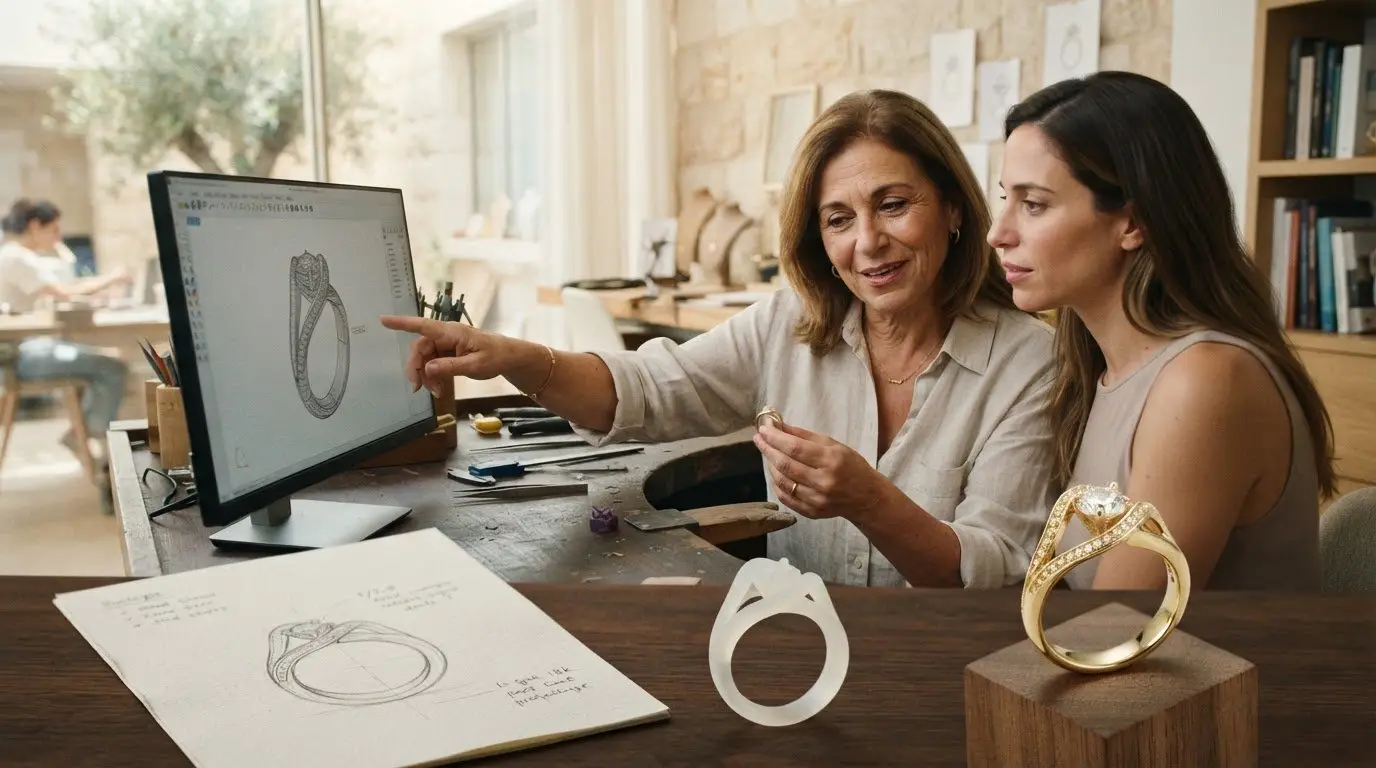
You’ve spent weeks dreaming of a ring that captures your story, but as you look at the artist’s rendering, a small doubt creeps in. Will that ethereal line in the drawing become a clunky band of metal on your finger? Investing in a custom 18k gold piece from KaMila Fine Jewellery is a significant emotional and financial commitment, often reaching ₪12,000 or more, so wanting absolute precision isn’t just understandable; it’s essential. The secret to ensuring the final piece matches the design sketch isn’t just talent, it’s a structured technical partnership between you and your artisan.
You deserve to feel confident that your jewelry will reflect your personality without any unpleasant surprises. In this article, we’ll demystify the journey from paper to polished gold. You’ll learn how modern tools like Rhino 8 and 3D-printed resin models act as your safety net during the collaborative process with KaMila Fine Jewellery. We’ll show you exactly how to verify every detail, ensuring your finished treasure is the perfect, graceful reflection of the sketch you first fell in love with.
Key Takeaways
- Understand the “translation gap” between a creative sketch and a wearable object to set clear expectations for your custom 18k gold jewelry.
- Discover how digital CAD blueprints act as a technical bridge, ensuring the final piece matches the design sketch with micron-level precision.
- Identify the three essential verification milestones, from digital renders to physical prototypes, before the final casting begins.
- Learn how to provide clear, actionable feedback and use reference imagery to help your artisan capture your personal story perfectly.
- Explore how the fusion of modern 3D printing and traditional Israeli artistry creates a seamless path to owning a unique, sustainable treasure.
The Journey from Sketch to Gold: Understanding the Translation Gap
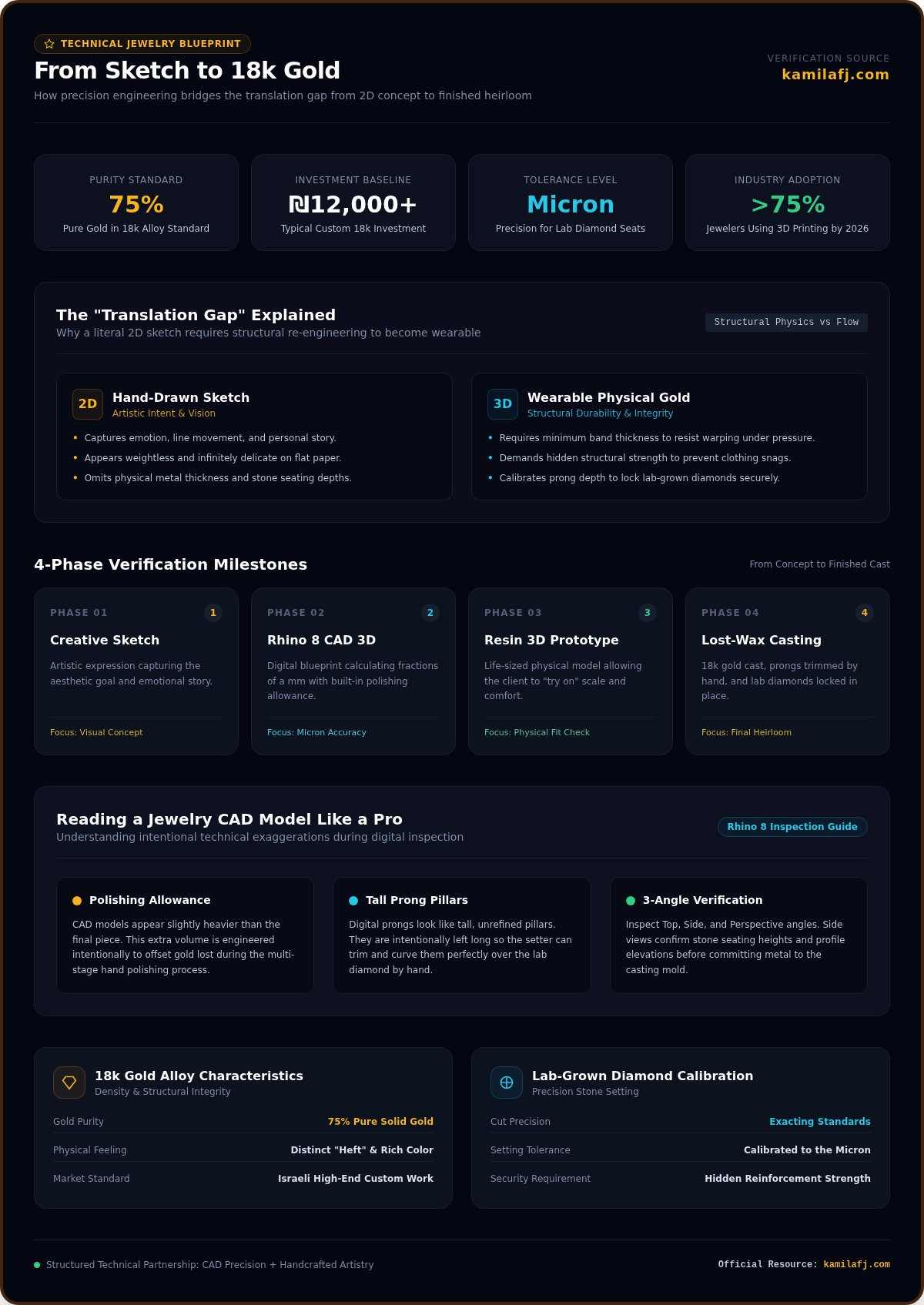
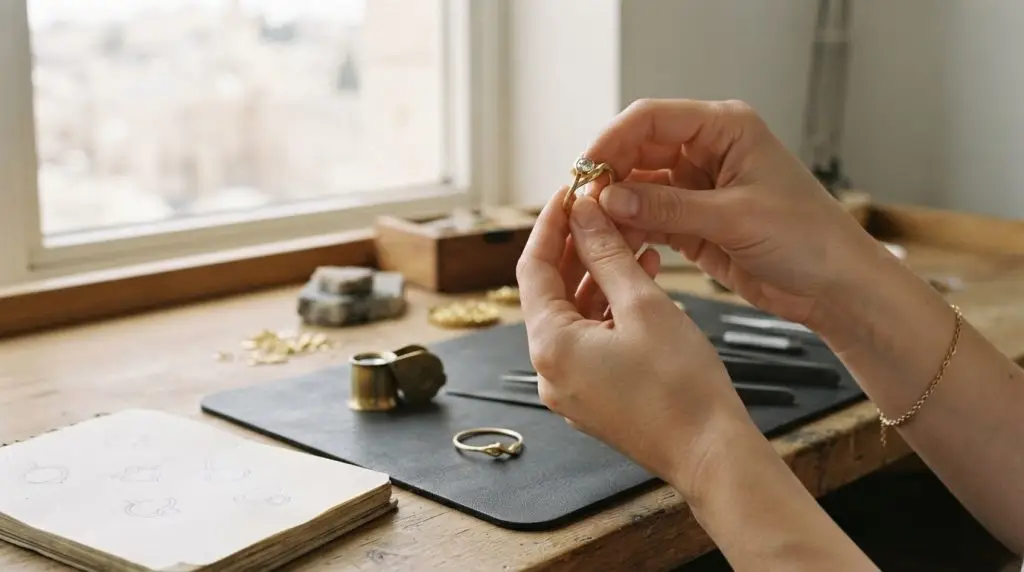
A hand-drawn sketch is a beautiful promise. It captures the spirit of a dream, but there is a distinct “Translation Gap” between that pencil line and a physical object you can wear. While your sketch represents feeling and flow, the final piece must obey the laws of structure and physics. This is where the artistry of ensuring the final piece matches the design sketch truly begins.
Deviations often happen because a drawing doesn’t account for three-dimensional realities like metal thickness. A line on paper might look delicate, but if translated literally, it might be too thin to survive daily life. A thoughtful artisan bridges this gap through a multi-stage verification process, eventually leading to the lost-wax casting process where your vision finally takes solid form. This journey requires checking several milestones to make sure the soul of the drawing stays intact.
Artistic Intent vs. Technical Feasibility
Every custom design starts with a conversation about intent. You might envision a band so thin it almost disappears, but 18k gold requires a minimum thickness to maintain its structural integrity. If a band is too slight, it can warp under the pressure of daily wear or snagging on clothing. The jeweler’s role is to act as an interpreter, taking your minimalist aesthetic and adding just enough hidden strength to ensure your lab-grown diamonds stay securely in place. It’s a delicate dance between maintaining that ethereal look and creating a durable heirloom.
Why 18k Gold and Lab Diamonds Require Precision
In the Israeli jewelry market, 18k gold is the standard for high-end custom work. Its density means it has a specific “heft” that a 2D drawing simply can’t convey. Because 18k gold is 75% pure gold, it offers a rich color and luxury feel that demands exact technical planning. Precision becomes even more vital when working with lab-grown diamonds. These stones are cut to exacting standards, and the setting must be calibrated to the micron to hold them safely. By focusing on these technical details early, we succeed in ensuring the final piece matches the design sketch while providing the security your investment deserves.
Technical Translation: Navigating the 2D Sketch to 3D CAD Phase
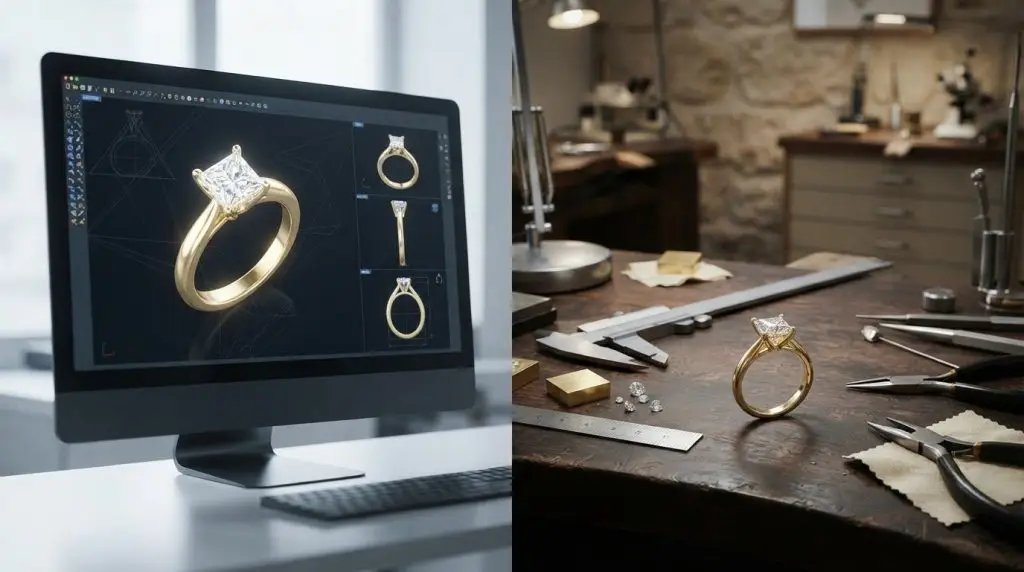
While a hand-drawn sketch captures the soul of your idea, Computer-Aided Design (CAD) provides the technical skeleton. Modern craftsmanship integrates contemporary practices like Rhino 8 software to transform your 2D dream into a digital 3D blueprint. This phase is the most critical step in ensuring the final piece matches the design sketch. It allows us to calculate measurements down to a fraction of a millimeter, making sure every curve is intentional and every stone is secure.
When you first view a CAD model, don’t be alarmed if it looks slightly “heavy” or unrefined. Jewelers purposely design these digital files to be bulkier than the final result. This extra volume, often called a “polishing allowance,” accounts for the metal lost during the finishing process. Without this buffer, your delicate ring might end up too fragile to wear. It’s essential to review the model from the top, side, and perspective angles to verify that the proportions feel right before moving to production.
Reading a Jewelry CAD Model Like a Pro
A CAD render uses specific visual cues to communicate the structure of your piece. Typically, different colors distinguish between the 18k gold and the lab-grown diamonds. Pay close attention to the prongs; in this stage, they often look like tall, unrefined pillars. They’ll be trimmed and shaped by hand later. Check the stone heights against your original vision to ensure the profile isn’t higher than you expected. If you’re ready to see how your vision takes shape, you can explore our custom jewelry design process for more inspiration.
The Role of 3D Printing in Verification
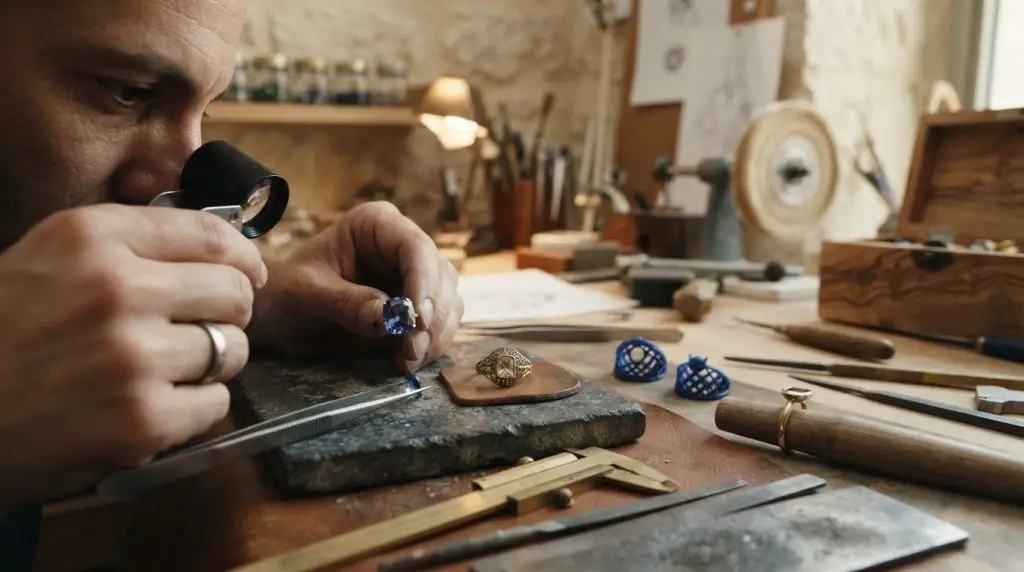
Seeing a design on a screen is one thing; holding it is another. By the end of 2026, over 75% of professional jewelers are expected to use 3D printing to create physical prototypes. We use resin printers to produce a life-sized version of your piece, allowing you to “try on” the design before any gold is cast. It’s the ultimate tool for ensuring the final piece matches the design sketch in terms of scale and comfort. You can feel how a ring sits against your other fingers or how a necklace rests against your skin. This physical touchpoint removes the anxiety of the unknown, giving you peace of mind before we commit to the final 18k gold casting.
Milestones of Verification: Renders vs. Wax vs. Final Casting
The journey from a fleeting idea to a tangible treasure relies on three distinct checkpoints: the artistic sketch, the digital render, and the physical prototype. Each stage serves as a safety net for ensuring the final piece matches the design sketch. By the time we reach the casting phase, the design is essentially locked in. This makes your active participation in earlier approvals vital. One often overlooked step is the “stone layout,” where we arrange your actual lab-grown diamonds to verify their placement and fire before they are permanently secured in 18k gold.
Photo-Realistic Renders: Seeing the Sparkle Early
A technical CAD model is a blueprint; it’s designed for the craftsman to see measurements and prong positions. In contrast, a photo-realistic render is designed for your heart. Modern software simulates how 18k gold and diamonds interact with light, showing you the interplay of shadows and brilliance. These images help you finalize metal color choices, whether you prefer the classic warmth of yellow gold or the modern edge of rose gold. It’s an ideal moment to consider how your new piece fits into your existing collection. For advice on building a cohesive look, see our guide on Styling Fine Jewelry.
The Physical Prototype: The Ultimate Reality Check
The physical prototype, usually a 3D-printed resin model, is the final safeguard for ensuring the final piece matches the design sketch. It allows you to check the “stackability” of a new ring against your existing bands or the “drape” of a necklace against your skin. You can verify that the proportions feel balanced in real life, not just on a screen. At this stage, we can still make subtle adjustments to the thickness of a band or the height of a setting. Once you give the final nod, we move to casting. This is the point of no return where the resin is replaced by molten 18k gold. Being thorough now guarantees that the finished piece isn’t just jewelry, but a precise embodiment of your vision.
Communication Best Practices for Custom Design Success
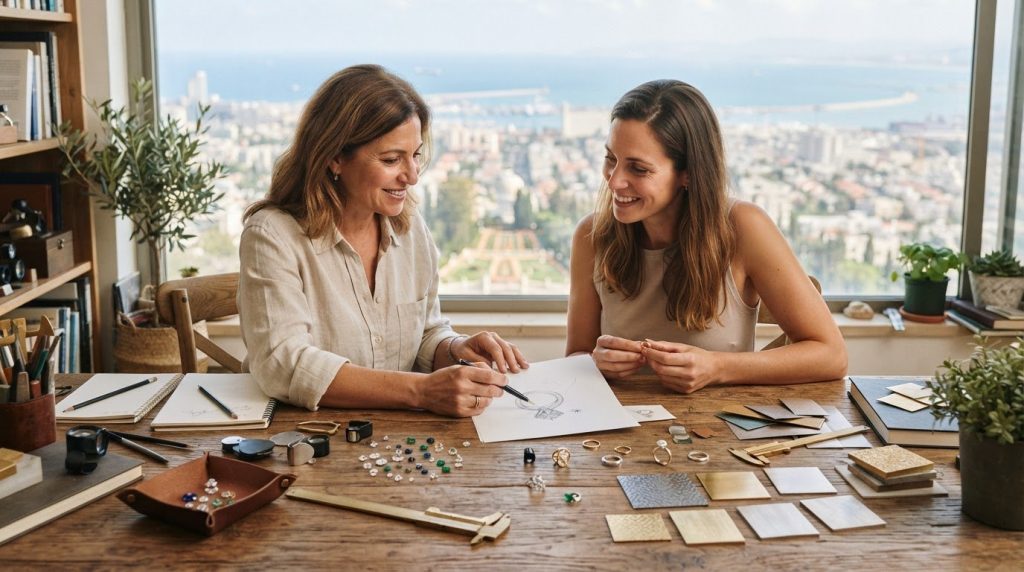
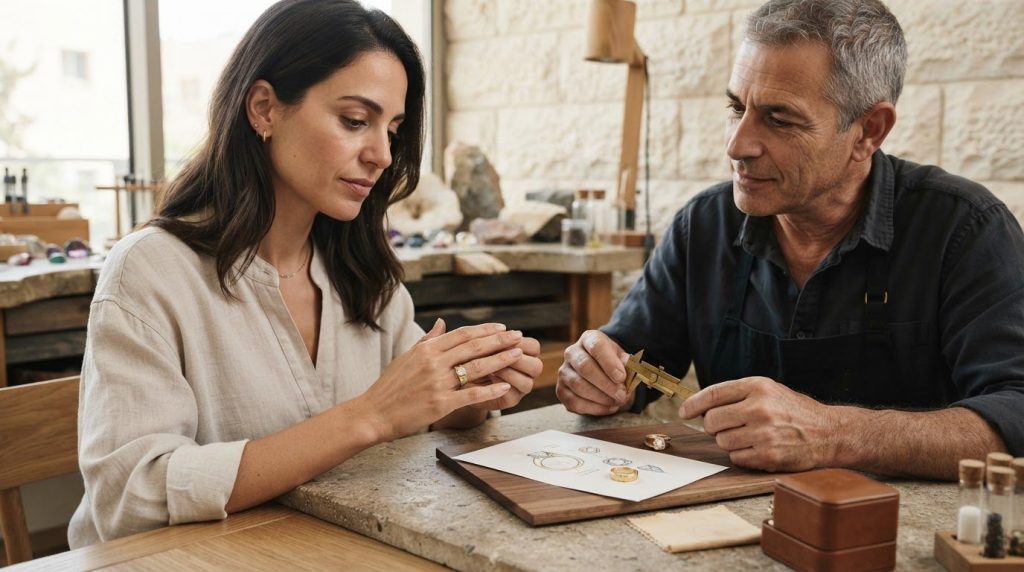
Clear communication is the foundation of any successful custom jewelry project. Providing constructive feedback involves more than just stating what you dislike; it requires describing how you want to feel when wearing the piece. To assist your artisan, share reference photos alongside your original drawing. These images clarify style preferences, such as a specific prong shape or a particular metal texture, that are difficult to capture in a lone sketch. Establishing clear expectations for timelines and the number of design revisions upfront keeps the process joyful and stress-free.
Your daily routine plays a massive role in the final construction. Being transparent about your lifestyle allows the jeweler to make vital adjustments for daily wear. If you work with your hands or lead an active life, your artisan might suggest a slightly thicker bezel setting or a lower profile. This collaborative honesty is a crucial factor in ensuring the final piece matches the design sketch while remaining practical for your everyday adventures.
The Design Approval Checklist
Before giving your final approval for production, use this structured checklist to review the technical models:
- Step 1: Verify Measurements – Confirm that the band width and stone millimeter sizes match your original request.
- Step 2: Check Material Specs – Ensure the documentation explicitly states 18k gold purity and details your lab-grown diamond specifications.
- Step 3: Evaluate Profile Height – Look at the side view to see if the stone sits too high or low for your comfort.
- Step 4: Assess the Vibe – Step back and ensure the original artistic fluid spirit of your sketch hasn’t been lost to technical precision.
Common Misunderstandings and How to Avoid Them
Misunderstandings often arise from tiny details that aren’t specified on paper. For example, clarify the difference between a high-polish finish and a brushed, matte texture early in the conversation. Discuss stone orientation, like choosing between a modern east-west or a classic north-south placement, before the CAD work begins. If you are designing a piece for a milestone occasion, reviewing our Engagement Rings Guide can help you master the vocabulary needed for smooth collaboration. Ready to begin your journey? You can book a custom design consultation with our team today.
The KaMila Approach: Handcrafted Precision for Your Story
At KaMila Fine Jewellery, we believe luxury should be an intimate expression of your identity rather than a distant indulgence. Our process is rooted in the thoughtful modern artisan philosophy, where we blend the technical precision of modern CAD software with the heritage of traditional Israeli craftsmanship. This fusion allows us to create pieces that feel both timeless and contemporary. By focusing on 18k gold, the gold standard for quality in Israel, we provide a durable and rich foundation for every one-of-a-kind creation.
Our collaborative journey ensures you’re never left wondering about the status of your investment. We keep you involved from the moment that first pencil stroke hits the paper until the final hand-polish is applied in our studio. This constant dialogue is our primary method for ensuring the final piece matches the design sketch in both form and spirit. We don’t just see ourselves as manufacturers; we’re partners in crafting a modern heirloom that will carry your story for generations.
Personalized Consultation for One-of-a-Kind Pieces
Every custom project begins with your unique inspiration. Whether you bring a rough drawing or a collection of memories, we refine those ideas into a professional design sketch that balances your aesthetic desires with technical reality. We maintain total transparency throughout the material selection phase. You’ll have a clear understanding of our ethically sourced 18k gold and the specific characteristics of the stones we select. For those choosing sustainable luxury, our Lab Diamonds Guide offers a deep dive into how these stones provide brilliance with a conscience.
Crafting Your Daily Luxury
We specialize in minimalist designs that celebrate the duality of strength and delicacy. This focus is essential for ensuring the final piece matches the design sketch, as it prevents the original vision from being overwhelmed by unnecessary clutter. Before your jewelry leaves our hands, it undergoes a rigorous artisanal quality check. We inspect every prong and every curve to ensure the finished product meets our high standards for grace and meaningfulness. Our goal is to make high-end craftsmanship a part of your daily life, not just for formal occasions. If you’re ready to see your vision come to life, start your custom jewelry journey with KaMila today and let us help you tell your story in gold.
Bringing Your Vision to Life in 18k Gold
The transition from a simple artistic sketch to a tangible treasure is a journey of shared discovery. By understanding the translation gap and utilizing modern verification tools like 3D-printed prototypes, you’ll move forward with absolute confidence. These checkpoints are the secret to ensuring the final piece matches the design sketch, giving you the power to approve every curve and setting before the final casting begins.
We take pride in our transparent, collaborative process, handcrafting every unique item in Israel with high-purity 18k gold. As specialists in minimalist lab-grown diamond settings, we focus on the subtle details that turn a beautiful drawing into a durable, everyday luxury. Your personal narrative is the most precious part of the design; we simply provide the technical artistry to let it shine. It’s about making your daily life special through meaningful, wearable art.
If you’re ready to see your inspiration take shape, design your one-of-a-kind piece with KaMila Fine Jewellery today. Let’s create a modern heirloom that reflects your identity with quiet confidence and grace. Your story is waiting to be told in gold.
Frequently Asked Questions
Will the final piece look exactly like the 2D sketch?
The final piece captures the spirit and proportions of your sketch while adding the necessary three-dimensional structure. A drawing represents an artistic vision, but a physical object requires specific metal thickness for durability. We work closely with you to translate those flat lines into a wearable form that maintains the grace of your original idea. This ensures the spirit remains intact even as we apply the laws of physics to your 18k gold treasure.
Why does the CAD model look so different from the finished ring?
A CAD model is a functional blueprint rather than a final portrait. It often looks bulkier because we include a polishing allowance, which is extra metal that gets refined away during the final handcrafted finishing. The prongs also appear as long, blunt pillars to allow for secure stone setting later. Once our artisans hand-polish the 18k gold, those heavy digital lines transform into the delicate, minimalist aesthetic you initially envisioned.
Can I make changes to the design after the CAD is finished?
Yes, the CAD phase is the ideal time to refine your vision. Because we use parametric software like Rhino 8, we can adjust band widths or stone heights without starting from scratch. Making these digital tweaks is a vital part of ensuring the final piece matches the design sketch before we commit to the casting process. It’s much easier to move a digital line than to alter solid gold once it has been poured.
What happens if I don’t like the 3D prototype?
If the 3D-printed resin prototype doesn’t feel right on your hand, we simply head back to the digital design stage. The prototype exists to reveal issues with scale or comfort that aren’t obvious on a screen. We’ll listen to your feedback, adjust the CAD model, and print a new version if necessary. We want you to feel complete joy and confidence before we begin the permanent 18k gold casting phase in our Israel studio.
How long does the custom design process usually take?
Most custom jewelry journeys take between four to six weeks from the initial consultation to the final polish. This timeline allows for the collaborative back-and-forth required for sketch refinements, CAD modeling, and 3D printing. Crafting a one-of-a-kind 18k gold piece shouldn’t be rushed. We dedicate the necessary time to source the perfect lab-grown diamonds and ensure every artisanal detail meets our rigorous standards for your story and identity.
Is 18k gold strong enough for a very delicate custom design?
18k gold is the ideal balance of purity and strength for sophisticated, minimalist designs. While it’s 75% pure gold, the remaining alloy provides the durability needed to hold delicate settings securely. We specialize in creating high-end pieces that look ethereal but possess the hidden structural integrity to withstand daily wear. Our artisans ensure that even the most delicate-looking bands meet the technical requirements for a lifetime of meaningful use and celebration.
Do I get to see the lab diamonds before they are set in the piece?
Absolutely, we believe in total transparency during the stone sourcing process. We invite you to a stone layout session where you can view your selected lab-grown diamonds in person before they are permanently set. This allows you to see their fire and brilliance under different lighting conditions. It’s a celebratory milestone that builds a deeper personal connection between you and the gems that will eventually anchor your custom 18k gold piece.
What is the most important thing to check during the design approval phase?
The most critical element to verify is the profile height and overall scale relative to your hand or neck. While a sketch shows the top view, the side view determines how the piece interacts with your daily life. Checking these proportions in the 3D prototype is the most effective way of ensuring the final piece matches the design sketch while remaining comfortable. You want to ensure the vibe of your original inspiration feels balanced.
Related Posts
Jewelry Design in Haifa: What to Expect in 2026
-
Posted by
מילה קלר
If you’re searching “jewelry design consultation in Haifa what to expect,” you may be wondering what to bring, which decisions you’ll need to make,…
Creating a Ring That Symbolizes a Personal Achievement
-
Posted by
What if the ring that marks your biggest achievement is subtle enough to feel like you, not a trophy? Creating a ring that symbolizes a personal…
Unhappy With Your Final Custom Ring? Here’s What to Do Next
-
Posted by
What if I’m unhappy with my final custom ring, even though I approved the design? A finished piece can feel different on your hand than it did in a…
Ensuring Your Final Ring Matches the 3D Render
-
Posted by
What if the image you approved is a beautiful preview, but not a complete specification for the ring being made? Ensuring the final ring matches the…
Repurposing Heirloom Stones into Modern Custom Jewelry: The Complete 2026 Guide
-
Posted by
What if keeping an inherited ring tucked away in a dark jewelry box isn’t protecting your family history, but silencing it? It’s completely natural…
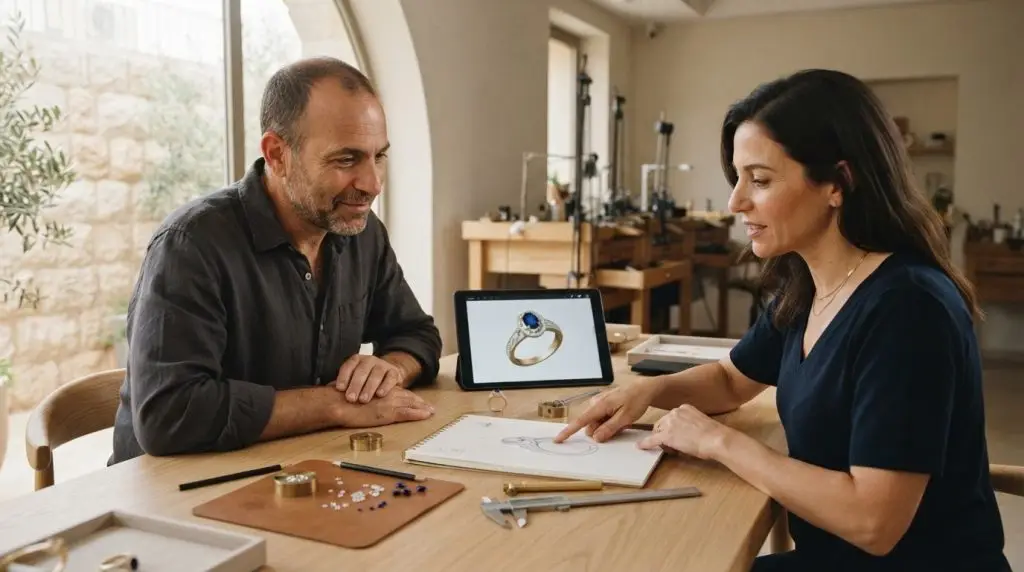
How to Give Constructive Feedback on a Jewelry Design: A Client’s Guide
-
Posted by
What if telling your jeweler you dislike a detail isn’t an insult, but the exact spark they need to craft your dream heirloom? When you first open…
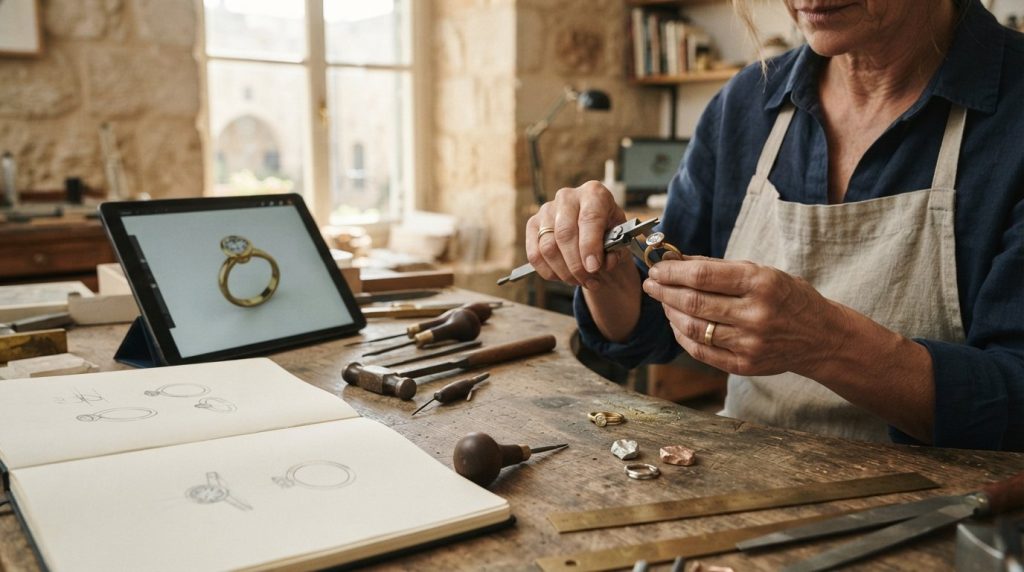
Designing a Custom 18k Gold Ring: 2026 Bespoke Guide
-
Posted by
What if the most exquisite jewelry you ever own isn’t reserved for formal galas, but crafted to enrich your daily life? When you start exploring…
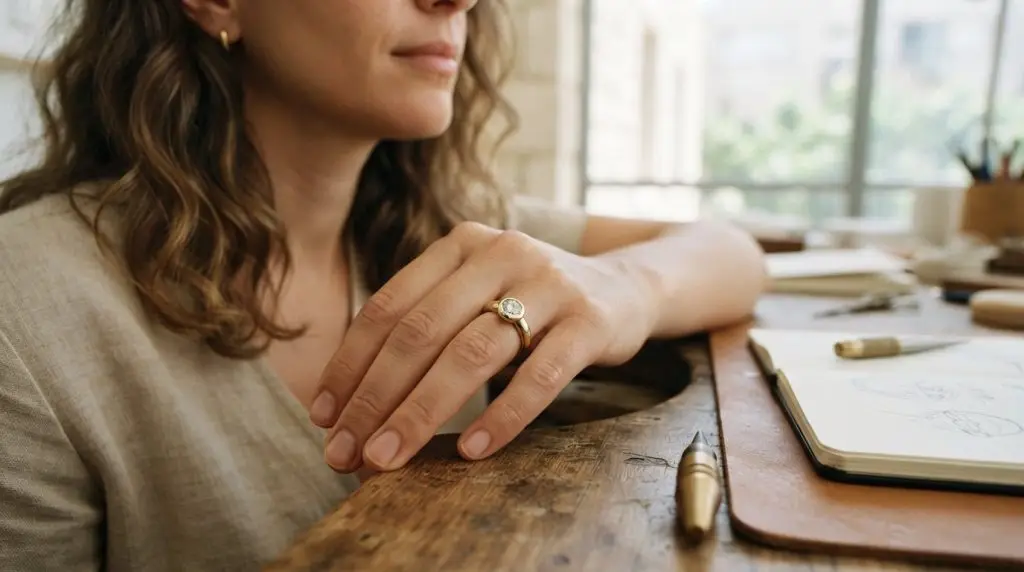
The Art of Ergonomics: Ensuring a Custom Ring is Comfortable for Daily Wear
-
Posted by
True luxury shouldn’t feel like a burden on your hand. While many focus solely on the carat weight or the sparkle, the real artistry lies in ensuring…
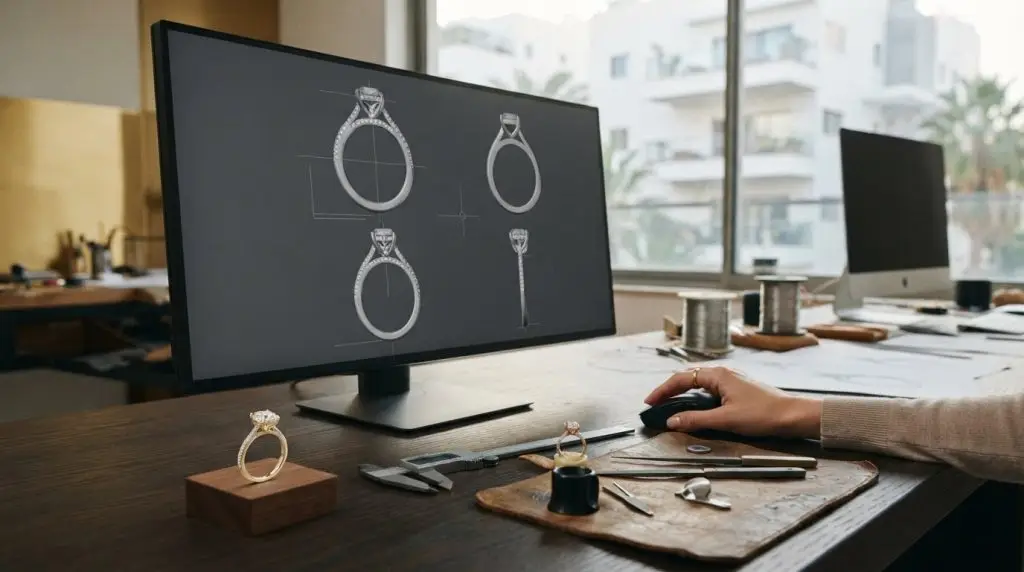
Ring CAD Models: A Guide to Jewelry Blueprints
-
Posted by
You finally receive the email containing your custom design, but instead of a sparkling heirloom, you see a robotic, gray-scale rendering with tiny…
Red Flags When Choosing a Custom Jewelry Designer: A 2026 Guide to Protecting Your Vision
-
Posted by
Imagine spending months dreaming of a bespoke 18k gold ring, only to open the velvet box and find a piece that feels like a generic retail cast…
Jewelry That Makes Me Feel Protected and Strong: A Guide to Modern Talismans
-
Posted by
Most people view a necklace or a ring as a simple finishing touch, but for the modern woman, it’s often the first layer of emotional armor she puts…
How to Stack Rings: The Art of Curating Your Personal Story in 18K Gold
-
Posted by
What if your jewellery box wasn’t just a collection of objects, but a living timeline of your most cherished milestones? You’ve likely looked at a…