
Blog
Signs of High Quality Jewelry: The Modern Woman’s Guide to Investing in Gold and Diamonds
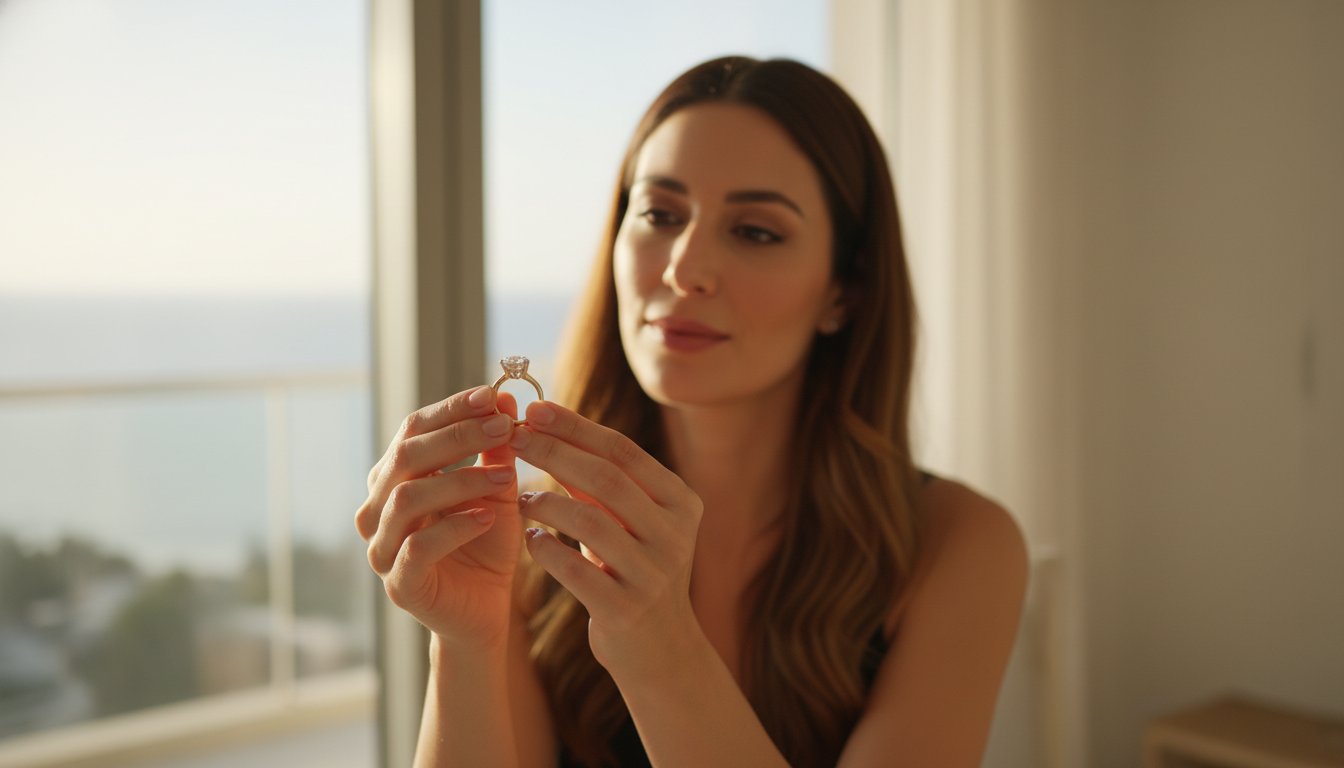
Last November, a client shared her disappointment when her favorite “gold” ring began fading into a dull grey after just three months. It’s a heartbreaking moment when an investment of ₪950 turns out to be a temporary accessory rather than a lasting treasure. We’ve all felt that hesitation when choosing between 14k and 18k gold or worrying if a delicate stone will stay secure during a busy day. Understanding the signs of high quality jewelry is the only way to ensure your personal talisman reflects your story without losing its luster before the season ends.
To shop with absolute confidence, you must learn to distinguish a true heirloom from a mass-produced imitation. We’ll teach you how to evaluate the tactile weight of the metal, the precision of handcrafted settings, and the ethical soul of the diamonds you choose. This guide provides a clear look at the technical and sensory markers that define fine artistry. You’ll gain the knowledge needed to find a piece that celebrates your identity for a lifetime, turning an everyday moment into a modern celebration of grace.
Key Takeaways
- Understand why 18k gold is the preferred standard for daily wear in Israel, offering the perfect harmony of rich aesthetic and structural durability.
- Learn to perform the “Heft Test” to ensure your investment feels substantial and balances naturally against your skin for effortless elegance.
- Master the “Shake Test” and other technical signs of high quality jewelry to verify that every gemstone is securely and expertly set.
- Explore how ethical sourcing and lab-grown diamonds have redefined modern luxury, offering identical physical brilliance with a transparent footprint.
- Discover the subtle markers of hand-finishing that elevate a handcrafted artisan piece above the limitations of mass-produced imitations.
The Foundation of Quality: Precious Metals and Hallmarks
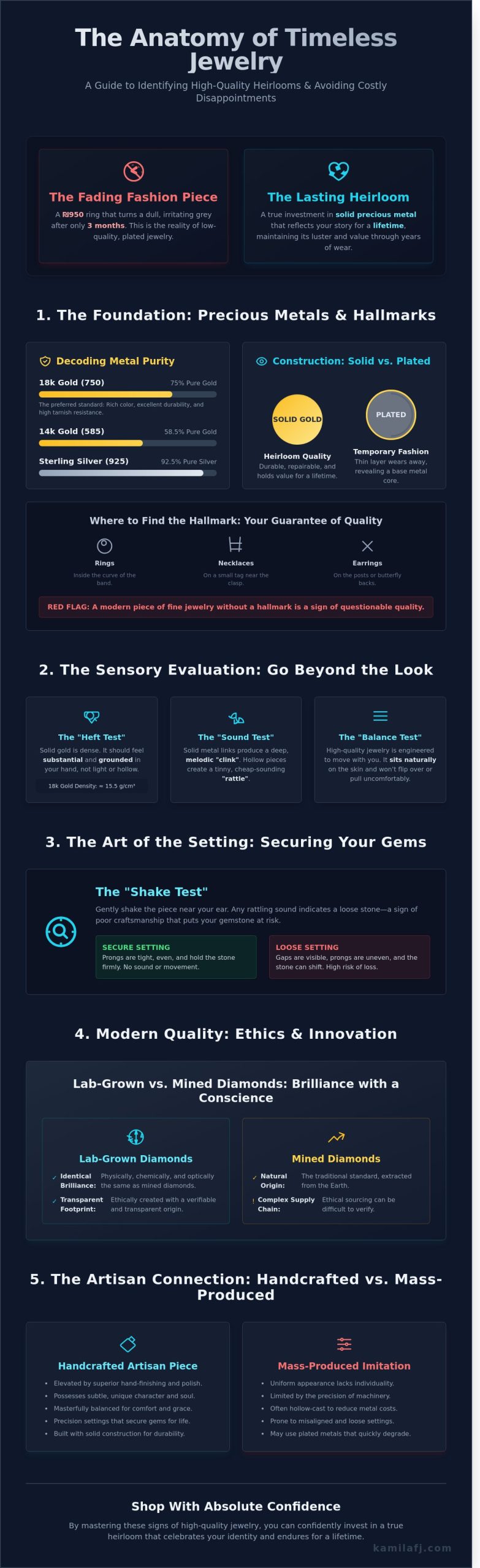
True fine jewelry begins with what’s beneath the surface. Identifying the signs of high quality jewelry starts with understanding the metal that rests against your skin. While fashion jewelry relies on base metals and thin coatings, fine jewelry is defined by its use of solid precious metals: gold, platinum, and silver. These materials don’t just hold value; they carry the weight of your most precious memories without fading or causing irritation over time. They are the permanent canvas for your personal story.
In Israel, the purity of these metals is strictly regulated, ensuring that what you buy is exactly what’s promised. You’ll often see three specific numbers that act as a shorthand for quality. 750 signifies 18k gold, containing 75% pure gold. 585 represents 14k gold, and 925 identifies Sterling Silver. While gold-plated or vermeil pieces might look similar at first glance, they don’t meet fine jewelry standards for longevity. The thin layer of gold on plated items eventually wears away, revealing a less durable core that can’t be easily repaired or polished. Investing in solid gold ensures your piece remains a lifelong companion.
A hallmark is a legal guarantee of metal purity. For any serious collector, understanding precious metal hallmarks is the first step in verifying an investment. These tiny engravings serve as a permanent record of the piece’s heritage and integrity, acting as a certificate of quality that stays with the jewelry forever.
The 18k Gold Advantage
We prioritize 18k gold for KaMila’s handcrafted rings because it offers a depth of color that’s simply unmatched. It possesses a warm, rich glow that makes the metal feel alive. Don’t believe the myth that 18k is too soft for daily wear. When expertly crafted, it provides the perfect balance of luxury and resilience for your everyday talismans. It resists tarnishing better than lower-karat alloys and maintains its characteristic luster through years of daily wear and celebrations.
Where to Find and Read Hallmarks
Identifying these marks requires a keen eye. You’ll typically find them tucked away in discreet locations:
- The inside curve of ring bands
- Small tags near necklace clasps
- The tiny posts or butterfly backs of earrings
If a modern piece lacks a hallmark, it’s a significant red flag regarding its quality. While some antique pieces from before the mid-1900s might lack marks due to historical wear or resizing, modern fine jewelry must carry this stamp of authenticity. Checking for these signs of high quality jewelry protects you from paying ₪5,000 for a piece that doesn’t have the metal content to back up its price tag. It’s the simplest way to ensure your investment is as genuine as the sentiment behind it.
The Sensory Evaluation: Weight, Balance, and Finishing
Assessing the signs of high quality jewelry begins the moment you pick it up. It’s a physical conversation between the piece and your palm. While visual beauty captures your attention, the tactile experience reveals the truth of the craftsmanship. High-quality gold has a specific, comforting density. For instance, 18-karat gold has a density of approximately 15.5 grams per cubic centimeter. When you hold a well-made ring or pendant, it should feel grounded and substantial, never like a hollow shell or a light plastic imitation.
Sound is another subtle indicator of excellence. Solid gold links produce a deep, melodic “clink” when they touch. In contrast, hollow-cast or mass-produced items often create a tinny, rattling noise. This difference occurs because air pockets in hollow jewelry act as echo chambers, whereas solid metal absorbs and reflects sound with a rich resonance. A piece that sounds “thin” is often a piece that will dent or break under the pressures of daily wear.
Symmetry and balance ensure that jewelry moves with you. A masterfully engineered necklace won’t flip over during a meeting; a well-balanced earring won’t pull uncomfortably on the lobe. The piece should sit naturally on the skin, following your body’s contours with effortless grace.
Weight as an Indicator of Solid Construction
Solid construction is the foundation of any investment piece. Many mass-market gold bracelets use hollow tubing to reduce the amount of precious metal, making them fragile and nearly impossible to repair. When you choose solid gold, you’re choosing a piece that can be polished and restored for decades. In Israel, where 14k and 18k gold are the benchmarks for quality, checking for authentic density is vital. You can refer to the FTC Guides for the Jewelry Industry to understand the global standards for metal descriptions and markings. These guidelines help you distinguish between a truly solid piece and “weighted” fakes that may use non-precious cores to mimic the feel of luxury.
The Importance of Finishing Touches
The mark of a thoughtful artisan is found where most people don’t look. Turn the piece over and inspect the “under-gallery,” which is the back or interior of the jewelry. It should be polished to a mirror finish, smooth and free of any pits or scratches. Visible solder lines or rough edges are clear indicators of rushed, industrial production. Modern fine jewelry often seeks a balance of edgy sophistication; this means the design might have sharp, geometric lines, but the edges that touch your skin must be buttery smooth. This level of detail ensures that your jewelry feels like a second skin, allowing you to find a daily talisman that is as comfortable as it is beautiful.
The Art of the Setting: Securing Your Gemstones
The true soul of a piece lies in how its stones are held. While the sparkle of a diamond captures your eye, the structural integrity of the setting ensures that beauty lasts for decades. One of the most telling signs of high quality jewelry is the transition from metal to stone. In premium handcrafted pieces, the setting acts as a protective embrace rather than a simple cage. You should look for settings where the metal has been meticulously moved by hand to fit the specific dimensions of the gemstone, a process that machine-pressed alternatives simply cannot replicate with the same level of precision.
Hand-set stones are superior because a master setter adjusts the pressure for every individual claw. In mass-produced jewelry, machines often apply uniform pressure that can leave stones vulnerable or, worse, create microscopic fractures in the gem. You can perform a simple diagnostic at home called the “Shake Test.” Hold the piece between two fingers near your ear and give it a gentle shake. If you hear even the faintest rattling or clicking, the stones are loose. A secure, high-quality setting remains perfectly silent.
Claw vs. Bezel Settings
When you examine a bezel setting, look for a consistent metal rim that surrounds the stone. A high-quality bezel should have a thickness of at least 0.5mm to 1mm to provide long-term security against daily wear. Claws, or prongs, should be perfectly symmetrical and “hug” the stone closely. They shouldn’t feel sharp or snag on your favorite cashmere sweater. In a pavé setting, where small diamonds are set closely together, 100% of the stones must be level and spaced with mathematical evenness to create a seamless river of light.
Signs of Poor Stone Setting
There are several red flags that indicate a lack of artistry. If you see any trace of visible glue, it’s a sign the piece isn’t fine jewelry. Professional setters never use adhesives; they rely on the tension and strength of the gold or platinum itself. Other warning signs include:
- Uneven Seats: The stone looks tilted or sits too high above the metal.
- Gaps: Visible space between the stone’s edge and the metal meant to hold it.
- Crooked Claws: Prongs that aren’t aligned at 12, 3, 6, and 9 o’clock positions.
A quality setting protects the gemstone while maximizing its brilliance, ensuring your investment remains as radiant as the day you first wore it. When searching for signs of high quality jewelry in Israel’s competitive market, prioritize these technical details to find a piece that truly honors the modern woman’s story.
Modern Quality Markers: Ethics and Lab-Grown Diamonds
By 2026, the definition of luxury has shifted from pure opulence to conscious integrity. One of the most significant signs of high quality jewelry today is a transparent supply chain. High-end craftsmanship doesn’t exist in a vacuum; it’s intrinsically tied to how materials are sourced. When you invest in a piece, you’re buying the artisan’s ethics as much as their technical skill. Conscious brands often spend 20% to 30% more on sourcing oversight to ensure every stone and gram of gold meets rigorous standards.
Lab-grown diamonds have become the cornerstone of this modern movement. These stones offer an identical physical, chemical, and optical profile to mined diamonds but carry a significantly lighter environmental footprint. Choosing lab-grown isn’t a compromise on quality. It’s a choice for clarity and peace of mind. Every high-quality diamond leaves a paper trail. In the Israeli market, a reputable jeweler will provide a digital or physical dossier detailing the stone’s origin and journey, ensuring your investment is both beautiful and untainted.
Sustainability serves as a reliable proxy for craftsmanship. A brand that invests in ethical sourcing is likely to apply that same meticulous attention to detail in their workshop. This holistic approach ensures that every facet of the piece, from the hidden structural supports to the final polish, meets a superior standard. It’s about creating jewelry that feels good to wear, both physically and emotionally.
Evaluating Lab Diamonds
Judging a lab-grown stone requires the same precision as a mined one. You’ll use the 4Cs: Cut, Color, Clarity, and Carat weight. Among these, the “Cut” remains the most critical marker of beauty. A perfect cut allows light to dance through the stone, creating the fire and brilliance you expect from a premium piece. Look for certifications from the Gemological Institute of America (GIA) or the International Gemological Institute (IGI). These reports are the only way to verify that your diamond meets the high standards of modern excellence.
The Rise of the Conscious Heirloom
If a brand takes the time to source recycled 18k gold, they usually apply that same level of care to their soldering and stone setting. Recycled gold maintains the same 75% purity as newly mined gold but avoids the ecological cost of traditional mining. This commitment to transparency builds a foundation of trust. We see this beautifully expressed when traditional Ashkenazi jewelry symbols are reimagined with ethical materials. These pieces become more than just ornaments; they are talismans of your values and history. Using ethical materials ensures that these signs of high quality jewelry will be cherished by the next generation without reservation.
Ready to find a piece that reflects your story and your values? Discover our collection of ethical fine jewelry today.
The Artisan Connection: Handcrafted vs. Mass-Produced
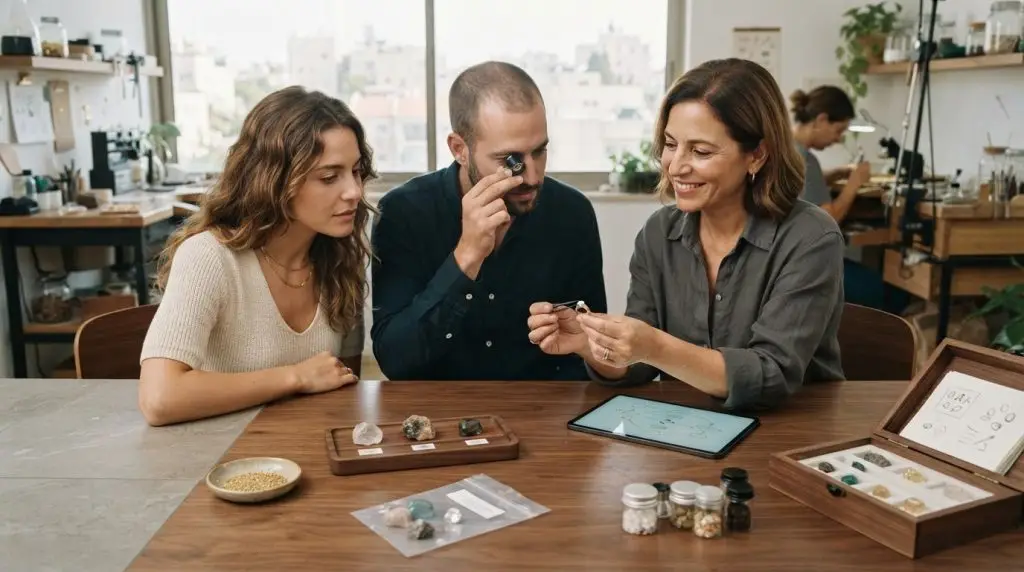
When you choose a piece of jewelry, you aren’t just buying a combination of metal and stone. You’re investing in the hours of scrutiny that an artisan poured into the bench. Mass-produced jewelry often relies on wax molds and rapid casting, which can lead to microscopic porosity or “bubbles” within the metal. In contrast, one-of-a-kind pieces undergo a rigorous level of structural inspection. An artisan examines every joint and prong under high magnification, ensuring the piece is free from the structural weaknesses common in factory-line production.
Identifying the “human touch” is one of the most reliable signs of high quality jewelry. Look for subtle markers like hand-finished edges that feel like silk against the skin or stones that are set with microscopic precision rather than being snapped into a pre-made head. These details transform a simple accessory into a talisman of self-expression. A thoughtful jeweler views their work as a partner to your personality, creating something that feels as unique as your own story. This personal connection ensures the piece isn’t just a trend; it’s a legacy item designed to be passed down through generations.
The Strength of Hand-Forged Metal
Hand-forging is a traditional technique where gold is hammered, rolled, and pulled into shape while cold. This process changes the molecular structure of the gold, making it 30% to 50% denser and significantly more durable than cast metal. While cast jewelry is often brittle, hand-forged pieces possess a spring-like resilience that holds stones more securely over time. In Israel, where the Standards Institution of Israel (SII) regulates gold purity, the structural integrity of the piece is what separates a standard purchase from a true investment. Even in minimalist, modern designs, the artistry is evident in the crispness of the lines and the weight of the metal. A custom-designed piece ensures a perfect, quality fit that mass-produced rings simply can’t replicate.
Final Checklist for Your Next Purchase
Before you commit to your next investment, use this 5-step quality check to ensure you’re getting the excellence you deserve:
- Hallmark Verification: Check for the official 14k or 18k stamps and the maker’s mark.
- The Weight Test: High-quality gold should feel substantial and dense, never hollow or light.
- Prong Security: Ensure stones don’t “wiggle” and that prongs are smooth to the touch, not snagging on fabric.
- Finishing Details: Look at the “hidden” parts of the jewelry, like the underside of a setting, to ensure they’re as polished as the front.
- The Narrative: Ask about the origin of the stones and the inspiration behind the design.
The story behind the piece is the final marker of its value. When jewelry is crafted with intention, it carries an energy that factory-made items lack. Once you’ve found your perfect piece, you can explore jewelry styling to learn how to curate a look that’s uniquely you. High-quality jewelry is more than an investment; it’s a celebration of your journey, captured in gold and light.
Invest in Pieces as Unique as Your Story
Identifying the signs of high quality jewelry starts with a shift in perspective. It’s about recognizing the 18k hallmark that guarantees 75% pure gold content, ensuring your pieces stand the test of time in Israel’s Mediterranean climate. You’ve learned that a secure gemstone setting and the substantial weight of a solid gold piece are non-negotiable markers of excellence. Today’s modern woman looks for more than just a sparkle; she seeks the ethical integrity of lab-grown diamonds and the soul of handcrafted artistry that mass production simply can’t replicate.
Your collection should be a curated reflection of your journey. By prioritizing ethically sourced materials and minimalist design, you’re not just buying an accessory; you’re investing in a personal talisman. KaMila Fine Jewellery specializes in 18k gold and lab-grown diamonds, blending modern Israeli artistry with everyday elegance. Each piece is handcrafted in our local studio to ensure it meets the highest standards of finishing and balance, making every day feel like a special occasion.
Discover Handcrafted 18k Gold Jewelry That Tells Your Story
Wear your story with confidence and let your jewelry be a quiet, powerful celebration of the woman you’ve become.
Frequently Asked Questions
How can I tell if my gold jewelry is solid or plated?
You can identify solid gold by looking for the official hallmark mandated by the Standards Institution of Israel. Solid gold jewelry will have a stamp like 585 for 14k or 750 for 18k gold. If you see marks like “GP” or “GF,” it means the piece is plated. A simple magnet test also helps. Since gold isn’t magnetic, a piece that sticks to a magnet is definitely not solid gold.
Is 14k gold better quality than 18k gold?
Quality is a balance of purity and durability. 18k gold has 75% pure gold, offering a rich, warm glow that’s perfect for artistry and prestige. 14k gold contains 58.5% pure gold and is mixed with stronger alloys. This makes 14k a better choice for rings or bracelets you wear daily. It resists scratches and dents much better than 18k gold does in active environments.
Do high-quality diamonds always have to be natural?
High-quality diamonds don’t need to be natural to be stunning or valuable. Lab-grown diamonds are chemically and physically identical to mined diamonds, offering a modern, sustainable alternative. They provide the same edgy sophistication and brilliance at a more accessible price point. Every high-quality lab diamond is graded by the same standards as natural stones, ensuring you receive a beautiful, ethical piece of jewelry.
What are the signs of a poorly made jewelry clasp?
A weak or scratchy mechanism is a clear sign of a poorly made clasp. High-quality clasps, like the lobster or integrated box clasp, should open smoothly and snap shut securely. Look closely at the jump rings connecting the clasp to the chain. In fine jewelry, these rings are always soldered closed. If there’s a visible gap, the piece is at risk of breaking or falling off.
Why does some jewelry turn skin green if it is supposed to be high quality?
Green skin is usually a reaction to base metals like copper or nickel, which aren’t found in high-end alloys. One of the primary signs of high quality jewelry is the use of hypoallergenic metals that don’t oxidize against your skin. If a piece leaves a mark, it’s often because the gold plating has worn thin or the alloy contains 40% or more of reactive base metals.
Does high-quality jewelry always come with a certificate?
Significant pieces, especially those with diamonds over 0.30 carats, usually come with an independent grading certificate. In Israel, look for reports from the GIA or IGI to verify the stone’s quality. While smaller everyday pieces might not have individual certificates, a reputable jeweler will always provide a detailed invoice. This document acts as a guarantee of the gold purity and the authenticity of the handcrafted design.
Can I wear high-quality fine jewelry every day?
You can absolutely wear high-quality fine jewelry every day. These pieces are designed to be a part of your life’s story, not just stored in a box. Solid 14k gold is particularly resilient for daily wear. To maintain the piece’s elegance, remove it before heavy exercise or when using harsh chemicals. A quick clean with mild soap and water every 30 days keeps the diamonds sparkling.
What should I look for in a jewelry store near me to ensure quality?
Search for a store that holds an official license from the Standards Institution of Israel to ensure gold authenticity. A trustworthy jeweler will offer a 12-month warranty on craftsmanship and be transparent about whether diamonds are lab-grown or natural. They should invite you to view stones through a 10x loupe. This level of transparency shows they value the artistry and integrity of the jewelry they sell.
Related Posts
Questions to Ask a Jeweler About Their Sourcing Ethics
-
Posted by
מילה קלר
What if “ethically sourced” tells you less than the answer to one careful question? When choosing a piece with personal meaning, it’s natural to want…
Jewelry Design in Haifa: What to Expect in 2026
-
Posted by
If you’re searching “jewelry design consultation in Haifa what to expect,” you may be wondering what to bring, which decisions you’ll need to make,…
From Sketch to Sparkle: Ensuring the Final Piece Matches Your Jewelry Design
-
Posted by
You’ve spent weeks dreaming of a ring that captures your story, but as you look at the artist’s rendering, a small doubt creeps in. Will that…
Repurposing Heirloom Stones into Modern Custom Jewelry: The Complete 2026 Guide
-
Posted by
What if keeping an inherited ring tucked away in a dark jewelry box isn’t protecting your family history, but silencing it? It’s completely natural…
Designing a Custom 18k Gold Ring: 2026 Bespoke Guide
-
Posted by
What if the most exquisite jewelry you ever own isn’t reserved for formal galas, but crafted to enrich your daily life? When you start exploring…
Finding an English-Speaking Custom Fine Jewelry Designer in Israel: A Complete Guide
-
Posted by
Your most cherished jewelry shouldn’t just be an accessory; it’s a piece of your history that deserves to be understood without a translator. When…

How to Convince Your Husband to Upgrade Your Wedding Ring
-
Posted by
What if your wedding ring wasn’t just a relic of who you were when you said “I do,” but a luminous reflection of the woman you’ve become today? Many…
Red Flags When Choosing a Custom Jewelry Designer: A 2026 Guide to Protecting Your Vision
-
Posted by
Imagine spending months dreaming of a bespoke 18k gold ring, only to open the velvet box and find a piece that feels like a generic retail cast…
Jewelry That Makes Me Feel Protected and Strong: A Guide to Modern Talismans
-
Posted by
Most people view a necklace or a ring as a simple finishing touch, but for the modern woman, it’s often the first layer of emotional armor she puts…
How to Stack Rings: The Art of Curating Your Personal Story in 18K Gold
-
Posted by
What if your jewellery box wasn’t just a collection of objects, but a living timeline of your most cherished milestones? You’ve likely looked at a…
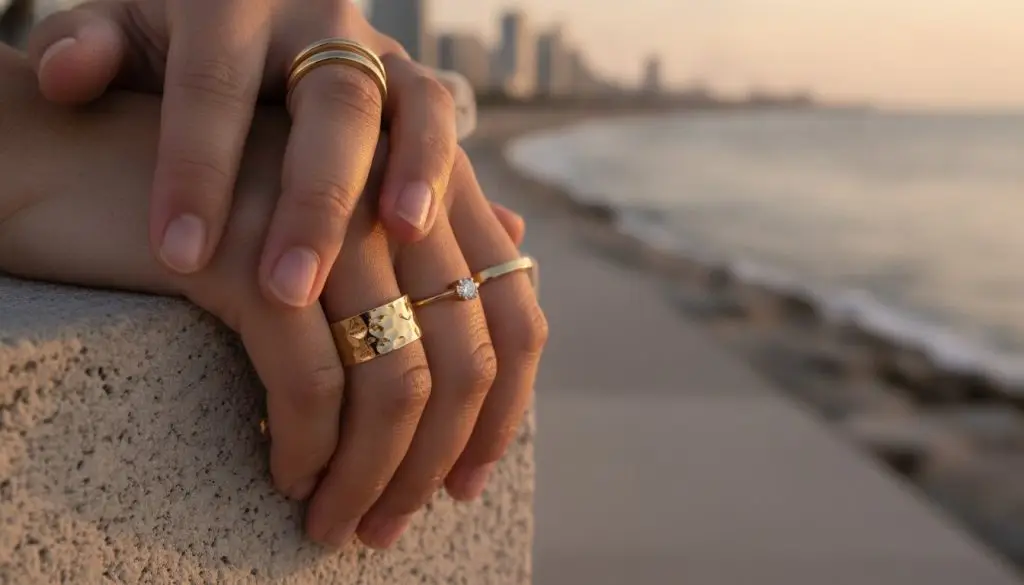
Minimalist Gold Rings: A Guide to Curating Your Timeless 18K Collection
-
Posted by
Your jewelry shouldn’t have an expiration date. Too many of us have felt the frustration of a cherished piece tarnishing or causing skin irritation…
Getting a Better Price Than Big Brand Jewelers in Israel: The Insider’s Guide 2026
-
Posted by
That iconic logo on a shopping bag in a Tel Aviv mall might feel like a mark of quality, but it’s often the most expensive way to buy a memory. When…