
Blog
Solid Gold vs Gold Plated Jewellery: A Guide to Choosing Modern Heirlooms
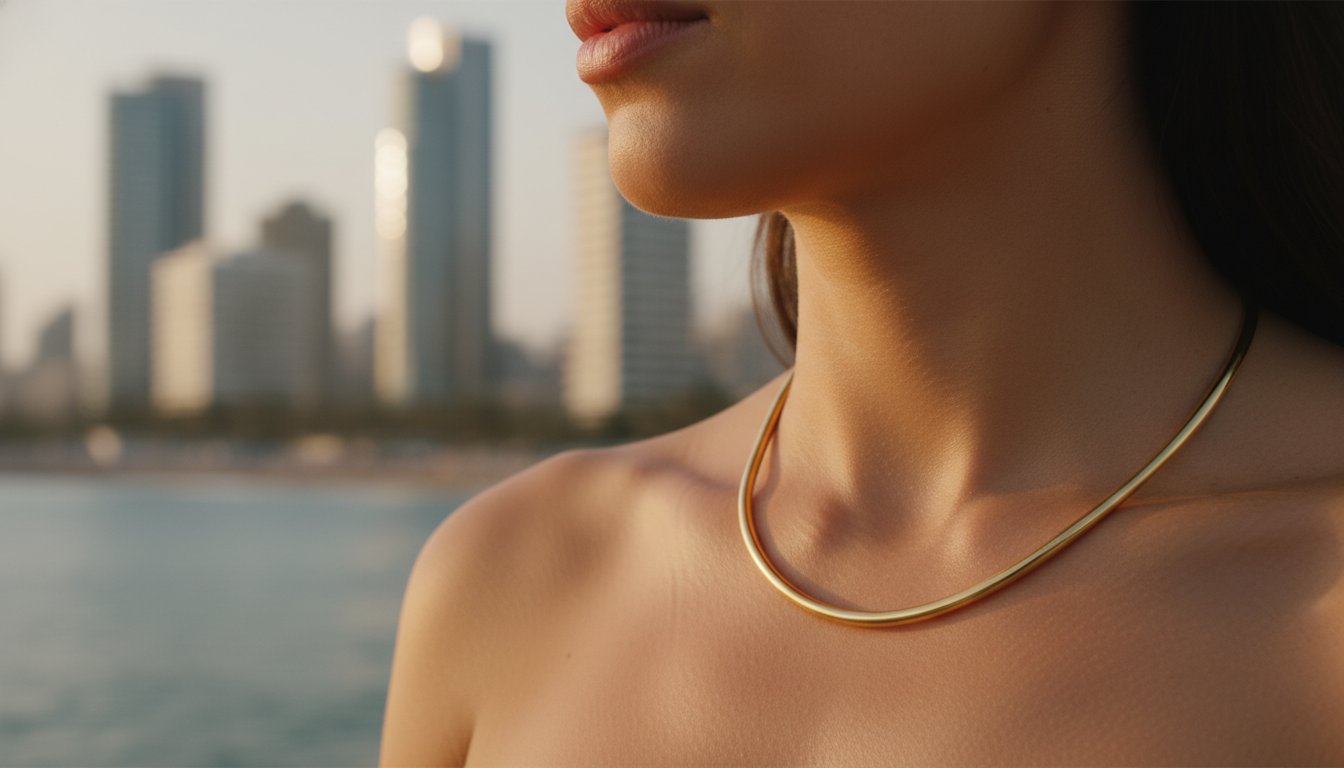
Imagine you’ve finally treated yourself to that shimmering necklace for a sunset dinner on the Tel Aviv coast, only to find it dull and leaving a faint green shadow on your skin just 90 days later. It’s a common frustration when a piece that looked like an investment turns out to be a temporary accessory. You deserve to feel confident that your jewelry won’t lose its luster after a few wears or irritate your skin. Understanding the difference between solid gold vs gold plated jewelry is the first step toward building a collection that truly lasts a lifetime.
We know how confusing terms like vermeil and 18k can be when you’re browsing local boutiques or online shops. You want your hard-earned Shekels to go toward artistry that stays as radiant as the day you bought it. In this guide, you’ll discover the essential differences between solid gold and plated alternatives to invest in jewelry that becomes a part of your daily story. We’ll explore the real cost-per-wear value of fine materials and give you the clarity needed to choose pieces that serve as meaningful talismans for years to come.
Key Takeaways
- Learn how to distinguish between solid gold vs gold plated jewelry to ensure your pieces withstand the test of time and daily wear without fading.
- Understand why investing more upfront in 18k gold offers a superior “cost-per-wear” in Shekels (₪) compared to the frequent replacement of disposable alternatives.
- Discover the science behind “green skin” and how choosing homogenous precious metals prevents skin reactions and the oxidation of base metals.
- Gain the confidence to identify authentic hallmarks like “750,” allowing you to shop with transparency and verify the purity of your modern heirlooms.
- Explore how selecting solid gold transforms a simple accessory into a meaningful, handcrafted talisman that celebrates your unique story for a lifetime.
Understanding the Spectrum: From Solid Gold to Gold Plated
Choosing a new piece of jewelry is an intimate experience. It’s a search for a talisman that reflects your personality and marks a moment in time. When you explore the differences between solid gold vs gold plated jewelry, you’re looking at how a piece is crafted at its very core. Solid gold is a homogenous precious metal alloy. This means the gold is consistent throughout the entire item, from the polished surface to the center. It doesn’t have layers to peel or wear away, making it the ultimate choice for those seeking a modern heirloom.
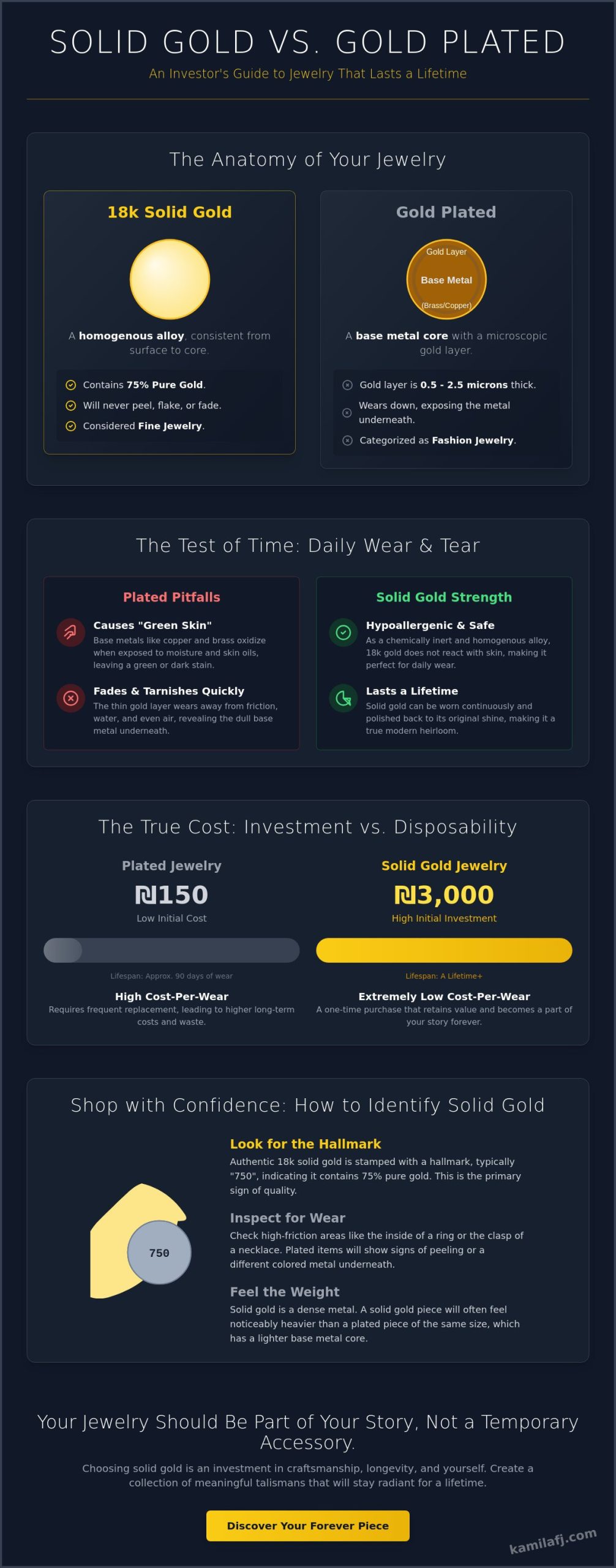
In contrast, gold plating involves a different structural approach. To understand what gold plating is, you must look at the base metal, which is usually brass or copper. A thin layer of gold is applied over this base using an electric current. The thickness of this layer is measured in microns, where one micron equals 1/1000th of a millimeter. Most fashion jewelry features a layer between 0.5 and 1.0 microns. While these pieces offer a temporary glow, the gold eventually wears down to reveal the darker metal underneath. This is why plated items are typically categorized as “fashion” or “costume” jewelry rather than fine jewelry.
- Gold Plated: A thin gold layer (0.5 microns) over brass or copper.
- Gold Vermeil: A thicker gold layer (at least 2.5 microns) over a sterling silver base.
- Gold Filled: Gold bonded to a base metal through heat and pressure, though it still contains a non-precious core.
- Solid Gold: A solid alloy of gold and other metals, offering the highest longevity and value.
The Purity of Solid Gold: Why 18k is the Standard
The karat system defines the ratio of pure gold in an alloy. While 24k gold is 100% pure, it’s often too soft for the intricate artistry of fine jewelry. We find that 18k gold, which contains 75% pure gold, provides the perfect balance. It offers a rich, deep color that 14k gold can’t match, while maintaining the durability needed for your daily story. Because it’s a consistent alloy, 18k gold is naturally hypoallergenic. It’s a kind choice for sensitive skin, ensuring that your jewelry makes every day feel special without irritation.
The Temporary Nature of Plating and Vermeil
Gold vermeil is often seen as a step above standard plating because it uses sterling silver as a base. However, even with a 2.5-micron thickness, the gold layer is still a temporary coating. The electroplating process creates a beautiful finish, but it’s susceptible to the elements. In the Israeli climate, humidity and salt air can accelerate the wear of plated pieces. These items serve a purpose for fleeting trends, but they lack the permanence of “You, in Gold.” For a piece that survives the passage of time, solid gold remains the only authentic choice.
Longevity and the Everyday Test: Why Material Choice Matters
Choosing between solid gold vs gold plated jewelry isn’t just about the initial price tag; it’s about how the piece lives with you. Your jewelry should be a silent witness to your life, from morning espresso to evening celebrations. However, daily habits like showering, applying perfume, or hitting the gym at the local country club test the integrity of these materials differently. Plated jewelry relies on a microscopic layer of gold, often just 0.5 to 2.5 microns thick, which eventually surrenders to friction and moisture. When that layer thins, the base metal underneath reacts with your skin’s natural oils and sweat.
This reaction often leads to the “green skin” phenomenon. Most plated items use copper or brass as a base; when these metals oxidize against your skin, they leave behind a telltale dark or green stain. Beyond the aesthetic frustration, there is an emotional toll. A piece bought to mark a promotion or a gift from a loved one loses its magic when it begins to peel or discolor. Solid gold doesn’t share this fate. Because it is gold through and through, it can be polished back to its original luster even after years of wear. It remains a reliable talisman of your personal story.
Tarnish and Oxidation: The Enemy of the Plated
Oxidation is the chemical process where base metals lose electrons when exposed to oxygen and moisture, creating a dull, dark, or greenish surface layer. While solid gold is chemically inert and resists this process, plated jewelry is a ticking clock. Eventually, the base metal molecules migrate to the surface in a process called “pore diffusion,” causing the gold finish to look muddy. Solid gold maintains its warm, sun-kissed glow for decades because it doesn’t contain the high levels of reactive base metals found in cheaper alternatives. It’s the difference between a temporary sparkle and a lifetime of artistry.
The Lifestyle Fit: Can You Wear It Every Day?
In Israel’s humid Mediterranean climate, jewelry faces extra challenges from salt air and perspiration. Solid 18k gold is the gold standard for an active life. You can wear it to the beach in Tel Aviv or during a high-intensity workout without worrying about permanent damage. It’s easy to naturally incorporate gold bracelets into your daily routine, as they don’t require the constant “take-it-off-and-put-it-on” ritual that plated pieces demand to survive.
- Solid Gold: Requires a simple soak in warm water and mild soap every few months to remove buildup.
- Gold Plated: Demands strict avoidance of water, lotions, and friction; even then, the finish usually fails within 6 to 24 months.
- Maintenance Cost: A professional polish for solid gold in Israel might cost 150 ₪ to 300 ₪, effectively resetting the piece to brand-new condition.
If you are looking for a piece that transitions seamlessly from your morning yoga to a gallery opening, explore the handcrafted collections at KaMila Fine Jewellery, where every design is crafted to be a permanent part of your identity.
The True Cost of Jewellery: Investment vs. Disposability
Understanding the difference between solid gold vs gold plated jewelry requires looking past the initial price tag. It’s about recognizing the difference between a temporary accessory and a permanent talisman. Many shoppers are drawn to the lower entry price of plated items, which often retail between ₪150 and ₪400 in Israel. However, this creates a “fast fashion” cycle where pieces are discarded after only a few months of wear. When the thin gold film inevitably wears off to reveal dull brass or copper, the item loses its beauty and its place in your collection.
The concept of cost-per-wear changes this perspective. A solid gold piece may require an initial investment of ₪1,800 or more, but it’s designed to last decades. If you wear a ₪2,000 gold necklace every day for ten years, your cost is less than ₪0.55 per day. Unlike plated alternatives, solid gold doesn’t demand replacement. It’s an empowering choice that favors quality over quantity, ensuring your jewelry remains as radiant as the day you first wore it.
Resale Value and Recyclability
Solid gold is a finite commodity with intrinsic value that fluctuates with the global market. In Israel, gold remains a traditional and secure way to hold wealth. If you own solid gold, you own an asset. You can melt it down to create new, modern heirlooms or sell it for its weight value at any time. Plated jewelry offers none of these benefits; because the gold content is less than 0.05% of the total weight, it has zero resale value and cannot be effectively recycled. Investing in lab diamonds set in solid gold further enhances this sustainability. It allows you to build a collection that is both ethically conscious and physically permanent, avoiding the environmental waste associated with disposable, short-lived jewelry.
A Financial Perspective: Saving by Spending More
The math of solid gold vs gold plated jewelry is revealing when viewed over a long timeline. Consider the following comparison over a 10-year period:
- The Plated Path: Buying a new ₪350 plated necklace every two years as the old one tarnishes. Total spend: ₪1,750. Residual value: ₪0.
- The Solid Gold Path: Buying one 14k solid gold necklace for ₪1,800. Total spend: ₪1,800. Residual value: Significant, based on current gold market rates.
For life’s most significant milestones, the choice becomes even more critical. Structural integrity is the reason why engagement rings must be crafted from solid gold. Plated metals are too soft and reactive to hold precious stones safely for a lifetime. Choosing solid gold ensures that the prongs holding your diamond won’t snap or wear down, protecting both your emotional memories and your financial investment.
How to Identify Solid Gold and Avoid Plated Pitfalls
Choosing a piece that resonates with your soul requires more than just an eye for design; it demands a bit of technical intuition. When you’re deciding between solid gold vs gold plated jewelry, the most reliable safeguard is the integrity of the artisan. Reputable designers in Israel provide full transparency about their sourcing and materials. Since the Standards Institution of Israel (SII) regulates the local market, any gold jewelry weighing over 2 grams must carry an official hallmark. This stamp isn’t just a legal requirement. It’s a promise of value that ensures your heirloom will retain its worth through the years.
Hallmarks and Stamps: The Language of Gold
Every piece of fine jewelry carries a tiny, whispered secret inside its band or near its clasp. These stamps, or hallmarks, tell you exactly how much pure gold is blended into the metal. A “750” stamp indicates 18k gold, meaning the piece is 75.0% pure gold. You’ll also frequently see “585” for 14k gold and “375” for 9k gold. Don’t confuse these purity marks with a brand signature, which represents the artist’s creative thumbprint. If you spot the letters “GP” or “GEP” on a piece, these stand for Gold Plated or Gold Electroplated. These markings are clear indicators that the item is a base metal covered in a thin golden skin, rather than a solid treasure.
Home Tests: Magnets and Skin Reactions
You can perform a few simple rituals at home to verify your jewelry’s essence. Pure gold is never magnetic. If you hold a strong magnet to your ring and it jumps or sticks, you’re likely holding a core of steel or nickel. Another telltale sign is how the metal interacts with your body. Plated pieces often leave a faint green or dark smudge on the skin when the thin top layer wears down and the base copper reacts with your natural oils.
Inspect the high-friction areas of your jewelry, such as the inner edges of rings or the links of a chain. On plated items, these “rub-off” points will eventually reveal a different colored metal underneath. Styling fine jewelry becomes easier when you trust the quality of your pieces; you can layer and wear them daily without the fear of fading. When you invest in solid gold, the color remains consistent all the way through the metal.
Be wary of red flags when shopping online. If a heavy “solid gold” necklace is priced at ₪200, it’s almost certainly plated, as the raw material costs alone would exceed that price. Vague descriptions like “gold-toned” or “gold-filled” without a specific karat hallmark are often used to mask lower-quality materials. Trust your instincts and look for designers who celebrate the technical details as much as the aesthetic ones.
Ready to find a piece that truly reflects your story? Discover the KaMila Fine Jewellery collection and choose gold that lasts a lifetime.
Creating Your Story: Why KaMila Fine Jewellery Chooses Solid Gold
At KaMila, we believe jewelry is far more than a decorative accessory; it’s an intimate extension of your identity. Our philosophy centers on the idea that what you wear should reflect your internal world. This is why we exclusively craft our pieces in 18k gold. We choose this specific alloy for its perfect balance of rich color and durability, ensuring each piece possesses an enduring elegance that lasts for generations. When you weigh the options of solid gold vs gold plated jewelry, you’re choosing between a temporary flash and a permanent legacy.
Our 18k gold offers a depth of tone that resonates with the sunlight of the Mediterranean. It doesn’t just sit on the skin; it becomes part of the wearer. By focusing on solid precious metals, we ensure that your investment retains its intrinsic value in the Israeli market, where gold has always been a symbol of security and grace. We invite you to move beyond the cycle of disposable fashion and start a collection of meaningful, wearable luxury that feels as good as it looks.
Handcrafted Artistry vs. Mass Production
The physical sensation of solid gold is unmistakable. While a plated piece often feels light, hollow, or “tinny,” our handcrafted 18k gold jewelry has a reassuring weight and warmth. In our Israeli studio, we intentionally celebrate the power and softness of the women who wear our designs. Every curve is polished by hand, moving away from the cold, clinical uniformity found in mass-produced items. This artisanal approach allows us to offer custom design options for those who want to write a one-of-a-kind gold story. Whether it’s a slight modification to a current design or a completely new vision, your piece is born from a process of genuine creation rather than a factory mold.
Your Everyday Talisman
We’re reframing fine jewelry from a locked-away luxury to a daily celebration of life’s small pleasures. You don’t need a special occasion to wear something extraordinary. Because we prioritize solid gold vs gold plated jewelry, our pieces are built for the reality of your life. You can wear your “Beans of Happiness” pendant or minimalist gold hoops while enjoying a coffee in Tel Aviv or swimming at the beach without worrying about the finish wearing thin.
If you’re new to fine jewelry, start your journey with minimalist essentials. A simple, solid gold band or a delicate talisman serves as a foundation for a lifetime of style. These pieces don’t demand attention; they command it through their quiet quality. We invite you to explore the KaMila collection and discover the jewelry that makes every day feel like a significant event.
Invest in a Legacy That Shines Every Day
Deciding between solid gold vs gold plated jewelry is a choice between a fleeting trend and a permanent legacy. Industry standards show that gold-plated items often show significant wear or base metal exposure within 6 to 12 months of regular use. In contrast, 18k solid gold contains 75% pure gold and remains tarnish-free forever. It isn’t just about the immediate sparkle; it’s about the long-term value of a piece that never requires a ₪0 replacement cost due to fading or skin irritation. By choosing solid materials, you’re opting for jewelry that survives the Mediterranean humidity and the rigors of daily life. Our collections are handcrafted in Israel, combining traditional artistry with modern sustainability. We use only 18k gold and sustainable lab-grown diamonds to ensure your jewelry feels as good as it looks. You don’t have to save your best pieces for special occasions when they’re built to be part of your everyday identity. It’s time to own jewelry that grows more meaningful with every year you wear it.
Explore our handcrafted 18k solid gold collection
Your story is unique, and your jewelry should be just as enduring.
Frequently Asked Questions
Does solid gold jewellery tarnish or turn skin green?
Solid gold jewelry won’t turn your skin green because it doesn’t contain high levels of copper or nickel found in cheaper base metals. While pure 24k gold never tarnishes, the alloys used in 14k or 18k gold might dull slightly over several years when exposed to harsh chemicals or oxygen. A quick polish with a soft cloth restores its original luster instantly. It’s a reliable choice for those with sensitive skin who want a piece that remains as beautiful as their own story.
How long does gold plated jewellery actually last?
Gold plated jewelry typically lasts between six months and two years before the thin gold layer begins to wear away. In the Israeli climate, humidity and perspiration can accelerate this process, often showing signs of fading within 12 months of daily wear. Because the base metal is usually brass or copper, the piece will eventually lose its golden glow. It’s a lovely choice for seasonal trends, but it won’t survive as a modern heirloom to be passed down through generations.
Is gold vermeil better than standard gold plating?
Gold vermeil is superior to standard plating because it requires a sterling silver base and a gold thickness of at least 2.5 microns. Standard gold plated jewelry often has a layer as thin as 0.5 microns over inexpensive brass or zinc. This fivefold increase in gold thickness means vermeil resists wear much longer. It offers a beautiful balance of quality and value, though it still requires more care than solid gold to prevent the silver underneath from naturally tarnishing over time.
Can I wear my solid gold jewellery in the shower?
You can safely wear your solid gold jewelry in the shower as it won’t rust or degrade when exposed to water. However, repeated exposure to soaps and body washes can create a cloudy film on the surface, which might temporarily dim its artistry and sparkle. To keep your pieces looking their best, we recommend rinsing them with fresh water if they come into contact with harsh shampoos. It’s one of the reasons solid gold is perfect for making every day feel special.
Is 18k gold better than 14k gold for everyday wear?
14k gold is generally better for everyday wear because its 58.3 percent gold content is balanced with stronger alloys, making it highly scratch resistant. In contrast, 18k gold contains 75 percent pure gold, giving it a richer, more buttery yellow hue that radiates elegance. While 18k is more prestigious, it’s also softer and may show signs of wear more quickly if worn during heavy activity. Both options serve as beautiful talismans, but 14k offers the edgy sophistication needed for a busy lifestyle.
What should I look for on a jewellery hallmark to ensure it is solid gold?
You should look for specific numerical stamps like 585 for 14k gold or 750 for 18k gold to verify its authenticity. In Israel, the Standards Institution of Israel requires all gold jewelry over 2 grams to be hallmarked with these purity marks and a registered manufacturer’s symbol. These tiny engravings are your guarantee of quality and value. Always check the inside of rings or the clasps of necklaces for these three digit numbers to ensure you’re investing in genuine artistry.
Can gold plated jewellery be repaired or replated?
Gold plated jewelry can be replated by a professional jeweler, but it’s often a temporary fix rather than a permanent repair. The process involves stripping the remaining gold and applying a new layer, which can cost between ₪150 and ₪400 depending on the size of the piece. Most owners find that the cost of repeated replating over several years eventually exceeds the price of the original item. For a piece that truly tells your story forever, solid gold remains the more sustainable choice.
Why is solid gold so much more expensive than plated?
Solid gold is significantly more expensive because it’s a precious metal with high intrinsic value that remains consistent throughout the entire piece. When comparing solid gold vs gold plated jewelry, the weight of the actual gold is the deciding factor. A solid gold ring contains 100 percent gold alloy, while a plated version is 99 percent base metal like brass. Since gold prices are dictated by global markets, the material cost alone makes solid gold a lasting investment and a true heirloom.
Related Posts
Jewelry Design in Haifa: What to Expect in 2026
-
Posted by
מילה קלר
If you’re searching “jewelry design consultation in Haifa what to expect,” you may be wondering what to bring, which decisions you’ll need to make,…
From Sketch to Sparkle: Ensuring the Final Piece Matches Your Jewelry Design
-
Posted by
You’ve spent weeks dreaming of a ring that captures your story, but as you look at the artist’s rendering, a small doubt creeps in. Will that…
Repurposing Heirloom Stones into Modern Custom Jewelry: The Complete 2026 Guide
-
Posted by
What if keeping an inherited ring tucked away in a dark jewelry box isn’t protecting your family history, but silencing it? It’s completely natural…
Designing a Custom 18k Gold Ring: 2026 Bespoke Guide
-
Posted by
What if the most exquisite jewelry you ever own isn’t reserved for formal galas, but crafted to enrich your daily life? When you start exploring…
Red Flags When Choosing a Custom Jewelry Designer: A 2026 Guide to Protecting Your Vision
-
Posted by
Imagine spending months dreaming of a bespoke 18k gold ring, only to open the velvet box and find a piece that feels like a generic retail cast…
Jewelry That Makes Me Feel Protected and Strong: A Guide to Modern Talismans
-
Posted by
Most people view a necklace or a ring as a simple finishing touch, but for the modern woman, it’s often the first layer of emotional armor she puts…
How to Stack Rings: The Art of Curating Your Personal Story in 18K Gold
-
Posted by
What if your jewellery box wasn’t just a collection of objects, but a living timeline of your most cherished milestones? You’ve likely looked at a…
Minimalist Gold Rings: A Guide to Curating Your Timeless 18K Collection
-
Posted by
Your jewelry shouldn’t have an expiration date. Too many of us have felt the frustration of a cherished piece tarnishing or causing skin irritation…

Getting a Better Price Than Big Brand Jewelers in Israel: The Insider’s Guide 2026
-
Posted by
That iconic logo on a shopping bag in a Tel Aviv mall might feel like a mark of quality, but it’s often the most expensive way to buy a memory. When…

18k Gold Earrings for New Piercings: Safe Styling Guide
-
Posted by
What if the most rewarding part of your piercing journey wasn’t the initial appointment, but the moment you finally swap those generic studs for…

18k Gold Minimalist Bracelets: The Ultimate Guide to Timeless Everyday Luxury
-
Posted by
True minimalism isn’t about having less; it’s about requiring more from the few pieces you choose to wear every day. If you’ve ever felt the…

18k Gold Stud Earrings: The Ultimate Guide to Everyday Luxury
-
Posted by
Why should the jewelry you wear every single day be the piece that irritates your skin or loses its radiance before the season even turns? It’s a…