
Blog
Ethical Gemstone Sourcing: A Modern Guide to Conscious Luxury in 2026
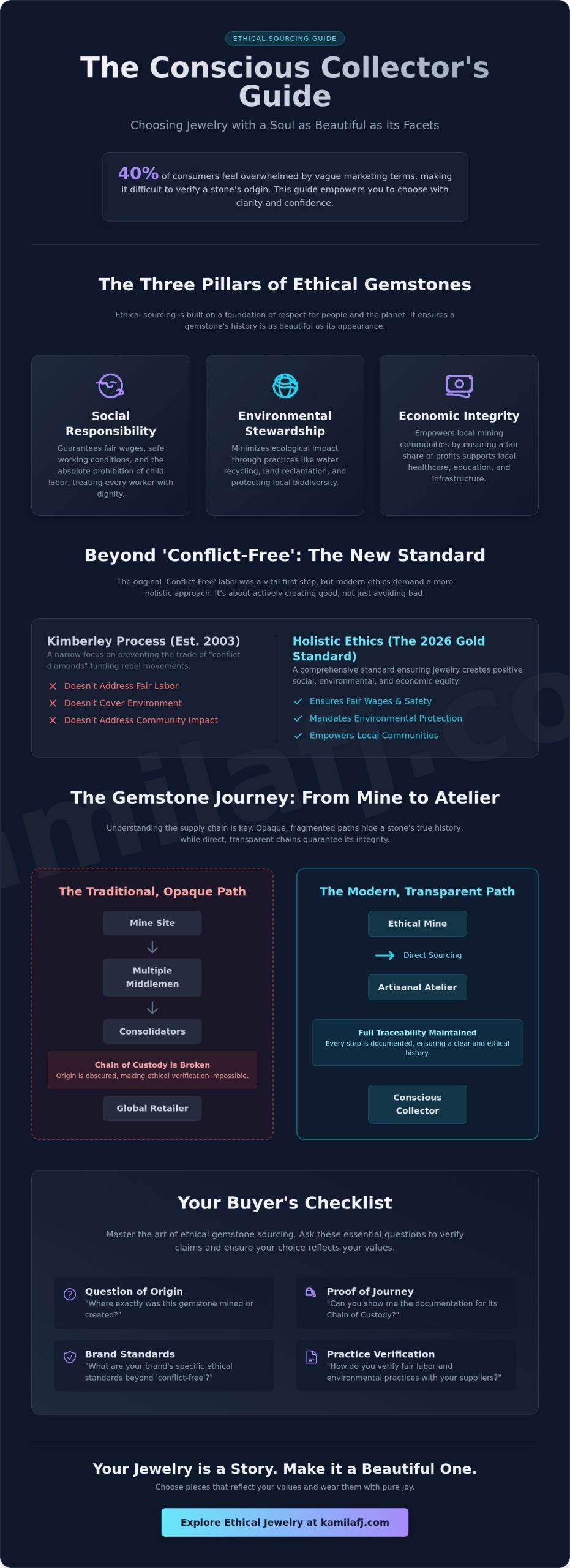
What if the most captivating element of your jewelry wasn’t the way it catches the light, but the quiet knowledge that its journey began with respect? You likely agree that a talisman meant to celebrate your most precious moments shouldn’t carry a hidden history of conflict or environmental harm. Even as we enter 2026, a 2024 study by the Responsible Jewellery Council found that 40% of consumers still feel overwhelmed by vague marketing terms that make it difficult to verify a stone’s origin. Choosing a piece that aligns with your soul requires more than just trust. It requires a clear understanding of ethical gemstone sourcing.
This guide empowers you to look beyond the display case and choose gems with a legacy as beautiful as their facets. You’ll discover a practical framework for evaluating a brand’s transparency, ensuring your next purchase in Tel Aviv is a true reflection of your values. We’ll break down the distinct ethical profiles of lab-grown versus natural stones and provide the specific questions you need to ask to ensure your jewelry is a source of pure joy, not doubt.
Key Takeaways
- Understand how the “soul” of your jewelry is defined by human rights, environmental protection, and the integrity of its origin story.
- Uncover the complex journey from mine to atelier and learn how to see past the middlemen who often obscure a stone’s true history.
- Navigate the environmental and human impact of lab-grown versus natural stones to decide which path aligns with your personal values.
- Master the art of ethical gemstone sourcing by learning to spot “greenwashing” red flags and knowing the essential questions to ask your jeweler.
- Explore how modern minimalism and handcrafted 18k gold can transform your jewelry into a meaningful talisman that reflects your unique story.
What is Ethical Gemstone Sourcing? Defining the Soul of Your Jewelry
Luxury has evolved. By 2026, the value of a ring or necklace isn’t measured solely by its carats or the shimmer of its gold. It’s measured by its soul. Ethical gemstone sourcing is the practice of ensuring every stone is obtained through methods that prioritize human rights, environmental health, and economic fairness. It transforms a piece of jewelry from a simple accessory into a personal talisman that reflects your deepest convictions. When you wear a piece of handcrafted jewelry, you’re wearing its entire history. Modern self-expression now demands that this history is as beautiful as the stone itself.
The Three Pillars of Ethical Gemstones
- Social Responsibility: This pillar ensures that every mine operates under strict safety protocols. It guarantees that no child labor is used and that workers are treated with the dignity they deserve.
- Environmental Stewardship: Ethical mining seeks to minimize the ecological footprint. This includes water recycling programs and land reclamation projects that restore the earth once the mining process is complete.
- Economic Integrity: True ethical sourcing empowers local communities. It ensures that a fair share of the wealth remains where the stones are found, supporting schools, healthcare, and infrastructure.
Understanding the Socioeconomic issues in the gemstone industry is vital for any conscious consumer. Historically, the supply chain has been opaque, but 2026 marks a new era of transparency. In Israel, where the diamond and gemstone trade is a cornerstone of the economy, the demand for traceable, artisanal stones has increased by 30% since 2023. This movement ensures that your investment supports a cycle of prosperity rather than exploitation.
Why ‘Conflict-Free’ is No Longer Enough
The Kimberley Process was a significant step when it launched in 2003, but its narrow focus on “conflict diamonds” used to fund rebel movements is insufficient for the modern world. It doesn’t address living wages, environmental degradation, or systemic poverty. Shoppers today look for the “presence of good” rather than just the “absence of war.” We’ve moved beyond avoiding the negative; we now seek to actively create the positive. This holistic approach ensures that your jewelry is a source of joy for everyone involved in its creation.
Holistic ethics is the 2026 gold standard that demands a gemstone creates measurable positive equity for its community of origin while leaving the earth’s ecosystem in a state of renewal.
The Gemstone Supply Chain: From the Mine to the Modern Atelier
The path a gemstone takes from the earth to your jewelry box is rarely a straight line. It begins in deep rock or riverbeds, moving through sorting houses, international trading floors, and specialized cutting studios before reaching a jeweler’s bench. In traditional models, a single ruby or sapphire might change hands ten times. This fragmentation often hides the stone’s true story, making conflict diamonds or stones from high-risk areas difficult to identify. For the conscious consumer in Israel, knowing this history is the first step toward true luxury.
Artisanal vs. Industrial Mining
Small-scale Mining (ASM) supports approximately 100 million people across the globe, particularly in rural parts of Africa and South America. While industrial mines are easier to regulate, ASM provides vital livelihoods for local communities. The challenge lies in monitoring these remote locations. By 2026, direct sourcing partnerships have become the gold standard for integrity. These agreements ensure that more of the final price, which can reach over ₪35,000 for high-quality stones in the Tel Aviv market, stays within the local mining community rather than being lost to layers of brokers.
The Role of Cutting and Polishing Centers
Ethics don’t end once the raw crystal leaves the mine. The cutting room is where the stone’s artistry is revealed, but it’s also where labor issues can hide. Ethical hubs in countries with strict labor laws ensure that artisans receive fair wages and work in safe conditions. At KaMila, every step of the process honors the stone’s journey. We believe that a piece of jewelry should feel as good as it looks. You can explore our collection of thoughtfully crafted pieces to see how this transparency translates into design. The Israeli diamond industry, centered in Ramat Gan, has long set high standards for technical skill; modern ethics now demand that those skills are matched by social responsibility.
Lab-Grown vs. Natural Gemstones: Navigating the Ethical Choice
Choosing a gemstone is a deeply personal decision. It’s about finding a piece that reflects your story and values. For the modern woman, this often means weighing the traditional allure of the earth against the innovative brilliance of the laboratory. Both paths offer beauty, but they impact our world in different ways. Understanding these differences is the first step toward true ethical gemstone sourcing.
Mining a single carat of natural diamond often requires moving approximately 250 tons of earth. This process can lead to habitat displacement and significant water consumption. Lab-grown stones are created in controlled environments that bypass these heavy physical tolls. While labs require electricity, many leading facilities transitioned to 100% renewable energy by 2024. This makes laboratory creation a primary choice for those seeking a lighter environmental footprint.
The human element is equally complex. While the industry has improved, guaranteeing a 100% ethical supply chain in traditional mining remains a challenge due to the many hands a stone passes through. Lab-grown stones offer a transparent, shorter path from creation to your jewelry box. They also provide incredible value. In Israel, a high-quality 1-carat lab-grown diamond might retail for ₪4,500, whereas a natural stone of comparable clarity and color could exceed ₪28,000. This allows you to invest in a larger, more brilliant stone that aligns with your conscious lifestyle.
We view these pieces as “Modern Heirlooms.” They aren’t just accessories; they’re talismans of your personal evolution. By choosing stones with a lower ethical cost, you’re creating new traditions rooted in kindness and artistry.
Lab-Grown Diamonds: Brilliance with a Conscience
Lab-grown diamonds aren’t imitations. They’re chemically, physically, and optically identical to mined diamonds. They possess the same edgy sophistication and timeless sparkle you expect from fine jewelry. For the eco-conscious minimalist, these stones represent a fresh way to celebrate life’s milestones without the baggage of traditional mining. You can explore the technical details in our Lab Diamonds: The Complete Guide to Brilliance with a Conscience.
When is a Natural Stone the Ethical Choice?
Natural stones can be an ethical choice when they support regulated, artisanal mining communities. In many regions, small-scale mining provides essential livelihoods. Stones like Montana Sapphires are famous for high ethical standards and clear provenance. When buying natural, always look for third-party certifications from organizations like the Responsible Jewellery Council (RJC). These certifications ensure the stone was handled with respect for both people and the planet, making it a beautiful expression of your identity.
Buying Guide: How to Verify Ethical Claims Without Being a Specialist
True luxury feels better when it’s transparent. Many brands use “greenwashing” to mask vague practices with poetic language. You might see labels like “earth-friendly” or “consciously curated” without any data to back them up. These are red flags. If a jeweler can’t name the specific mine or laboratory, the claim likely lacks substance. Real ethical gemstone sourcing requires a clear paper trail, not just a marketing story.
In the Israeli market, 18k gold is the standard for high-end, meaningful pieces. It contains 75% pure gold, offering the perfect balance of rich color and daily durability. Choosing recycled 18k gold ensures your stone sits in a setting that respects the planet as much as the person wearing it. It’s a choice that reflects both artistry and integrity. When you invest your ₪ in fine jewelry, the metal should be as responsibly sourced as the gem it holds.
Look closely at your grading reports from the GIA or IGI. By 2026, these institutions have expanded their origin services significantly. A report shouldn’t just list the 4Cs; it should ideally include a digital trace of the stone’s journey. If the report is blank under the origin section, ask your jeweler for supplemental documentation. Evidence of a stone’s history is now a standard expectation for any conscious buyer.
5 Questions to Ask Your Jeweler
- Can you trace this stone back to its country or mine of origin? Specificity is key here. “Africa” is a continent, not a source.
- What third-party certifications do you rely on for your sourcing? Look for names like RJC or SCS Global.
- How do you ensure fair wages for the artisans who cut this stone? Ethical beauty shouldn’t come at the cost of someone else’s well-being.
- Is the gold in this piece recycled or Fairtrade certified? The setting matters as much as the sparkle.
- Do you have a public sustainability report or a written code of conduct? Authentic brands are proud to share their standards.
Certifications You Can Trust in 2026
- The Responsible Jewellery Council (RJC): This organization audits the entire supply chain, from the depths of the mine to the retail counter, ensuring human rights are protected.
- SCS Global Services: This is the premier standard for verifying the sustainability claims of lab-grown diamonds, checking everything from carbon neutrality to water usage.
- Fairtrade Gold: This ensures small-scale miners receive a guaranteed minimum price and an extra premium for community projects like schools or clinics.
A lack of a formal certificate isn’t always a red flag for small, independent artisans. Many boutique designers in Israel work directly with family-owned mines where formal paperwork might be replaced by long-standing personal relationships. In these cases, transparency is mandatory. If they can tell you the name of the cutter or the specific region where the stone was found, that personal connection often carries more weight than a corporate seal.
Celebrate your story with jewelry that aligns with your soul. Discover our collection of ethically sourced, handcrafted treasures.
The KaMila Approach: Handcrafted Integrity and Modern Minimalism
At KaMila, we believe luxury shouldn’t cost the earth or compromise your values. Our commitment to using 18k gold and lab-grown diamonds is a deliberate choice for a sustainable future. By focusing on these materials, we ensure that every piece of jewelry meets the highest standards of beauty without the environmental or social debt often associated with traditional mining. This is the heart of ethical gemstone sourcing in the modern era. We’ve moved beyond the old industry standards to embrace a path that respects both the planet and the people on it.
Our “You, in Gold” philosophy drives everything we create. We don’t see jewelry as a mere accessory; it’s an intimate expression of your unique story and personal ethics. Every curve of gold and every spark of a diamond reflects the woman who wears it. We curate our collections to celebrate your identity, blending a sense of quiet confidence with artistic flair. It’s about empowering you to wear your values with pride every single day.
We’ve intentionally chosen to keep our production local. Every KaMila piece is handcrafted in Israel rather than being mass-manufactured in a faceless factory. This decision allows us to maintain total oversight of our quality and working conditions. It supports our local artisan community and ensures that your jewelry carries the warmth of human touch. When you choose a piece from our studio, you’re supporting a system that values craftsmanship over speed and integrity over profit margins.
Sustainable Artistry for Everyday Wear
We design pieces meant to last a lifetime, not just a fleeting season. Our aesthetic is a fusion of timeless craftsmanship and edgy, modern sophistication. We want your jewelry to become a permanent part of your life, a talisman that grows more meaningful with every wear. Whether it’s a minimalist band or a bold statement piece, the focus remains on durability and grace. To see how these principles translate into your wardrobe, you can read our guide on Styling Fine Jewelry: How to Curate a Look That’s Uniquely You. It’s the perfect way to see how ethics and style live together in harmony.
Custom Design: Your Values, Your Vision
Sometimes, a pre-designed collection isn’t enough to tell your full story. We offer a bespoke experience where we work directly with you to source specific stones for one-of-a-kind pieces. This process relies heavily on our rigorous ethical gemstone sourcing standards, ensuring that even the most unique requests align with our conscious luxury model. There’s a profound personal connection in knowing exactly who made your ring right here in our Israeli studio. It transforms the object from a simple purchase into a shared journey between the artisan and the wearer. Ready to find a piece that truly resonates with your soul? Explore our collection of ethically sourced gold rings and start your story in gold today.
The Future of Conscious Luxury
Luxury in 2026 isn’t just about the sparkle; it’s about the story behind the stone. You’ve seen how ethical gemstone sourcing transforms a piece of jewelry into a personal talisman of integrity and grace. By choosing lab-grown diamonds, you’re embracing a path that reduces environmental impact while maintaining the same chemical brilliance as mined stones. In the Israeli market, the shift toward sustainable luxury is accelerating as more women seek transparency over traditional status symbols. It’s a movement that celebrates both the power and the softness of the modern wearer.
KaMila Fine Jewellery bridges the gap between edgy sophistication and timeless craftsmanship. Each piece is handcrafted in 18k gold, ensuring your investment remains a lasting part of your narrative. We specialize in sustainable lab-grown diamonds, offering a designer-led approach that prioritizes artistry and total transparency. Whether you’re marking a major milestone or simply making a Tuesday feel special, your jewelry should be an intimate expression of your values. It’s not just jewelry. It’s you, in gold.
Discover Jewelry That Tells Your Ethical Story
Embrace the artistry of a more conscious future and let your brilliance shine through every choice you make.
Frequently Asked Questions
What exactly makes a gemstone ‘ethical’?
An ethical gemstone is one mined and processed under conditions that protect human rights, ensure fair labor practices, and minimize environmental damage. This means 100 percent of the supply chain avoids child labor and provides miners with a living wage and safe working environments. Ethical gemstone sourcing also requires full transparency from the moment a stone is unearthed until it’s set into your jewelry.
Are lab-grown diamonds really more ethical than mined diamonds?
Lab-grown diamonds are generally considered more ethical because they eliminate the land displacement and local ecosystem disruption caused by traditional mining. These stones possess the same chemical and physical properties as mined diamonds but require 85 percent less water per carat to produce. It’s important to choose labs that use 100 percent renewable energy to ensure the carbon footprint remains as small as possible.
Is it possible to track a gemstone back to its original mine?
You can track a gemstone back to its origin through blockchain technology and specialized origin reports. Systems like the GIA Diamond Origin Report or Everledger’s digital ledger now track over 2 million stones across the globe. These records provide a permanent, unchangeable history of a gem’s journey, giving you confidence that your piece aligns with your personal values and story.
What is greenwashing in the jewelry industry and how do I avoid it?
Greenwashing occurs when brands use vague terms like “eco-friendly” or “sustainable” without providing data or third-party certifications to back them up. To avoid this, look for specific credentials such as the SCS-007 Jewelry Sustainability Standard or Responsible Jewellery Council (RJC) membership. Authentic brands will share their supply chain details and won’t hide behind buzzwords; they’ll show you exactly where their materials come from.
Does the Kimberley Process guarantee that a diamond is ethical?
The Kimberley Process doesn’t guarantee a diamond is fully ethical; it only certifies that a stone is “conflict-free” regarding rebel movements. Established in 2003, this process fails to address broader issues like fair wages, worker safety, or environmental protection. For a truly conscious choice, you should look for stones with full provenance that go beyond this basic certification to ensure total transparency.
Why is 18k gold preferred for ethically sourced gemstone settings?
18k gold is the preferred choice because its 75 percent gold content offers the perfect balance of rich color and daily durability. It’s more resistant to tarnishing than lower-karat options and provides a secure, lasting home for precious stones. Many modern artisans use 100 percent recycled 18k gold to avoid the need for new mining, making the entire piece a celebration of responsible luxury.
Are ethical gemstones more expensive than traditional ones?
Ethical gemstones aren’t necessarily more expensive, particularly if you choose lab-grown options. While traceable mined stones might carry a 10 to 20 percent premium due to the costs of auditing the supply chain, lab-grown diamonds often cost 40 percent less than mined ones. This allows you to invest in a larger or higher-quality stone while staying within your budget and maintaining your integrity.
Can I find ethical engagement rings that are also affordable?
You can definitely find beautiful, ethical engagement rings in Israel with prices starting around ₪3,500 for minimalist designs. By opting for lab-grown diamonds or recycled gold, you can create a stunning talisman that doesn’t break your budget. Many local designers now focus on fresh, minimalist designs that prioritize ethical gemstone sourcing while keeping the price point accessible for modern couples.
Related Posts

Questions to Ask a Jeweler About Their Sourcing Ethics
-
Posted by
מילה קלר
What if “ethically sourced” tells you less than the answer to one careful question? When choosing a piece with personal meaning, it’s natural to want…
From Sketch to Sparkle: Ensuring the Final Piece Matches Your Jewelry Design
-
Posted by
You’ve spent weeks dreaming of a ring that captures your story, but as you look at the artist’s rendering, a small doubt creeps in. Will that…
Repurposing Heirloom Stones into Modern Custom Jewelry: The Complete 2026 Guide
-
Posted by
What if keeping an inherited ring tucked away in a dark jewelry box isn’t protecting your family history, but silencing it? It’s completely natural…

Finding an English-Speaking Custom Fine Jewelry Designer in Israel: A Complete Guide
-
Posted by
Your most cherished jewelry shouldn’t just be an accessory; it’s a piece of your history that deserves to be understood without a translator. When…

How to Convince Your Husband to Upgrade Your Wedding Ring
-
Posted by
What if your wedding ring wasn’t just a relic of who you were when you said “I do,” but a luminous reflection of the woman you’ve become today? Many…
Red Flags When Choosing a Custom Jewelry Designer: A 2026 Guide to Protecting Your Vision
-
Posted by
Imagine spending months dreaming of a bespoke 18k gold ring, only to open the velvet box and find a piece that feels like a generic retail cast…

Jewelry That Makes Me Feel Protected and Strong: A Guide to Modern Talismans
-
Posted by
Most people view a necklace or a ring as a simple finishing touch, but for the modern woman, it’s often the first layer of emotional armor she puts…
How to Stack Rings: The Art of Curating Your Personal Story in 18K Gold
-
Posted by
What if your jewellery box wasn’t just a collection of objects, but a living timeline of your most cherished milestones? You’ve likely looked at a…
Minimalist Gold Rings: A Guide to Curating Your Timeless 18K Collection
-
Posted by
Your jewelry shouldn’t have an expiration date. Too many of us have felt the frustration of a cherished piece tarnishing or causing skin irritation…

Getting a Better Price Than Big Brand Jewelers in Israel: The Insider’s Guide 2026
-
Posted by
That iconic logo on a shopping bag in a Tel Aviv mall might feel like a mark of quality, but it’s often the most expensive way to buy a memory. When…

18k Gold Minimalist Bracelets: The Ultimate Guide to Timeless Everyday Luxury
-
Posted by
True minimalism isn’t about having less; it’s about requiring more from the few pieces you choose to wear every day. If you’ve ever felt the…

18k Gold Stud Earrings: The Ultimate Guide to Everyday Luxury
-
Posted by
Why should the jewelry you wear every single day be the piece that irritates your skin or loses its radiance before the season even turns? It’s a…