

Blog
Why Is My Gold Ring Scratching? Understanding the Patina of Fine Jewellery
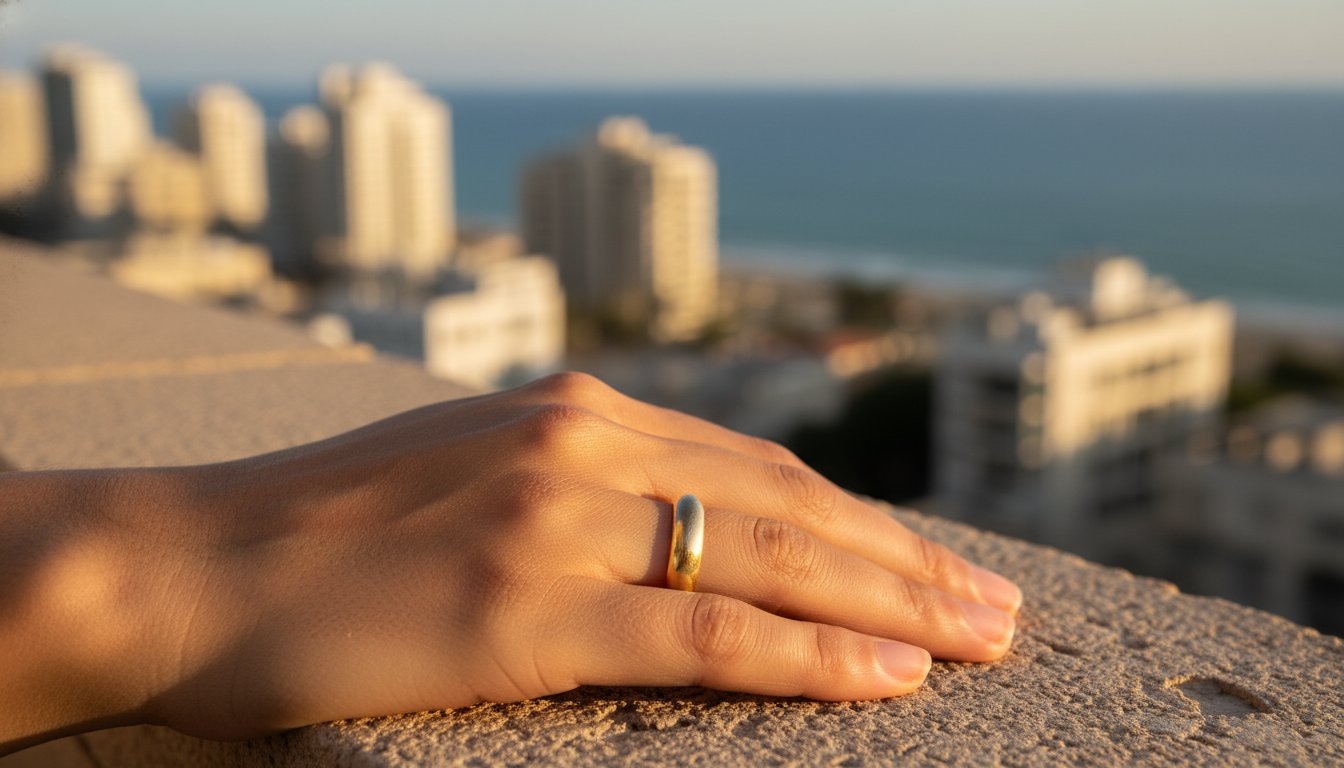
What if those tiny, swirling marks on your new band aren’t signs of a mistake, but the beginning of a beautiful story? It’s completely natural to feel a pang of disappointment when that mirror-like finish first meets the reality of daily life. You might even worry that you’ve invested in something fragile, but the durability of 18k gold rings is actually a sophisticated balance of 75% purity and lasting strength. We understand that sinking feeling when the factory shine begins to soften, especially when you’ve chosen a piece meant to last a lifetime.
We promise to help you distinguish between the soulful “patina” of high-carat gold and actual structural damage, ensuring you feel confident in your investment. You’ll learn why 18k gold carries a 29% price premium over 14k, the science behind metal hardness, and the practical steps to maintain that luminous, handcrafted glow in the unique light of the Mediterranean.
Key Takeaways
- Understand why high-purity gold is naturally malleable and how surface marks can actually confirm the authenticity of your 18k pieces.
- Identify the hidden daily culprits, from tech accessories to fitness habits, that affect the durability of 18k gold rings over time.
- Discover the art of the “patina” and why many collectors value a lived-in glow over a sterile, factory-fresh finish.
- Learn the professional methods used to safely restore brilliance to your gold without compromising the integrity of your jewelry.
- Explore our unique philosophy on wearable luxury and how we balance rich material quality with the needs of a modern lifestyle.
The Science of Gold: Why Even Fine Jewellery Scratches
Gold is a study in beautiful contradictions. It’s a material that has survived for millennia, yet it’s tender enough to be shaped by a craftsman’s hands. When we talk about the durability of 18k gold rings, we aren’t describing the impenetrable hardness of a diamond. Instead, we’re discussing a precious metal that lives and breathes alongside you. The Science of Gold reveals that pure, 24k gold is far too soft for a ring you’d wear while navigating the streets of Tel Aviv or working at your desk. It would warp and bend within a matter of days.
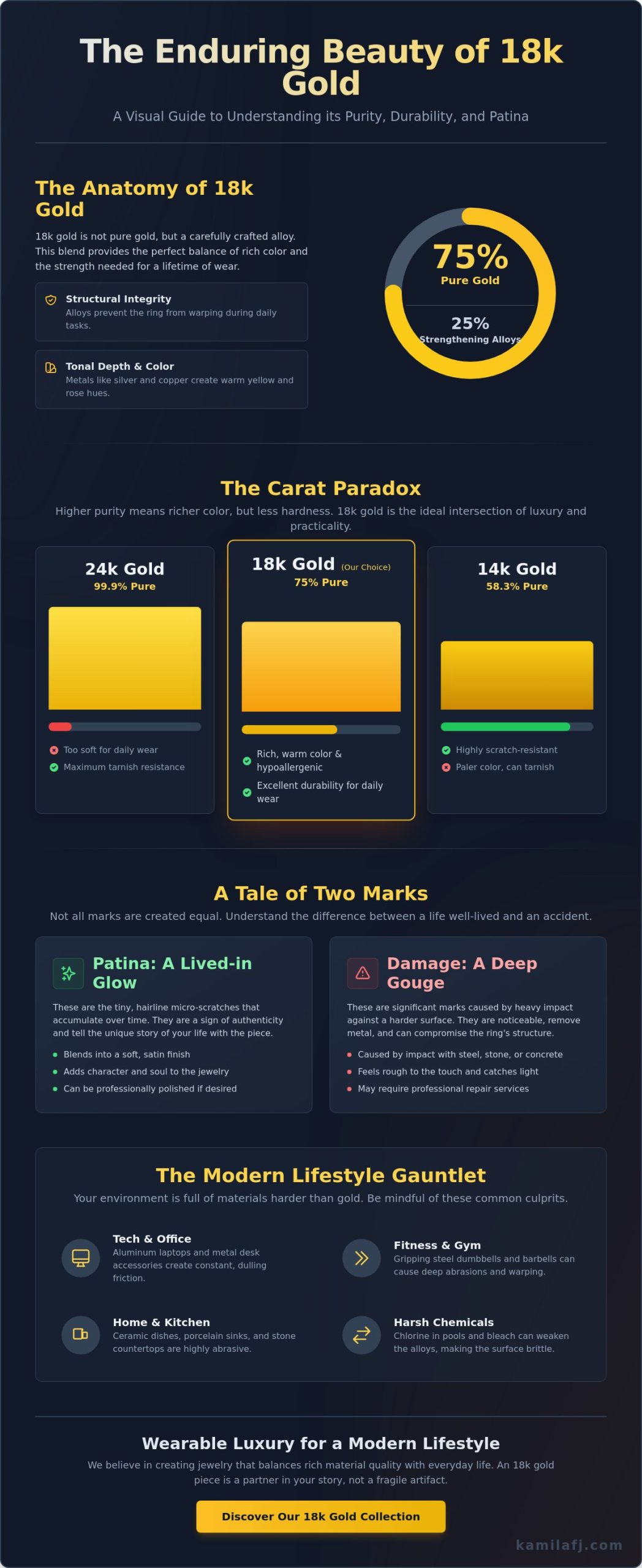
To give your jewelry the strength it needs for a lifetime of wear, we use 18k gold. This is a deliberate blend of 75% pure gold and 25% strengthening alloys. These additional metals give the ring a “backbone,” ensuring it holds its circular shape even under pressure. However, these alloys don’t make the surface entirely scratch-proof. Gold ductility is the unique physical property that allows the metal to be deformed or stretched under stress without actually breaking, which is why your ring might show a tiny mark rather than snapping when it meets a harder surface.
The 25% alloy mix in our 18k gold serves several vital purposes:
- Structural Integrity: It prevents the band from warping during daily tasks like driving or carrying bags.
- Tonal Depth: The specific ratio of silver and copper helps us achieve the warm, sun-drenched yellow or romantic rose tones that define our aesthetic.
- Foundation: It provides a necessary toughness that pure 24k gold simply cannot offer.
The Carat Paradox: Purity vs. Hardness
You might wonder why we don’t use 14k or 10k gold for everything if they’re technically harder. While lower carats contain more base metals, they lack the soul and vibrant glow of 18k gold. High-purity gold possesses a buttery warmth that feels alive against the skin and remains remarkably resistant to tarnish. In the humid coastal air of Israel, 18k gold stays bright and luminous, whereas lower carats can sometimes dull or react with the environment. For those with sensitive skin, the high gold content makes our pieces naturally hypoallergenic, celebrating a balance of luxury and well-being.
Micro-scratches vs. Structural Damage
It’s helpful to distinguish between a ring that’s “living” and one that’s “breaking.” Micro-scratches are the tiny, hairline marks that appear when your ring brushes against a stainless steel door handle or a ceramic coffee mug. Over time, these marks blend together to create a soft, satin finish known as a patina. Deep gouges are different. These are significant marks that actually remove metal, usually caused by heavy impact against stone or steel. While a patina is a beautiful record of your personal history, a deep gouge may require our jewelry repair services to ensure the durability of 18k gold rings isn’t compromised over the long term.
Common Daily Culprits Behind Ring Scratches
Even the most thoughtfully crafted pieces encounter a world designed for utility rather than delicacy. While we use specific alloys to enhance durability and strength, the reality is that your environment is full of materials harder than gold. From the stainless steel door handles in a Tel Aviv office to the unexpected grit of a coastal garden, life leaves its mark. It isn’t just about heavy lifting. Sometimes, it’s the quiet, repetitive motions of a modern workday that leave the most noticeable marks on the durability of 18k gold rings.
Aluminum laptop palm rests are a hidden danger. As you type, the bottom of your ring constantly buffs against the metal surface. This creates a burnished, dull area over time through consistent friction. Similarly, your smartphone case might be scratching your engagement rings every time you reach for a call, especially if the case features metal hardware, exposed screws, or abrasive textures. These micro-interactions happen hundreds of times a day, slowly softening the factory finish of your jewelry.
The Modern Lifestyle and Your Rings
Stacking and Friction
When you’re styling fine jewelry, the “clink” effect becomes a factor. This is the constant, microscopic friction of metal meeting metal. Wearing multiple bands together causes them to rub against one another with every hand movement. High-polish minimalist bands are particularly vulnerable here. Their mirror-like surfaces show every tiny point of friction. We often suggest using thin, plain spacer bands. These act as a buffer, protecting intricate settings or delicate engravings from being worn down by their neighbors. It’s a simple step that preserves the artistry of your stack. If your favorite piece has lost its luster, our custom jewelry workshop can help breathe new life into your collection through professional care.
Patina: Reframing Scratches as a Personal Narrative
In the quiet world of fine art, a patina is more than just age. It’s a certificate of authenticity, a visible record of time that adds value and soul to an object. When you first notice tiny marks on your band, try to view them through this lens. Rather than seeing a defect, you’re witnessing the birth of a lived-in glow. This soft, satin-like finish is unique to high-carat metals. While the durability of 18k gold rings ensures they remain structurally sound for generations, their surface is designed to evolve alongside you.
Understanding The Science of Gold helps explain this transition. Because 18k gold is 75% pure, it possesses a natural malleability that lower-carat alloys lack. This isn’t a weakness. It’s the very reason 18k gold develops such a rich, sophisticated character over time. Many collectors and jewelry enthusiasts actually prefer this seasoned look over the sterile, mirror-like shine of a brand-new factory piece. It represents a life well-lived rather than a treasure kept in a box.
The Soul of Handcrafted Gold
18k gold has a remarkable memory. It carries the microscopic impressions of your daily life, from the warmth of a hand held during a walk in Neve Tzedek to the steady rhythm of your morning routine. When you’re styling fine jewelry, you’re doing more than picking accessories; you’re choosing companions for your journey. A seasoned gold surface scatters light in a soft, multidimensional dance that a factory polish simply cannot replicate. This evolution transforms a simple object into a personal emblem, moving it from the category of a scuffed ring to that of an evolved heirloom.
When to Polish and When to Leave It
There’s an emotional weight to the marks we keep. Perhaps a specific scratch reminds you of the day you moved into a new home or a milestone celebration with family. Choosing to leave these marks is a way of honoring your history. It’s also a practical choice for the long-term durability of 18k gold rings. Every time a ring is professionally polished, a microscopic layer of metal is removed to level the surface. Over several decades, frequent aggressive polishing can actually thin the band. Finding the balance between a pristine look and a meaningful one allows your jewelry to age gracefully, maintaining its strength while gaining a story.
How to Restore the Brilliance of Your Gold Ring
While the patina of a lived-in ring tells a beautiful story, there are moments when you might want to reclaim that initial, breathtaking radiance. It’s essential to understand that cleaning and polishing are two distinct rituals. Cleaning removes the oils, lotions, and dust of daily life, while polishing addresses the physical surface of the metal itself. Because the durability of 18k gold rings relies on a specific balance of purity and alloys, restoring them requires a gentle, expert hand rather than aggressive home remedies.
Restoration isn’t just about shine; it’s about maintaining the integrity of the piece. A professional touch ensures that the character of the design remains intact while the surface is smoothed. If your jewelry has lost its luster or suffered a deep impact, our jewelry repair services can safely bring back its original, sophisticated glow.
The Professional Polishing Process
When a jeweler polishes a ring, they use specialized compounds like jeweler’s rouge and high-speed rotating buffs. This process carefully removes a microscopic layer of gold to level the surface, effectively erasing the tiny peaks and valleys of minor scratches. It’s a transformative process, but it shouldn’t be done too often. We recommend a full restorative polish no more than once a year. This frequency preserves the metal’s thickness over many decades of wear. If your piece features lab diamonds, you can rest easy. These stones are exceptionally hard and remain entirely unaffected by the metal polishing process, keeping their fire while the gold returns to a mirror finish.
Maintaining White Gold vs. Yellow Gold
White gold requires a unique form of care known as a rhodium refresh. Naturally, white gold has a slight champagne tint, so it’s plated with rhodium to achieve that crisp, icy look. When scratches occur, they can cut through this thin plating, revealing the warmer metal beneath. This is why white gold rings often appear to “yellow” over time. Yellow and rose gold are more “honest” in this regard. Their color is consistent all the way through the band, so scratches don’t reveal a different tone. If your yellow gold ring looks dull, it likely just needs a professional buff. If your white gold piece shows a yellowish tint, it’s time for a fresh rhodium dip.
Between professional visits, simple daily care goes a long way. A soft microfiber cloth and a gentle solution of warm water with a drop of mild dish soap will keep the surface free of films that emphasize scratches. Avoid the temptation of DIY “hacks” like toothpaste or baking soda. These substances are abrasive and can create thousands of new micro-scratches, permanently dulling the finish and compromising the durability of 18k gold rings over time. Stick to soft materials and professional guidance to keep your treasures luminous.
KaMila’s Philosophy: Wearable Luxury for Every Day
At KaMila, we believe fine jewelry shouldn’t be reserved for velvet boxes or occasional galas. It’s meant to be lived in, laughed in, and loved through the messy, beautiful reality of daily life. Our unwavering commitment to 18k gold isn’t just about the prestige of the “750” hallmark. It’s about finding that exquisite intersection between the buttery richness of high-purity gold and the resilience required for a modern life. We understand that the durability of 18k gold rings is a primary concern for women who want their jewelry to keep up with their ambitions. By choosing this specific purity, we ensure your pieces possess a depth of color that never fades, even as the surface evolves alongside you.
Every piece we create is a fusion of classic craftsmanship and modern minimalist aesthetics. We’ve spent years perfecting the art of the delicate silhouette, proving that a ring can look ethereal while remaining remarkably strong. This is achieved through thoughtful engineering and a focus on ethical sourcing. We prioritize materials that respect both the planet and the people who mine them, ensuring that the integrity of your ring goes far deeper than the surface. When you wear a KaMila piece, you’re wearing a commitment to conscious luxury and enduring quality.
Designing for the Modern Woman
We engineer our bands to withstand the “everyday elevation” of a busy life. Unlike mass-produced jewelry that is often cast in large, porous batches, our rings are hand-finished by skilled artisans. This manual process actually compresses the metal, creating a denser and more scratch-resistant surface than industrial alternatives. This attention to detail significantly enhances the durability of 18k gold rings, allowing our minimalist designs to remain structurally sound through years of wear. We don’t fear the natural aging of gold. Instead, we celebrate it as a sign of authenticity and a life well-lived.
Your Journey with KaMila
Your jewelry is a direct reflection of your identity and your unique story. As your ring develops its own unique patina, it becomes a one-of-a-kind emblem of your experiences. We view our relationship with you as a long-term partnership rather than a simple transaction. Our artisan-led support is always available to help you maintain the soul of your piece. We invite you to explore our current collection of handcrafted rings, each designed to be a protective and meaningful part of your daily narrative. From the first day you slide a band onto your finger to the moment it becomes a cherished heirloom, we’re here to ensure it remains as resilient and radiant as the woman who wears it.
Celebrate the Story Your Jewelry Tells
Your ring is more than a simple accessory. It’s a constant companion that absorbs the unique rhythm of your life. We’ve explored how the natural softness of high-purity gold leads to a beautiful, soulful patina and how the durability of 18k gold rings ensures they remain structurally sound for decades. Whether you choose to cherish the lived-in glow of a seasoned band or prefer a yearly professional polish to restore its mirror-like shine, your jewelry remains an authentic reflection of your personal journey. Marks of wear aren’t defects; they’re the microscopic records of your most meaningful moments.
At KaMila, we take pride in our artisan heritage. Every piece is handcrafted in Israel, specializing in the radiant warmth of 18k gold and the ethical brilliance of lab-grown diamonds. Our minimalist designs are carefully engineered to be modern heirlooms that handle the elevation of your everyday life with grace and strength. Explore our collection of handcrafted 18k gold rings designed for your daily narrative and find the piece that will grow beautiful alongside you. Wear your story with quiet confidence and joy.
Common Questions About Fine Jewelry Care
Is it normal for my gold ring to scratch after just one day?
Yes, it’s perfectly normal for a high-quality gold ring to show micro-scratches within the first 24 hours of wear. Gold is naturally a soft metal, and even a casual brush against a laptop’s edge or a car door handle can leave a mark. These initial scratches are the first steps in your ring developing its unique, lived-in patina, which many collectors value as a sign of authenticity.
Does 18k gold scratch easier than 14k gold?
18k gold does scratch more easily than 14k gold because it contains a higher percentage of pure gold. Since 18k gold is 75% pure and 14k is roughly 58%, the higher gold content makes the metal more malleable. While the durability of 18k gold rings ensures they won’t snap or break, their surfaces are more prone to the soft swirling marks that characterize high-carat jewelry.
Can I remove scratches from my gold ring at home?
You cannot safely remove physical scratches from gold at home; this requires professional buffing tools. While you might see “hacks” suggesting toothpaste or baking soda, these are abrasive and will actually create more micro-scratches. Home care should be limited to gentle cleaning with warm water and mild soap to remove the oils and dust that make existing scratches look more prominent.
Will polishing my ring make the gold thinner?
Yes, professional polishing removes a microscopic layer of metal to level the surface and reveal a fresh shine. This is why we emphasize that while the durability of 18k gold rings is excellent, you shouldn’t over-polish them. Doing so once a year is perfectly safe, but polishing every few months would eventually thin the band over several decades of ownership.
Why is my white gold ring looking dull and scratched?
Your white gold ring likely looks dull because the protective rhodium plating has worn down through daily friction. White gold is naturally a warm, champagne-toned alloy that is plated with rhodium to achieve a crisp, white finish. When scratches cut through this plating, they reveal the warmer metal underneath, making the ring look slightly yellow and less reflective.
How often should I have my gold ring professionally polished?
We recommend a professional restorative polish no more than once a year. This keeps the piece looking its best without compromising the structural integrity of the metal. For routine maintenance, a professional cleaning every six months is a better way to keep the brilliance alive without removing any gold from the band.
Can lab-grown diamonds get scratched like the gold band?
No, lab-grown diamonds cannot be scratched by everyday materials or the gold band itself. Diamonds are the hardest known natural substance, sitting at a 10 on the Mohs scale, while gold is significantly softer at approximately 2.5 to 3. Your diamond will remain pristine and sharp-edged even as the gold setting develops its soft, characteristic patina.
What activities should I avoid while wearing my gold rings?
You should remove your rings before weightlifting, gardening, or using harsh household chemicals. In Israel, it’s particularly important to remove jewelry before swimming in the Dead Sea or chlorinated pools. The high mineral content and chemicals can react with the alloys in your gold, potentially weakening the setting or dulling the finish over time.
Related Posts
Creating a Ring That Symbolizes a Personal Achievement
-
Posted by
מילה קלר
What if the ring that marks your biggest achievement is subtle enough to feel like you, not a trophy? Creating a ring that symbolizes a personal…
From Sketch to Sparkle: Ensuring the Final Piece Matches Your Jewelry Design
-
Posted by
You’ve spent weeks dreaming of a ring that captures your story, but as you look at the artist’s rendering, a small doubt creeps in. Will that…
Repurposing Heirloom Stones into Modern Custom Jewelry: The Complete 2026 Guide
-
Posted by
What if keeping an inherited ring tucked away in a dark jewelry box isn’t protecting your family history, but silencing it? It’s completely natural…
Red Flags When Choosing a Custom Jewelry Designer: A 2026 Guide to Protecting Your Vision
-
Posted by
Imagine spending months dreaming of a bespoke 18k gold ring, only to open the velvet box and find a piece that feels like a generic retail cast…

Jewelry That Makes Me Feel Protected and Strong: A Guide to Modern Talismans
-
Posted by
Most people view a necklace or a ring as a simple finishing touch, but for the modern woman, it’s often the first layer of emotional armor she puts…
How to Stack Rings: The Art of Curating Your Personal Story in 18K Gold
-
Posted by
What if your jewellery box wasn’t just a collection of objects, but a living timeline of your most cherished milestones? You’ve likely looked at a…
Minimalist Gold Rings: A Guide to Curating Your Timeless 18K Collection
-
Posted by
Your jewelry shouldn’t have an expiration date. Too many of us have felt the frustration of a cherished piece tarnishing or causing skin irritation…
Getting a Better Price Than Big Brand Jewelers in Israel: The Insider’s Guide 2026
-
Posted by
That iconic logo on a shopping bag in a Tel Aviv mall might feel like a mark of quality, but it’s often the most expensive way to buy a memory. When…

18k Gold Minimalist Bracelets: The Ultimate Guide to Timeless Everyday Luxury
-
Posted by
True minimalism isn’t about having less; it’s about requiring more from the few pieces you choose to wear every day. If you’ve ever felt the…

18k Gold Stud Earrings: The Ultimate Guide to Everyday Luxury
-
Posted by
Why should the jewelry you wear every single day be the piece that irritates your skin or loses its radiance before the season even turns? It’s a…

18k Gold Jewelry Care: Preserving Modern Heirlooms
-
Posted by
Is your most cherished jewelry tucked away in a dark velvet box, waiting for a “special enough” occasion that never quite arrives? Many women…
Handcrafted Minimalist Jewelry in Israel: A Guide to Modern Elegance (2026)
-
Posted by
Why settle for jewelry that simply fills a space when you could wear a piece that captures the depth of your own story? If you’ve been searching for…