

Blog
Why Is My Skin Turning Green From My Ring? The Science & The Solution
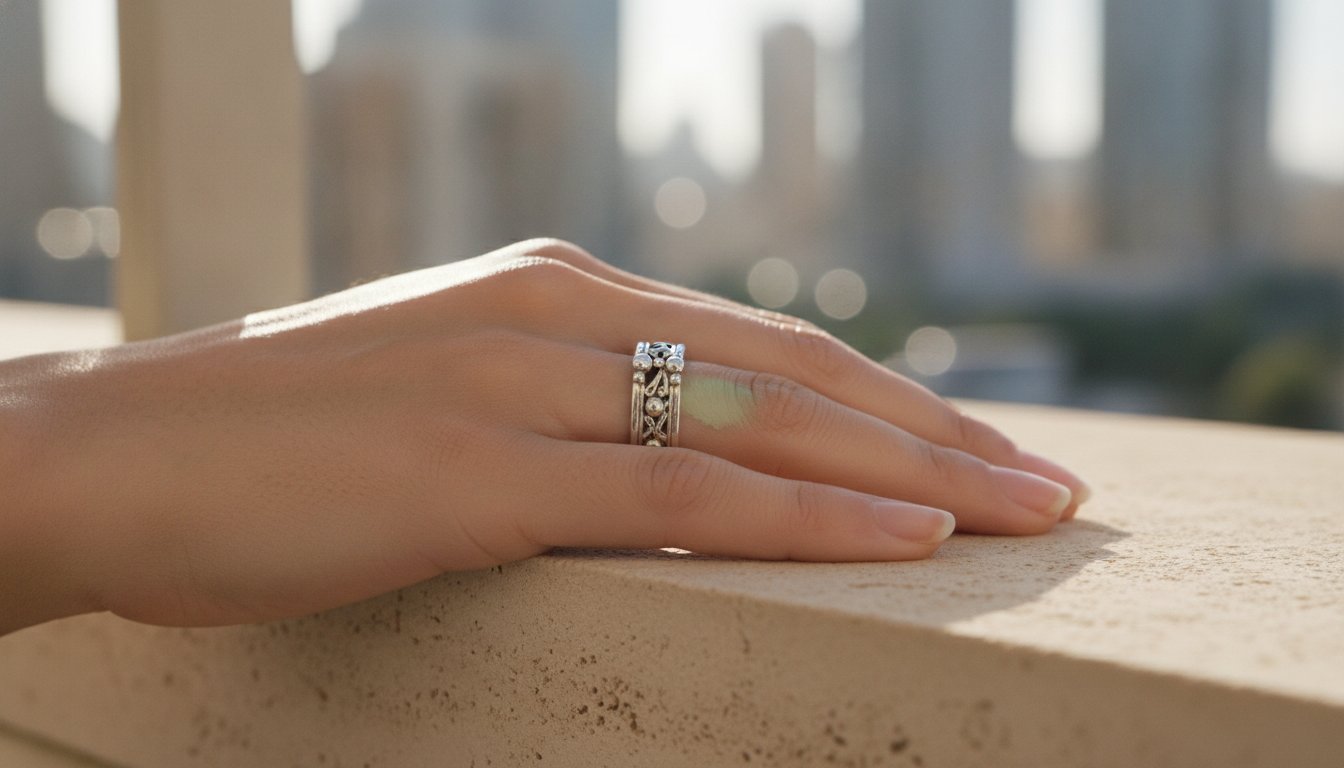
That persistent green mark on your finger isn’t a sign that you’ve been scammed with fake gold. It’s actually a simple, harmless chemical reaction that can occur even with beautiful, high-quality pieces. We understand the frustration of looking down at your hand only to find a shadowy ring of color where your favorite accessory should be. It’s natural to feel a bit uneasy when asking why is my skin turning green from my ring, especially if you’re worried about skin irritation or the integrity of your jewelry.
You’re about to discover the chemical mystery behind the “green finger” and how to choose pieces that never leave a mark. We’ll explore the science of oxidation and why copper or nickel alloys often react with your skin’s natural pH. While nickel allergies affect 10% to 20% of the global population, a green stain is usually just a harmless interaction with the air and your skin’s oils. You’ll learn how to easily remove these marks and why moving toward high-purity 18k gold is the most elegant, permanent solution for your daily story.
Key Takeaways
- Learn why the “green finger” is a harmless chemical reaction called copper oxidation rather than a sign of low-quality craftsmanship.
- Discover the specific environmental factors and skin pH levels that explain why is my skin turning green from my ring even when wearing sterling silver.
- Identify which common metals, such as brass and bronze, act as the most frequent culprits due to their high copper content.
- Adopt simple daily rituals like the “last on, first off” rule to protect your jewelry from catalysts like lotions and perfumes.
- Understand why choosing high-purity 18k gold provides a biocompatible, permanent solution that honors both your skin and your personal style.
What Causes the ‘Green Finger’ Phenomenon?
Discovering a verdant shadow beneath a cherished ring can feel like a brief betrayal of quality. It’s the moment many jewelry lovers dread, leading to the immediate question: why is my skin turning green from my ring? Before you worry that your piece is “fake” or that you’ve been scammed, it’s helpful to understand that this is a common, harmless chemical reaction. It isn’t a medical emergency, nor is it a permanent stain on your skin or your jewelry’s legacy. This phenomenon is simply a biological dialogue between your body’s unique chemistry and the alloys used to give jewelry its strength and shape.
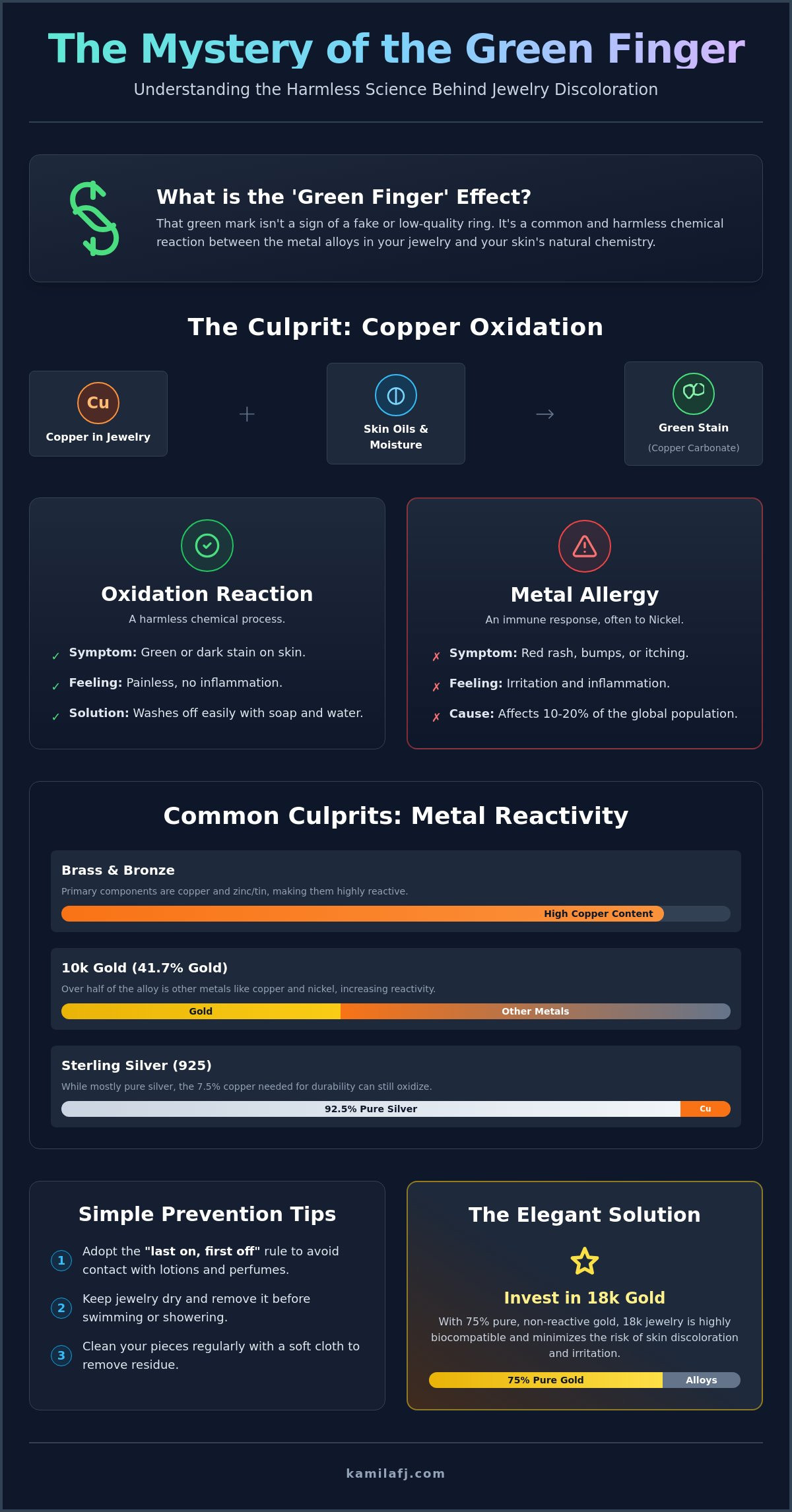
The primary culprit is copper oxidation. While pure gold and silver are often too soft for daily wear, they are frequently blended with other elements to ensure durability. Even high-quality sterling silver is composed of 92.5% silver and 7.5% copper. When that copper content meets the acids and oils on your skin, it creates copper carbonates. This process is further influenced by chelation, where the metal reacts with the specific amino acids in your sweat, essentially “binding” the metal to your skin in the form of a colorful residue. Because every individual has a distinct chemical makeup, a ring that leaves a mark on one person might remain perfectly clear on another.
The Chemistry of Oxidation
The transformation begins when the metal is exposed to oxygen and moisture. Whether it’s through natural perspiration or the humidity in the air, water acts as a catalyst for the copper to oxidize. This reaction produces a specific green pigment that transfers from the metal surface to your finger. Copper carbonate is the primary pigment in jewelry staining, and its presence is a sign of a natural chemical process rather than a lack of artisanal value. Unlike non-reactive metals that resist environmental changes, copper is sensitive to its surroundings, making it more likely to leave its mark during warm weather or active days.
Is it an Allergy or a Reaction?
It’s vital to distinguish between a simple green stain and a true metal allergy. A green mark is an oxidation reaction; it’s painless, non-inflammatory, and washes away with a little soap and water. In contrast, an allergic reaction, most commonly caused by nickel, presents as a red rash, itching, or small bumps. Research indicates that nickel allergies affect 10% to 20% of the global population, making it a significant concern for those with sensitive skin. If your skin feels irritated or inflamed, you’re likely dealing with an allergy rather than simple oxidation. You can test your sensitivity by wearing a piece for a few hours in a controlled environment to see if the reaction is purely aesthetic or symptomatic of a deeper sensitivity.
The Usual Suspects: Metals Most Likely to Turn Skin Green
Not all jewelry is created equal. Some metals are naturally more social, reacting with everything they touch, while others possess a quiet, steadfast resilience. If you’ve ever looked at your hand after a long day and wondered why is my skin turning green from my ring, the culprit is often hiding in the metal’s DNA. Most discoloration isn’t a sign of a “fake” product, but rather a sign of an active alloy. Brass and bronze are the most frequent offenders because they are composed primarily of copper. These metals are often used in costume jewelry to mimic the look of gold without the investment; however, they lack the noble properties that prevent oxidation.
Low-karat gold is another common source of frustration. While 18k gold contains 75% pure gold, 10k gold is only 41.7% gold. The remaining 58.3% is a blend of filler metals like copper, silver, and nickel. This high concentration of base metals makes 10k and even 14k jewelry much more reactive than their high-purity counterparts. When these fillers interact with your skin’s chemistry, they can trigger allergic contact dermatitis or leave behind that familiar green residue. Choosing higher karat weights is more than an aesthetic preference; it’s a commitment to skin comfort.
The Sterling Silver Surprise
Many are surprised to learn that high-quality sterling silver can still leave a mark. The “925” stamp signifies that the piece is 92.5% pure silver, but the remaining 7.5% is almost always copper, added to give the silver enough strength for daily wear. In environments with high humidity or salt air, this copper content oxidizes rapidly. If you find silver too reactive for your lifestyle, you might consider exploring this essential gold necklace guide to understand how different metal purities behave over time. Silver requires consistent care to keep its copper content from greeting your skin too enthusiastically.
Plated Jewelry and the ‘Ticking Clock’
Plated jewelry offers a temporary sanctuary for your skin, but it’s often a ticking clock. Gold-plated pieces feature a microscopically thin layer of gold over a base metal like brass or nickel. With every movement, the friction between the ring and your finger erodes that golden shield. Flash plating is the thinnest application, often wearing away in weeks, while heavy gold vermeil offers a more substantial layer. Eventually, the barrier fails, revealing the reactive base metal underneath. This is why is my skin turning green from my ring even if it looked perfect when you first bought it. For a piece that celebrates your story without fading, investing in thoughtfully crafted gold rings ensures a lasting, non-reactive bond between your jewelry and your skin.
Why Me? How Skin Chemistry and Environment Trigger Reactions
Your skin is as unique as your signature. While your jewelry remains constant, the environment it rests upon is a living, breathing ecosystem that changes based on your habits and health. If you’ve ever wondered why is my skin turning green from my ring while a friend wearing the same piece has no issues, the answer lies in your personal biology. The reaction is an intimate intersection between the metal’s composition and your skin’s pH levels. When your skin is more acidic, it acts as a catalyst, accelerating the chemical reaction that turns skin green by breaking down copper alloys more quickly.
Environmental factors also play a significant role in this delicate balance. High humidity levels or a dip in a chlorinated pool can introduce moisture and chemicals that provoke the metal. Chlorine is particularly aggressive; it doesn’t just cause discoloration but can actually weaken the structural integrity of certain alloys over time. Even the salt in sea air can create a micro-environment on your finger that invites oxidation. This is why a ring might behave beautifully in a dry climate but begin to leave marks during a seaside holiday.
The Impact of Modern Skincare
Diet and Biological Factors
What we consume directly influences the acidity of our perspiration. High-acid diets, rich in processed foods or certain citrus fruits, can lower your skin’s pH and make you more prone to jewelry reactions. Even certain medications or significant hormonal shifts can temporarily alter your body chemistry. Skin pH fluctuates and can cause a ring to react one day but not the next. This biological rhythm means that a green mark isn’t a permanent verdict on your jewelry or your skin, but rather a fleeting reflection of your body’s current state. Understanding these shifts allows you to adjust your wear habits and maintain the grace of your collection without frustration.
How to Stop Your Ring from Turning Your Finger Green
If you’re currently asking why is my skin turning green from my ring, you’re likely looking for more than just a quick fix. You’re looking for a way to preserve the beauty of your jewelry while protecting the skin that wears it. While the reaction is harmless, it can certainly detract from the joy of a piece. Fortunately, there are several methods to mitigate this interaction, ranging from simple daily rituals to professional artisanal interventions. The goal is to create a reliable barrier between the metal’s copper content and your skin’s natural oils.
A common “home hack” involves applying a thin layer of clear nail polish to the inside of the band. This creates an immediate physical shield. However, it’s important to recognize that this is merely a temporary patch. Over time, the polish can chip, trap moisture against the metal, or even react with certain gemstones. For a more sophisticated approach, focus on moisture management. Keeping your skin dry is the most effective way to prevent the chemical reaction from starting. By following the “last on, first off” rule, you ensure your jewelry avoids contact with water, soaps, and lotions that act as catalysts for oxidation.
Daily Care Rituals
Maintaining your jewelry’s integrity requires a bit of intentionality. After washing your hands, take a moment to thoroughly dry the inside of your diamond ring or band. Moisture trapped beneath a ring is the primary driver of discoloration. You can learn more about preserving your collection’s luster in our guide on styling and caring for fine jewelry. Additionally, store your pieces in a dry, airtight environment when they aren’t being worn. Using a specialized, non-abrasive polishing cloth to gently wipe the interior of the band after each wear removes the salts and acids that cause pre-wear oxidation.
When to Seek a Professional
Sometimes, daily care isn’t enough to overcome a ring’s inherent reactivity. If a cherished piece continues to leave marks, a professional jeweler can apply a specialized polymer coating. This is a more durable and refined version of the nail polish trick, designed specifically for fine metals. For those wearing white gold, the solution is often rhodium plating. This “rhodium shield” provides a brilliant, non-reactive surface that completely isolates the base metal from your skin. However, if you find yourself constantly battling green marks, it may be a sign that your skin is calling for a material upgrade. If you’re ready to move beyond temporary hacks, explore our collection of handcrafted gold rings designed for a lifetime of comfortable, mark-free wear.
The Permanent Solution: Investing in 18k Gold and Fine Jewellery
While temporary barriers and meticulous cleaning provide short-term relief, the most graceful way to stop asking why is my skin turning green from my ring is to choose materials that respect your body’s chemistry. Fine jewelry is more than a simple accessory; it’s a second skin that should feel as good as it looks. At KaMila Fine Jewellery, we believe that luxury should be both effortless and enduring. This is why we focus on 18k gold as our standard. It’s a metal that balances the structural strength needed for daily life with the high purity required for a mark-free, comfortable experience.
Choosing high-karat gold is a commitment to your own comfort. When you invest in pieces that prioritize biocompatibility, you’re removing the environmental stressors that lead to oxidation and irritation. It’s about elevating the everyday, turning a routine piece of jewelry into a reliable emblem of your personal style. By selecting metals that are naturally resistant to the acids and oils of your skin, you ensure that your story is told through the brilliance of the metal rather than a temporary stain on your finger.
The 18k Gold Advantage
The secret to 18k gold’s performance lies in its specific ratio. Composed of 75% pure gold, it leaves only 25% for the alloy metals that contribute to reactivity. In contrast, 10k gold is only 41.7% pure gold, meaning it contains a much higher concentration of “filler” metals like copper or nickel. By choosing 18k, you’re significantly reducing the presence of the elements that cause the “green finger” phenomenon. Beyond the chemistry, there’s a tactile joy in the weight of 18k gold. It feels substantial and warm against the skin, serving as a mark of quality that never loses its luster or its heritage value.
Curating a Green-Free Collection
Building a jewelry wardrobe is an act of self-expression and self-celebration. Transitioning from reactive costume pieces to a curated capsule of fine jewelry is a practical evolution for anyone with sensitive skin. While the initial investment in high-purity gold is higher, the long-term cost-effectiveness is clear. One high-quality ring that loves your skin back is worth more than a dozen pieces that cause frustration. For those seeking brilliance with a conscience, pairing non-reactive 18k gold with lab-grown diamonds offers a modern, sustainable path to luxury. Whether you are searching for engagement rings that tell a unique story or a simple daily band, the material is the foundation of the experience. Explore our handcrafted 18k gold rings and find a piece that celebrates your identity with quiet, permanent confidence.
Embrace a Future of Lasting Brilliance
Understanding why is my skin turning green from my ring is the first step toward a more comfortable and confident jewelry experience. We’ve explored how harmless copper oxidation and your unique skin pH create those temporary marks, but they don’t have to be a permanent part of your story. By prioritizing moisture management and recognizing the reactive nature of base metal alloys, you can protect both your skin and your favorite pieces from unnecessary discoloration.
The most enduring solution is to invest in high-purity materials that respect your body’s chemistry. Our pieces are handcrafted in 18k gold for maximum skin compatibility, ensuring that your jewelry remains a source of joy rather than irritation. We combine modern minimalist designs for everyday comfort with sustainable lab-grown diamonds that never lose their brilliance. You deserve a collection that is as resilient and beautiful as the life you lead.
Discover our collection of non-reactive 18k gold rings and find a piece that truly celebrates your identity without leaving a mark. Your journey to a more refined, irritation-free aesthetic starts today.
Frequently Asked Questions
Is the green stain on my finger dangerous or toxic?
The green stain on your skin is completely harmless and non-toxic. It’s simply the result of copper oxidation, which creates copper carbonates that rub off on your finger. This reaction doesn’t damage your health; it’s merely a temporary aesthetic inconvenience. While the color might look surprising, you don’t need to worry about any long-term effects on your well-being. It’s a natural, biological dialogue between your body and the metal.
How do I get the green stain off my skin quickly?
You can remove the green stain quickly by washing your hands with warm, soapy water and a soft cloth. For more stubborn marks, a cotton ball soaked in makeup remover or a small amount of rubbing alcohol will dissolve the residue instantly. Since the stain sits on the surface of your skin rather than being absorbed, it lifts away with minimal effort. Applying a gentle moisturizer afterward keeps your skin feeling soft and restored.
Does sterling silver always turn your finger green?
Sterling silver doesn’t always turn skin green, but it is prone to doing so because it contains 7.5% copper. This copper is necessary to give the silver enough strength for daily wear, yet it can react with moisture or acidic skin. If you live in a humid climate or have a lower skin pH, you’re more likely to see this reaction. Proper storage and keeping your piece dry will significantly reduce the chances of any discoloration.
Can I prevent a ring from turning my finger green with clear nail polish?
You can use clear nail polish to create a temporary barrier between the metal and your skin. This method physically prevents the copper from reacting with your skin’s oils and acids. However, this isn’t a permanent solution as the polish will eventually chip and wear away. It can also trap moisture against the ring, potentially causing tarnish. For a more lasting result, consider professional plating or upgrading to a higher-purity metal like 18k gold.
Why does my gold ring turn my finger green if it’s real gold?
Even a real gold ring can leave a mark if it’s a lower karat, such as 10k or 14k, because of the copper alloys mixed in. These base metals are added for durability but can still oxidize against your skin. This is a common reason why is my skin turning green from my ring even when the piece is authentic. Transitioning to 18k gold reduces the concentration of these reactive fillers, providing a much more stable experience.
How can I tell if I have a nickel allergy or just a copper reaction?
You can distinguish between the two by looking for signs of inflammation or physical irritation. A copper reaction leaves a painless green stain that washes off easily. In contrast, a nickel allergy often causes redness, itching, swelling, or small bumps. While a green mark is purely a chemical reaction, an allergy is an immune response. If your skin feels irritated or painful, it’s likely an allergy rather than simple oxidation.
What is the best metal for someone with sensitive skin?
High-purity 18k gold and platinum are the best choices for those with sensitive skin. These metals are celebrated for their biocompatibility and resistance to oxidation, making them ideal for everyday wear. Because 18k gold contains 75% pure gold, it has fewer reactive alloys to trigger a response. Choosing these noble metals ensures your jewelry remains an empowering expression of your style without the worry of irritation or wondering why is my skin turning green from my ring.
Does sweat make jewelry turn skin green faster?
Yes, sweat acts as a catalyst that accelerates the oxidation process. Sweat contains moisture, salts, and acids that break down the copper in your jewelry, creating the green pigment more rapidly. On warm days or during physical activity, you may notice the reaction happening faster than usual. To prevent this, try to remove your jewelry during intense exercise and always dry your hands and the interior of your rings thoroughly after they get wet.
Related Posts
Jewelry Design in Haifa: What to Expect in 2026
-
Posted by
מילה קלר
If you’re searching “jewelry design consultation in Haifa what to expect,” you may be wondering what to bring, which decisions you’ll need to make,…
From Sketch to Sparkle: Ensuring the Final Piece Matches Your Jewelry Design
-
Posted by
You’ve spent weeks dreaming of a ring that captures your story, but as you look at the artist’s rendering, a small doubt creeps in. Will that…
Repurposing Heirloom Stones into Modern Custom Jewelry: The Complete 2026 Guide
-
Posted by
What if keeping an inherited ring tucked away in a dark jewelry box isn’t protecting your family history, but silencing it? It’s completely natural…

Designing a Custom 18k Gold Ring: 2026 Bespoke Guide
-
Posted by
What if the most exquisite jewelry you ever own isn’t reserved for formal galas, but crafted to enrich your daily life? When you start exploring…
Red Flags When Choosing a Custom Jewelry Designer: A 2026 Guide to Protecting Your Vision
-
Posted by
Imagine spending months dreaming of a bespoke 18k gold ring, only to open the velvet box and find a piece that feels like a generic retail cast…

Jewelry That Makes Me Feel Protected and Strong: A Guide to Modern Talismans
-
Posted by
Most people view a necklace or a ring as a simple finishing touch, but for the modern woman, it’s often the first layer of emotional armor she puts…
How to Stack Rings: The Art of Curating Your Personal Story in 18K Gold
-
Posted by
What if your jewellery box wasn’t just a collection of objects, but a living timeline of your most cherished milestones? You’ve likely looked at a…
Minimalist Gold Rings: A Guide to Curating Your Timeless 18K Collection
-
Posted by
Your jewelry shouldn’t have an expiration date. Too many of us have felt the frustration of a cherished piece tarnishing or causing skin irritation…
Getting a Better Price Than Big Brand Jewelers in Israel: The Insider’s Guide 2026
-
Posted by
That iconic logo on a shopping bag in a Tel Aviv mall might feel like a mark of quality, but it’s often the most expensive way to buy a memory. When…

18k Gold Earrings for New Piercings: Safe Styling Guide
-
Posted by
What if the most rewarding part of your piercing journey wasn’t the initial appointment, but the moment you finally swap those generic studs for…

18k Gold Minimalist Bracelets: The Ultimate Guide to Timeless Everyday Luxury
-
Posted by
True minimalism isn’t about having less; it’s about requiring more from the few pieces you choose to wear every day. If you’ve ever felt the…

18k Gold Stud Earrings: The Ultimate Guide to Everyday Luxury
-
Posted by
Why should the jewelry you wear every single day be the piece that irritates your skin or loses its radiance before the season even turns? It’s a…