
Blog
18k Gold Earrings for Sensitive Ears: The 2026 Guide to Irritation-Free Luxury
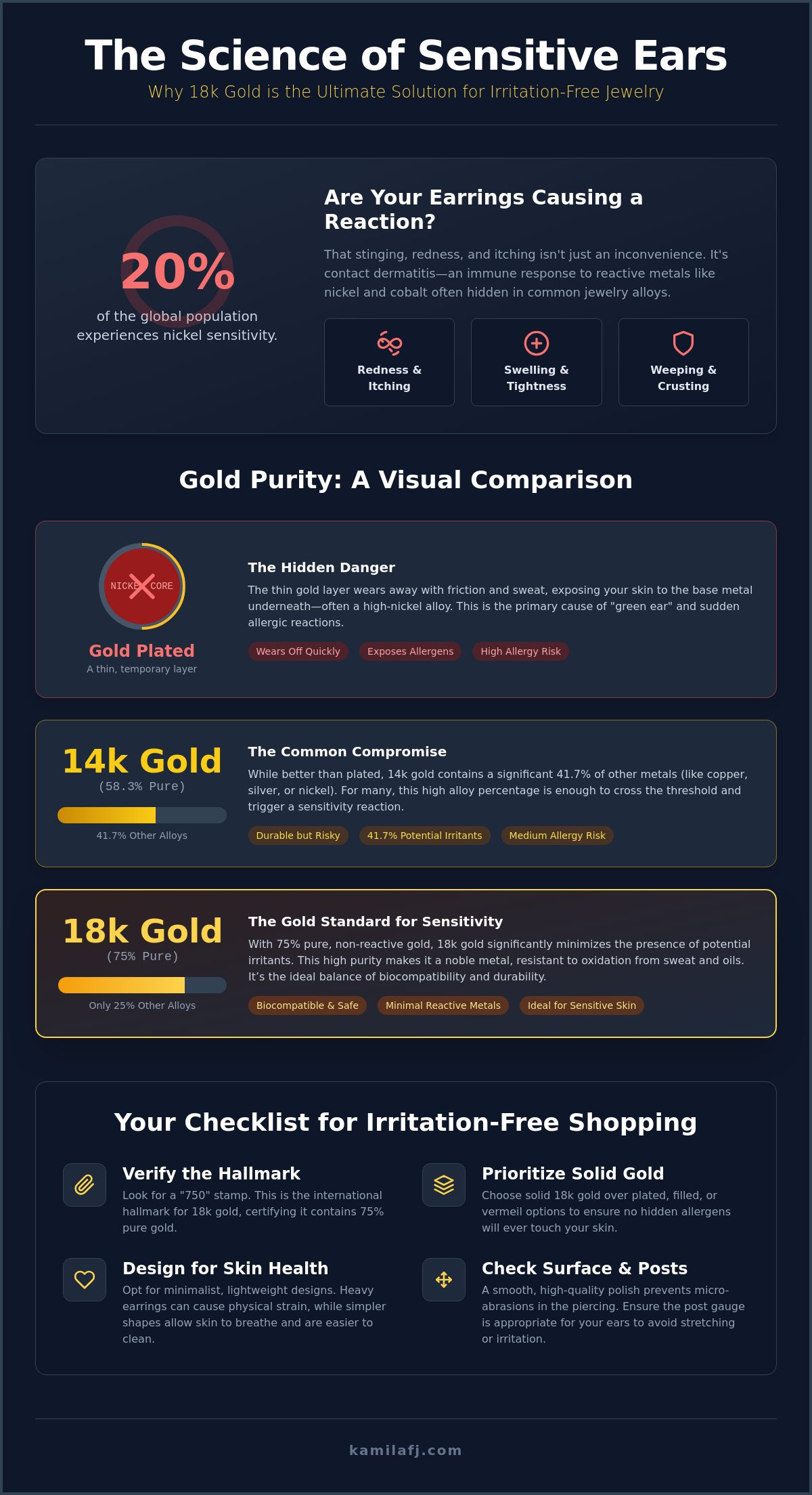
With nearly 20% of the global population experiencing nickel sensitivities, that stinging redness you feel after a few hours of wear isn’t just an inconvenience; it’s a sign your skin is reacting to hidden alloys. You’ve likely wasted money on “hypoallergenic” or gold-plated pieces only to end up with itchy, swollen ears by dinner time. It’s exhausting to feel like you must sacrifice your aesthetic for the sake of comfort. Choosing 18k gold earrings for sensitive ears isn’t just about luxury. It’s a biological decision to prioritize a 75% gold purity that minimizes the reactive metals found in lower-karat alternatives.
We believe your jewelry should be an empowering extension of your identity, meant for everyday life rather than just special occasions. You deserve a minimalist aesthetic that doesn’t compromise your skin health or your values. In this guide, we’ll explain the technical reasons why 18k gold is the ultimate solution for irritation. You’ll learn how to navigate international safety standards, such as the EU’s strict nickel release limits, and how to invest in handcrafted pieces that offer timeless elegance without the pain.
Key Takeaways
- Identify the biological triggers of contact dermatitis and why common alloys like nickel cause persistent irritation in standard jewelry.
- Learn why the 75% purity of 18k gold earrings for sensitive ears offers a safer, more luxurious alternative to 14k or gold-plated options.
- Discover how minimalist earring designs and intentional weight considerations allow your skin to breathe while preventing physical strain.
- Master the essential checklist for irritation-free shopping, from verifying authentic 750 hallmarks to choosing the correct post gauge.
- Understand the value of artisanal, handcrafted pieces that transition seamlessly from morning rituals to evening celebrations without compromising skin health.
Understanding Sensitive Ears: Why Metal Choice Matters in 2026
Your body is a finely tuned system. When you place a metal object inside a piercing, your skin reacts to the chemical composition of that object. Contact dermatitis occurs when the immune system identifies metal ions as foreign invaders, triggering an inflammatory response. While many blame “sensitive skin,” the reality is often a reaction to specific alloys like nickel or cobalt. Understanding the science of gold alloys helps explain why some pieces feel like a second skin while others cause immediate distress. In 18k gold, the higher concentration of pure gold means there is less room for these reactive “filler” metals.
What Exactly Are ‘Sensitive Ears’?
Many people assume itching is the only symptom of a metal allergy. True hypersensitivity can manifest as weeping, crusting, or even localized swelling that makes the piercing feel tight. Mass-produced jewelry often features microscopic burrs or uneven surfaces. These micro-abrasions create tiny tears in the fistula, the skin lining the piercing, which allows allergens to penetrate deeper. This is why a reaction might feel more intense than a simple surface rash. Choosing 18k gold earrings for sensitive ears ensures a smoother surface finish, protecting the delicate internal tissue of your earlobe and preventing the cycle of irritation before it starts.
The Hidden Cost of Plated Jewellery
Gold plating is a temporary mask. Over time, the thin layer of gold wears away through friction, sweat, and contact with skin oils. This exposes the base metal underneath, which is frequently a mixture of nickel, brass, or copper. When these metals oxidize, they create the infamous “green ear” effect. While the green stain itself is just a chemical reaction, it often coincides with an allergic flare-up as the skin comes into direct contact with the reactive core. Long-term exposure to these low-quality metals can have lasting consequences on your piercing health:
- Piercing Migration: Chronic irritation can cause the body to physically “push” the earring toward the surface.
- Persistent Inflammation: Constant swelling prevents the piercing tract from ever fully maturing or healing.
- Increased Sensitivity: Repeated exposure to low-grade nickel can actually worsen your allergy over time.
In 2026, conscious consumers are moving away from the generic “hypoallergenic” label, which often lacks a legal definition. Instead, the focus has shifted toward high-purity standards. Solid 18k gold remains the gold standard because its 75% purity offers a stable, non-reactive environment for your skin to thrive. It’s a modern heirloom choice that protects your health as much as it elevates your style.
18k Gold vs. 14k and Plated: The Science of Hypoallergenic Purity
Pure gold is one of the few elements that doesn’t react with oxygen or skin chemistry. In its rawest form, it’s a sanctuary for the skin. However, 24k gold is far too soft for the intricate details of modern jewelry. To create durable pieces, artisans blend pure gold with other metals. The “karat” system tells you exactly how much pure gold is in the mix. When you choose 18k gold earrings for sensitive ears, you’re opting for a 75% gold concentration. This leaves only 25% for other alloys, significantly reducing the risk of a reaction compared to 14k or lower purities.
Purity Levels Compared
Understanding the math behind your jewelry helps you make better choices for your body. 14k gold is only 58.3% pure gold. The remaining 41.7% consists of base metals like copper, silver, or zinc. This high alloy content is a common cause of metal allergies because these metals can oxidize and leach ions into your skin. While 14k is popular for its hardness, it often crosses the threshold of what sensitive ears can tolerate. 18k gold sits at the perfect intersection of skin compatibility and structural integrity. It’s resilient enough for life’s adventures but pure enough to prevent the stinging and redness associated with high-alloy blends.
Many people turn to “surgical steel” as a budget-friendly fix. It’s a common myth that this material is universally safe. In reality, surgical steel is an alloy that often includes nickel to keep it shiny and corrosion-resistant. For someone with a true sensitivity, gold remains the gold standard. It’s a noble metal, meaning it resists chemical attacks from sweat and skin oils better than any industrial steel ever could. It won’t break down or release harmful elements into your bloodstream through your piercings.
Why KaMila Chooses 18k Gold
We believe your jewelry should be an intimate part of your story, not a source of discomfort. Our Israeli studio focuses exclusively on 18k gold because it aligns with our styling fine jewellery philosophy: quality over quantity. The rich, buttery hue of 18k gold is unmistakable. It possesses a warmth that 14k gold simply cannot replicate. Because the gold content is higher, the color remains vibrant and doesn’t tarnish over time. This makes 18k gold earrings for sensitive ears a superior choice for those who value both health and aesthetic depth.
Investing in 18k gold is also about creating a modern heirloom. These pieces maintain their material value and skin-safe properties for decades. When you choose high-purity gold, you’re choosing a piece you never have to take off. If you’re ready to start your journey toward pain-free luxury, explore our collection of handcrafted 18k gold earrings designed for your everyday story.
Designing for Comfort: Earring Styles That Minimize Irritation
Gravity is often the silent enemy of a healthy piercing. Choosing the right 18k gold earrings for sensitive ears involves more than just checking the hallmark; it requires an understanding of how shape and weight interact with your skin. Heavy, ornate pieces pull on the earlobe, stretching the piercing tract and creating tiny gaps where sweat and bacteria can accumulate. This stagnant environment is a primary trigger for flare-ups. Minimalist designs, by contrast, allow for better airflow. When the skin can breathe, the risk of moisture-induced irritation drops significantly, making your jewelry feel like a natural, weightless extension of your body.
Studs: The Essential Daily Companion
Minimalism isn’t just an aesthetic choice; it’s a functional one for those with metal sensitivities. 18k gold studs provide the least amount of surface contact, which is ideal for daily wear. However, the backing you choose is just as critical as the earring itself. While traditional butterfly backs are common, they often trap hair, soap residue, and dead skin cells against the lobe. Flat-back studs offer a cleaner alternative, providing a smooth surface that sits flush against the skin. For those seeking an ethical sparkle that matches their skin-safe standards, lab diamonds set in high-purity gold offer the ultimate “set and forget” luxury. These pieces transition effortlessly from your morning workout to a formal evening without ever needing to be removed.
Hoops and Huggies
Small hoops, often called huggies, are a sanctuary for sensitive sleepers. Their circular design eliminates the sharp post that often pokes into the neck during rest. Many of our handcrafted huggies feature a “click-in” or “sleeper” mechanism. This design removes the need for a separate backing entirely, reducing the number of components that could potentially trap debris. When you invest in 18k gold earrings for sensitive ears, the smooth finish of the post is just as vital as the purity of the metal. Artisanal polishing ensures there are no microscopic ridges to cause micro-tears when you insert or rotate the jewelry.
If you’re building an ear piercing curation, consider the spacing of your stack. Crowding too many pieces together can lead to localized heat and swelling. Use lightweight 18k gold hoops as your base and layer smaller studs or huggies around them. This creates a curated look that prioritizes skin health. By focusing on smooth finishes and intentional proportions, you can enjoy a sophisticated aesthetic that feels as good at midnight as it did at midday.
The Sensitive Ear Checklist: What to Look for Before You Buy
Selecting the right pair of earrings is an intimate process. It’s a search for a piece that resonates with your personal narrative while respecting the delicate nature of your skin. When you’re ready to invest in 18k gold earrings for sensitive ears, you must look beyond the initial sparkle. True luxury lies in the details that ensure long-term wearability. From the microscopic thickness of the post to the specific numbers stamped into the metal, these markers are your guide to a pain-free experience.
Reading the Hallmarks
Authenticity has a signature. In the world of fine jewelry, this is the hallmark. For 18k gold, look for the number “750” stamped discreetly on the earring post or the scroll back. This number confirms the piece contains 75% pure gold. You should be cautious of deceptive labels like “18k GP” (Gold Plated) or “18k HGE” (Heavy Gold Electroplated). These pieces only have a thin skin of gold over a reactive base metal, which will inevitably lead to the redness and swelling we discussed earlier. Purchasing from a reputable local fine jewellery store or an artisanal studio provides a level of accountability that mass-market retailers often lack.
The thickness of the post, known as the gauge, also dictates your comfort level. A post that is too thick can stretch the piercing, while one that is too thin may move excessively and cause friction. Most standard lobe piercings are comfortable with a 20-gauge post. If your ears feel sore even when wearing high-purity gold, the physical dimensions of the earring might be the hidden cause of your distress. Artisanal pieces are typically finished by hand to ensure every edge is perfectly rounded and smooth to the touch.
Maintenance for Sensitivity
Sometimes, what feels like a metal allergy is actually a reaction to trapped debris. Skin oils, soap residue, and environmental dust can accumulate around the earring post, creating a breeding ground for bacteria. Cleaning your jewelry is a vital part of skin health. You don’t need harsh, industrial chemicals that might further irritate your ears. A gentle soak in warm water with a drop of mild, fragrance-free soap is sufficient to keep your 18k gold earrings for sensitive ears pristine. This simple ritual ensures that your jewelry remains a celebratory part of your daily life rather than a source of irritation.
High-purity gold is resilient, but your skin occasionally needs a moment to breathe. While 18k gold is safe for continuous wear, a quick cleaning of both the jewelry and the piercing site once a week can prevent sensitivity from developing. If you’re looking for a piece designed with this level of care and integrity, we invite you to explore our collection of handcrafted 18k gold earrings and find a pair that tells your story comfortably.
Handcrafted Elegance: The KaMila 18k Gold Collection
At KaMila Fine Jewellery, we believe that luxury should be a whisper of elegance in your daily life, not a loud statement reserved for rare occasions. Our Israeli studio is a sanctuary where traditional artisanal techniques meet a clean, modern aesthetic. We understand that for the woman with metal sensitivities, jewelry is often a source of anxiety rather than joy. Our collection of 18k gold earrings for sensitive ears is born from the desire to change that narrative. We create pieces that celebrate the duality of strength and delicacy, designed to be worn from the moment you wake up until you rest your head at night.
Choosing 18k gold earrings for sensitive ears from our studio means choosing a piece that aligns with your values. We exclusively use 18k gold for its superior skin compatibility and rich, warm hue. To complement this high-purity metal, we often feature lab-grown diamonds. These stones offer the same physical and chemical brilliance as mined diamonds but with a focus on ethical sourcing and sustainable luxury. It’s an approach to fine jewelry that prioritizes both the health of your skin and the health of the planet. For those with highly specific sensitivity needs, we also offer custom design options to ensure every element of the piece is tailored to your comfort.
The KaMila Difference
Every pair of earrings we produce tells a story of craftsmanship and intention. Because we hand-finish each item in our studio, we can guarantee a level of smoothness that mass-produced jewelry simply cannot match. We obsess over the details you can’t see, such as the internal polishing of a hoop or the precise rounding of a post. While our focus often begins with the ear, we curate our designs to tell a cohesive story across your entire look. You can find gold bracelets and necklaces that echo the same minimalist lines, allowing you to build a signature style that is as comfortable as it is sophisticated.
Start Your 18k Gold Journey
If you’ve spent years battling the redness and swelling caused by low-quality alloys, the transition to high-purity gold can feel transformative. You don’t have to replace your entire collection overnight. We recommend starting with a pair of versatile 18k gold “starter” earrings, such as our minimalist studs or classic huggies. These pieces act as a foundation for your jewelry wardrobe, providing a safe and elegant base that you’ll never feel the need to remove. As you experience the comfort of 75% gold purity, you can slowly transition your other pieces to match this higher standard of care.
Your jewelry should be an intimate expression of your personality, free from the distraction of physical pain. We invite you to browse our curated collection of 18k gold earrings and discover how handcrafted, high-purity gold can redefine your relationship with luxury. It’s time to invest in pieces that protect your health while celebrating your unique story.
Embrace the Comfort of High-Purity Luxury
Your jewelry should be an intimate expression of your identity, not a source of physical distress. We’ve seen how the 75% purity of 18k gold significantly reduces reactive alloys and how thoughtful, minimalist designs prevent the bacterial buildup that often triggers sensitivity. By prioritizing authentic 750 hallmarks and choosing artisanal quality over mass-market plating, you’re making a long-term investment in your well-being. Choosing 18k gold earrings for sensitive ears is the definitive step toward a collection that stays with you through every chapter of your life.
Our Israeli studio is committed to this vision of everyday luxury. We blend handcrafted 18k gold with sustainable lab-grown diamonds to create pieces that resonate with quiet confidence. With worldwide shipping from Israel, we’re proud to bring our artisanal heritage to your doorstep. Don’t let metal allergies dictate your style. It’s time to enjoy the grace and joy of jewelry that’s as kind to your skin as it is beautiful to the eye.
Discover KaMila’s Handcrafted 18k Gold Earring Collection
Frequently Asked Questions
Is 18k gold better than 14k gold for sensitive ears?
Yes, 18k gold is superior for sensitive skin because it contains 75% pure gold. This leaves only 25% for other alloys, whereas 14k gold contains over 41% non-gold metals. The higher gold concentration in 18k gold earrings for sensitive ears significantly reduces the risk of leaching reactive ions into your skin. It’s the ideal balance of purity and daily durability for those prone to irritation.
Can I wear 18k gold earrings 24/7 if I have sensitive skin?
You can comfortably wear high-purity 18k gold earrings around the clock. Because 18k gold is a noble metal, it doesn’t react with sweat or skin oils. We design our pieces to be an intimate part of your daily story. Just remember to clean your piercings and jewelry once a week with mild soap to prevent bacterial buildup; this residue is often mistaken for a metal allergy.
Does 18k gold contain nickel?
Most high-quality 18k gold is nickel-free, especially in artisanal fine jewelry. While 18k gold is an alloy, the 25% non-gold portion usually consists of skin-safe metals like silver or copper. We focus on high-purity standards in our Israeli studio to ensure our pieces remain non-irritating. You should always verify with your jeweler that their specific alloy blend doesn’t include nickel if you have a known severe allergy.
Will 18k gold earrings tarnish or turn my ears green?
Solid 18k gold will not turn your ears green or tarnish over time. The “green ear” phenomenon is caused by the oxidation of base metals like copper or brass, which are common in gold-plated or low-karat jewelry. Since 18k gold is 75% pure, it maintains its rich, warm hue without reacting to your skin’s pH levels. It’s a permanent investment in both your style and your comfort.
What is the difference between solid 18k gold and 18k gold vermeil for allergies?
Solid 18k gold is 75% pure gold through the entire piece, while gold vermeil is a thin layer of gold over a sterling silver base. For those with severe sensitivities, vermeil poses a risk because the gold layer eventually wears down. Once the plating is gone, your skin is exposed to the underlying metals. Solid 18k gold earrings for sensitive ears offer a consistent, non-reactive surface that never wears away.
How can I tell if my earrings are real 18k gold?
Authentic 18k gold is almost always marked with a “750” or “18k” hallmark. The “750” stamp indicates that the piece is 750 parts gold out of 1,000. You’ll typically find this tiny engraving on the earring post or the butterfly backing. To ensure accountability and quality, purchase from reputable artisanal jewelers who specialize in solid fine metals rather than mass-market retailers who may use deceptive labeling.
Are lab-grown diamond earrings safe for sensitive ears?
Lab-grown diamonds are perfectly safe for sensitive ears because they are chemically identical to mined diamonds. Diamonds are carbon-based and completely inert, meaning they won’t react with your skin. The key to irritation-free wear is ensuring these stones are set in high-purity 18k gold. This combination allows you to enjoy ethical, sustainable luxury without compromising your skin health or your personal values.
Why do my ears hurt even when I wear gold earrings?
Pain can occur if the earrings are too heavy or if the post is the wrong thickness for your piercing. If you’re wearing solid gold and still feel discomfort, you might be reacting to trapped bacteria or physical friction rather than the metal itself. Switch to lightweight, minimalist designs with smooth, hand-polished finishes. This allows your skin to breathe and heal properly while maintaining a sophisticated aesthetic.
Related Posts
Jewelry Design in Haifa: What to Expect in 2026
-
Posted by
מילה קלר
If you’re searching “jewelry design consultation in Haifa what to expect,” you may be wondering what to bring, which decisions you’ll need to make,…
From Sketch to Sparkle: Ensuring the Final Piece Matches Your Jewelry Design
-
Posted by
You’ve spent weeks dreaming of a ring that captures your story, but as you look at the artist’s rendering, a small doubt creeps in. Will that…
Repurposing Heirloom Stones into Modern Custom Jewelry: The Complete 2026 Guide
-
Posted by
What if keeping an inherited ring tucked away in a dark jewelry box isn’t protecting your family history, but silencing it? It’s completely natural…
Designing a Custom 18k Gold Ring: 2026 Bespoke Guide
-
Posted by
What if the most exquisite jewelry you ever own isn’t reserved for formal galas, but crafted to enrich your daily life? When you start exploring…
Finding an English-Speaking Custom Fine Jewelry Designer in Israel: A Complete Guide
-
Posted by
Your most cherished jewelry shouldn’t just be an accessory; it’s a piece of your history that deserves to be understood without a translator. When…
Red Flags When Choosing a Custom Jewelry Designer: A 2026 Guide to Protecting Your Vision
-
Posted by
Imagine spending months dreaming of a bespoke 18k gold ring, only to open the velvet box and find a piece that feels like a generic retail cast…
Jewelry That Makes Me Feel Protected and Strong: A Guide to Modern Talismans
-
Posted by
Most people view a necklace or a ring as a simple finishing touch, but for the modern woman, it’s often the first layer of emotional armor she puts…
How to Stack Rings: The Art of Curating Your Personal Story in 18K Gold
-
Posted by
What if your jewellery box wasn’t just a collection of objects, but a living timeline of your most cherished milestones? You’ve likely looked at a…
Minimalist Gold Rings: A Guide to Curating Your Timeless 18K Collection
-
Posted by
Your jewelry shouldn’t have an expiration date. Too many of us have felt the frustration of a cherished piece tarnishing or causing skin irritation…
Getting a Better Price Than Big Brand Jewelers in Israel: The Insider’s Guide 2026
-
Posted by
That iconic logo on a shopping bag in a Tel Aviv mall might feel like a mark of quality, but it’s often the most expensive way to buy a memory. When…

18k Gold Earrings for New Piercings: Safe Styling Guide
-
Posted by
What if the most rewarding part of your piercing journey wasn’t the initial appointment, but the moment you finally swap those generic studs for…

18k Gold Minimalist Bracelets: The Ultimate Guide to Timeless Everyday Luxury
-
Posted by
True minimalism isn’t about having less; it’s about requiring more from the few pieces you choose to wear every day. If you’ve ever felt the…