
Blog
18k Gold vs 14k Gold Jewelry: A Guide to Choosing Your Modern Heirloom
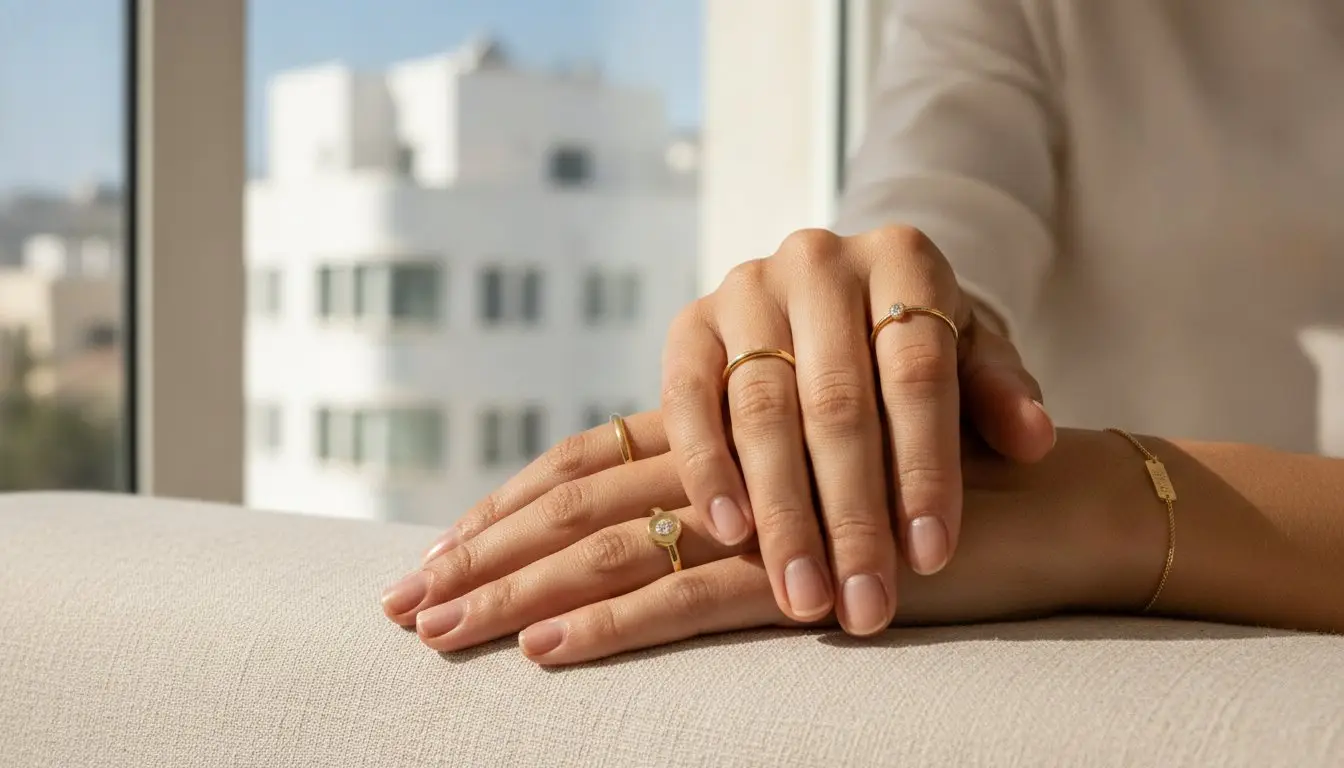
Choosing the metal for your next investment isn’t just a technical decision; it’s an intimate choice about the legacy you carry on your skin. When weighing the merits of 18k gold vs 14k gold jewelry, the decision often feels like a tug-of-war between the allure of pure radiance and the practicalities of daily wear. You likely want a piece that feels like a natural extension of your identity, yet you might worry that the rich glow of 18k won’t survive your busy Israeli lifestyle or that hidden alloys could irritate sensitive skin.
We believe that a true modern heirloom must balance artisanal beauty with quiet resilience. It’s a common misconception that 14k is the only sensible choice for durability, but the reality for the modern collector is far more nuanced. You shouldn’t have to compromise on the deep, celebratory colour of high-purity gold to ensure your pieces last for generations.
This guide explores the delicate differences between these two gold standards to help you find the perfect harmony of radiance and soul. You’ll learn how different karats interact with lab-grown diamonds and gain a clear framework for curating a minimalist jewellery stack that feels both effortless and eternal.
Key Takeaways
- Understand that 18k gold contains 75% pure gold, offering a superior artisanal weight and inherent value for your personal collection.
- Learn to distinguish between 18k gold vs 14k gold jewelry by identifying the rich, sun-drenched hue that defines high-purity pieces.
- Discover why 18k gold is perfectly suited for daily wear, debunking the myth that high-end jewellery is too delicate for a modern lifestyle.
- Protect your skin by choosing 18k gold for its hypoallergenic properties, as it contains fewer alloy metals that typically cause sensitivities.
- Master the art of the minimalist stack by maintaining karat consistency to ensure a harmonious, sophisticated glow across your entire collection.
The Language of Karats: What 18k and 14k Gold Really Mean
To choose the right piece, you first need to understand the mathematical poetry of the karat system. In its essence, a karat is a unit of purity measured in 24 parts. Pure gold, known as 24k, is an elemental marvel, but it’s rarely found in fine jewellery because it lacks the structural integrity needed for daily wear. When we discuss 18k gold vs 14k gold jewelry, we’re really talking about the ratio of pure gold to the strengthening metals that give a piece its life and longevity.
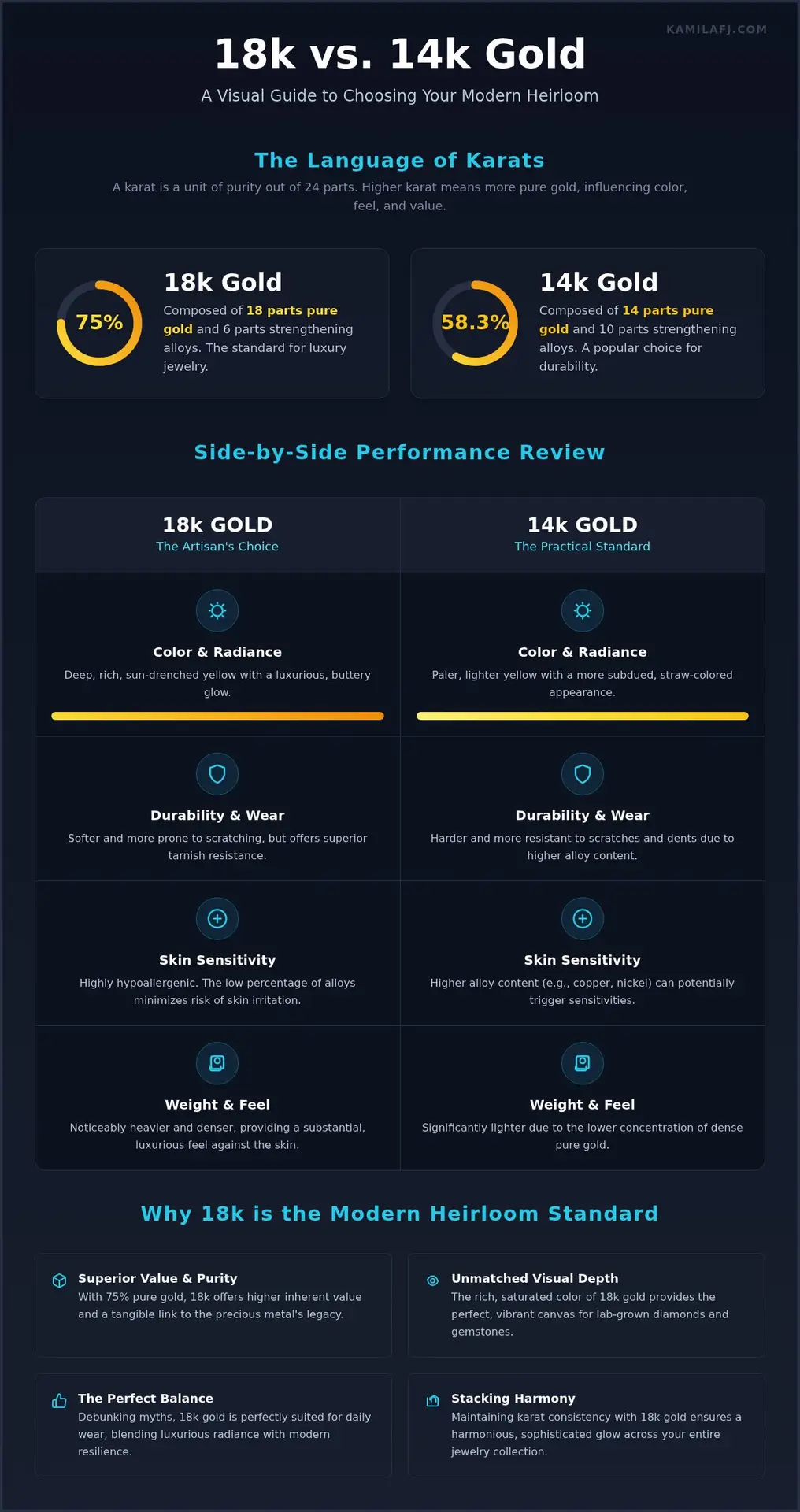
18k gold consists of 18 parts pure gold and 6 parts alloy, resulting in a 75% purity level. This specific ratio is widely considered the sweet spot for luxury. It retains the deep, sun-drenched radiance of the raw element while gaining enough strength to hold precious stones securely. In contrast, 14k gold contains 14 parts gold and 10 parts alloy, or roughly 58.3% purity. While 14k is a popular choice for its utility, the higher percentage of base metals can sometimes dilute the natural, vibrant glow that makes gold so enchanting to the eye.
The Alchemy of Alloys: Why Pure Gold Needs a Partner
While the idea of “pure gold” sounds romantic, 24k gold is incredibly malleable. It’s so soft that it can be scratched with a fingernail or lose its shape under slight pressure. This makes it unsuitable for the intricate architectural details of engagement rings or delicate settings. To solve this, artisans mix gold with other elements to create gold alloys that are durable and diverse in colour.
- Silver and Copper: These are the traditional partners that create the classic yellow and rose hues we adore.
- Palladium: Often used in high-end white gold to provide a bright, silvery finish without the need for excessive plating.
The specific ratio of these metals dictates the final personality of the piece. A higher copper content creates a fiery rose, while more silver leans toward a soft, moonlight yellow. By choosing 18k, you’re ensuring that the majority of your jewellery’s soul remains pure gold.
The 18k Distinction: A Tradition of Fine Craftsmanship
In the world of high-end Israeli craftsmanship, 18k gold is the undisputed standard. It’s the preferred medium for master goldsmiths who prioritise the metal’s natural warmth and superior density. You can actually feel the difference when you hold it. 18k gold is significantly heavier than 14k; it has a substantial, artisanal weight that feels grounded and meaningful against the skin.
This increased density doesn’t just feel better. It also provides a more secure and prestigious setting for modern innovations. We find that the rich, saturated tones of 18k gold serve as the ultimate canvas for lab diamonds, allowing their brilliance to pop against a background of pure, unadulterated colour.
Richness vs. Resilience: A Side-by-Side Performance Review
When choosing between 18k gold vs 14k gold jewelry, many people focus solely on the price tag. However, the true difference lies in the sensory experience. 18k gold possesses a distinct artisanal weight. It feels substantial and grounded against your skin, acting as a physical reminder of the story you’re wearing. Because gold is a dense, heavy element, the higher concentration in 18k pieces provides a luxurious heft that 14k simply cannot replicate.
Higher gold content also translates to superior tarnish resistance. While all fine jewellery requires care, the 75% purity of 18k gold makes it less reactive to environmental factors than its 14k counterpart. This ensures your pieces maintain their brilliance for years, requiring less frequent deep cleaning to stay radiant. These quality standards are underpinned by official FTC guidelines for jewelry, which provide the legal framework for purity and marking that we strictly follow.
Colour Theory: The Visual Impact of Purity
The most immediate difference is the colour. Yellow 18k gold has a deep, buttery radiance that mimics the glow of a Mediterranean sunset. 14k yellow gold, by comparison, often appears paler or slightly more straw-coloured due to the higher percentage of silver and copper alloys. This distinction is vital for those building a minimalist stack; mixing karats can sometimes lead to a clashing of tones rather than a cohesive glow.
This visual distinction extends across all shades. In white gold, 18k provides a warmer, more sophisticated base. Even when rhodium-plated, the underlying richness of 18k gold adds a subtle depth to the finish. For rose gold lovers, 18k offers a soft, romantic blush hue. Because it contains less copper than 14k rose gold, it avoids the harsh, coppery tones that can look more industrial than artisanal.
The Myth of the ‘Soft’ 18k Ring
A common concern is that 18k gold is too soft for an active life. It’s time to debunk this durability myth. While 14k gold is technically harder on the Mohs scale, 18k gold is actually tougher. In metallurgy, hardness refers to scratch resistance, while toughness refers to a metal’s ability to resist breaking under pressure.
14k gold is more brittle because of its high alloy content. Over decades, 18k gold settings often hold diamond rings more securely because the metal is more resilient and less likely to snap. Any slight surface marks a piece picks up over time shouldn’t be feared. We view this as the patina of life, a beautiful record of your experiences that transforms your jewellery into a true modern heirloom. If you’re ready to find a piece that resonates with your personal narrative, you can explore our handcrafted collections designed for the conscious collector.
Skin Health and Sensitivity: The Hypoallergenic Advantage
Jewellery is the most intimate form of art we own. It rests against your pulse points for hours, absorbing the heat of your body and the essence of your day. When navigating the choice between 18k gold vs 14k gold jewelry, skin health is often the deciding factor that moves beyond aesthetics. For many collectors in Israel, where the Mediterranean humidity can increase skin reactivity, the purity of 18k gold offers a level of comfort that lower-karat alternatives simply cannot match. Higher gold content reduces the likelihood of contact dermatitis, a common skin reaction that leaves many people unable to wear their favourite pieces for more than a few hours.
The peace of mind that comes with high-purity gold is invaluable. As The Plumb Club explains the difference, the higher the gold content, the lower the risk of allergic reactions. This is particularly critical for ear piercings and new jewellery placements where the skin is most vulnerable. Choosing 18k gold ensures that your journey with a new piece begins with grace and ease, rather than irritation.
Nickel and Alloys: What’s Hiding in Your 14k?
To achieve its hardness, 14k gold relies on a higher percentage of base metals. These alloys often include nickel, zinc, or copper in concentrations that can trigger sensitivities. While 14k gold is popular, it carries a higher risk of causing the dreaded “green skin” effect or itchy rashes. At KaMila, we prioritise 18k gold because we believe every piece should be a joy to wear. We want your jewellery to feel like a protective emblem, never a source of discomfort. By choosing a higher purity, you’re effectively filtering out the metals that most commonly cause skin distress.
Long-Term Wearability for the Everyday
Our skin is dynamic. It changes with the seasons, the temperature, and our personal health. 18k gold is remarkably stable. It interacts beautifully with natural skin oils without losing its lustre or causing the metal to leach onto your skin. Whether you’re navigating a brisk Jerusalem winter or a humid Tel Aviv summer, 18k gold remains gentle and consistent. 18k gold is 75% pure, significantly reducing the presence of potential irritants that are often found in 14k or 10k alloys. This high gold ratio ensures that your minimalist stack remains as kind to your body as it is beautiful to the eye.
Building a personal jewellery collection is like writing a visual diary where each piece should harmonise with the next. The most important principle in professional styling is consistency. When you compare 18k gold vs 14k gold jewelry in a stack, the difference in saturation becomes obvious. Mixing different karats can create an unintentional visual clash; the rich, sun-drenched glow of 18k often makes 14k pieces look dull or overly pale by comparison.
A minimalist look relies on intentionality. A single gold necklace in 18k gold serves as a powerful anchor for any outfit, from a simple linen shirt to a sophisticated evening ensemble. The metal’s inherent radiance provides a warm focal point that captures light differently than lower-purity options, ensuring your look feels elevated even in its simplest form.
The Stacking Aesthetic
Layering is an art form that celebrates the duality of strength and delicacy. When you stack thin 18k bands, their superior density ensures they don’t get “lost” against your skin. They hold their presence with a quiet confidence. You can play with textures by mixing high-polished surfaces with soft, matte finishes. This adds depth to your stack without needing bulky designs. An often overlooked benefit of high-purity gold is its weight. Because 18k gold is heavier, delicate chains have more “drop” and are significantly less likely to tangle into frustrating knots during your daily routine.
Framing the Sparkle: 18k Gold and Lab Diamonds
The marriage of 18k gold and lab-grown diamonds represents the pinnacle of modern, conscious luxury. The saturated yellow of 18k gold provides a stunning contrast that makes high-colour lab diamonds appear even more brilliant and crisp. It’s a synergy that respects both traditional craftsmanship and future-thinking ethics. By pairing recycled 18k gold with lab-grown stones, you’re choosing a piece with a soul as pure as its composition. This combination ensures that the brilliance of the stone is never overshadowed by the metal, but rather amplified by it.
If you’re ready to design a piece that truly reflects your identity, we recommend consulting on custom jewelry to find the perfect metal-to-stone harmony. You can also browse our handcrafted 18k gold collection to start building your minimalist stack today.
The KaMila Choice: Why We Believe in 18k Gold
We’ve explored the technicalities and the aesthetics, but at KaMila, our preference for 18k gold is ultimately a matter of the heart. In the landscape of 18k gold vs 14k gold jewelry, we choose the former because it represents the pinnacle of Israeli artisanal heritage. Our commitment to high-purity gold isn’t just about luxury; it’s about the “elevation of the everyday.” We believe that the objects you wear should make every morning feel significant, turning a simple routine or a quiet moment of reflection into a celebration of your personal journey.
Choosing 18k gold is a definitive stand on quality over quantity. While 14k gold is often positioned as the practical choice, we believe a true modern heirloom requires the soul and radiance that only 75% purity can provide. It’s about the tactile weight on your skin and the knowledge that your jewellery is as pure as the intentions behind it. This is why 18k gold remains the only choice for a piece intended to be passed down through generations.
Handcrafted in Israel: A Story in Every Gram
Every piece in our collection is born in our Tel Aviv studio, where the precision of modern design meets the warmth of the human touch. Handcrafting in Israel allows us to infuse each gram of gold with a narrative of resilience and artistry. 18k gold is our preferred medium because it allows for finer, more intricate details that lower-purity metals can’t always sustain. Its superior malleability combined with its inherent strength means we can create minimalist designs that are incredibly delicate yet structurally sound.
This gold doesn’t just sit on your skin; it carries the symbolic value of a legacy. The rich, saturated colour stays consistent over decades, ensuring that the piece you wear today will look just as vibrant when it’s worn by your daughter or granddaughter. We don’t just see ourselves as jewellers, but as custodians of your personal history, crafting emblems that remain beautiful for generations.
Your Personal Gold Journey
Transitioning from the fleeting nature of costume jewellery to the lasting value of 18k gold is a transformative experience. It’s a shift from “buying for now” to “investing for forever.” You don’t need a full vault to start; your personal gold journey often begins with a single, meaningful piece. Perhaps it’s a slim band that marks a milestone or a pendant that serves as a protective emblem. Over time, these individual stories weave together to form a collection of modern heirlooms.
When you choose 18k, you’re choosing a material that grows more beautiful with you, absorbing the experiences of your life while retaining its intrinsic worth. We invite you to experience the difference that high-purity, handcrafted jewellery makes in your daily life. Explore our curated collection of 18k gold rings, necklaces, and bracelets and find the piece that resonates with your unique soul.
Embrace the Radiance of a Modern Heirloom
The choice between 18k gold vs 14k gold jewelry is ultimately a decision about how you want to feel every day. While 14k offers a practical starting point, 18k gold provides the rich, sun-drenched colour and skin-kind purity that defines a true modern heirloom. You’ve seen how the superior density of 18k gold anchors a minimalist stack and how its high gold content protects sensitive skin from common alloy irritants. By choosing a higher purity, you aren’t just buying an accessory; you’re investing in a piece of artisanal history that will retain its lustre for generations.
At KaMila, we’re dedicated to high-end craftsmanship that celebrates your unique story. Every piece is handcrafted in Israel using 18k gold and ethically sourced lab-grown diamonds, designed specifically for the modern individual who seeks daily elegance without compromise. It’s time to elevate your collection with a piece that resonates with your soul and stands the test of time.
Discover the radiance of our handcrafted 18k gold collection and find the next chapter of your personal narrative today.
Frequently Asked Questions
Is 18k gold too soft for an engagement ring I wear every day?
18k gold is not too soft for daily wear; its resilience makes it an excellent choice for an engagement ring. While 14k is technically harder on the Mohs scale, 18k is tougher and less brittle, meaning it’s less likely to snap or break over decades of use. Many Israeli collectors wear their 18k rings through every aspect of life, finding that the metal holds diamonds securely while developing a beautiful, storied patina over time.
Can I really see the difference between 14k and 18k yellow gold?
You can absolutely see the visual difference between these two purities, especially in yellow gold. 18k gold possesses a rich, sun-drenched hue that mimics the warmth of a Mediterranean sunset. In contrast, 14k gold appears significantly paler and more straw-coloured because it contains a higher percentage of silver and copper alloys. This difference in saturation is why many stylists recommend staying consistent with your choice of 18k gold vs 14k gold jewelry within a single stack.
Why is 18k gold better for people with sensitive skin?
18k gold is significantly better for sensitive skin because it’s 75% pure, leaving less room for irritating base metals. 14k gold uses a higher percentage of alloys, such as nickel or copper, which are the primary triggers for contact dermatitis and itchy rashes. By choosing 18k, you’re effectively filtering out these common allergens. This makes it the preferred choice for anyone who experiences skin reactivity during the humid Israeli summers or after long hours of wear.
Does 18k gold tarnish faster than 14k gold?
18k gold does not tarnish faster; it’s actually more resistant to environmental reactivity than lower-karat options. Pure gold is an incredibly stable element that doesn’t react with oxygen or moisture. Because 18k gold contains a higher percentage of this pure element, it stays bright and radiant for longer. While 14k gold might be technically harder, its higher alloy content makes it more prone to subtle discolouration over time when exposed to skin oils and perfumes.
Is it okay to mix 14k and 18k gold jewellery in one stack?
While you can mix different karats, it often creates a visual clash that disrupts the harmony of a minimalist stack. 18k gold is visibly more saturated and radiant than 14k, which can make the lower-purity pieces look dull or washed out by comparison. For a cohesive and sophisticated look, we recommend sticking to one karat. This consistency ensures that every piece in your curated collection shares the same sun-drenched glow and artisanal weight.
Why is 18k gold more expensive if it’s ‘softer’?
18k gold is more expensive because it contains a much higher volume of pure gold, which is the most valuable component in any alloy. An 18k piece is 75% gold, whereas a 14k piece is only 58.3% gold. When comparing 18k gold vs 14k gold jewelry, you’re paying for the intrinsic value and artisanal weight of the raw material. The softness of the metal is a natural characteristic of purity, not a sign of lower quality or value.
How do I care for my 18k gold and lab diamond jewellery at home?
Caring for your 18k gold and lab diamond jewellery is a simple, ritualistic process that preserves its brilliance. You can clean your pieces at home using a bowl of warm water mixed with a few drops of mild, pH-neutral soap. Gently scrub the settings with a very soft-bristled brush to remove any residue, then rinse thoroughly under clean water. Dry each piece with a soft, lint-free cloth to restore its natural, celebratory glow and prevent water spots.
What does the ‘750’ stamp on 18k gold jewellery mean?
The 750 stamp is the international hallmark that verifies your jewellery is 18k gold. This number represents 750 parts of pure gold per 1000, which is exactly 75%. It’s a mark of integrity and craftsmanship that you’ll find on high-purity pieces handcrafted in Israel and beyond. Seeing this stamp gives you the confidence that your modern heirloom meets global standards for luxury and purity, ensuring its value remains clear for generations to come.
Related Posts
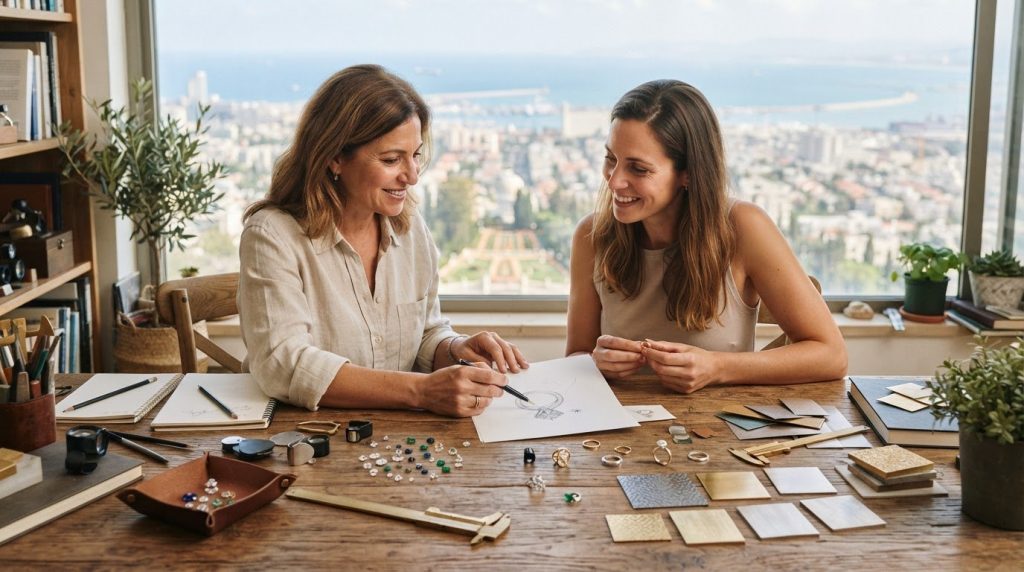
Jewelry Design in Haifa: What to Expect in 2026
-
Posted by
מילה קלר
If you’re searching “jewelry design consultation in Haifa what to expect,” you may be wondering what to bring, which decisions you’ll need to make,…
From Sketch to Sparkle: Ensuring the Final Piece Matches Your Jewelry Design
-
Posted by
You’ve spent weeks dreaming of a ring that captures your story, but as you look at the artist’s rendering, a small doubt creeps in. Will that…
Repurposing Heirloom Stones into Modern Custom Jewelry: The Complete 2026 Guide
-
Posted by
What if keeping an inherited ring tucked away in a dark jewelry box isn’t protecting your family history, but silencing it? It’s completely natural…
Designing a Custom 18k Gold Ring: 2026 Bespoke Guide
-
Posted by
What if the most exquisite jewelry you ever own isn’t reserved for formal galas, but crafted to enrich your daily life? When you start exploring…

Finding an English-Speaking Custom Fine Jewelry Designer in Israel: A Complete Guide
-
Posted by
Your most cherished jewelry shouldn’t just be an accessory; it’s a piece of your history that deserves to be understood without a translator. When…
Red Flags When Choosing a Custom Jewelry Designer: A 2026 Guide to Protecting Your Vision
-
Posted by
Imagine spending months dreaming of a bespoke 18k gold ring, only to open the velvet box and find a piece that feels like a generic retail cast…
Jewelry That Makes Me Feel Protected and Strong: A Guide to Modern Talismans
-
Posted by
Most people view a necklace or a ring as a simple finishing touch, but for the modern woman, it’s often the first layer of emotional armor she puts…
How to Stack Rings: The Art of Curating Your Personal Story in 18K Gold
-
Posted by
What if your jewellery box wasn’t just a collection of objects, but a living timeline of your most cherished milestones? You’ve likely looked at a…
Minimalist Gold Rings: A Guide to Curating Your Timeless 18K Collection
-
Posted by
Your jewelry shouldn’t have an expiration date. Too many of us have felt the frustration of a cherished piece tarnishing or causing skin irritation…
Getting a Better Price Than Big Brand Jewelers in Israel: The Insider’s Guide 2026
-
Posted by
That iconic logo on a shopping bag in a Tel Aviv mall might feel like a mark of quality, but it’s often the most expensive way to buy a memory. When…

18k Gold Earrings for New Piercings: Safe Styling Guide
-
Posted by
What if the most rewarding part of your piercing journey wasn’t the initial appointment, but the moment you finally swap those generic studs for…

18k Gold Minimalist Bracelets: The Ultimate Guide to Timeless Everyday Luxury
-
Posted by
True minimalism isn’t about having less; it’s about requiring more from the few pieces you choose to wear every day. If you’ve ever felt the…