

Blog
How to Measure Your Wrist for a Bracelet: The Ultimate Sizing Guide

Imagine the quiet heartbreak of looking down at your wrist only to realize your favorite gold bracelet is gone, lost to a fit that was just a fraction too loose. It’s a worry many of us share when investing in pieces meant to last a lifetime. Whether you’re eyeing a bold sculptural cuff or a delicate link chain, learning how to measure wrist for bracelet at home is the first step to true peace of mind. The uncertainty of online sizing often feels like a barrier, especially when you’re navigating the differences between hand and wrist measurements or varying brand charts.
This guide will help you master the art of sizing from your own sanctuary, turning technical precision into an act of self-care. We’ll show you how to find a measurement in inches or centimeters that ensures your jewelry feels like an effortless part of your daily story. You’ll gain the clarity to choose between a snug, tailored fit or a graceful, loose drape. We’ll walk through the specific steps to secure your next gold heirloom so it stays exactly where it belongs, as a beautiful and secure reflection of your identity.
Key Takeaways
- Understand why 18K gold and lab-diamond jewelry demand a higher level of precision to protect your most meaningful investments.
- Master the “Artisan Method” to learn how to measure wrist for bracelet using everyday items you already have at home.
- Apply the “Buffer Rule” to determine the perfect amount of space between your skin and your jewelry for daily comfort.
- Learn the critical difference between measuring your wrist for chains and your hand for bangles to avoid common sizing mistakes.
- Use your precise measurements to shop curated collections with the confidence that each piece will feel like a natural extension of yourself.
Why Precision Matters for Fine Gold Bracelets
A perfect fit is the delicate intersection of comfort, aesthetics, and security. It’s the moment jewelry stops being an object you carry and starts being an effortless part of your identity. When you master how to measure wrist for bracelet, you aren’t just looking for a number on a ruler. You’re ensuring that your piece sits with the grace it deserves. A bracelet that’s too tight can feel restrictive and clinical, while one that’s too loose risks losing its intentional silhouette or, worse, sliding off entirely.
Precision is particularly vital when we talk about 18K gold and lab-diamond pieces. Unlike mass-produced costume jewelry, these materials possess a distinct weight and density. Fine gold has a presence on the skin that requires a thoughtful fit to remain stable. Because these pieces are designed as modern heirlooms, the stakes are higher. A well-measured fit protects the integrity of the clasp and prevents the metal from suffering unnecessary friction or impact against hard surfaces.
Your personal style is often expressed through the “drape” of your jewelry. Some individuals prefer a close, tailored fit that mirrors the clean lines of a minimalist aesthetic, while others enjoy a more fluid movement. Reviewing different Bracelet types and styles shows us that the construction of a piece dictates how it should rest. A flexible chain needs a different allowance than a rigid cuff to look its best. Without precision, that carefully chosen look can easily become a source of distraction rather than joy.
The risk of loss is perhaps the most compelling reason to prioritize accuracy. An ill-fitting clasp is far more likely to snag on a silk sleeve or catch on a handbag strap. When a bracelet doesn’t sit correctly, it’s exposed to accidental damage that can be costly to repair. Taking the time to understand how to measure wrist for bracelet ensures your investment remains a secure part of your story for years to come.
The Security of Your Investment
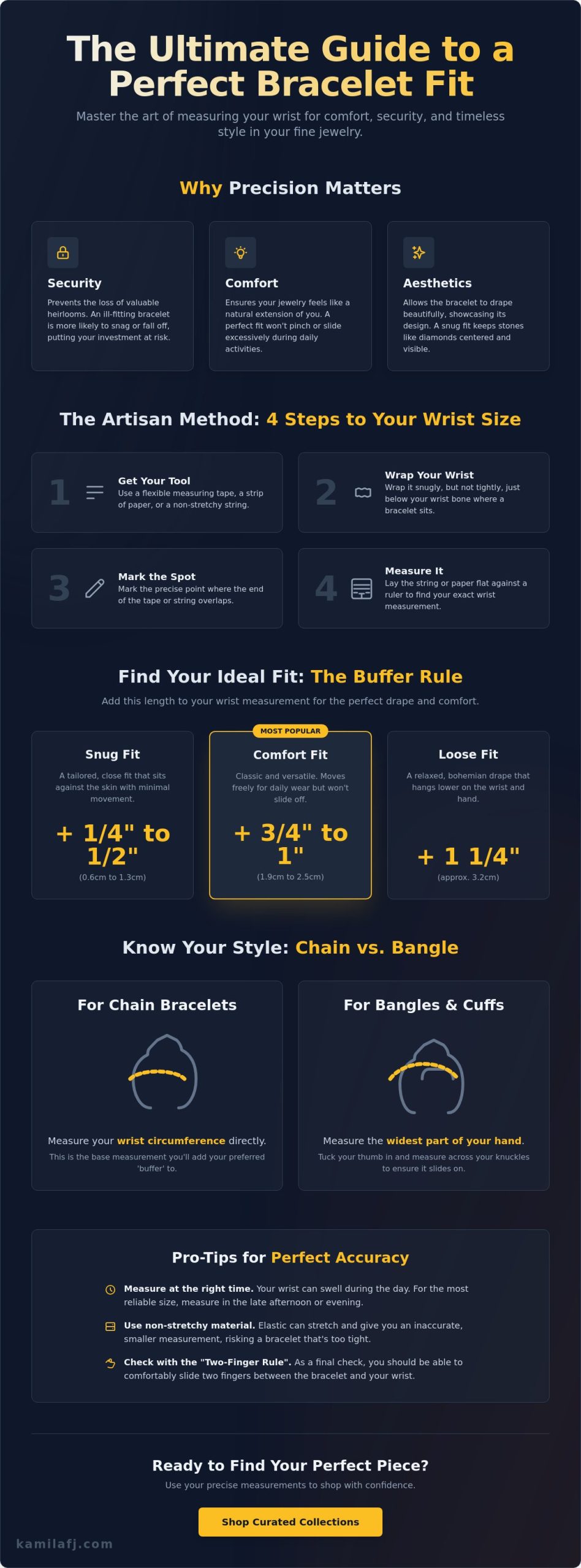
High-value jewelry, such as a diamond-set tennis bracelet, often requires a snugger fit to ensure the stones remain visible and centered. If the piece is too loose, the weight of the gems will cause it to flip, hiding the brilliance of the diamonds against your skin. Solid gold also has a unique weight distribution that can cause a bracelet to feel “bottom-heavy” if the sizing isn’t exact. In 2026, the most reliable measure of security is the two-finger rule, which suggests that a perfectly fitted bracelet should allow you to slide two fingers comfortably between the jewelry and your wrist.
Comfort for the Modern Individual
Luxury should never feel like a burden. We believe that fine jewelry is meant for making daily life special, which means it must be comfortable enough to “disappear” during your morning meetings or evening celebrations. A bracelet that pinches or slides excessively creates a psychological barrier between the wearer and the piece. Minimalist designs, in particular, benefit from a tailored fit that highlights their architectural simplicity. When a bracelet fits perfectly, it becomes a silent companion that celebrates your strength and delicacy without ever getting in the way.
Two Simple Ways to Measure Your Wrist at Home
Finding your size shouldn’t feel like a clinical chore. Instead, think of the Artisan Method as a thoughtful ritual that ensures your next piece of jewelry feels like it was crafted specifically for your story. To begin, you must identify exactly where you want your bracelet to rest. Most people prefer the area just below the wrist bone, which is the narrowest part of the arm. Measuring this specific spot is the secret to a fit that feels intentional and secure. If you measure too high or too low, the piece won’t drape with the grace you expect.
Timing is everything. Your body changes throughout the day, and your wrist is no exception. For the most accurate result, measure your wrist in the late afternoon or evening. This is when your wrist is likely at its largest due to daily activity and temperature changes. It’s also vital to use a non-stretchy material. Fabric tapes or cotton string are ideal because they won’t distort the final number. Elastic or soft ribbons can stretch as you pull them, leading to a false measurement and a bracelet that might eventually slip away.
While we often focus on the aesthetic, there is an anatomical science to a perfect fit. Research regarding clinical wrist measurement highlights the importance of using specific landmarks, like the bony protrusion of the wrist, to ensure consistency. By following these professional standards at home, you’re giving your jewelry the best possible foundation. It’s this attention to detail that transforms a simple purchase into a lasting bond between the wearer and the object.
Method 1: The Flexible Measuring Tape
Using a tailor’s tape is the most direct way to learn how to measure wrist for bracelet. It provides an immediate reading that you can use across different international sizing charts.
- Step 1: Wrap the flexible tape around your arm just below the wrist bone.
- Step 2: Note the measurement exactly where the tape overlaps. The tape should be flush against your skin but not tight enough to leave a mark or squeeze the tissue.
- Step 3: Record this number in both centimeters and inches. Having both units makes it much easier to shop for bespoke pieces without any confusion.
Method 2: The String or Paper Strip
- Step 1: Wrap your string or paper strip around your wrist. Use a fine-tip pen to mark the exact point where the end meets the rest of the material. A thick marker can add unnecessary millimeters to your result.
- Step 2: Lay the string perfectly flat against a rigid metal or wooden ruler. Avoid pulling the string too tight as you lay it down, as this can distort the length.
- Step 3: Measure the distance from the starting end to your mark. Once you have this baseline, you can explore our collection of thoughtfully designed gold bracelets with total confidence in your choice.
Understanding Bracelet Fit Types and Sizing
Once you’ve mastered how to measure wrist for bracelet, you have your base circumference, but it’s vital to remember that this number is rarely your final bracelet size. Think of your wrist measurement as the canvas and the bracelet as the art. If you buy a piece that exactly matches your skin’s circumference, it will likely be too tight to clasp or feel restrictive as you move throughout your day. The secret to a fit that feels like a natural extension of yourself lies in the “Buffer Rule,” which is the intentional space added to your base measurement to allow for movement and grace.
Your choice of material also plays a significant role in how the size feels on your arm. High-quality 18K solid gold has a density and weight that behaves differently than hollow links or lighter metals. A heavy, solid piece might require a slightly more tailored fit to prevent it from swinging too much and striking hard surfaces. In contrast, airy, delicate links can afford a more generous drape. Scientific Anthropometric data on hand and wrist size shows that our anatomy is unique and dynamic, meaning your jewelry should accommodate the natural expansion of your wrist during activity.
Beyond the numbers, your bracelet should reflect your personal story. Are you looking for a bold statement piece that commands attention with a dramatic drape, or a subtle accent that whispers against your skin? There’s no single right answer. The perfect fit is an intimate choice that balances the physical requirements of the piece with the narrative you want to tell. Whether you’re layering multiple styles or wearing a single, one-of-a-kind design, the fit defines the silhouette.
Choosing Your Preferred Fit
The amount of space you add to your wrist measurement determines the final character of the piece. Most individuals find their ideal fit within these three artisanal standards:
- Snug Fit: Add 1/4″ to 1/2″ (0.6cm to 1.3cm) to your base measurement. This is ideal for charms or delicate chains that you want to stay relatively in place.
- Comfort Fit: Add 3/4″ to 1″ (2cm to 2.5cm). This is the classic standard for most gold bracelets, offering effortless movement without the risk of the piece sliding too far down the hand.
- Loose Fit: Add 1 1/4″ (3cm). This creates a dramatic, bangle-like effect with chain bracelets, allowing the piece to move freely and catch the light from every angle.
Standard Bracelet Size Chart for 2026
While we celebrate the unique dimensions of every individual, the jewelry industry generally follows these standard benchmarks for ready-to-wear pieces. In 2026, most fine jewelry collections categorize sizes as Small (approximately 6.5″), Medium (7″), and Large (7.5″). These measurements represent the total length of the bracelet, including the clasp. Because “one size fits all” rarely applies to fine handcrafted pieces, we specialize in custom jewelry design to ensure your jewelry fits your specific measurements with absolute precision. A bespoke approach guarantees that your investment is as unique as the story it represents.
Measuring for Different Styles: Bangles vs. Chain Bracelets
While knowing how to measure wrist for bracelet is the foundation of a good fit, the architecture of the jewelry itself changes the rules. A delicate chain is a whisper around the wrist, but a solid gold bangle is a commitment that must pass over the hand. This distinction is where many sizing errors occur. Chain bracelets are measured against the skin of the wrist, but bangles are restricted by the circumference of your hand at its widest point. If you only measure your wrist for a bangle, you’ll likely find it impossible to put on.
Consider the volume and width of the piece as well. A chunky, wide gold bracelet takes up more surface area on your arm and has a smaller internal diameter than a thin wire piece of the same length. If you’re choosing a bold, architectural design, you may need a slightly larger size than your usual delicate link chain. Conversely, a “cuff” offers a middle ground; its open-ended design allows for a slight manual adjustment to find that perfect, personalized embrace once it’s on your arm.
A tennis bracelet requires perhaps the most precise “comfort fit” to ensure the stones stay upright. If the piece is too loose, the weight of the gems will cause it to rotate, hiding the brilliance against your skin. For gold bracelets featuring heavy charms or intricate stations, a slightly tighter fit prevents the weight from pulling the piece awkwardly to one side or putting undue stress on the clasp.
The Bangle Hand Measurement
To find your bangle size, you must measure the hand rather than the wrist. When you learn how to measure wrist for bracelet styles like bangles, remember that the hand is the primary gatekeeper. This ensures the piece can glide over your knuckles but won’t be so large that it falls off during daily movement.
- Step 1: Bring your thumb and little finger together and tuck your thumb into your palm, mimicking the shape your hand makes when sliding on a bangle.
- Step 2: Use your measuring tape or string to find the circumference around the widest part of your hand, typically across the knuckles and the base of the thumb.
- Step 3: Compare this to our standard bangle sizes: Small (7.5”), Medium (8”), and Large (8.5”). This measurement ensures a secure fit that stays on the wrist once it has passed the hand.
Fine Chain and Tennis Bracelet Nuances
- Internal Circumference: Always prioritize the internal circumference over the total length, as the thickness of the metal or the size of the stones can “eat up” the wearable space.
- Weight Distribution: Pieces with a heavy center focal point or charms need a snugger fit to stay centered and prevent the jewelry from “clanking” against desks or tables.
- Clasp Allowance: The clasp mechanism itself can often add a small amount of hidden length to a piece, which is why professional sizing considers the total closed loop.
If you’re ready to find a piece that fits your life as perfectly as your wrist, explore our collection of handcrafted gold bracelets today. Every piece is designed to celebrate the duality of strength and delicacy in the modern individual.
Finding Your Perfect KaMila Bracelet Fit
At KaMila, we believe that fine jewelry is far more than a simple accessory. It’s an intimate expression of your identity and a silent narrator of your personal history. Once you’ve mastered how to measure wrist for bracelet, you’ve moved beyond the technical and into the realm of curation. Armed with your precise dimensions, you can explore our collections with the quiet confidence that every 18K gold piece you choose will sit with the grace and security it deserves. We don’t just sell objects; we offer modern emblems designed to be worn as a consistent part of your daily life.
The relationship between an object and its wearer is deeply personal. A well-fitted bracelet shouldn’t just look beautiful; it should feel like a natural extension of your strength and delicacy. When you understand your measurements, the process of styling fine jewelry becomes an act of self-expression rather than a guessing game. Whether you’re drawn to the architectural lines of a solid cuff or the fluid movement of a diamond-set chain, your measurement is the key to ensuring that piece remains a joyful, effortless companion through every chapter of your story.
Styling Your Personal Stack
Creating a meaningful bracelet stack is an art form that relies heavily on the precision of your fit. When you layer multiple pieces, their individual sizes dictate how they interact on your arm. A thoughtful arrangement prevents your jewelry from becoming a cluttered distraction and instead creates a harmonious, modern silhouette.
- The Anchor Technique: Wear your tightest-fitting bracelet highest on your forearm. This piece acts as an “anchor,” preventing the rest of your stack from sliding too far down and keeping the arrangement intentional.
- Varying Diameters: By choosing bracelets with slightly different internal circumferences, you prevent the pieces from overlapping. This reduces the risk of metal-on-metal friction that can lead to surface scratches over time.
- Textural Contrast: Mix the rigid structure of a gold bangle with the soft drape of a fine chain. Knowing your measurements for both styles ensures they sit at different points on the wrist, allowing each unique design to catch the light.
Custom Sizing for Modern Heirlooms
We understand that the most beautiful jewelry is often the piece that fits a non-standard dimension. Because our 18K gold designs are handcrafted by thoughtful artisans, we’re proud to offer bespoke adjustments to meet your specific needs. If our standard Small, Medium, or Large sizes don’t perfectly align with your results after learning how to measure wrist for bracelet, we invite you to consult with us for custom jewelry. This ensures your piece is tailored to your exact comfort and security requirements.
The process of requesting a custom length is a collaborative journey. Our artisans can adjust the number of links in a chain or the diameter of a cuff to ensure the final piece mirrors your personal narrative. A well-fitted bracelet is the first step in a lifelong celebration of your story. It’s a commitment to quality and a reflection of your unique identity, designed to be cherished today and passed down for generations to come.
Embrace Your Story with a Perfect Fit
Your jewelry should be a seamless reflection of your identity, never a source of worry or discomfort. By mastering how to measure wrist for bracelet, you’ve moved past the uncertainty of online shopping and into a world of curated elegance. You now understand the vital distinction between measuring your hand for a bangle and your wrist for a delicate chain. You’ve also learned to apply the Buffer Rule to find a drape that matches your personal aesthetic, whether you prefer a tailored snugness or a dramatic, fluid movement.
This precision is the ultimate form of security for pieces handcrafted in Israel using sustainable 18K gold and lab-grown diamonds. It’s about more than just a number. When your bracelet fits perfectly, it stays secure as you move through your daily life, becoming a true modern heirloom that feels like an effortless part of you. If you have unique sizing needs, bespoke adjustments are always available to ensure your jewelry fits your specific story with absolute grace. Discover your next heirloom in our Gold Bracelet collection and wear your story with the confidence and joy you deserve.
Frequently Asked Questions
How tight should a bracelet be on your wrist?
A perfectly fitted bracelet should sit comfortably against your skin while allowing for effortless movement. You should be able to slide two fingers between the jewelry and your wrist without feeling restricted. This “two-finger rule” ensures the piece remains secure during your daily story. It avoids any pinching or discomfort that might distract from your personal expression, making the jewelry a silent and graceful companion.
What is the average bracelet size for a woman?
The standard average size for a woman’s bracelet is approximately 7 inches, which is about 18 centimeters. While this is the most common ready-to-wear length, many individuals find they fall into the Small category at 6.5 inches or the Large category at 7.5 inches. Because every individual’s anatomy is a unique reflection of their identity, we always recommend taking a personalized measurement before investing in a fine gold piece.
Can I measure my wrist for a bracelet without a tape measure?
You can easily learn how to measure wrist for bracelet using common household items like a piece of string or a strip of paper. Simply wrap the material around your wrist, mark the overlap point with a fine-tip pen, and then lay it flat against a rigid ruler. This method provides the same level of precision as a flexible tailor’s tape, ensuring your next heirloom fits with absolute confidence.
Is wrist size the same as bracelet size?
No, your wrist circumference is the base measurement, while your bracelet size includes an intentional “buffer” for comfort and movement. If you purchase a piece that matches your exact wrist measurement, it will feel too tight and may be difficult to clasp. Adding between 0.5 and 1 inch to your base number creates the necessary space for the jewelry to drape beautifully and move with your natural rhythm.
How do I measure for a surprise gift without them knowing?
To keep the magic of a surprise alive, try measuring the internal diameter of a bracelet they already wear and love. You can also trace the inside of one of their favorite pieces onto a piece of paper to share with an artisan. If they don’t wear bracelets often, asking a close friend for insight can help you choose a size that celebrates their unique style while maintaining the secret.
Should I measure my left or right wrist?
You should measure the specific wrist where you intend to wear the new piece. Most people find that their dominant hand’s wrist is slightly larger than their non-dominant one due to muscle development and daily activity. Measuring the correct side ensures your jewelry sits with perfect symmetry and grace, whether you are wearing it alone or as part of a curated stack that reflects your personal history.
How much extra space should be in a tennis bracelet?
A tennis bracelet typically requires a closer “comfort fit” with about 0.5 to 0.75 inches of extra space. This precision is essential to keep the brilliant lab-grown diamonds facing upward and centered on the arm. If the fit is too loose, the weight of the stones will cause the piece to flip. This hides the artistry of the setting and the radiance of the gems against your skin.
What if my measurement falls between two bracelet sizes?
If you find yourself between two standard sizes, we generally recommend choosing the larger option for daily comfort. However, for a truly modern heirloom, you might consider how to measure wrist for bracelet adjustments through a bespoke consultation. Since our 18K gold pieces are handcrafted, we can often create a custom length that bridges the gap, ensuring your jewelry feels like a perfectly tailored expression of your personality.
Related Posts
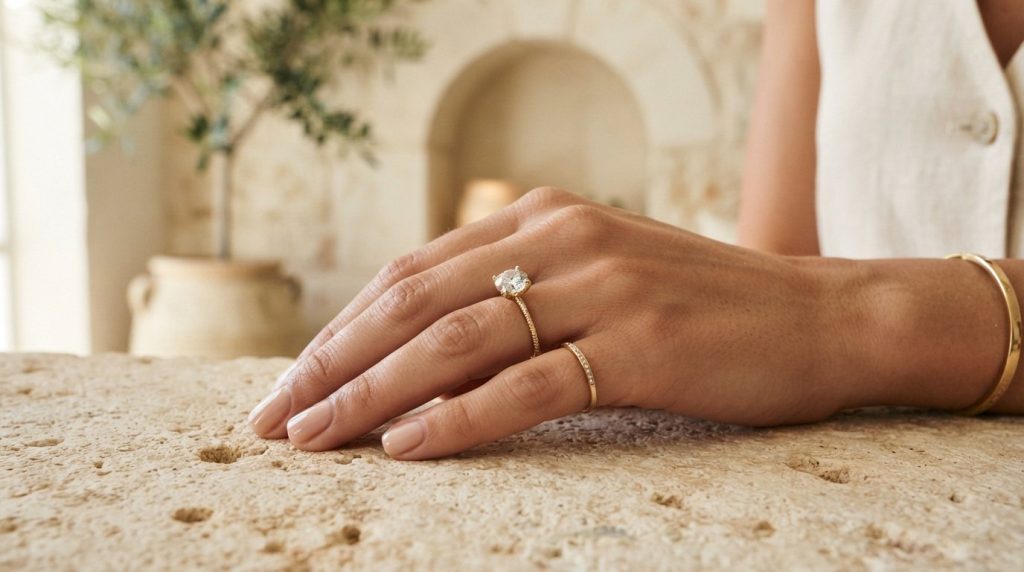
Is My Diamond Too Big for My Hand? A Personal Style Guide
-
Posted by
מילה קלר
A diamond can look dramatic in a product photo and feel perfectly at home on your hand; a smaller stone can still make a striking statement. If…
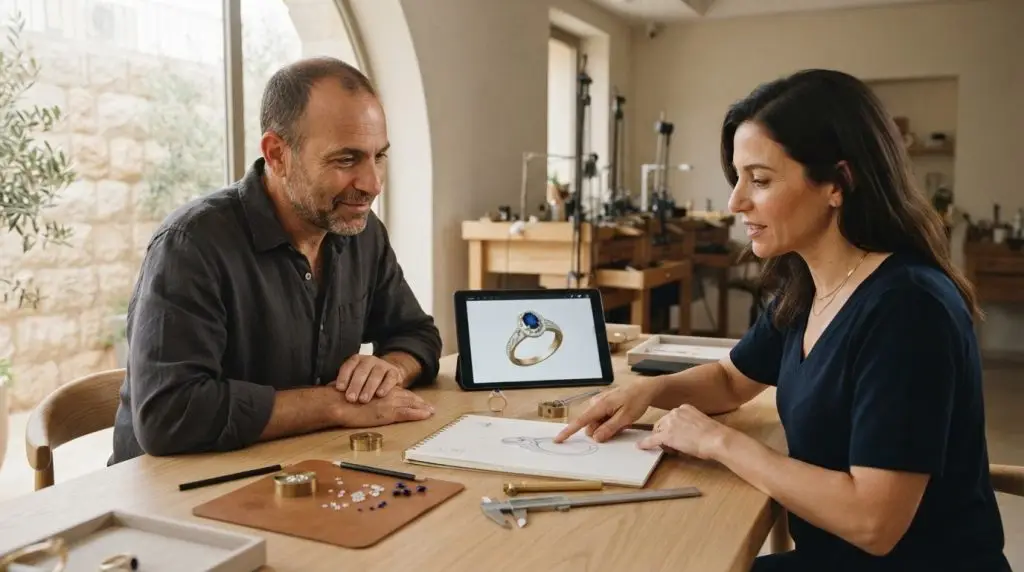
How to Give Constructive Feedback on a Jewelry Design: A Client’s Guide
-
Posted by
What if telling your jeweler you dislike a detail isn’t an insult, but the exact spark they need to craft your dream heirloom? When you first open…

How to Convince Your Husband to Upgrade Your Wedding Ring
-
Posted by
What if your wedding ring wasn’t just a relic of who you were when you said “I do,” but a luminous reflection of the woman you’ve become today? Many…

Common Regrets After Buying an Engagement Ring: How to Choose a Forever Piece
-
Posted by
What if the most significant purchase of your life becomes a source of quiet hesitation every time you get ready in the morning? It’s a heavy…

How to Choose a Ring Style: A Guide to Meaningful Self-Expression
-
Posted by
A ring is more than a circle of gold; it’s a wearable emblem of your personal history and a quiet reflection of your unique story. Finding that…
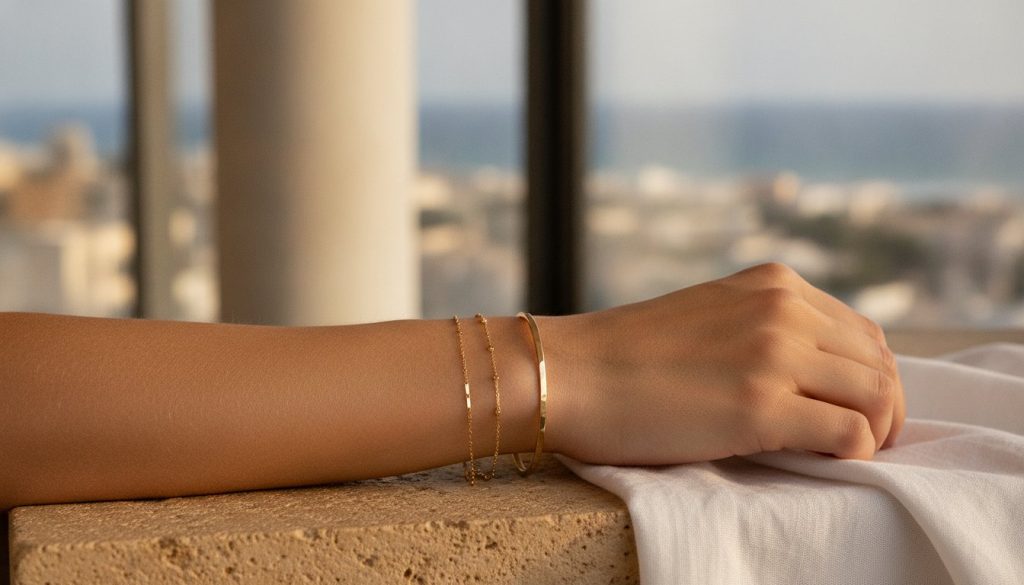
Minimalist 18k Gold Bracelets: The Ultimate Guide to Everyday Luxury (2026)
-
Posted by
True luxury isn’t defined by the weight of the gold on your wrist. It’s found in the quiet confidence of a piece that tells your story every single…

Custom Fingerprint Necklace: A Guide to Modern Heirlooms
-
Posted by
What if you could carry the physical touch of someone you love, not just as a memory, but as a tangible, golden weight against your heart? You likely…
How to Tell If a Gemstone Is Real: A Guide to Authenticity and Value
-
Posted by
Imagine holding a vibrant emerald that has been passed down through your family, only to wonder if its brilliant green glow is a gift from the earth…

What to Wear with Gold Jewelry: A Guide to Effortless Elegance in 2026
-
Posted by
What if the 18k gold necklace you reserve for special occasions was actually the secret to making your favorite everyday outfit feel like a piece of…
Best Gold for Olive Skin Tone: The Ultimate Guide to Your Radiant Glow
-
Posted by
That bright, 14k yellow gold you’ve been told is a safe bet might actually be the very thing making your complexion feel muted or tired. While olive…
How to Choose Earring Size: The Definitive Guide to Scale and Style
-
Posted by
A single millimeter can be the difference between a subtle whisper and a bold declaration. While we often focus on the luster of gold or the fire of…

How to Style Minimalist Jewelry for Work: The 2026 Professional Guide
-
Posted by
Could the subtle shimmer of a gold ring be the most persuasive tool in your next board meeting? You likely believe that your professional image…