

Blog
How to Polish Gold Jewelry: A Guide to Restoring Your Luster
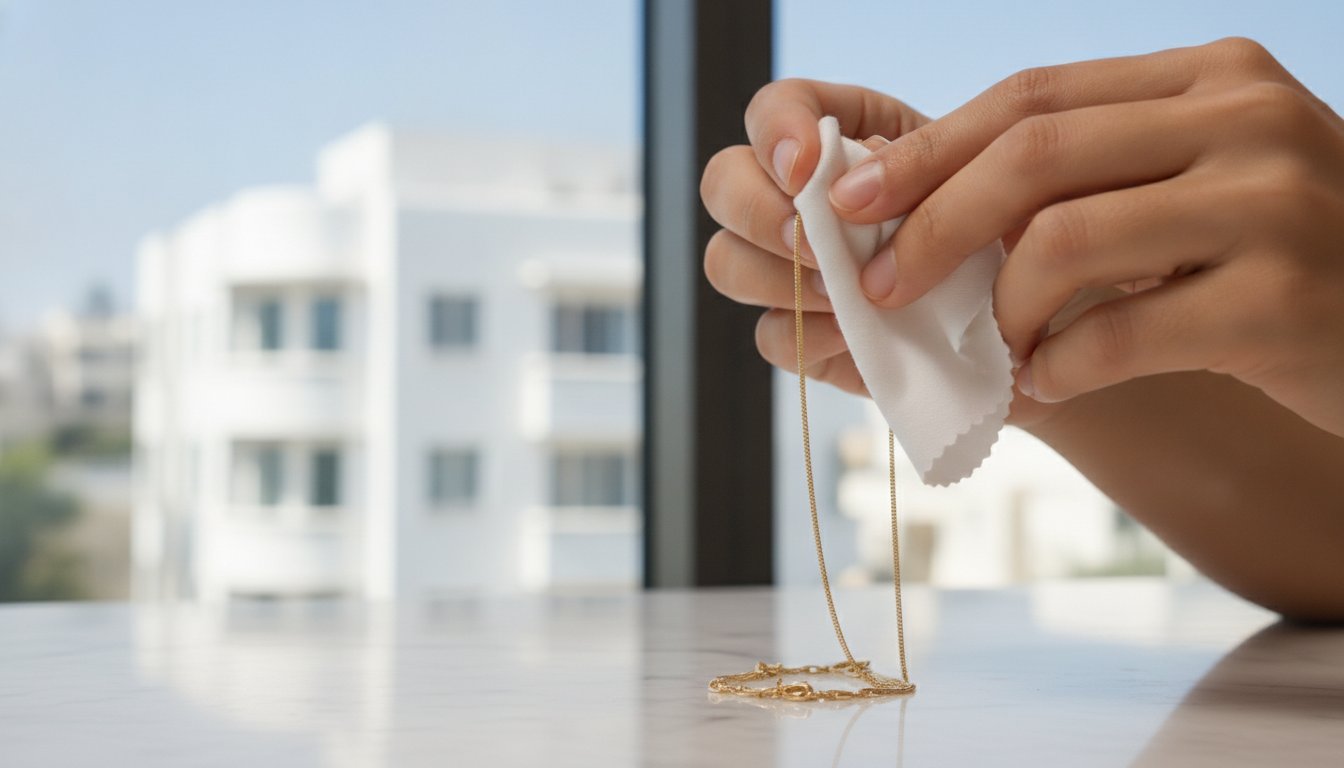
Your jewelry is an intimate expression of your identity, a silent companion through your daily life. When your favorite 18K gold pieces begin to look a bit tired, it feels like a small part of that story has dimmed. It’s a common struggle, as research from 2026 suggests that nearly 70% of jewelry owners continue to wear dull or scuffed items for months before seeking care. Mastering the skill of how to polish gold jewelry allows you to take back that sparkle, transforming a simple maintenance task into a celebratory ritual of preservation.
You likely worry about using the wrong chemical or an abrasive cloth that might do more harm than good. We understand that your fine jewelry is precious, both in value and in meaning. This guide promises to walk you through the gentle art of polishing high-karat gold to restore its mirror-like finish while protecting its structural integrity. We’ll look at the essential differences between cleaning and polishing, the safest materials to use in a modern home, and how to identify when a piece requires the expert touch of a professional artisan.
Key Takeaways
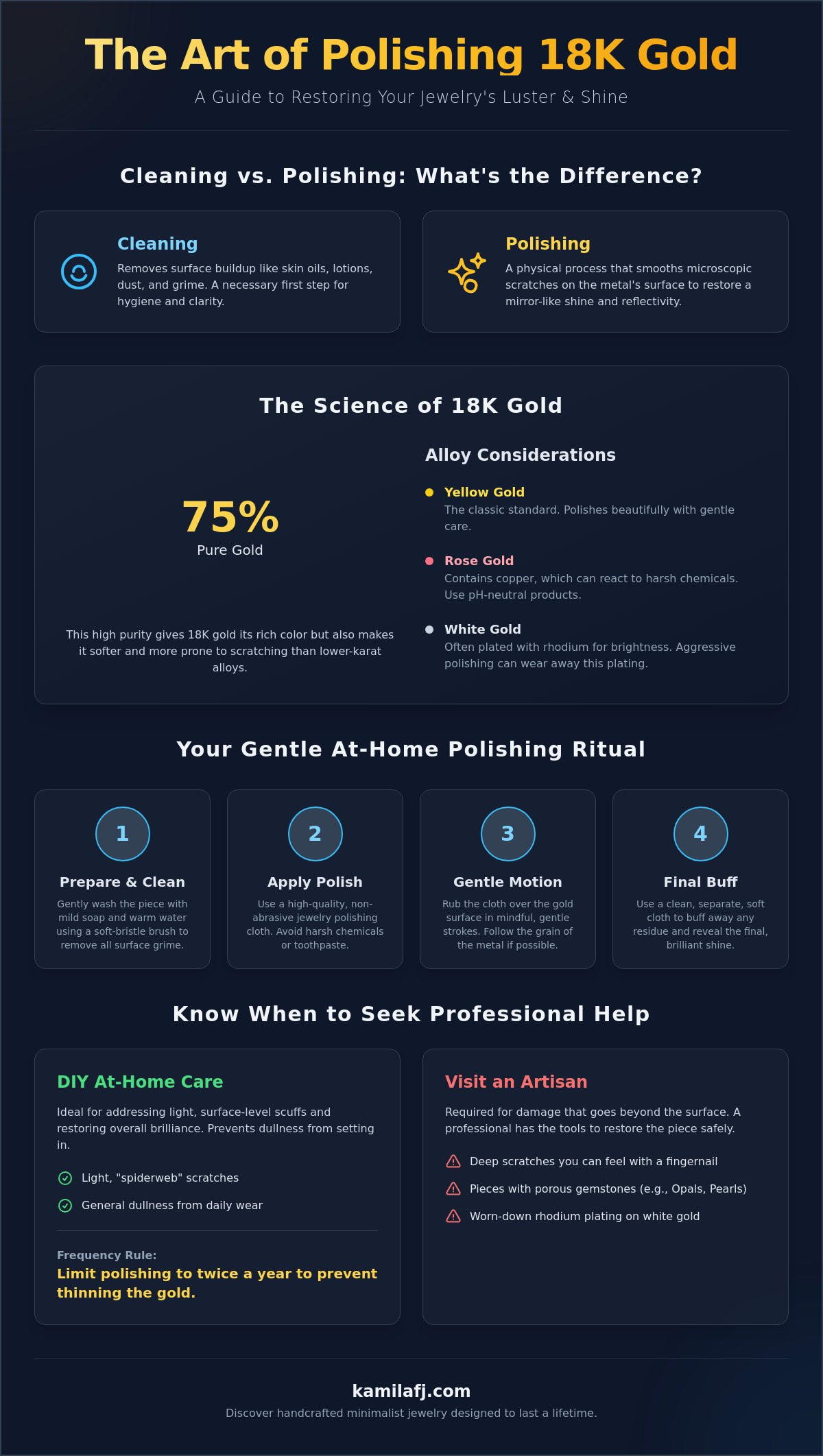
- Distinguish between cleaning environmental grime and polishing to restore a mirror-like finish, ensuring you apply the right care at the right time.
- Master a mindful four-step ritual on how to polish gold jewelry that preserves the delicate 75% pure gold composition of your 18K pieces.
- Learn to navigate the specific needs of different alloys and minimalist settings to protect the structural integrity of your favorite rings and necklaces.
- Identify which gemstones, from lab diamonds to porous opals, require specialized handling to maintain their unique sparkle during the polishing process.
- Understand the “twice-a-year” rule to prevent thinning your jewelry and know exactly when a deep scratch calls for a professional artisan’s touch.
Cleaning vs. Polishing: Understanding the Difference for Your Gold
Your favorite gold ring or necklace is more than a piece of metal; it’s a reflection of your journey and a celebration of your personal style. Over time, that reflection can grow hazy. Many people assume a quick dip in soapy water will bring back the fire, but there’s a fundamental distinction between maintaining hygiene and restoring luster. Understanding Cleaning vs. Polishing is the first step in proper care. Cleaning involves the removal of organic buildup, such as skin oils, lotions, and environmental dust. Polishing, however, is a transformative process that levels the metal’s surface to restore its mirror-like reflectivity.
If your jewelry still looks cloudy after a thorough wash, it isn’t dirty. It’s scratched. These microscopic abrasions scatter light in different directions rather than bouncing it back to your eye. Learning how to polish gold jewelry helps you address these surface-level imperfections that soap simply cannot touch. By gently smoothing the gold, you allow the light to dance off the surface once again, revealing the original artistry of the piece.
The Anatomy of a Scratch
18K gold is prized for its rich, warm hue, but its high gold content makes it beautifully malleable. Because it consists of 75% pure gold, it’s softer than lower-karat alloys. This softness means that everyday contact with hard surfaces, even something as simple as a wooden desk or a set of keys, leaves behind a record of your movements. Collectively, these tiny marks create what artisans call a patina. While some appreciate this lived-in look, it eventually dulls the sharp, crisp lines of modern, minimalist designs. When light hits a perfectly smooth surface, it reflects evenly. When it hits a scratched surface, the light breaks apart. This scattering is the primary cause of surface dullness in high-end jewelry.
When to Stop Cleaning and Start Polishing
Before you reach for a cloth, you need to determine if your piece is actually scratched or just coated in residue. A simple breath test can help you decide. Hold the piece close and fog the metal with your breath. If the fog clears and the surface remains dull or shows visible spiderweb lines under a bright light, the metal itself is scuffed. If the dullness looks like a film or shifts when you wipe it with a soft cloth, a deep clean is all you need. Knowing how to polish gold jewelry safely ensures you don’t over-work the metal. At-home polishing is a wonderful ritual for light scuffs, but it’s important to set realistic expectations. You aren’t just washing away dirt; you’re mindfully refining the metal to bring back its soul.
The Science of 18K Gold: Why Your Choice of Polish Matters
When you hold a piece of 18K gold, you’re holding a material that is 75% pure, noble metal. This high purity gives 18K gold its signature warmth and weight, but it also makes the metal inherently soft. Unlike 10K or 14K gold, which are heavily alloyed with harder metals for industrial-grade durability, 18K gold requires a more thoughtful approach to maintenance. If you’re wondering how to polish gold jewelry without stripping away its character, the secret lies in understanding these material nuances. The very malleability that allows an artisan to sculpt intricate, organic shapes also means the surface is susceptible to the finest abrasives.
The specific alloy of your piece also dictates how it responds to care. Yellow gold is the most traditional, but rose gold gains its romantic hue from copper, a metal that can react poorly to certain harsh chemicals. White gold is often finished with a thin layer of rhodium to maintain its bright, silvery sheen. Using aggressive polishing agents on white gold can prematurely wear down this protective plating, leaving the piece looking yellowed and uneven. While Good Housekeeping’s guide to restoring gold provides a solid foundation for general care, high-karat pieces need an even lighter touch to preserve their integrity. Explore our collection of handcrafted gold rings to see how we balance this delicate metal with modern, minimalist design.
18K Gold vs. Gold Plating
Before you begin any restoration, you must confirm your jewelry is solid gold. Look for hallmarks like “750” or “18K” stamped on the inside of a band or near a clasp. Polishing solid gold is a process of refinement, where you are smoothing the metal itself. However, you should never attempt to “polish” plated or gold-filled jewelry. These items feature only a microscopic layer of gold over a base metal like brass or silver. A polishing cloth, even a soft one, acts as a very fine abrasive that can quickly strip away that golden layer, exposing the dull metal beneath and ruining the piece forever.
The Impact of Chemical Polishes
Mastering how to polish gold jewelry at home starts with knowing what to avoid. Many “miracle” cleaners found in big-box stores rely on ammonia or heavy acids to strip away tarnish instantly. While effective in the short term, these chemicals can cause “stress corrosion cracking” in certain gold alloys, making your jewelry brittle and prone to breaking. Dry polishing methods using specialized cloths are almost always safer for the long-term health of your collection. Pure gold sits at a 2.5 to 3 on the Mohs scale, meaning common household dust, which often contains silica at a 7, can easily leave permanent marks if you use the wrong cloth or a dusty workspace.
How to Polish Gold Jewelry at Home: A Gentle 4-Step Ritual
The first step is always a foundation clean. This is a crucial stage that many people overlook. Use a mild, pH-neutral soap and warm water to remove any loose grit, oils, or dust. If you skip this, any microscopic particles on the surface will act like sandpaper when you start buffing, creating new scratches instead of removing old ones. Dry the piece thoroughly with a soft, lint-free towel before moving to the polishing stage.
Selecting Your Polishing Cloth
A quality jewelry cloth is usually dual-layered, and each part serves a specific purpose. The inner cloth is treated with a professional polishing compound designed to level out micro-scratches. The outer layer is a soft, untreated fabric meant for the final buffing. Never wash these cloths. The cleaning agents are embedded deep within the fibers, and water will strip them away, rendering the cloth useless. You’ll know a cloth is “spent” when it’s completely blackened on both sides and no longer restores shine. Until then, those dark marks are simply a sign that the cloth is doing its job by lifting oxidized metal and grime.
Mastering the Buffing Technique
Once your piece is clean and dry, use the inner treated cloth to address scuffs. Use light, consistent pressure. It’s better to make twenty light passes than one heavy one that could generate heat. Focus on high-visibility areas, such as the smooth, mirror-like band of a gold ring. Always use straight, back-and-forth motions rather than circular ones. Circular buffing can create “halos” or uneven light patterns on the metal that detract from its brilliance.
When navigating around delicate prongs or intricate engravings, be extra gentle. The cloth can snag on fine settings, so use the edge of the fabric for precision. After you’ve removed the scuffs with the inner cloth, switch to the outer layer. This final step removes any remaining compound and skin oils, leaving a crisp finish. Give the piece a final inspection under a bright light. If the luster has returned and the surface is clear of residue, your ritual is complete. Knowing how to polish gold jewelry with this level of intention ensures your pieces remain as vibrant as the memories they hold.
Protecting Your Brilliance: Gemstones and Minimalist Settings
Restoring the glow of your gold is only half the journey when your piece features exquisite gemstones. While you’re learning how to polish gold jewelry, you must remember that the metal acts as a stage for the stones it holds. Harder stones like lab diamonds are incredibly resilient, but they can still be affected by the polishing process if you aren’t careful. The goal is to brighten the gold without leaving a film on the diamond’s facets or, worse, damaging more delicate companions like pearls, emeralds, or opals. These porous stones can absorb the oils and abrasive compounds found in polishing cloths, leading to permanent discoloration or a loss of their natural luster.
Precision is especially vital in modern, handcrafted designs where clean lines and “hidden” details define the piece. Pay close attention to the inner gallery of a ring, the small space directly beneath the center stone. Grime often settles here, blocking light from entering the diamond and making the entire piece look flat. A gentle foundation clean, as discussed in our previous ritual, is usually enough for these tucked-away areas. If you find that the metal around a stone is particularly scuffed, use the very edge of your polishing cloth to avoid direct contact with the gem. This careful approach preserves the intentional contrast between the high-shine metal and the brilliant sparkle of the stone.
Polishing Around Diamond Settings
When working with prongs or bezel settings, your movements must be deliberate. Polishing cloth fibers are notorious for snagging on the tiny metal claws that secure your diamonds. A sharp tug can slightly displace a prong, compromising the safety of the stone. This is even more critical for jewelry with pavé settings, where dozens of small stones are held by microscopic beads of gold. If you use a heavy-handed technique, you risk loosening these settings or clogging the tiny crevices with polishing wax. Always wipe away from the setting rather than toward it to prevent compound buildup from hiding in the shadows of the stones.
Maintaining Modern, Minimalist Finishes
Not all gold is meant to shine like a mirror. Many contemporary, minimalist pieces feature satin, brushed, or matte finishes that offer a sophisticated, understated glow. If you apply a standard polishing cloth to these surfaces, you’ll accidentally “burnish” the metal, turning a beautiful matte finish into an uneven, blotchy shine. For these architectural pieces, stick strictly to the foundation clean. Avoiding the urge to over-polish ensures you don’t round off the sharp, crisp edges that give handcrafted jewelry its unique character. If your piece has lost its specific texture, it’s time to consult an artisan rather than attempting a home fix. To keep your collection looking its best, explore our selection of ethically sourced gold necklaces and bracelets that celebrate these refined finishes.
When to Visit an Artisan: Professional Polishing and Beyond
While the home rituals we’ve discussed are perfect for maintaining a daily glow, there are moments when your jewelry requires a deeper level of restoration. Mastering how to polish gold jewelry at home is an act of love, but it has its limits. A professional artisan uses high-speed polishing wheels and specialized compounds that can erase deep gouges a simple cloth cannot reach. However, this level of refinishing is a delicate balance. Since polishing technically removes a microscopic layer of metal to level out the surface, over-polishing can eventually weaken your favorite pieces. To protect the longevity of your collection, it’s best to limit professional refinishing to once or twice a year.
Seeking expert care isn’t just about the shine; it’s about the health of the piece. A professional service often combines a deep polish with an ultrasonic cleaning and, most importantly, a structural integrity check. This is vital because nearly 70% of jewelry owners wear damaged items for months before seeking repairs, often unaware that a stone is loose or a prong is thin. When an artisan handles your jewelry, they aren’t just restoring the mirror-like finish; they’re ensuring that your story remains secure for years to come.
Signs You Need a Professional Artisan
How do you know when your home ritual isn’t enough? A simple way to check is the fingernail test. If you run your nail across a scratch and it “catches” in the groove, that’s a deep gouge that requires a professional wheel to smooth out. You should also look for signs of thinning, especially on the bottom of a ring shank. If the metal looks significantly narrower than when you first bought it, stop polishing immediately and consult an expert. For those with white gold pieces, a visible yellowing or a loss of that crisp, silvery sheen indicates that the rhodium plating has worn away. This requires a professional “re-dipping” process that cannot be replicated with at-home tools.
The KaMila Approach to Jewelry Longevity
At KaMila, we believe that every piece of fine jewelry is a modern heirloom in the making. Our commitment to handcrafted quality extends far beyond the initial purchase. We treat every servicing appointment as a celebratory restoration, mindfully assessing the metal and the settings to ensure your jewelry feels as strong as it did on day one. Whether you’re looking to erase the marks of a decade of wear or simply want to ensure your prongs are secure, we’re here to help. Contact us for custom care or professional polishing services to keep your collection as vibrant and meaningful as the life you lead.
Preserve the Brilliance of Your Journey
Caring for your fine jewelry is more than a maintenance task; it’s a mindful ritual that honors the memories and milestones your collection represents. By distinguishing between simple cleaning and the art of how to polish gold jewelry, you empower yourself to protect the delicate luster of your 18K pieces. Whether you are performing a gentle home buffing or recognizing the moment a professional artisan’s wheel is required, your attention to detail ensures these treasures endure as modern heirlooms.
At KaMila, we believe that everyday luxury should be as conscious as it is beautiful. Our modern minimalist designs are handcrafted in Israel, specializing in the enduring warmth of 18K gold and the ethical sparkle of lab-grown diamonds. We invite you to discover our handcrafted 18K gold collections and select a piece that mirrors your own unique spirit. May your jewelry always shine as a reflection of your personal story, carrying your light forward with grace and confidence.
Frequently Asked Questions
Can I use toothpaste to polish my gold jewelry?
No, you should never use toothpaste as a solution for how to polish gold jewelry. Toothpaste contains silica and other abrasives designed for tooth enamel, which are far too harsh for the soft surface of 18K gold. Using it will create microscopic swirl marks and dull the finish over time. Instead, stick to a professional polishing cloth or a mild, pH-neutral soap for a safe and effective foundation clean.
How often should I polish my 18K gold rings?
You should only perform a deep polish on your 18K gold rings once or twice a year. Because polishing involves a microscopic removal of metal to level out the surface, frequent polishing can eventually thin the band. For daily maintenance, a gentle wipe with a soft, untreated cloth is enough to remove oils and maintain the glow without compromising the structural integrity of your favorite piece.
Will polishing my gold jewelry make it lose weight or value?
Polishing does remove a microscopic amount of metal, but it won’t significantly impact the weight or value of your jewelry when performed correctly. In fact, a well-maintained piece often holds its value better because it remains in pristine condition. The key is to polish mindfully and avoid over-working the metal, focusing on restoring the mirror-like finish rather than aggressively scrubbing at deep gouges or scratches.
Is it safe to use an ultrasonic cleaner for polishing at home?
An ultrasonic cleaner is a tool for deep cleaning, not polishing. While it’s excellent for removing grime from hidden areas like ring galleries, it won’t remove surface scratches or restore luster. When learning how to polish gold jewelry, remember that the shine comes from the physical buffing of the metal. Additionally, these machines can be dangerous for certain porous gemstones like opals, emeralds, or pearls.
What is the best cloth to use for polishing fine gold?
The best choice is a dual-layered professional jewelry polishing cloth. These are specifically designed with an inner treated layer to address micro-scratches and an outer untreated layer for the final buffing. Avoid using paper towels or old t-shirts, as these fibers can be surprisingly abrasive on high-karat gold. A dedicated cloth ensures you achieve a professional-grade finish while remaining gentle enough for handcrafted, minimalist gold designs.
How do I remove scratches from white gold without ruining the plating?
You cannot safely remove scratches from white gold at home without affecting the rhodium plating. White gold is typically finished with rhodium to achieve its bright, silvery sheen. Polishing will inevitably wear down this thin layer, exposing the warmer, natural yellow of the gold beneath. If your white gold piece is heavily scratched or yellowing, it’s best to visit an artisan for a professional polish and rhodium re-plating.
Can I polish gold-filled or gold-plated jewelry?
You should avoid polishing gold-filled or gold-plated jewelry with any abrasive cloth or compound. These items only have a thin layer of gold over a base metal. Polishing works by smoothing the surface through friction, which will quickly strip away the golden layer and reveal the dull metal underneath. For these pieces, a very light wipe with a damp, soft cloth is the only safe way to maintain their appearance.
What should I do if my gold jewelry is still dull after polishing?
If your jewelry remains dull after a careful at-home ritual, the scratches may be too deep for a cloth to handle. This is a clear sign that your piece requires a professional artisan’s touch. Deep gouges that catch on a fingernail need a high-speed polishing wheel to be properly leveled. An expert can also check for structural issues, like thinning shanks or loose prongs, to ensure your jewelry stays safe.
Related Posts
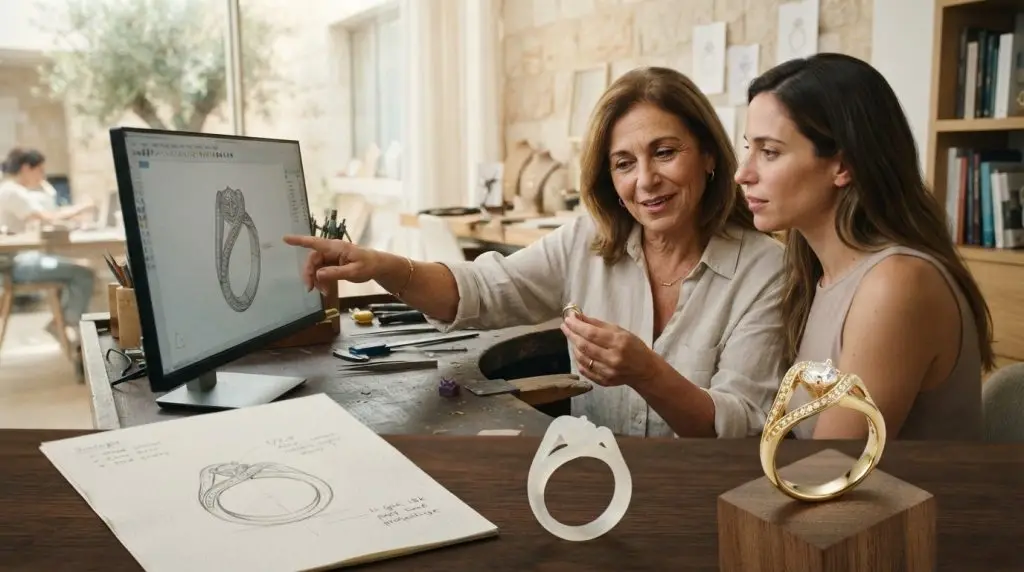
From Sketch to Sparkle: Ensuring the Final Piece Matches Your Jewelry Design
-
Posted by
מילה קלר
You’ve spent weeks dreaming of a ring that captures your story, but as you look at the artist’s rendering, a small doubt creeps in. Will that…
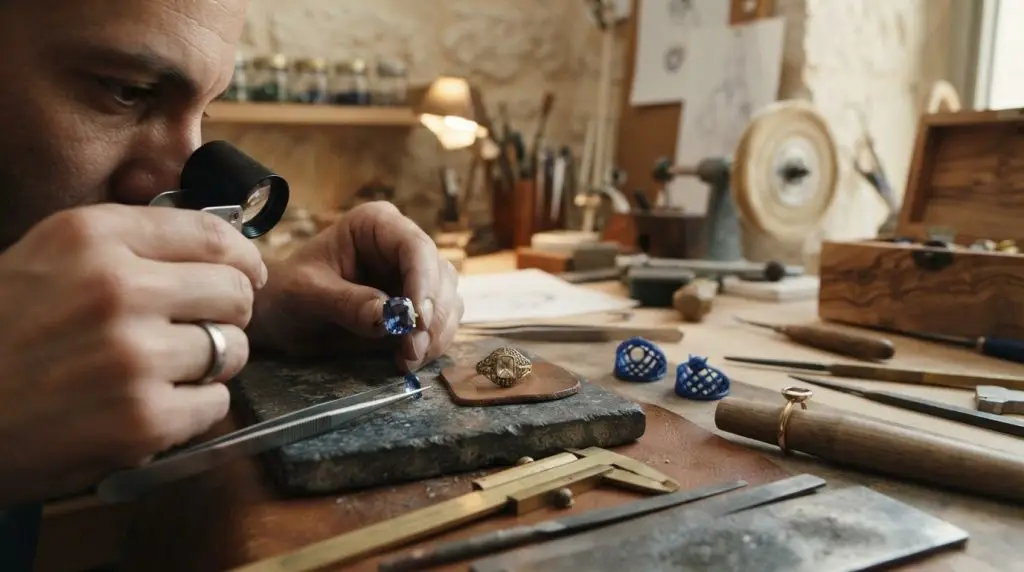
Repurposing Heirloom Stones into Modern Custom Jewelry: The Complete 2026 Guide
-
Posted by
What if keeping an inherited ring tucked away in a dark jewelry box isn’t protecting your family history, but silencing it? It’s completely natural…
Red Flags When Choosing a Custom Jewelry Designer: A 2026 Guide to Protecting Your Vision
-
Posted by
Imagine spending months dreaming of a bespoke 18k gold ring, only to open the velvet box and find a piece that feels like a generic retail cast…

Jewelry That Makes Me Feel Protected and Strong: A Guide to Modern Talismans
-
Posted by
Most people view a necklace or a ring as a simple finishing touch, but for the modern woman, it’s often the first layer of emotional armor she puts…
How to Stack Rings: The Art of Curating Your Personal Story in 18K Gold
-
Posted by
What if your jewellery box wasn’t just a collection of objects, but a living timeline of your most cherished milestones? You’ve likely looked at a…

Minimalist Gold Rings: A Guide to Curating Your Timeless 18K Collection
-
Posted by
Your jewelry shouldn’t have an expiration date. Too many of us have felt the frustration of a cherished piece tarnishing or causing skin irritation…

Getting a Better Price Than Big Brand Jewelers in Israel: The Insider’s Guide 2026
-
Posted by
That iconic logo on a shopping bag in a Tel Aviv mall might feel like a mark of quality, but it’s often the most expensive way to buy a memory. When…

18k Gold Minimalist Bracelets: The Ultimate Guide to Timeless Everyday Luxury
-
Posted by
True minimalism isn’t about having less; it’s about requiring more from the few pieces you choose to wear every day. If you’ve ever felt the…

18k Gold Stud Earrings: The Ultimate Guide to Everyday Luxury
-
Posted by
Why should the jewelry you wear every single day be the piece that irritates your skin or loses its radiance before the season even turns? It’s a…

18k Gold Jewelry Care: Preserving Modern Heirlooms
-
Posted by
Is your most cherished jewelry tucked away in a dark velvet box, waiting for a “special enough” occasion that never quite arrives? Many women…

Handcrafted Minimalist Jewelry in Israel: A Guide to Modern Elegance (2026)
-
Posted by
Why settle for jewelry that simply fills a space when you could wear a piece that captures the depth of your own story? If you’ve been searching for…
Stacking Gold Bracelets in Israel: The Ultimate Guide to Curating Your Wrist
-
Posted by
What if your most precious jewelry pieces weren’t reserved for formal galas, but were designed to be lived in every single day? Many women feel a…