

Blog
The Art of the Ear Piercing: Your Complete Guide to Placement, Healing & Styling
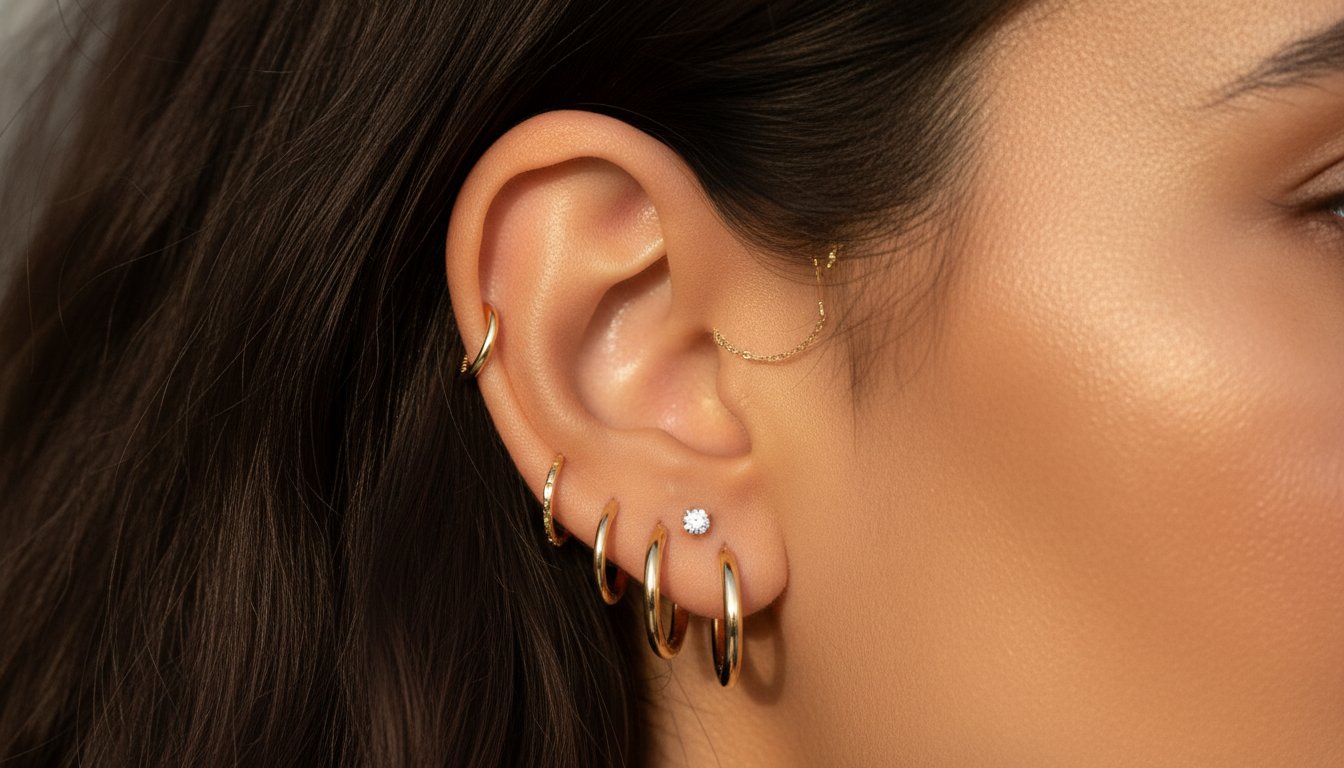
The idea of a new ear piercing is a thrilling one-a tiny, sparkling celebration of your personal story waiting to happen. Yet, the journey from a flash of inspiration to a beautifully adorned ear can feel overwhelming. You scroll through endless images of curated constellations, but the practical questions quickly surface: Which placement is truly right for you? What does the healing process actually involve? And how do you find a trusted, professional piercer here in Israel to bring your vision to life?
Think of this as your warm, elegant guide to the art of the ear piercing. We believe that choosing to adorn your body is a meaningful act of self-expression. In this guide, we demystify the entire process with clarity and care. You will discover how to select the perfect placement to complement your unique anatomy, gain the confidence to navigate healing with ease, and learn to identify exquisite, high-quality fine jewelry that is both safe for a new piercing and timelessly beautiful. Let’s begin creating the curated ear you’ve been dreaming of.
A Map of the Ear: Popular Piercing Placements Explained
An ear piercing is more than just an accessory; it’s a personal mark, a chapter in your story written in gold and sparkle. The art of adorning the ear is one of the oldest known forms of body modification, evolving into the modern ‘curated ear’-a unique constellation of piercings that tells a story of personal style. Think of your ear as a canvas and each piercing as a brushstroke. This guide will serve as your map to the most beloved placements, helping you design a look that is entirely your own.
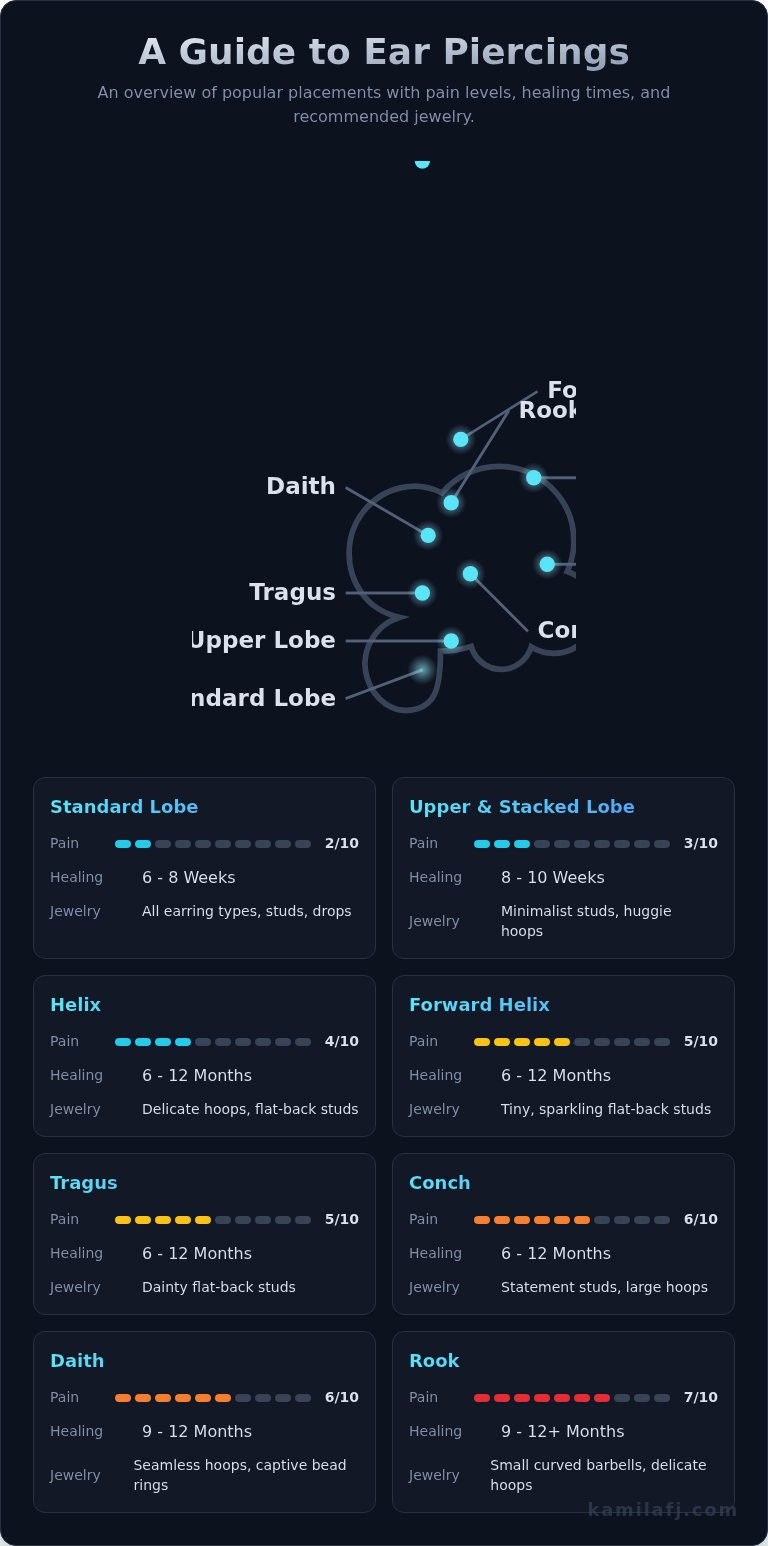
[Illustrative Diagram Showing All Ear Piercing Placements]
The Lobe Placements: Classic and Versatile
The soft, fleshy lower part of the ear is the perfect starting point for any piercing journey, offering minimal pain and quick healing.
- Standard Lobe: The timeless first piercing.
Pain: 2/10 | Healing: 6-8 weeks | Best for: All earring types, from classic studs to elegant drop earrings. - Upper & Stacked Lobe: Placed directly above the standard lobe, perfect for creating an elegant, layered look with tiny studs.
Pain: 3/10 | Healing: 8-10 weeks | Best for: Minimalist studs and huggie hoops. - Transverse Lobe: A modern take where a barbell passes horizontally through the lobe instead of front-to-back.
Pain: 4/10 | Healing: 2-4 months | Best for: Straight or curved barbells.
The Helix & Outer Cartilage: The Elegant Edge
This upper rim of the ear is cartilage territory, offering a touch of edgy sophistication that beautifully frames the ear.
- Helix: A popular choice along the upper-outer cartilage rim.
Pain: 4/10 | Healing: 6-12 months | Best for: Delicate hoops, flat-back studs, and crawlers. - Forward Helix: Located on the forward-facing cartilage rim, opposite the standard helix.
Pain: 5/10 | Healing: 6-12 months | Best for: Tiny, sparkling flat-back studs. - Auricle (Mid-Helix): A stylish spot on the outer rim between the upper helix and the earlobe.
Pain: 4/10 | Healing: 6-12 months | Best for: Small hoops and statement studs.
The Inner Ear: For Delicate & Unique Statements
Inner ear piercings are delicate, distinctive, and perfect for adding an unexpected touch of sparkle to your curated collection.
- Tragus: The small, oval cartilage flap that partially covers the ear canal.
Pain: 5/10 | Healing: 6-12 months | Best for: Dainty flat-back studs. - Daith: Nestled in the innermost fold of cartilage, this is a striking placement for a hoop.
Pain: 6/10 | Healing: 9-12 months | Best for: Seamless hoops and captive bead rings. - Conch: Located in the inner cup of the ear, ideal for making a bold statement.
Pain: 6/10 | Healing: 6-12 months | Best for: Statement studs or a large hoop that encircles the cartilage. - Rook: A vertical piercing through the ridge of cartilage above the daith.
Pain: 7/10 | Healing: 9-12+ months | Best for: Small curved barbells and delicate hoops.
Before the Needle: Planning Your Perfect Piercing
An ear piercing is more than an adornment; it’s a personal mark, a small celebration of your unique story. Like choosing a piece of fine jewelry, planning your piercing is an investment in artistry that will last a lifetime. Preparation is the key to a beautiful, lasting result. The first step is understanding that your ear is a unique canvas. A true professional considers the delicate curves and folds of your anatomy, treating the process not as a procedure, but as a craft to ensure the placement is perfectly suited to you.
Choosing a Professional Piercer: Your Checklist for Safety & Skill
A professional piercer is a craftsperson dedicated to their art. They create beauty with precision and care, following strict Ministry of Health guidelines. When selecting a studio, look for an artist who meets these essential standards:
- Impeccable Hygiene: The studio should be spotless, and they must use a steam autoclave for sterilizing all equipment and jewelry.
- A Portfolio of Healed Work: Ask to see photos of their piercings after the healing process is complete. This is the true testament to their skill.
- Quality Initial Jewelry: They should offer a selection of implant-grade titanium or solid 14k/18k gold jewelry, giving your body the best start.
Needle vs. Piercing Gun: Why Needles are the Gold Standard
The tool used for your piercing makes all the difference. Professional piercers exclusively use single-use, hollow needles. This method is precise, creating a clean channel for the jewelry with minimal trauma to the tissue. In contrast, piercing guns use blunt force to push a stud through your ear, which can shatter cartilage and complicate healing. Furthermore, as plastic guns cannot be properly sterilized in an autoclave, authoritative sources like the National Environmental Health Association have detailed the significant risks of piercing guns, from tissue damage to cross-contamination. Always choose the needle for a safer, healthier piercing.
What to Expect During Your Appointment
Your appointment should feel like a collaborative design session. It begins with a consultation where you and your piercer discuss placement options that complement your anatomy and style. They will mark the spot with a sterile pen for your approval before proceeding. The piercing itself is very quick-a moment of pressure and a sharp pinch that fades almost immediately. Take a deep breath in, and on the exhale, it’s done. This is your moment to curate your look and begin a new chapter in your personal story.
The Art of Healing: Your Aftercare Ritual
Your new ear piercing is the beginning of a beautiful story. The next chapter, healing, is a quiet ritual of self-care-a mindful practice that transforms a simple piercing into a permanent canvas for your personal style. Proper aftercare isn’t a chore; it is the thoughtful process that ensures your body heals beautifully, preparing it to wear the fine jewelry you love. Patience is your most elegant accessory during this time, as healing can take anywhere from six weeks for a lobe to over a year for cartilage.
Your Daily Cleaning Routine
Embrace a simple, gentle routine to create the perfect healing environment. The goal is to clean the area without causing irritation. This gentle approach is a cornerstone of aftercare, echoed in many pediatrician’s safety tips for preventing complications.
- Use Sterile Saline Solution Only: Twice a day, spray a sterile saline solution directly onto the front and back of your piercing, or apply it with a clean, non-woven gauze. Avoid harsh chemicals like alcohol or peroxide, which can damage healing tissue.
- Gently Cleanse: If you notice any “crusties” (dried lymph fluid), allow the saline to soften them before gently wiping them away with the gauze. Never pick at them.
- Pat Dry Carefully: Moisture can harbor bacteria. After cleaning, gently pat the area completely dry with a fresh, disposable paper towel. Fabric towels can snag on jewelry and introduce bacteria.
What to Avoid During Healing
Protecting your new piercing from physical irritation is just as crucial as cleaning it. Think of this as creating a peaceful space for your body to work its magic.
- Resist the Urge to Twist: It’s a common myth that you need to turn your jewelry. Twisting irritates the delicate healing channel (the fistula) and can introduce bacteria, delaying the healing of your ear piercing.
- Avoid Sleeping On It: Applying pressure to a new piercing can cause swelling, irritation, and even change the angle of the piercing. Try sleeping on your other side or use a travel pillow, placing your ear in the hole to avoid contact.
- Be Mindful of Irritants: Keep headphones, telephones, and dirty pillowcases away from the piercing. Be careful when using hair products like hairspray, ensuring they don’t come into contact with the jewelry.
Signs of Normal Healing vs. Infection
Knowing what to expect can bring peace of mind. Your body’s healing process has distinct stages, and it’s important to recognize the difference between normal signs and a call for help.
Normal Healing often includes mild redness, initial swelling, tenderness to the touch, and the secretion of a clear or whitish fluid (lymph) that forms small crusts. This is all part of the process.
Signs of a Potential Infection are more severe and include intense or worsening pain, thick yellow or green pus, significant redness that spreads, and the area feeling hot to the touch. If you have minor concerns, your professional piercer is your first point of contact. However, if you suspect an infection, it is essential to consult a medical doctor promptly.
Choosing Your First Earring: Why Material Matters Most
The journey of a new ear piercing doesn’t end at the studio; it begins with the jewelry you choose. Your initial earring is more than just an accessory-it’s a critical part of the healing process. The right material ensures a smooth, complication-free recovery, preventing the irritation and allergic reactions that can arise from lesser-quality metals. This first piece is the foundation of your curated ear, a personal story told in gold and gems. Choosing it with intention makes the entire experience more meaningful.
Implant-Grade Metals: The Safe Standard
Professional piercers in Israel and worldwide rely on implant-grade metals for their biocompatibility. These materials are designed to live in harmony with your body as it heals. The most common options include:
- Implant-Grade Titanium: The gold standard for initial piercings. It’s exceptionally biocompatible, lightweight, and entirely nickel-free, making it the safest choice for those with metal sensitivities.
- Surgical Steel: While widely used, it’s important to ensure it’s a low-nickel, implant-grade variety (such as 316LVM). Lower-quality steel can contain enough nickel to cause irritation for some individuals.
- Niobium: Similar to titanium, niobium is highly biocompatible and hypoallergenic. It can be anodized to create a beautiful spectrum of colours, offering a unique yet safe alternative.
The Elegance of Solid Gold: The Premier Choice
For those who desire timeless elegance from day one, solid gold is the premier choice. We recommend 14k or 18k gold, as these alloys offer the perfect balance of purity and strength. Unlike gold-plated jewelry, which has a thin layer of gold over a base metal that can flake off and expose your healing ear piercing to irritants, solid gold is hypoallergenic and consistent throughout. 18k gold, in particular, has a rich, warm lustre and a high purity that is exceptionally kind to sensitive skin. It’s an investment in both your style and your well-being.
Begin your curated ear story with a piece crafted for beauty and biocompatibility. Explore our collection of 18k gold earrings, perfect for sensitive ears and designed to make every day feel special.
From a Single Stud to a Curated Ear Stack
Once your new ear piercing has fully healed, the true artistry begins. Think of your ear as a canvas, a unique space to tell your personal story through the shimmer of gold and the sparkle of gemstones. There are no rigid rules in creating a curated ear stack-only guiding principles of balance, flow, and personal expression. The journey is about starting slowly and building a collection of meaningful pieces that feel like you.
Principles of Ear Styling
Creating a look that is both cohesive and dynamic is a celebration of personal style. It’s about how each piece interacts with the others and complements the natural lines of your ear. Keep these foundations in mind:
- Balance: Weave together the delicate sparkle of studs, the graceful curve of hoops, and the modern edge of chains. This textural variety creates visual interest and sophistication.
- Flow: Arrange your jewelry to follow your ear’s unique anatomy. A sparkling climber can trace the line of your helix, while a delicate drop earring adds elegant movement from the lobe.
- Theme: A unifying concept brings your story together. You might choose a celestial theme with stars and moons, a minimalist look with clean geometric lines, or a bold statement with vibrant gemstones.
Mixing Metals and Gemstones
A modern, sophisticated ear stack often plays with the warm glow of yellow gold, the cool elegance of white gold, and the soft romance of rose gold. The key is intention. Start with a ‘hero’ piece-perhaps a brilliant lab-grown diamond stud or a vibrant sapphire hoop-and build around it. Use other metals as thoughtful accents to create depth and a look that feels curated, not chaotic.
Building Your Collection Over Time
A truly personal ear stack isn’t created overnight. It’s a thoughtful collection built over time, with each piece marking a moment or a memory. We believe in investing in timeless, handcrafted jewelry you’ll love and wear forever, making every day feel special. As you define your style, you might decide to add a new ear piercing to open up new styling possibilities. This slow, intentional process ensures your collection is a true reflection of your journey.
Let us help you find the next piece for your story. Discover our collection of fine earrings and begin your curation.
Your Story, Beautifully Adorned
Embarking on your ear piercing journey is a deeply personal form of self-expression. As you’ve learned, the magic lies in the details-from thoughtfully choosing the perfect placement that tells your story to committing to a gentle healing process. Remember that the foundation of a beautiful, curated ear is not just artistry, but also the quality of the jewelry you choose to wear, especially for a fresh piercing.
Once you are ready to style your new addition or elevate your existing stack, the next chapter begins. At KaMila Fine Jewellery, we believe in making every day special with pieces designed for modern, everyday elegance. Our collections are meticulously handcrafted with 18k solid gold and feature sparkling, sustainable lab-grown diamonds, ensuring your jewelry is as conscious as it is beautiful.
Let your personality shine through every detail. Discover handcrafted 18k gold earrings to begin your curated ear story. Your canvas awaits.
Frequently Asked Questions
Which ear piercing hurts the most and the least?
Pain is deeply personal, but generally, a classic lobe piercing is the gentlest, feeling like a quick pinch. For those seeking a bolder statement, cartilage piercings like the daith or industrial involve more pressure and a longer healing ache. Think of it as a fleeting moment that introduces a lifetime of personal expression. The key is choosing a placement that tells your unique story, regardless of the sensation.
How long do I have to wait before I can change my piercing jewelry?
Patience is key to a beautifully healed piercing. For lobe piercings, we recommend waiting at least 6-8 weeks before introducing a new piece. Cartilage piercings are a longer commitment, requiring 6-12 months of healing before you should change your initial jewelry. Allowing your body this time ensures your piercing is a stable, healthy foundation for the beautiful fine jewelry you’ve been dreaming of wearing.
Can I get multiple piercings in one session?
Absolutely! Curating your ear story with multiple piercings in one session is a popular way to create an instantly impactful look. Most professional piercers in Israel will comfortably perform up to three piercings at once, depending on placement. This allows them to heal together. A single piercing might start around ₪150-₪250, with discounts often available for multiples, making it a lovely way to begin your collection.
What’s the best way to sleep with a new cartilage piercing?
Protecting your new cartilage piercing while you rest is crucial for a smooth healing journey. We recommend sleeping on your opposite side to avoid any pressure or irritation. For an elegant solution, try using a travel pillow and placing your ear in the opening. This clever trick allows you to sleep comfortably without disturbing your new, delicate adornment as it heals, ensuring it remains perfectly placed and happy.
Is it normal for a healed piercing to get irritated sometimes?
Yes, it’s quite normal for even a beautifully healed piercing to have moments of sensitivity. This can be caused by minor snags, pressure from sleeping, or a reaction to a new jewelry material. Think of it as your body communicating. If irritation occurs, simply return to your aftercare routine with a saline solution for a few days. This gentle care usually calms things down, allowing your piercing to return to its comfortable, celebrated state.
Why is 18k gold a better choice for piercings than 10k or 24k gold?
We believe your body deserves the best. For a new ear piercing, 18k gold is the perfect marriage of purity and strength. While 24k gold is pure, it’s too soft for daily wear and can easily scratch, trapping bacteria. In contrast, 10k gold contains more nickel and other alloys that can cause irritation. 18k gold offers the ideal balance: it’s biocompatible and gentle on sensitive skin while being durable enough for a lifetime of wear.
How do I know what size hoop or stud to buy for my piercing?
Finding the perfect fit is part of the joy of choosing new jewelry. The best method is to measure the post length of a stud or the inner diameter of a hoop that you love and fits well. For a new piercing, your piercer can advise on the ideal size. As a guide, 6-7mm hoops are wonderful for a snug helix, while 8-10mm hoops are common for lobes. This personal measurement ensures your new piece has the graceful, perfect fit it was designed for.
Related Posts

18k Gold Earrings for New Piercings: Safe Styling Guide
-
Posted by
מילה קלר
What if the most rewarding part of your piercing journey wasn’t the initial appointment, but the moment you finally swap those generic studs for…
Cartilage Piercing Jewelry: The Ultimate Guide to 18k Gold & Fine Styles
-
Posted by
Imagine waking up without the familiar, dull throb of an irritated ear for the first time in months. For many, the journey to a perfectly curated ear…
Best Earrings for Newly Pierced Ears: The 2026 Guide to Healing in Style
-
Posted by
Your first set of earrings shouldn’t feel like a medical prescription. Many people assume that the healing phase requires sacrificing personal style…
Earrings for New Piercings: A Guide to Healing in 18k Gold
-
Posted by
What if the very first piece of jewelry you wear in a new piercing could be as breathtaking as the heirlooms you plan to collect for years to come?…
How to Choose a Ring Style: A Guide to Meaningful Self-Expression
-
Posted by
A ring is more than a circle of gold; it’s a wearable emblem of your personal history and a quiet reflection of your unique story. Finding that…
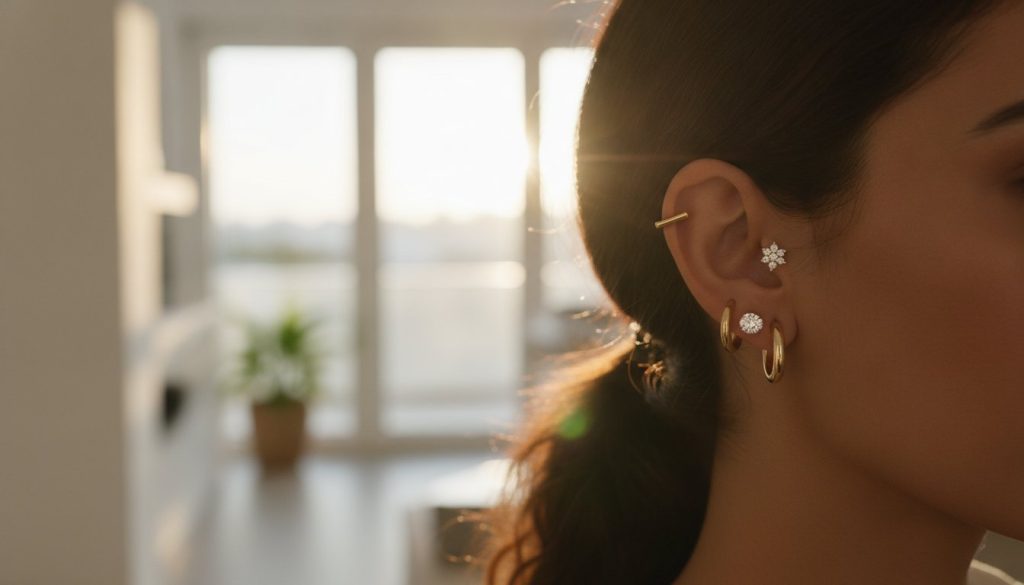
How to Style Multiple Ear Piercings: The Ultimate Guide to a Curated Ear Stack
-
Posted by
What if your jewelry did more than just sparkle? What if each piercing was a deliberate sentence in a story only you can tell? Many women worry that…
Minimalist 18k Gold Bracelets: The Ultimate Guide to Everyday Luxury (2026)
-
Posted by
True luxury isn’t defined by the weight of the gold on your wrist. It’s found in the quiet confidence of a piece that tells your story every single…

What to Wear with Gold Jewelry: A Guide to Effortless Elegance in 2026
-
Posted by
What if the 18k gold necklace you reserve for special occasions was actually the secret to making your favorite everyday outfit feel like a piece of…

How to Measure Your Wrist for a Bracelet: The Ultimate Sizing Guide
-
Posted by
Imagine the quiet heartbreak of looking down at your wrist only to realize your favorite gold bracelet is gone, lost to a fit that was just a…
Best Gold for Olive Skin Tone: The Ultimate Guide to Your Radiant Glow
-
Posted by
That bright, 14k yellow gold you’ve been told is a safe bet might actually be the very thing making your complexion feel muted or tired. While olive…
How to Choose Earring Size: The Definitive Guide to Scale and Style
-
Posted by
A single millimeter can be the difference between a subtle whisper and a bold declaration. While we often focus on the luster of gold or the fire of…
What Is a Curated Ear? The Art of Designing Your Personal Ear Story
-
Posted by
What if your ear wasn’t just a place to wear jewelry, but a living canvas for your most meaningful chapters? You might be wondering, what is a…