
Blog
Best Earrings for Newly Pierced Ears: The 2026 Guide to Healing in Style
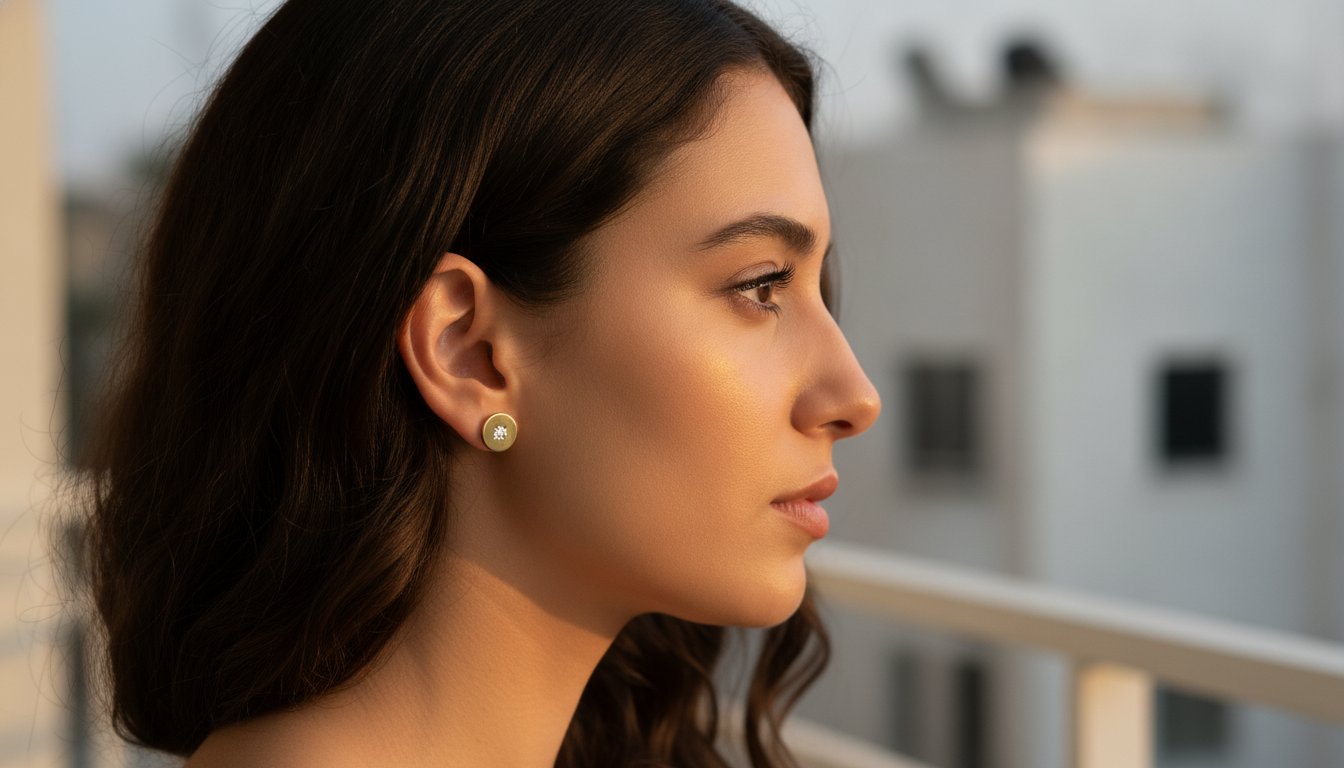
Your first set of earrings shouldn’t feel like a medical prescription. Many people assume that the healing phase requires sacrificing personal style for clinical, uninspiring studs, but finding the best earrings for newly pierced ears is actually the first step in your personal style narrative. You likely want a look that feels like an intimate expression of your identity from day one, yet the fear of nickel allergies or painful infections often leads to confusion over which metals are truly safe for your skin. It is a common struggle to find that balance between medical safety and the artisanal beauty you expect from fine jewelry.
We believe that high-end craftsmanship should make every day special, including the weeks spent waiting for a new piercing to settle. This guide promises to help you find elegant, hypoallergenic pieces that ensure a flawless healing process without looking like medical supplies. We will cover everything from the importance of 18K gold purity to how you can transition your new look into a sophisticated, full ear stack that celebrates your unique story. By the end, you will have the knowledge to choose jewelry that protects your health while reflecting your personal grace and confidence.
Key Takeaways
- Understand why 18K gold is the ultimate hypoallergenic choice for biocompatibility, offering maximum purity to prevent long-term nickel sensitivities.
- Discover why low-profile, flat-back silhouettes are the best earrings for newly pierced ears to ensure comfort during sleep and prevent snagging on hair or clothing.
- Learn the modern 2026 approach to aftercare, prioritizing gentle saline solutions over harsh chemicals to support your skin’s natural healing rhythm.
- Identify the biological reasons why you should never rotate your jewelry during the healing phase to avoid micro-tears and potential infection.
- Master the art of transitioning from a starter stud to a sophisticated curated ear stack using ethically sourced lab-grown diamonds and minimalist designs.
Why Your First Pair of Earrings is a Health and Style Investment
A new piercing is far more than a simple fashion statement; it is a delicate biological process. When a needle creates a new channel in your ear, your body immediately begins the work of forming a tube of skin called a fistula. This internal tissue is raw, vulnerable, and incredibly sensitive to whatever material rests against it. Choosing the best earrings for newly pierced ears is the most critical decision you will make in your jewelry journey. It isn’t just about the aesthetic you present to the world, but about the foundation of health you build for your skin. If you choose the wrong metal now, you risk complications that could prevent you from wearing jewelry comfortably for years to come.
The danger often lies in hidden alloys. Many “affordable” starter studs contain high levels of nickel, a common metal that triggers allergic reactions in 10-20% of the global population. During the healing phase, your bloodstream is directly exposed to the jewelry. If the metal leaches nickel into this open wound, your immune system may develop a permanent sensitivity. This is why the shift toward high-purity 18K gold is so significant in 2026. By choosing handcrafted, high-end pieces from the start, you ensure that your first experience with a new piercing is one of joy and grace rather than irritation and regret.
The Role of Biocompatibility in Healing
Biocompatibility is the measure of how harmoniously a material interacts with living tissue without triggering an adverse immune response. In the context of ear piercings, this means using metals that the body recognizes as “friendly” rather than foreign invaders. The healing fistula is particularly prone to reacting to low-quality metals, which can cause swelling, redness, or prolonged weeping. 18K gold stands as a superior choice because its high gold content provides a stable, non-reactive surface. This stability allows the skin to knit together smoothly, reducing the total time it takes for the piercing to settle into its permanent shape.
Style Without Compromise
We have moved past the era of bulky, clinical-looking studs that felt more like medical supplies than accessories. The luxury piercing movement of 2026 celebrates the idea that healing can be beautiful. Throughout the history of body piercing, jewelry has been used as a symbolic emblem of personal identity and strength. Today, that tradition continues through minimalist designs that prioritize both safety and sophistication. These are “forever” pieces, often featuring ethically sourced lab-grown diamonds, that look just as elegant at a formal event in Tel Aviv as they do during your morning routine. By selecting the best earrings for newly pierced ears from a fine jewelry perspective, you aren’t just buying a temporary placeholder. You are investing in an artisanal piece that will eventually become the anchor of your future ear stack.
The Gold Standard: Why 18K Gold is Best for New Piercings
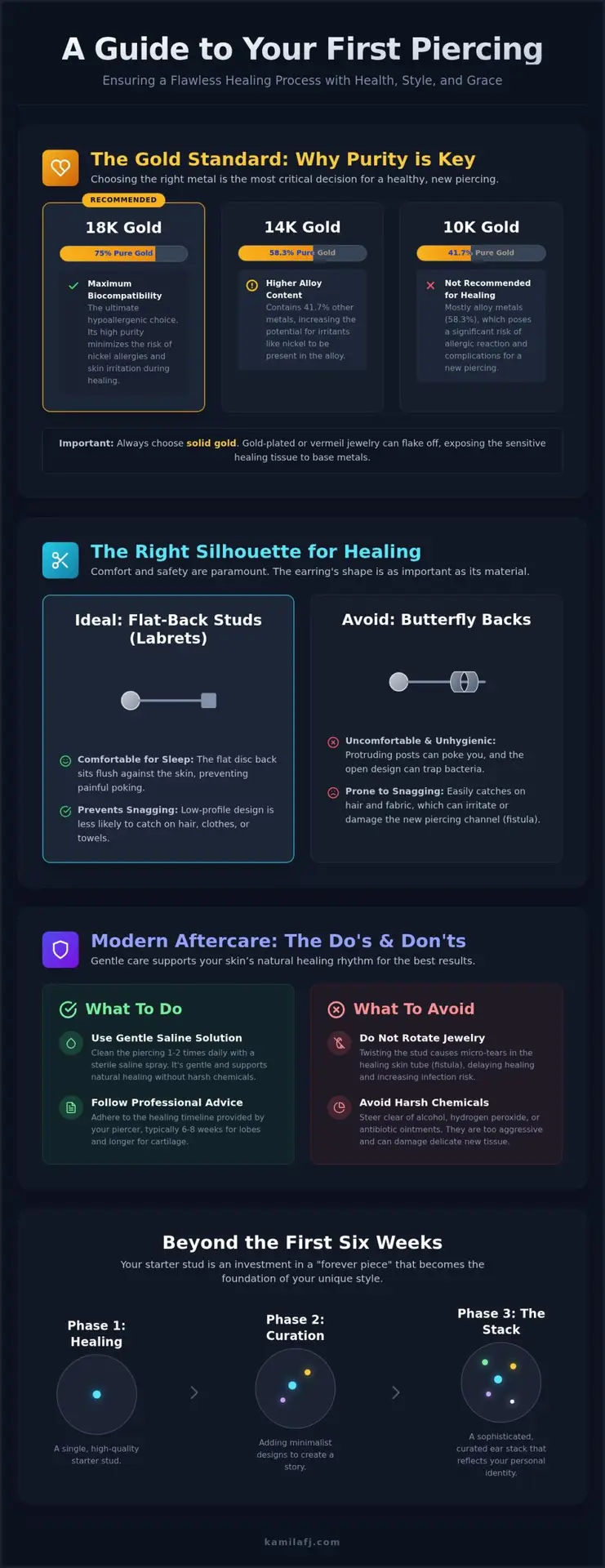
Purity isn’t just a mark of luxury; it’s a safeguard for your skin. When you’re searching for the best earrings for newly pierced ears, the composition of the metal matters more than the silhouette. Gold is measured in karats, with 24K being pure, soft gold. While pure gold is too malleable for jewelry, 18K gold contains 75% pure gold. This leaves only 25% for other metals, which is a significantly smaller window for potential irritants compared to 14K (58.3%) or 10K (41.7%) gold. In the Israeli market, where high-quality craftsmanship is deeply valued, choosing 18K gold ensures you are wearing a piece that respects both tradition and your health.
The science of alloys explains why 18K gold is naturally lower in irritating base metals, as the higher gold content requires fewer additives to maintain the metal’s structural integrity. For a healing piercing, this reduction is vital. Many lower-karat golds rely on nickel to add strength or change the color, but nickel is the primary culprit in jewelry-related dermatitis. Selecting solid, nickel-free 18K gold ensures that your body can focus on healing rather than fighting off a localized allergic reaction. Investing in solid gold also means you avoid the risks of gold-plated or “vermeil” jewelry, which can flake or wear away inside the sensitive piercing channel.
18K Gold vs. Other Metals
While implant-grade titanium and surgical steel are common in clinical settings, they often lack the warm, celebratory glow of fine jewelry. 18K gold offers a rich, deep hue that feels personal and meaningful. It bridges the gap between medical safety and modern artistry. You don’t have to choose between a comfortable healing process and an accessory that makes you feel empowered. By choosing a high-purity metal, you’re opting for a piece that will last a lifetime, rather than a temporary stud that loses its luster. Explore our collection of handcrafted gold earrings to find a piece that resonates with your personal story.
Avoiding the Nickel Trap
Nickel allergies are a hidden struggle for many, often developing silently through prolonged exposure to low-quality metals. Once these sensitivities are triggered, they are usually irreversible, limiting your jewelry choices for life. This is why sourcing your jewelry from a thoughtful, modern artisan is essential. Handcrafted pieces prioritize material integrity over mass production. While white gold is stunning, it’s worth noting that yellow gold is often the safer choice for initial healing, as it typically avoids the nickel or rhodium plating sometimes found in white gold alloys. This mindful approach to materials ensures your piercing journey is as graceful as the jewelry itself.
Selecting the Right Silhouette: Studs, Flatbacks, and Weight
While material purity is the foundation, the physical shape of your jewelry determines your daily comfort. The best earrings for newly pierced ears must feature a low-profile silhouette. High-set or intricate designs catch easily on hair and knitwear, causing micro-trauma to the healing tissue. Heavy dangles are strictly forbidden during the initial months. The weight of a swinging earring pulls on the raw fistula, potentially elongating the hole or causing migration. Instead, look for lightweight, solid pieces that sit flush against the skin.
Understanding the anatomy of your jewelry is just as vital as its beauty. Most professional piercers recommend a slightly thicker post, usually 16 or 18 gauge, to ensure the channel heals with enough room for future jewelry changes. The length of the post also matters. Initial jewelry should be slightly longer to accommodate the natural swelling that occurs in the first two weeks. Once the swelling subsides, a shorter post can be fitted to prevent the earring from sliding back and forth.
The Minimalist Stud Advantage
Minimalist design is a practical choice for healing. Simple geometric shapes like tiny spheres or bars are far easier to clean than ornate filigree. There is no space for debris to hide. For those who desire a touch of brilliance without the bulk, lab-grown diamond studs offer ethical sparkle in a compact form. These pieces serve as the perfect foundation for a curated ear stack, allowing you to build a cohesive look that evolves with your story.
Backing Styles: Butterfly vs. Flat Back
Traditional butterfly backs are often problematic for new piercings. Their tight loops and grooves act as bacteria traps, making them difficult to sanitize effectively. They also tend to squeeze the earlobe, restricting blood flow and slowing the healing process. Flat-back labrets have become the gold standard for a reason. These pieces feature a smooth, flat disk that sits comfortably against the back of the ear. They don’t poke you while you sleep and provide a sleek, snag-free finish that feels like a natural extension of your body.
Healing with Grace: Essential Aftercare for Your New Piercings
One of the most persistent myths in piercing care is the idea that you must rotate your earrings to prevent them from “sticking” to the skin. This is actually counterproductive and can lead to micro-tears. Rotating the jewelry breaks the fragile new skin cells forming inside the channel, essentially reopening the wound and inviting bacteria. Instead, let the 18K gold rest undisturbed. If you notice minor swelling in the first few days, don’t panic. This is a standard biological response. However, stay vigilant for signs of infection, such as spreading redness, intense heat, or thick, discolored discharge.
The Daily Cleaning Ritual
Consistency is the heartbeat of successful healing. Follow this simple, elegant routine twice a day to maintain your piercing’s integrity:
- Mist the front and back of the piercing with a sterile saline spray.
- Allow the solution to sit for a moment to soften any natural discharge.
- Gently pat the area dry with a clean, disposable paper towel or non-woven gauze.
Ensuring the area is completely dry after cleaning prevents moisture rot, a condition where the skin stays too soft and becomes easily irritated. For new lobe piercings, a gentle cleaning twice a day for the first eight weeks is the standard for maintaining a pristine healing environment.
Lifestyle Adjustments for New Piercings
Your daily habits influence how quickly your ear settles into its new look. If you’re a side sleeper, the constant pressure of your head against a pillow can cause the earring to shift or the ear to swell. A common artisan trick is to use a travel pillow, placing your ear in the center hole to avoid any direct contact with the surface. Be mindful of your phone screen and hair products too. These are frequent sources of bacteria and chemical irritation that can disrupt the fistula. Keep your hair tied back during the initial weeks to prevent strands from wrapping around the jewelry post.
While the urge to experiment with new styles is strong, patience remains your greatest ally. Most lobe piercings require at least six to eight weeks before a jewelry swap is safe, while cartilage can take up to a year. When you are finally ready to transition, ensure your next piece maintains the same high standards of purity. You can find your next heirloom in our collection of handcrafted 18K gold earrings, designed to celebrate your journey with permanent elegance.
Beyond the First Six Weeks: Curating Your Personal Ear Stack
The healing phase is merely the prologue to your jewelry story. Many people view their initial studs as temporary medical necessities, but the best earrings for newly pierced ears are actually the foundational pieces of a lifelong collection. Once the initial six to eight weeks have passed, the focus shifts from clinical safety to creative expression. This is the moment you can begin to envision a curated ear look that reflects your personal journey. Your starter earrings, if chosen with quality in mind, often become your most cherished everyday essentials because of their comfort and timeless appeal.
Transitioning to a full ear stack involves a thoughtful mix of textures and light. You can achieve ethical brilliance by incorporating lab-grown diamonds into your curation. These stones offer the same fire and clarity as traditional diamonds while supporting a more conscious approach to luxury. Mixing textures is the secret to a sophisticated stack. Try combining your solid gold studs with delicate gold rings, textured hoops, or tiny geometric bars. This layering creates a visual rhythm across the ear, blending strength with delicacy in a way that feels uniquely yours.
Building a Modern Heirloom Collection
Every piece you add to your collection should feel like a meaningful emblem of your identity. In the Israeli jewelry tradition, pieces are often chosen for their ability to withstand the test of time and be passed down through generations. Staying with high-purity gold earrings for all your piercings, even after they have fully healed, prevents the irritation that often comes from switching to “costume” metals. KaMila Fine Jewellery supports this journey of self-expression by providing pieces that balance modern minimalist aesthetics with traditional artisanal integrity. Your ear stack becomes a living gallery of your experiences.
The KaMila Difference: Handcrafted in 18K Gold
The difference between mass-produced and handcrafted jewelry is felt directly against the skin. Hand-finished pieces undergo a level of scrutiny that ensures every edge is smooth and every post is perfectly polished. This artisan touch is vital for those with sensitive skin who still desire the best earrings for newly pierced ears and beyond. By choosing sustainable luxury through lab-grown diamonds and 18K gold, you are making a choice that respects both the planet and your own well-being. Our designs are crafted to be worn daily, elevating the mundane into something celebratory and special. Explore the KaMila collection of fine gold earrings and discover the perfect anchors for your growing ear stack.
Begin Your Personal Style Narrative
Your journey toward a curated ear begins with a single, thoughtful choice. We’ve explored why high-purity 18K gold stands as the ultimate hypoallergenic standard, ensuring your body heals without the common irritation of base metals. By prioritizing minimalist silhouettes and smooth flat-back designs, you protect your new piercing from the trauma of snagging while maintaining a sophisticated aesthetic from day one. Finding the best earrings for newly pierced ears is more than a health decision; it’s an investment in your long-term comfort and self-expression.
At KaMila Fine Jewellery, we believe your first earrings should be modern heirlooms rather than temporary medical supplies. Our pieces are handcrafted in Israel using 18K gold and sustainable lab-grown diamonds, specifically designed to be gentle on sensitive skin while offering timeless brilliance. Discover Handcrafted 18K Gold Earrings at KaMila Fine Jewellery and start building a collection that reflects your unique story. Trust in the healing process and look forward to the many beautiful layers of style you’ll add in the years to come.
Frequently Asked Questions
How long must I wait before changing my new earrings?
You should wait at least six to eight weeks for earlobe piercings and six to twelve months for cartilage before changing your jewelry. This timeframe allows the internal tissue to form a stable channel called a fistula. Even if the piercing looks healed on the surface, the delicate inner skin needs time to strengthen. Rushing this process can lead to irritation or the immediate closure of the hole.
Is 18K gold safe for people with sensitive ears?
18K gold is one of the safest materials for sensitive skin due to its high purity level. Since it contains 75% pure gold, there is significantly less room for irritating alloys like nickel that often plague lower-karat options. For many, 18K gold represents the best earrings for newly pierced ears because it balances artisanal beauty with medical-grade biocompatibility, ensuring a graceful healing journey.
Can I wear hoops in a newly pierced ear?
It is best to avoid hoops in a fresh piercing until the initial healing phase is complete. Hoops tend to rotate and slide, which can introduce bacteria into the raw channel and cause unnecessary friction. This movement often leads to piercing bumps or prolonged swelling. Stick to flat-back studs during the first few months to ensure your ear heals in a straight, stable position.
What happens if I take my earrings out too early?
Taking your earrings out too early usually results in the piercing channel closing almost immediately. A fresh fistula is incredibly unstable and will begin to knit together the moment the jewelry is removed. This can also trap bacteria inside the wound, potentially leading to an abscess. If you must remove them for a medical procedure, consult your piercer about using a glass retainer to keep the channel open.
How do I know if my ear piercing is infected or just irritated?
Irritation typically presents as localized redness or minor itching, while an infection involves more systemic symptoms. You should look for spreading heat, persistent throbbing, or thick, yellow to green discharge. While minor crusties are a normal part of the body’s repair process, any extreme swelling that swallows the jewelry requires professional attention. Irritated ears often just need a gentler cleaning routine and less physical contact.
Are lab-grown diamonds safe for new piercings?
Lab-grown diamonds are perfectly safe for new piercings when they are securely set in high-purity, nickel-free gold. Because they are chemically and physically identical to mined diamonds, they don’t pose any additional risk to your healing skin. Choosing lab-grown stones allows you to enjoy ethical brilliance and a modern aesthetic without compromising the integrity of your new piercing or your personal values regarding sustainability.
Is sterling silver a good choice for a fresh piercing?
Sterling silver is not an appropriate choice for a fresh piercing because it can oxidize when it comes into contact with body fluids. This oxidation can lead to permanent grey or black staining of the skin, a condition known as argyria. Additionally, silver often contains trace amounts of nickel. It is much safer to wait until the piercing is fully mature before wearing silver pieces for short durations.
What is the ‘LITHA’ method for piercing aftercare?
The LITHA method stands for “Leave It The Hell Alone,” and it is the preferred approach for modern piercing care. This philosophy encourages you to stop touching, rotating, or over-cleaning your jewelry. By minimizing physical interference, you allow the body’s natural immune response to work undisturbed. Simply use a gentle saline spray twice a day and let your 18K gold pieces do the rest of the work.
Related Posts
From Sketch to Sparkle: Ensuring the Final Piece Matches Your Jewelry Design
-
Posted by
מילה קלר
You’ve spent weeks dreaming of a ring that captures your story, but as you look at the artist’s rendering, a small doubt creeps in. Will that…
Repurposing Heirloom Stones into Modern Custom Jewelry: The Complete 2026 Guide
-
Posted by
What if keeping an inherited ring tucked away in a dark jewelry box isn’t protecting your family history, but silencing it? It’s completely natural…
Red Flags When Choosing a Custom Jewelry Designer: A 2026 Guide to Protecting Your Vision
-
Posted by
Imagine spending months dreaming of a bespoke 18k gold ring, only to open the velvet box and find a piece that feels like a generic retail cast…
Jewelry That Makes Me Feel Protected and Strong: A Guide to Modern Talismans
-
Posted by
Most people view a necklace or a ring as a simple finishing touch, but for the modern woman, it’s often the first layer of emotional armor she puts…
How to Stack Rings: The Art of Curating Your Personal Story in 18K Gold
-
Posted by
What if your jewellery box wasn’t just a collection of objects, but a living timeline of your most cherished milestones? You’ve likely looked at a…
Minimalist Gold Rings: A Guide to Curating Your Timeless 18K Collection
-
Posted by
Your jewelry shouldn’t have an expiration date. Too many of us have felt the frustration of a cherished piece tarnishing or causing skin irritation…
Getting a Better Price Than Big Brand Jewelers in Israel: The Insider’s Guide 2026
-
Posted by
That iconic logo on a shopping bag in a Tel Aviv mall might feel like a mark of quality, but it’s often the most expensive way to buy a memory. When…

18k Gold Earrings for New Piercings: Safe Styling Guide
-
Posted by
What if the most rewarding part of your piercing journey wasn’t the initial appointment, but the moment you finally swap those generic studs for…

18k Gold Minimalist Bracelets: The Ultimate Guide to Timeless Everyday Luxury
-
Posted by
True minimalism isn’t about having less; it’s about requiring more from the few pieces you choose to wear every day. If you’ve ever felt the…

18k Gold Stud Earrings: The Ultimate Guide to Everyday Luxury
-
Posted by
Why should the jewelry you wear every single day be the piece that irritates your skin or loses its radiance before the season even turns? It’s a…

18k Gold Jewelry Care: Preserving Modern Heirlooms
-
Posted by
Is your most cherished jewelry tucked away in a dark velvet box, waiting for a “special enough” occasion that never quite arrives? Many women…
Handcrafted Minimalist Jewelry in Israel: A Guide to Modern Elegance (2026)
-
Posted by
Why settle for jewelry that simply fills a space when you could wear a piece that captures the depth of your own story? If you’ve been searching for…