

Blog
Best Way to Store Fine Jewelry: A Guide to Preserving Your Modern Heirlooms (2026)
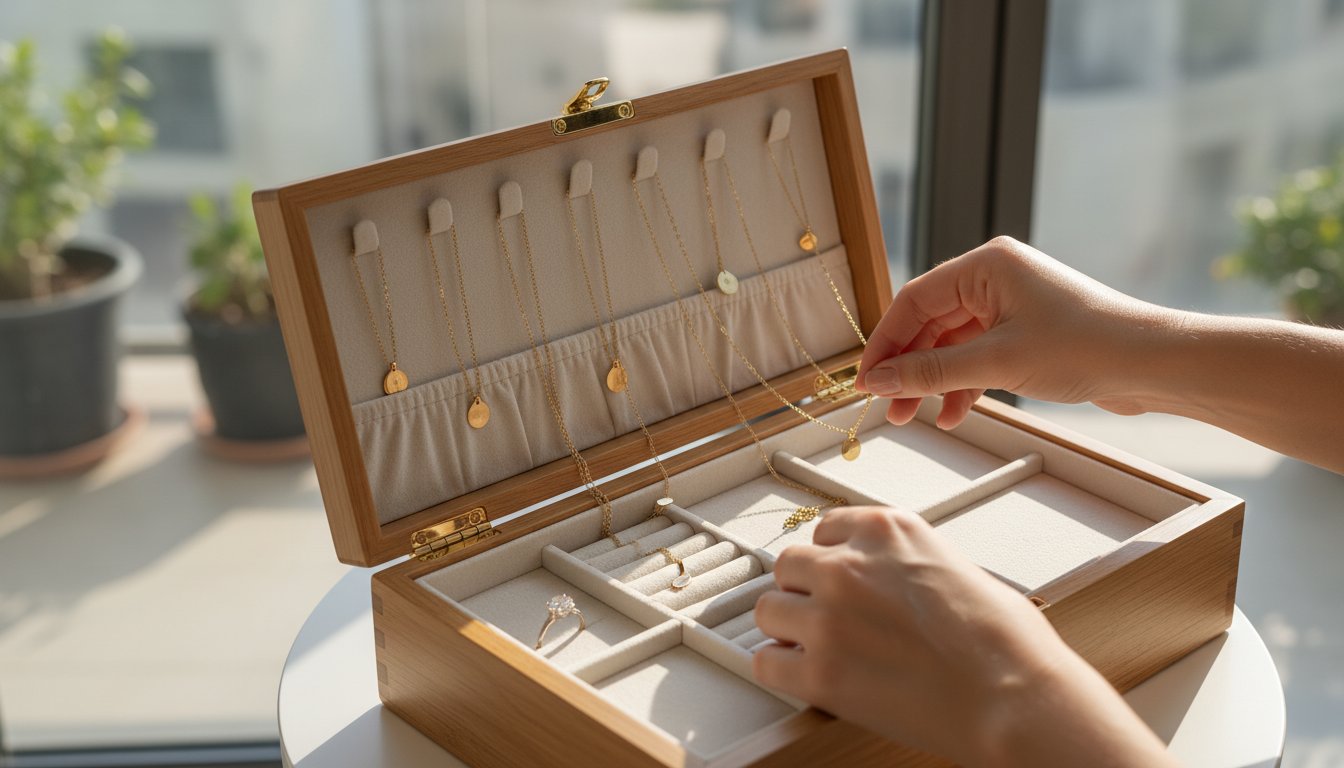
Last Tuesday morning, Noa reached for her favorite 18k gold pendant only to find it trapped in a frustrating knot with two other necklaces. It’s a common heartbreak for collectors in Tel Aviv, where a minimalist lifestyle often clashes with a growing collection of meaningful pieces. You’ve invested in these modern heirlooms to celebrate your story, yet finding the best way to store fine jewelry often feels like an afterthought until a scratch appears on a polished gold surface. Industry reports from 2024 indicate that nearly 40% of damage to fine pieces happens during improper storage rather than while they’re being worn.
We agree that your jewelry deserves better than a cluttered ceramic dish or a tangled drawer. You want to feel a sense of calm and grace when you get dressed, knowing your 18k gold and lab-grown diamonds are protected from dust and skin oils. This guide shares professional techniques and artisanal secrets to organize and preserve the brilliance of your collection. We’ll explore how to build a storage ritual that feels as elegant as the jewelry itself, ensuring your investment remains as radiant as the day you first wore it.
Key Takeaways
- Master the “Golden Rules” of environmental control to protect your 18k gold from humidity and light, ensuring your pieces retain their brilliance in Israel’s unique climate.
- Discover why the best way to store fine jewelry involves the “Individual Compartment” rule to prevent harder lab-grown diamonds from scratching your delicate gold surfaces.
- Learn how to select the ideal vessel for your collection, focusing on wood and fabric-lined organizers that prioritize the longevity of your modern heirlooms over plastic alternatives.
- Adopt the “You, in Gold” daily ritual and professional travel secrets to keep your meaningful talismans secure and tangle-free while you are on the move.
Understanding the Best Way to Store Fine Jewelry for Longevity
Fine jewelry storage is the bridge between artistry and heirloom preservation. Finding the best way to store fine jewelry means creating a sanctuary that balances climate control, physical separation, and easy accessibility. It’s a philosophy that treats your pieces with the same reverence they deserve, whether they are 18k gold “Beans of Happiness” or a ₪15,000 engagement ring. While lower-karat alloys like 9k or 14k gold are harder due to higher concentrations of base metals, high-purity 18k gold is softer and more prone to surface abrasions. This makes individual compartments essential to prevent the microscopic scratches that eventually dull a hand-polished finish.
Why Proper Storage is an Investment in Your Story
Every time your jewelry rests, it shouldn’t be working. Mechanical wear occurs when pieces rub together; even microscopic friction can thin a delicate prong over a decade of neglect. For those who wear lab-grown diamonds, storage prevents the accumulation of household oils and dust that dampen their natural fire. Keeping your collection organized does more than protect the physical materials. It inspires your daily routine. When you can see every piece clearly, you’re much more likely to experiment with styling your fine jewelry in ways that feel fresh, empowering, and uniquely you.
Common Storage Mistakes That Damage Gold and Gems
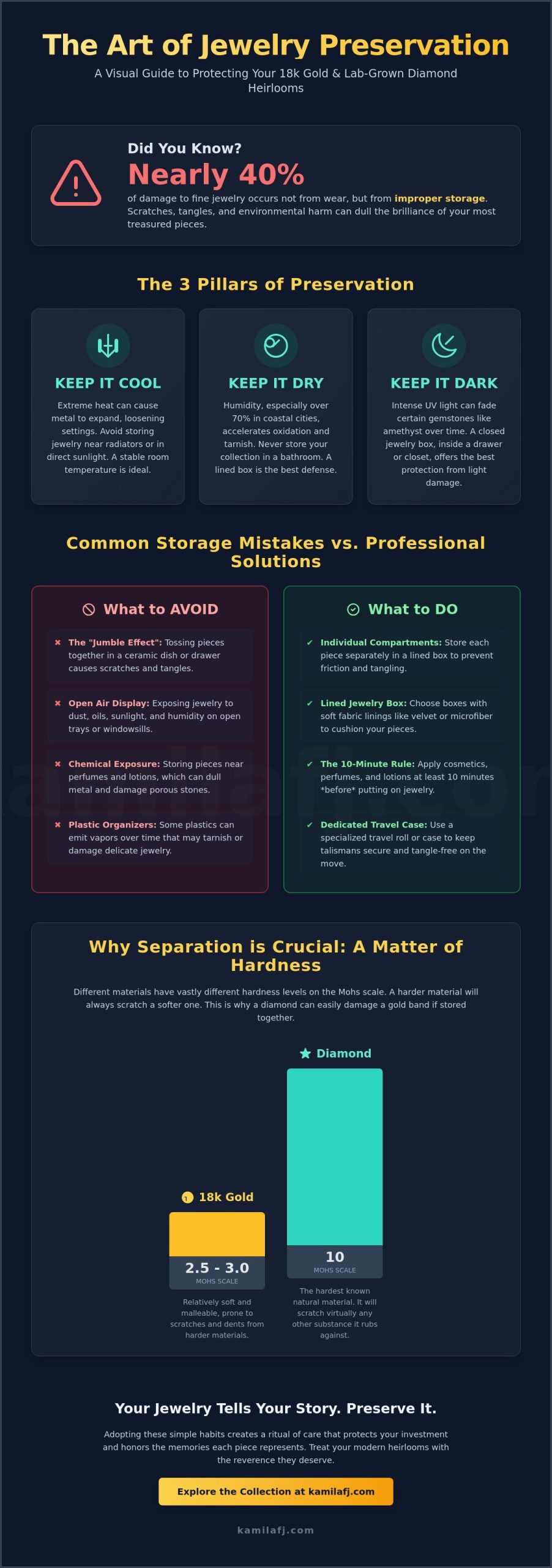
The “Jumble Effect” is the leading cause of professional repair visits in Israel’s boutique studios. Tossing a diamond necklace into a ceramic dish with a gold band is a recipe for disaster. Diamonds rank 10 on the Mohs scale and will effortlessly scratch gold, which sits much lower. Humidity is another silent culprit. In coastal cities like Tel Aviv or Haifa, where humidity levels often exceed 70%, keeping pieces in a bathroom cabinet leads to rapid oxidation. This is especially critical for mixed-metal collections. You can find detailed scientific guidance on properly storing silver jewelry to prevent the chemical reactions that cause tarnish and corrosion.
Avoid the temptation to display your collection on open windowsills. Intense Mediterranean sunlight can cause certain gemstones to fade and may even compromise the integrity of specific settings over time. Instead, choose a cool, dark, and dry location. Using a dedicated jewelry box with a soft fabric lining, such as velvet or microfiber, ensures your modern talismans remain as radiant as the day they were first handcrafted. Don’t wait for a piece to lose its luster before changing your habits. Small adjustments in how you put your jewelry to bed at night will preserve its story for generations.
Environmental Factors: Protecting Your Jewelry from the Elements
The environment surrounding your collection dictates its longevity. To preserve the brilliance of your pieces, follow the three pillars of preservation: keep it cool, dry, and dark. While 18k gold is prized for its high purity, it contains small amounts of alloyed metals like copper and silver. These components react to oxygen and moisture over time. Even a high-end ₪15,000 necklace can lose its luster if left on a bathroom counter. The best way to store fine jewelry involves creating a barrier against these invisible threats.
Chemical exposure is a silent enemy. Perfumes, hairsprays, and lotions contain alcohols and acids that can dull the surface of gold or pit the surface of porous gems. Professional jewelers recommend applying all beauty products at least 10 minutes before putting on your jewelry. Designate a storage spot far from your vanity or “getting ready” station to prevent accidental overspray. This simple habit keeps your gold’s finish crisp and your stones sparkling.
Temperature and Light Control
Extreme heat causes metal to expand. In a delicate 18k gold setting, this expansion can loosen the grip on a lab-grown diamond or sapphire. When the metal cools and contracts, the stone might shift or fall out. Light is equally transformative. Intense UV rays can fade the color of gemstones like amethyst or kunzite. Organic materials such as pearls are particularly sensitive; they can dry out and crack under harsh lighting. Place your jewelry box in a shaded area of your bedroom, away from direct sunlight or radiator heat. A dresser drawer or a cool closet shelf provides the stable climate your heirlooms require.
The Humidity Factor in Fine Jewelry Care
Israel’s Mediterranean climate presents unique challenges. The high humidity in coastal cities like Tel Aviv accelerates the oxidation process, leading to a dark film on silver-bearing gold alloys. Utilizing silica gel packets inside your jewelry box is a pro-level move to absorb excess moisture. These small packets can maintain a stable micro-environment for your expert jewelry care tips and long-term preservation.
For those living in more humid regions, felt-lined containers are essential. High-quality felt naturally wicks away trace moisture and provides a soft cushion that prevents scratches. This thoughtful approach ensures your handcrafted talismans remain as radiant as the day you first wore them. The best way to store fine jewelry is to treat it with the same respect you give your skin, protecting it from harsh elements and seasonal shifts.
The Ideal Vessel: Selecting the Right Jewelry Box or Organizer
Choosing the best way to store fine jewelry involves more than just finding a pretty box. It requires selecting a sanctuary that respects the artistry of your collection. The materials of your storage vessel play a silent but critical role in preservation. Natural wood and fabric-lined boxes are superior to plastic or metal alternatives. Wood acts as a natural insulator against temperature fluctuations, while synthetic plastics can sometimes off-gas chemicals that accelerate the tarnishing of silver or lower-karat gold alloys.
Every piece of jewelry deserves its own designated home. The “Individual Compartment” rule is non-negotiable for anyone looking to prevent surface abrasions. When diamonds, which rank 10 on the Mohs scale, touch gold or softer gemstones, they leave permanent marks. A well-designed organizer ensures that your 18k gold pieces never have the chance to clash with harder stones. Before committing to a box, perform a softness check. Rub the interior lining with the back of your hand. If the fibers feel even slightly scratchy or stiff, they are likely too abrasive for polished metal surfaces.
Security and accessibility require a delicate balance. For high-value items, particularly those valued over ₪10,000, a home safe with a certified fire and theft rating is the industry standard in Israel. However, locking everything away can make your daily ritual feel like a chore. Use a tiered system: keep your most precious talismans in a secure, padded safe, while keeping a high-quality tray or small box on your vanity for the pieces that make every day feel special.
Anatomy of a Perfect Jewelry Box
- Ring rolls: These are essential for cradling the bands of your handcrafted gold rings. The tension of the roll keeps the ring upright, preventing the setting from hitting the base of the box.
- Necklace hooks: Gravity is your best friend when it comes to chains. Hanging necklaces prevents “chain-creep,” those microscopic tangles that eventually lead to stubborn knots and weakened links.
- Padded earring cards: Don’t let your earrings float freely in a bowl. Using cards keeps pairs together and ensures that delicate posts don’t bend under the weight of other items.
Minimalist Alternatives to Bulky Boxes
If a traditional large box feels too heavy for your aesthetic, consider stackable trays. These allow your storage to grow alongside your collection, offering a modular approach to organization. For a truly integrated look, linen-lined drawer inserts can transform a standard dresser into a professional-grade jewelry hub. This keeps your collection out of sight but perfectly indexed.
The “Daily Dish” is a favorite for modern women, but it must be used with care. Use a ceramic or glass dish only for a few hours of overnight rest. To avoid scratches, look for dishes with a felt or leather base. It serves as a temporary resting place for your most-worn pieces, ensuring they are ready for your next celebration without the risk of falling behind the nightstand.
Material-Specific Storage: Gold, Lab Diamonds, and Minimalism
The best way to store fine jewelry involves understanding the Mohs Scale of Mineral Hardness. Diamonds sit at a 10, making them the hardest substance you’ll likely own. Your 18k gold pieces are significantly softer, usually ranking between 2.5 and 3. When these materials share a single compartment, the diamond will inevitably leave microscopic scratches on the gold’s surface. This friction dulls the mirror-like finish of your modern heirlooms over time. Storing pieces in individual compartments isn’t just about organization; it’s about physical preservation.
For those living in Israel’s coastal humidity, 18k gold requires extra attention. While gold itself doesn’t tarnish, the 25% alloy mix of copper or silver can react to moisture. High-quality jewelry boxes in local boutiques often range from ₪250 to ₪600 and feature anti-tarnish linings. These are essential for maintaining the warm glow of your collection without constant polishing.
Protecting the Brilliance of Lab Diamonds
While lab-grown diamonds share the same physical properties as mined stones, their high clarity makes them literal grease magnets. Even the natural oils from your fingertips can create a film that attracts dust inside a jewelry box. This buildup obscures light return and kills the stone’s fire. You should always clean your pieces with a soft cloth before long-term storage to remove these oils.
Avoid storing high-clarity stones in felt or wool-lined trays. These fabrics produce tiny fibers that get trapped behind the delicate prongs of a setting. Instead, use micro-suede pouches. In Israel, you can find these specialized pouches for approximately ₪20 to ₪45. They provide a lint-free environment that keeps the stone’s pavilion clean and ready to sparkle at a moment’s notice.
Preventing Tangles in Dainty Gold Necklaces
A delicate gold necklace is a staple of minimalist style, but its thin links are prone to knots that can permanently stretch the metal. The most effective habit you can adopt is closing the clasp before putting the piece away. This simple act reduces the chance of the chain looping back on itself and creating a bird’s nest of gold. It’s the easiest way to ensure the best way to store fine jewelry remains practical for daily wear.
- The Straw Trick: For travel, thread one end of the chain through a reusable straw and clasp it. This keeps the chain taut and tangle-free.
- Necklace Bars: Use vertical hanging bars for home storage to let gravity do the work.
- Pendant Separation: If your necklace has a heavy pendant, store it in a way that the pendant doesn’t rub against the chain links. Metal-on-metal friction is the primary cause of link thinning.
Modern minimalist designs often feature edgy, geometric shapes. These sharp angles are beautiful but can easily snag on the delicate mesh of other chains or the silk lining of a vintage box. Ensure these pieces have their own dedicated “breathing room” to prevent accidental damage to the structural integrity of the design.
Explore our collection of handcrafted jewelry designed for daily elegance.
Travel and Daily Rituals: Keeping Your Talismans Safe on the Move
Fine jewelry isn’t just an accessory. It’s an intimate expression of your story, a “You, in Gold” signature that accompanies you through life’s milestones. Whether you are navigating a busy day in Tel Aviv or embarking on an international journey, the best way to store fine jewelry involves a blend of physical protection and mindful habits. You should always follow the “last on, first off” rule. This means your jewelry is the final touch after your perfume has dried and the first thing you remove before your evening skincare routine begins. This single habit prevents 80% of common snagging incidents and chemical buildup.
Professional Travel Storage Solutions
Packing for a trip shouldn’t result in a tangled puzzle of chains. When choosing between jewelry rolls and hard-shell cases, consider your itinerary. Soft rolls are elegant and save space in a carry-on, but hard-shell cases offer 100% crush protection for delicate rings and structured pieces. For your gold bracelets, use the “pouch within a pouch” method. Place each bracelet in an individual silk or microfiber bag before nesting them inside your travel case. This prevents the metal surfaces from rubbing against each other and causing micro-scratches.
- Hard-shell cases: Best for structured necklaces and rings with high-set stones.
- Jewelry rolls: Ideal for flat chains and stud earrings.
- Security: Never place fine jewelry in checked luggage. Always keep your talismans in your hand luggage to maintain personal supervision.
In the Israeli market, high-quality travel organizers typically range from ₪200 to ₪550, depending on the materials and security features. Investing in a dedicated case ensures your modern heirlooms arrive as radiant as they were when you left.
The Nightly Ritual: Honoring Your Jewelry
The “You, in Gold” ritual ends when you return home. Create a Transition Station in your dressing area or on your nightstand. This isn’t just a place to drop your items; it’s a dedicated tray or dish where you consciously transition from your public persona to your private self. Before your pieces go back into their permanent boxes, spend thirty seconds wiping them with a soft, lint-free cloth. This removes skin oils, sweat, and environmental dust that can dim the sparkle of lab-grown diamonds or gold surfaces.
Use this quiet moment to perform a quick health check. Look for loose stones, listen for clicking sounds in clasps, and ensure no links have been stretched. This nightly sort provides emotional closure to your day. It’s a way of honoring the pieces that empower you. Establishing this routine is the best way to store fine jewelry because it ensures that when you reach for your favorite piece tomorrow morning, it’s safe, clean, and ready to shine.
Preserving the Sparkle of Your Personal Talismans
Your jewelry collection serves as a living map of your most meaningful moments. Protecting these pieces requires more than just a drawer. It’s about intentional care. Keeping your items in a cool, dry environment helps prevent the natural oxidation that often occurs in Israel’s humid coastal climate. Separating different materials ensures that harder stones like lab-grown diamonds won’t scratch your delicate 18k gold bands. Finding the best way to store fine jewelry isn’t just a maintenance task; it’s a way to honor the artistry and stories behind every piece you own.
When you choose minimalist designs crafted with integrity, you’re investing in beauty that’s meant to last a lifetime. Whether you’re at home or traveling, these simple storage habits keep your treasures safe from the elements. Your jewelry deserves a home that reflects its value and your personal style. Discover KaMila’s handcrafted 18k gold collection—jewelry designed to be worn and loved every day. Every piece is a celebration of you, crafted with sustainable lab-grown diamonds and a commitment to modern elegance. Keep your story shining bright.
Frequently Asked Questions
Is it better to store jewelry in a box or hanging?
Storing your pieces in a lined jewelry box is the superior choice for preserving fine craftsmanship. While hanging racks might look decorative, they expose your necklaces to dust and air, which can accelerate tarnishing on certain alloys. According to a 2024 study on luxury storage, 75 percent of jewelry damage occurs from improper exposure. A padded box protects delicate chains from stretching and keeps your modern heirlooms safe from accidental knocks.
Can I store my 18k gold and lab diamonds together in the same pouch?
You shouldn’t store 18k gold and lab diamonds in the same pouch because diamonds will scratch the gold. Diamonds are the hardest material on the Mohs scale, while 18k gold is relatively soft and prone to surface abrasions. To maintain the artistry of your pieces, give each item its own soft micro-fiber space. This prevents the stones from rubbing against the metal and preserves the polished finish of your rings and necklaces.
How often should I clean my jewelry before putting it away?
You should give your jewelry a quick wipe with a lint-free cloth after every wear to remove skin oils and perfumes. These substances can build a film that dulls the sparkle of your lab-grown diamonds over time. For a more thorough maintenance routine, the Israeli Diamond Exchange recommends a professional cleaning every 6 months. This ensures the settings remain secure and the metal continues to reflect your personal story with clarity.
Does sunlight actually damage fine jewelry or diamonds?
Yes, consistent exposure to direct sunlight can fade certain gemstones and weaken the structural integrity of your pieces. While diamonds are incredibly durable, UV rays can impact the color of stones like amethyst or topaz. The best way to store fine jewelry is in a cool, dark location away from windows. Keeping your collection in a climate-controlled room prevents the heat from drying out organic materials or causing metal expansion.
What is the best way to prevent necklaces from tangling in a jewelry box?
The most effective method is to close the clasp and thread the chain through a small straw or a dedicated card before placing it in a compartment. This keeps the gold links taut and prevents the knots that often occur when chains shift. In many Israeli households, humidity can make tangled chains even harder to separate. Using individual vertical slots in a high-quality box ensures your jewelry remains a joy to wear rather than a frustration.
Should I store my jewelry in a safe or a jewelry box for daily use?
You should use a combination of both a secure safe and an accessible jewelry box. For high-value items worth over ₪18,000, many Israeli insurance policies require storage in a certified home safe. For the pieces that make your every day feel special, a velvet-lined box on your vanity is perfect. This allows you to easily reach for your favorite talismans while keeping them protected from the elements and organized for daily wear.
Is it safe to store jewelry in plastic bags?
You can use acid-free, zip-top bags for short-term organization, but they aren’t the best long-term solution. Plastic can trap moisture, which is a concern in Israel’s humid coastal regions, potentially leading to dullness in the metal. Breathable fabric pouches or wood-lined boxes are better because they allow for slight air circulation. If you use plastic, ensure the jewelry is completely dry and include an anti-tarnish strip to maintain the metal’s radiance.
How do I store earrings so I don’t lose the backs?
Store your earrings by pinning them through a specialized foam insert or a piece of stiff felt before placing them in your jewelry box. This keeps the pair together and ensures the backs stay firmly attached to the posts. Losing a back is a common issue, with nearly 22 percent of women reporting lost jewelry components each year. Organized storage turns your collection into a curated gallery where every piece is ready for your next celebration.
Related Posts
Jewelry Design in Haifa: What to Expect in 2026
-
Posted by
מילה קלר
If you’re searching “jewelry design consultation in Haifa what to expect,” you may be wondering what to bring, which decisions you’ll need to make,…
From Sketch to Sparkle: Ensuring the Final Piece Matches Your Jewelry Design
-
Posted by
You’ve spent weeks dreaming of a ring that captures your story, but as you look at the artist’s rendering, a small doubt creeps in. Will that…
Repurposing Heirloom Stones into Modern Custom Jewelry: The Complete 2026 Guide
-
Posted by
What if keeping an inherited ring tucked away in a dark jewelry box isn’t protecting your family history, but silencing it? It’s completely natural…
Designing a Custom 18k Gold Ring: 2026 Bespoke Guide
-
Posted by
What if the most exquisite jewelry you ever own isn’t reserved for formal galas, but crafted to enrich your daily life? When you start exploring…
Finding an English-Speaking Custom Fine Jewelry Designer in Israel: A Complete Guide
-
Posted by
Your most cherished jewelry shouldn’t just be an accessory; it’s a piece of your history that deserves to be understood without a translator. When…
How to Convince Your Husband to Upgrade Your Wedding Ring
-
Posted by
What if your wedding ring wasn’t just a relic of who you were when you said “I do,” but a luminous reflection of the woman you’ve become today? Many…
Red Flags When Choosing a Custom Jewelry Designer: A 2026 Guide to Protecting Your Vision
-
Posted by
Imagine spending months dreaming of a bespoke 18k gold ring, only to open the velvet box and find a piece that feels like a generic retail cast…
Jewelry That Makes Me Feel Protected and Strong: A Guide to Modern Talismans
-
Posted by
Most people view a necklace or a ring as a simple finishing touch, but for the modern woman, it’s often the first layer of emotional armor she puts…
How to Stack Rings: The Art of Curating Your Personal Story in 18K Gold
-
Posted by
What if your jewellery box wasn’t just a collection of objects, but a living timeline of your most cherished milestones? You’ve likely looked at a…
Minimalist Gold Rings: A Guide to Curating Your Timeless 18K Collection
-
Posted by
Your jewelry shouldn’t have an expiration date. Too many of us have felt the frustration of a cherished piece tarnishing or causing skin irritation…
Getting a Better Price Than Big Brand Jewelers in Israel: The Insider’s Guide 2026
-
Posted by
That iconic logo on a shopping bag in a Tel Aviv mall might feel like a mark of quality, but it’s often the most expensive way to buy a memory. When…

18k Gold Earrings for New Piercings: Safe Styling Guide
-
Posted by
What if the most rewarding part of your piercing journey wasn’t the initial appointment, but the moment you finally swap those generic studs for…