

Blog
Modern Hamsa Jewelry: A Guide to Minimalist Protective Emblems
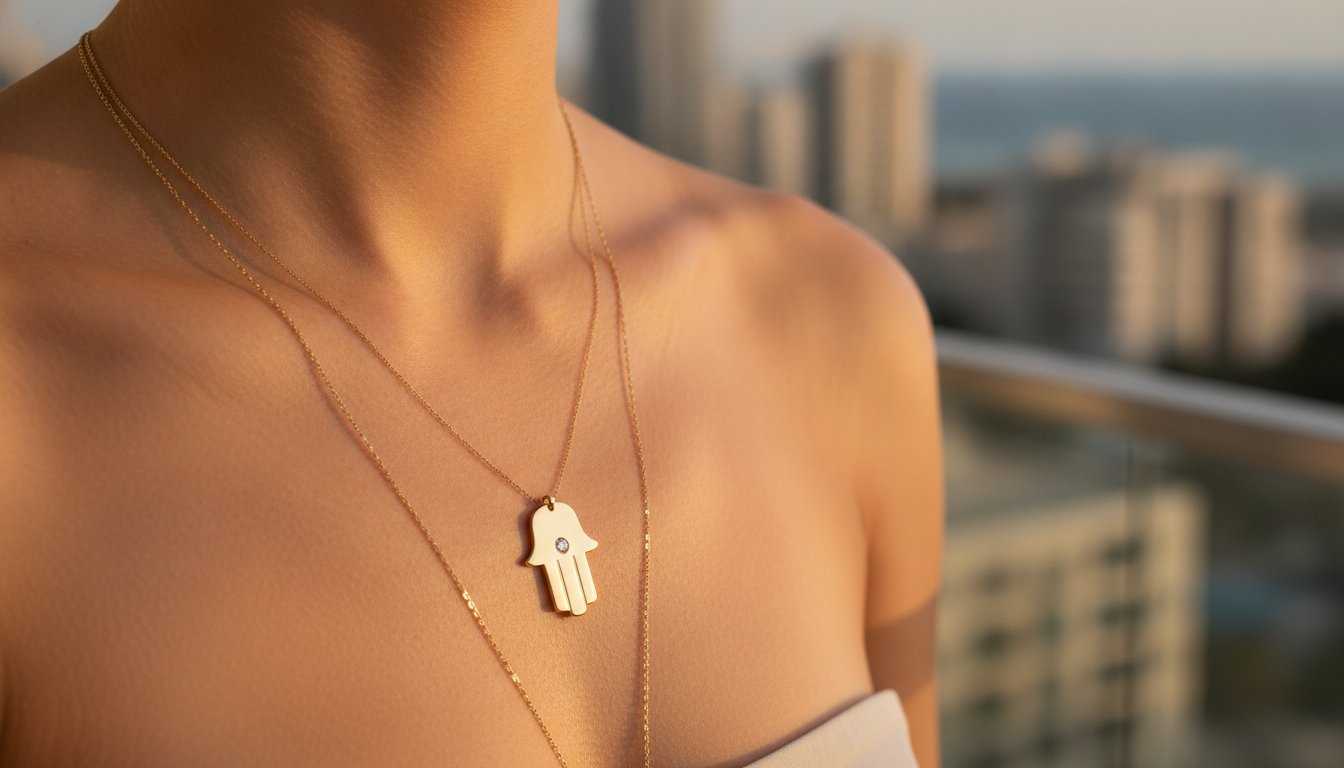
Why should a symbol of ancient protection feel like a relic of the past rather than a reflection of your present self? You likely appreciate the spiritual heritage of the Hamsa, yet find that traditional designs often feel too ornate or heavy for your daily life. It’s a common challenge to seek out modern hamsa jewelry that maintains its sacred meaning while fitting a minimalist, contemporary aesthetic.
We understand that you want jewelry that reflects your values, which is why we’re exploring how this ancient emblem is being reimagined through 18K gold and ethical lab-grown diamonds. This guide will help you distinguish between traditional and modern aesthetics so you can find a piece that feels like a true personal signature. We’ll preview the artistry of handcrafted designs and show you how sustainable materials are turning protective symbols into sophisticated, daily essentials that celebrate your story with grace and quiet confidence.
Key Takeaways
- Trace the journey of the Hamsa from an ancient protective amulet to a modern icon of personal empowerment and strength.
- Learn how to select high-quality modern hamsa jewelry by prioritizing 18K gold and ethical lab-grown diamonds for lasting brilliance.
- Compare traditional filigree with minimalist aesthetics to find a design that balances heritage with your contemporary style.
- Master the art of styling symbolic emblems within your everyday jewelry stacks, from professional settings to casual weekend looks.
- Discover the intimate value of a handcrafted heirloom that transforms a universal symbol into a unique expression of your personal story.
The Evolution of the Hamsa: From Ancient Amulet to Modern Icon
The Hamsa is an ancient whisper of protection that has echoed through the centuries. It represents power, blessings, and an unwavering sense of strength. While its form is recognizable globally, its meaning remains deeply personal to everyone who wears it. It isn’t just a charm; it’s a legacy of resilience carried forward into a new era of design.
Its roots stretch across the vibrant cultures of the Middle East and the Mediterranean. To understand its enduring appeal, it helps to explore the history and symbolism of the Hamsa, which shows how it has served as a cross-cultural bridge for generations. Historically, these amulets were often large and intricate, designed to serve as bold declarations of faith and safety. They were meant to be noticed, often crafted with heavy metals and complex patterns that reflected the artistic styles of their time.
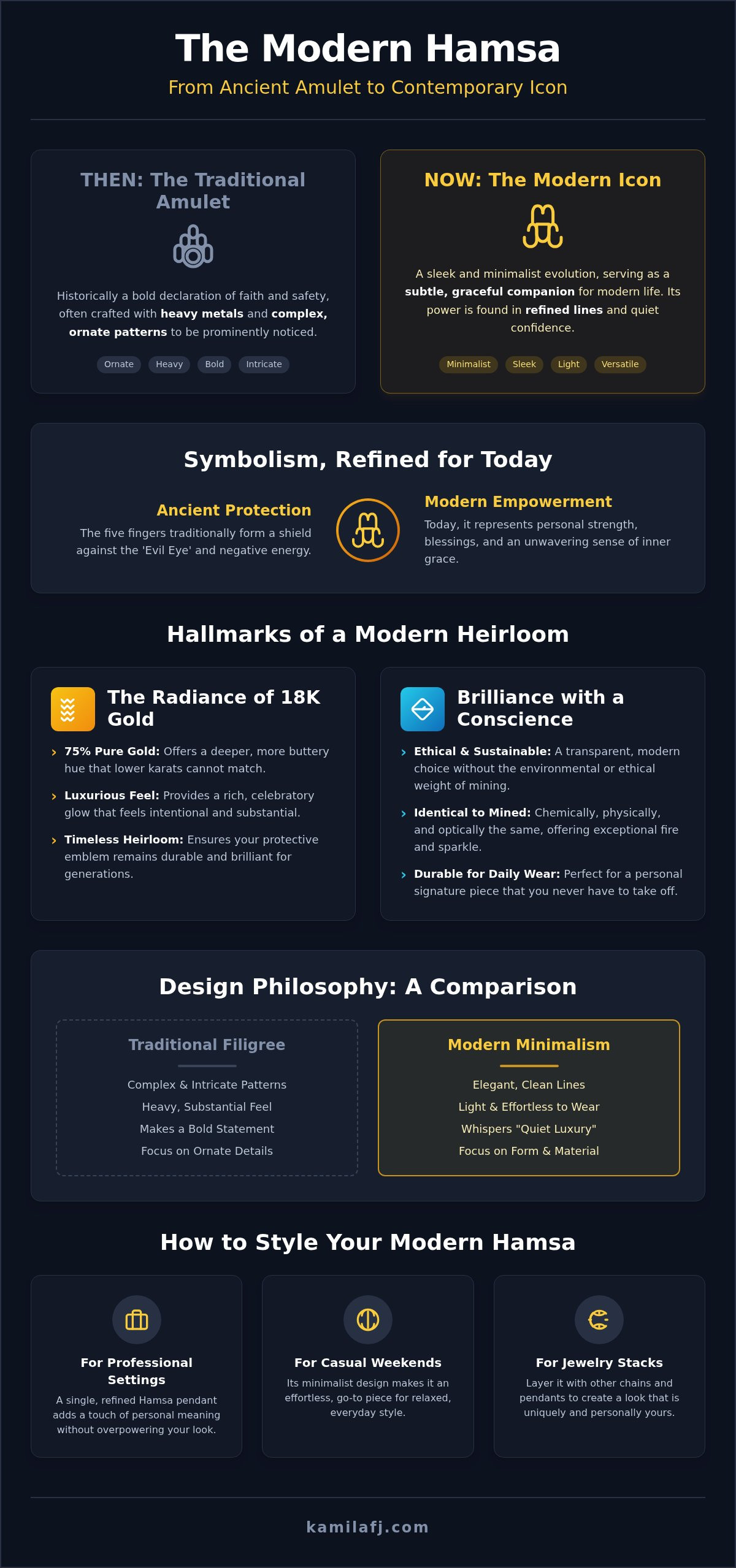
In recent years, we’ve seen a beautiful transformation. The bulky, ornate talismans of the past are evolving into sleek, minimalist icons. This shift isn’t about losing the symbol’s power; it’s about making it wearable for modern life. Today’s fine jewelry pieces act as storytelling elements, allowing you to carry your history in a way that feels light, sophisticated, and entirely your own. It’s a transition from a piece that defines you to a piece that complements you.
The Meaning Behind the Open Hand
The five fingers of the Hamsa traditionally offer a shield against the “Evil Eye,” a concept of negative energy found in many traditions. In the world of modern hamsa jewelry, these five points are often distilled into their most essential, geometric forms. By simplifying the shape into elegant lines, the focus shifts to the purity of the symbol itself. This artistic restraint creates a powerful emotional connection, turning a protective emblem into a subtle, graceful companion for your daily journey.
Why Minimalism is the New Tradition
The rise of “quiet luxury” has fundamentally changed how we approach symbolic pieces. Modern wearers often shy away from the heavy filigree of previous generations, preferring jewelry that whispers rather than shouts. A smaller, more refined Hamsa allows for incredible versatility, making it easy to transition from a professional meeting to a quiet evening out. It’s about finding beauty in the essence of the form rather than in excess. Modern Hamsa jewelry is the intersection of heritage and high-fashion minimalism.
Minimalism in Fine Jewelry: The Role of 18K Gold and Lab Diamonds
Choosing a piece of modern hamsa jewelry is an intimate decision. It’s about finding a balance between an ancient protective symbol and the refined aesthetics of the minimalist jewelry movement. When we strip away the excess of traditional designs, the quality of the materials becomes the focal point. Using 18K gold and lab-grown diamonds isn’t just a design choice; it’s a commitment to creating something that feels substantial yet delicate on the skin. High-end materials transform a daily accessory into a personal signature that speaks of quiet confidence and artistry.
The Warmth of 18K Gold
In the context of minimalist design, the metal choice does much of the storytelling. While 14K gold is common in mass-produced jewelry, 18K gold offers a deeper, more buttery hue that truly celebrates the wearer’s skin tone. It contains 75% pure gold, providing a rich radiance that lower karats simply can’t match. This purity creates a celebratory glow that feels intentional and luxurious. For those seeking a daily companion, choosing 18K gold ensures your protective emblem remains a timeless heirloom. If you’re considering how a pendant sits against your neckline, our guide to choosing a timeless gold necklace offers deeper insights into finding the perfect fit.
Ethical Brilliance: Lab-Grown Diamonds
Brilliance shouldn’t come with a compromise. Lab-grown diamonds are chemically, physically, and optically identical to their mined counterparts, but they offer a transparent and sustainable path forward. They represent the modern choice for a conscientious heirloom, allowing the Hamsa’s light to shine without the ethical weight of traditional mining. These stones provide the same fire and durability as natural diamonds, making them perfect for jewelry intended for daily wear. For a closer look at why these stones are the future of fine jewelry, you can explore our complete guide to lab-grown diamonds.
The beauty of minimalist jewelry lies in the details that aren’t immediately obvious. In our Israeli studio, each stone is hand-set with precision, ensuring that even the smallest diamond catches the light perfectly. This artisanal approach transforms a simple gold shape into a soulful object. When you wear a piece crafted with such care, it becomes more than an accessory; it becomes a part of your identity. You might find that a handcrafted gold necklace from our collection is the perfect way to begin your own story of modern protection.
Traditional Filigree vs. Modern Hamsa Designs: A Comparison
Choosing between a traditional and a contemporary design is often a reflection of how you want your jewelry to interact with your daily life. While both styles honor the same protective spirit, their visual languages are worlds apart. One speaks of ancient, ornate craftsmanship, while the other embraces the clarity of modern artistry. For those intrigued by the deeper history and symbolism of the Hamsa, it’s clear that the emblem’s power remains constant even as its outward appearance evolves to meet the needs of the modern wearer.
Understanding the Filigree Aesthetic
Traditional Israeli jewelry is often defined by Yemenite filigree, a technique involving incredibly intricate silver or gold wire-work. These pieces are masterpieces of complexity, featuring delicate swirls and patterns that create a lace-like effect. While stunning, this aesthetic can often feel very formal or “heavy.” Because the designs are so busy, they tend to dominate an outfit rather than complement it. For many, these ornate talismans feel more like museum artifacts or special-occasion pieces than something meant for a Tuesday afternoon at the office.
The Modern Hamsa Framework
In contrast, modern hamsa jewelry strips away the noise to focus on the purity of the form. Instead of complex wire-work, you’ll find solid 18K gold shapes with smooth, polished surfaces or subtle geometric cut-outs. These designs allow the material quality to take center stage. Pave diamond accents are often used sparingly to add a touch of light without overwhelming the minimalist silhouette. This approach reimagines the “Hand of Fatima” as a source of quiet confidence, a sleek emblem that provides a sense of sanctuary without the bulk of traditional styles.
When deciding which direction suits you best, consider this simple framework:
- Bold Heritage: Choose traditional filigree if you want a statement piece that serves as a highly visible link to the past. These are ideal for those who love maximalist textures and vintage-inspired charm.
- Understated Sophistication: Opt for modern hamsa jewelry if you value versatility and “quiet luxury.” These pieces are built as modern heirlooms, designed to be layered, lived in, and passed down through generations.
The true impact of a modern design lies in its wearability. A minimalist Hamsa necklace or bracelet doesn’t snag on clothing or feel out of place with casual denim. It bridges the gap between professional elegance and personal meaning. By choosing a handcrafted piece in 18K gold, you ensure that your emblem isn’t just a trend, but a durable companion that tells your story with grace and simplicity.
How to Style Modern Hamsa Jewelry for Everyday Wear
Integrating modern hamsa jewelry into your daily wardrobe is an act of self-expression. It’s about more than just matching an outfit; it’s about weaving a symbol of protection into the rhythm of your life. Because minimalist designs are inherently versatile, they don’t demand a specific dress code. Instead, they adapt to you, whether you’re wearing a crisp white button-down for a morning meeting or a soft cashmere sweater for a weekend brunch.
The Art of Layering Symbolism
Layering allows you to tell a complex story through simple, elegant pieces. A Hamsa pendant serves as a beautiful focal point when paired with other meaningful emblems. For instance, you might consider layering it with a Magen David necklace to celebrate different facets of your heritage and personal history. The key to a successful layered look is varying the lengths of your chains. Using a 16 inch chain paired with an 18 inch or 20 inch piece prevents tangling and ensures each pendant has space to breathe. If you’re looking for more inspiration on how to build your collection, our guide on styling fine jewelry offers practical advice for curating a look that feels uniquely yours.
Transitioning from Day to Night
One of the greatest benefits of 18K gold is how it interacts with light. During the day, it has a warm, grounded glow. As evening approaches and the lights dim, the rich purity of the metal becomes even more apparent. If your Hamsa features lab-grown diamond accents, it’ll catch the flickering light of a dinner setting with subtle brilliance. You don’t need to change your jewelry for an evening out; you simply let it shine. For a cohesive wrist stack, try pairing a delicate Hamsa bracelet with a structured gold bangle. This combination of fluid and rigid shapes creates a sophisticated balance that works for any occasion.
Your jewelry should never feel like a costume. It’s a direct reflection of your identity and the stories you choose to carry with you. Whether you prefer a single, understated ring or a full stack of necklaces, the goal is to feel empowered and comfortable. Modern hamsa jewelry is designed to be lived in, moving with you as you navigate your day. This piece acts as a quiet reminder of your strength and the grace you bring to the world. Explore our collection of handcrafted gold jewelry to find the next piece in your personal narrative.
KaMila Fine Jewellery: Handcrafting Your Modern Protective Heirloom
Every piece we create at KaMila is a dialogue between the artisan and the wearer. We believe that your protective emblems should be as unique as the life they guard. Our approach to modern hamsa jewelry centers on the concept of the “Modern Heirloom.” These are pieces designed for the present moment but built with the material integrity required to last for generations. We don’t see fine jewelry as an occasional indulgence. We see it as a consistent, intimate part of your daily self-expression.
Each necklace, ring, and bracelet is handcrafted in our Israeli studio. This direct connection to the heart of artisanal jewelry making allows us to maintain a level of intimacy that mass-produced items simply can’t achieve. By specializing in 18K gold, we offer a higher purity and a richer, more celebratory color than the common 14K standard. This choice reflects our commitment to artistry and the belief that the objects you wear against your skin should be as pure as your intentions. We invite you to explore our curated collection of 18K gold Hamsa necklaces and rings, each designed to catch the light and the imagination.
The Artisan Story
Our studio is a place where passion meets precision. We celebrate the duality of strength and delicacy in every design, ensuring that our Hamsas feel empowering yet graceful. Our artisans are deeply connected to the craft and the stories of the individuals who wear our pieces. We don’t just set stones; we curate brilliance. By choosing sustainable lab-grown diamonds, we ensure that your jewelry aligns with modern, conscious values. These diamonds offer the same fire and durability as mined stones, providing an ethical path to high-end luxury.
Customizing Your Story
Sometimes, the most powerful story is one you help write yourself. Beyond our permanent collection, we offer custom jewelry services and one-of-a-kind pieces that are tailored to your personal narrative. Whether you’re interested in specific gemstone sourcing or a bespoke design, our team is dedicated to bringing your vision to life. If you’re currently in Israel and want to experience our handcrafted approach in person, we recommend visiting our guide on finding the best Jewelry Store Near Me. It’s a helpful resource for anyone seeking an authentic, artisan-led experience.
Your journey with a Hamsa is a celebration of personal history and future blessings. It’s a quiet shield that moves with you through the world. We’re honored to help you find a piece that reflects your identity with joy and sophistication. When you choose KaMila, you’re not just buying an accessory; you’re investing in a handcrafted story that will be told for years to come.
Embrace Your Modern Protective Emblem
The Hamsa is more than an ancient charm; it’s a living symbol of strength that adapts to the rhythm of your life. By choosing modern hamsa jewelry, you honor centuries of tradition while embracing a minimalist aesthetic that fits your contemporary wardrobe. We’ve explored how the transition to 18K gold and sustainable lab-grown diamonds elevates this sacred emblem into a sophisticated daily essential. Whether you’re layering a delicate pendant for a busy workday or letting a diamond-accented ring shine during a quiet evening, these pieces serve as intimate reminders of your personal journey and values.
High-end craftsmanship ensures your jewelry isn’t just a fleeting accessory, but a durable heirloom built to last. It’s about finding that perfect balance between heritage and quiet confidence. Every handcrafted piece from our Israeli studio is designed to celebrate the duality of your strength and delicacy. We invite you to find the emblem that speaks to your unique story and brings a sense of grace to every moment.
Explore the Modern Hamsa Collection at KaMila Fine Jewellery
You deserve a piece that reflects your identity and protects your spirit with elegance and artistry.
Frequently Asked Questions
What is the meaning of the Hamsa hand in modern jewelry?
The Hamsa hand represents a universal symbol of protection, strength, and power. In the context of modern hamsa jewelry, it’s reimagined as an intimate expression of the wearer’s personal story and resilience. While it maintains its ancient roots as a shield against negative energy, today’s minimalist designs focus on the symbol as a source of quiet confidence and a celebratory emblem for daily life.
Can I wear a Hamsa necklace every day?
You can absolutely wear a Hamsa necklace every day, especially when it’s crafted from high-quality materials like 18K gold. Minimalist designs are specifically created for daily wear because they’re lightweight and versatile enough to complement any outfit. Since our pieces are handcrafted for durability, they’re intended to be lived in, moving with you from professional meetings to casual weekend outings without feeling overdone.
What is the difference between a traditional Hamsa and a modern Hamsa?
The primary difference lies in the visual complexity and weight of the design. Traditional Hamsas often feature intricate Yemenite filigree and heavy wire-work that can feel formal or bulky. Modern designs prioritize clean lines, solid 18K gold shapes, and geometric elegance. This shift toward “quiet luxury” makes the modern version much more wearable for those who prefer a sophisticated, understated aesthetic that doesn’t overwhelm their look.
Why is 18K gold better for a Hamsa pendant?
18K gold is the superior choice because it contains 75% pure gold, offering a much richer, warmer hue than the 14K standard. This higher purity ensures a celebratory glow that beautifully complements all skin tones. It’s also more resistant to tarnishing, making it the ideal material for a modern heirloom that you intend to wear daily and eventually pass down through your family.
Are lab-grown diamonds real diamonds in Hamsa jewelry?
Lab-grown diamonds are real diamonds, possessing the exact same chemical, physical, and optical properties as mined stones. They offer the same fire and brilliance but represent a more conscious and sustainable choice for the modern wearer. We use them in our modern hamsa jewelry to provide ethical luxury that aligns with contemporary values without compromising on the timeless quality or durability of the piece.
How do I style a Hamsa necklace with other pieces?
Styling a Hamsa is best achieved through thoughtful layering and stacking to create a look that’s uniquely yours. Try pairing a Hamsa pendant with a shorter gold chain or a different meaningful symbol to create a narrative-driven look. For your wrists, a delicate Hamsa bracelet looks exceptional when stacked alongside a structured gold bangle. The key is to mix different textures and chain lengths to build a look that feels personal.
Does the Hamsa hand have to face up or down?
Both directions are culturally significant, so the choice depends entirely on your personal intention. When the fingers face upward, the Hamsa is traditionally seen as a shield against negative energy and the “Evil Eye.” When the fingers face downward, it’s often interpreted as an invitation for blessings, abundance, and luck to flow into your life. You should choose the orientation that resonates most with your current journey.
Is it okay to wear a Hamsa if I am not religious?
It’s perfectly acceptable to wear a Hamsa regardless of your religious background. The symbol has deep roots across Middle Eastern and Mediterranean cultures, serving as a universal emblem of protection and strength. Many modern wearers choose the Hamsa for its artistic beauty and its role as a meaningful reminder of personal resilience rather than for specific religious reasons. It’s an empowering, celebratory piece for anyone who values its history.
Related Posts
Questions to Ask a Jeweler About Their Sourcing Ethics
-
Posted by
מילה קלר
What if “ethically sourced” tells you less than the answer to one careful question? When choosing a piece with personal meaning, it’s natural to want…
From Sketch to Sparkle: Ensuring the Final Piece Matches Your Jewelry Design
-
Posted by
You’ve spent weeks dreaming of a ring that captures your story, but as you look at the artist’s rendering, a small doubt creeps in. Will that…
Repurposing Heirloom Stones into Modern Custom Jewelry: The Complete 2026 Guide
-
Posted by
What if keeping an inherited ring tucked away in a dark jewelry box isn’t protecting your family history, but silencing it? It’s completely natural…
Finding an English-Speaking Custom Fine Jewelry Designer in Israel: A Complete Guide
-
Posted by
Your most cherished jewelry shouldn’t just be an accessory; it’s a piece of your history that deserves to be understood without a translator. When…
How to Convince Your Husband to Upgrade Your Wedding Ring
-
Posted by
What if your wedding ring wasn’t just a relic of who you were when you said “I do,” but a luminous reflection of the woman you’ve become today? Many…
Red Flags When Choosing a Custom Jewelry Designer: A 2026 Guide to Protecting Your Vision
-
Posted by
Imagine spending months dreaming of a bespoke 18k gold ring, only to open the velvet box and find a piece that feels like a generic retail cast…
Jewelry That Makes Me Feel Protected and Strong: A Guide to Modern Talismans
-
Posted by
Most people view a necklace or a ring as a simple finishing touch, but for the modern woman, it’s often the first layer of emotional armor she puts…
How to Stack Rings: The Art of Curating Your Personal Story in 18K Gold
-
Posted by
What if your jewellery box wasn’t just a collection of objects, but a living timeline of your most cherished milestones? You’ve likely looked at a…
Minimalist Gold Rings: A Guide to Curating Your Timeless 18K Collection
-
Posted by
Your jewelry shouldn’t have an expiration date. Too many of us have felt the frustration of a cherished piece tarnishing or causing skin irritation…
Getting a Better Price Than Big Brand Jewelers in Israel: The Insider’s Guide 2026
-
Posted by
That iconic logo on a shopping bag in a Tel Aviv mall might feel like a mark of quality, but it’s often the most expensive way to buy a memory. When…

18k Gold Minimalist Bracelets: The Ultimate Guide to Timeless Everyday Luxury
-
Posted by
True minimalism isn’t about having less; it’s about requiring more from the few pieces you choose to wear every day. If you’ve ever felt the…

18k Gold Stud Earrings: The Ultimate Guide to Everyday Luxury
-
Posted by
Why should the jewelry you wear every single day be the piece that irritates your skin or loses its radiance before the season even turns? It’s a…